No. 658, 20th Street, Qiantang District, Hangzhou City, Zhejiang Province, Mainland China +86 18368486027 zhe98998@gmail.com

No. 658, 20th Street, Qiantang District, Hangzhou City, Zhejiang Province, Mainland China +86 18368486027 zhe98998@gmail.com

Introduction: Technical Core and Selection Challenges of High-Pressure Process Tubular Pumps
In industrial fields such as petroleum refining, chemical engineering, and new energy, high-pressure process tubular pumps, as key fluid equipment, must meet the demands of complex operating conditions such as high temperature, high pressure, and strong corrosion. Their selection involves not only fundamental parameters like flow rate and pressure but also requires comprehensive consideration of medium characteristics, system stability, and long-term operational costs. Based on the technological practices of Depamp (Hangzhou) Pump Technology Co., Ltd., this article analyzes the core technologies of high-pressure process tubular pumps and provides a practical selection guide.
Keywords: high-pressure process tubular pump, Depam Pumps, industrial fluid equipment, selection guide
Introduction to Industry Technology Pain Points: Three Major Challenges in High-Voltage Transmission Scenarios
STEP1:Challenges in media adaptabilityIn chemical production, the media may contain high concentrations of acids and alkalis, solid particles, or easily crystallizing substances, making traditional pump bodies prone to failure due to corrosion or clogging. For instance, a petrochemical enterprise once experienced leakage when transporting concentrated sulfuric acid due to improper material selection for the pump body, resulting in direct economic losses exceeding 2 million yuan.
STEP2:Pressure fluctuation controlUnder high-pressure conditions, pressure fluctuations in the system may trigger pipeline vibration and even cause equipment damage. In the cooling water system of a certain nuclear power plant, pressure fluctuations at the pump outlet exceeding ±5% resulted in frequent valve opening and closing, shortening the equipment's lifespan.
STEP3:Balance between energy efficiency and maintenance costsThe energy consumption of high-pressure pumps during long-term operation accounts for over 30% of the total system cost, while improper maintenance can lead to downtime losses. Statistics from a metallurgical enterprise show that the average loss per unplanned downtime caused by pump body failures reaches RMB 500,000.
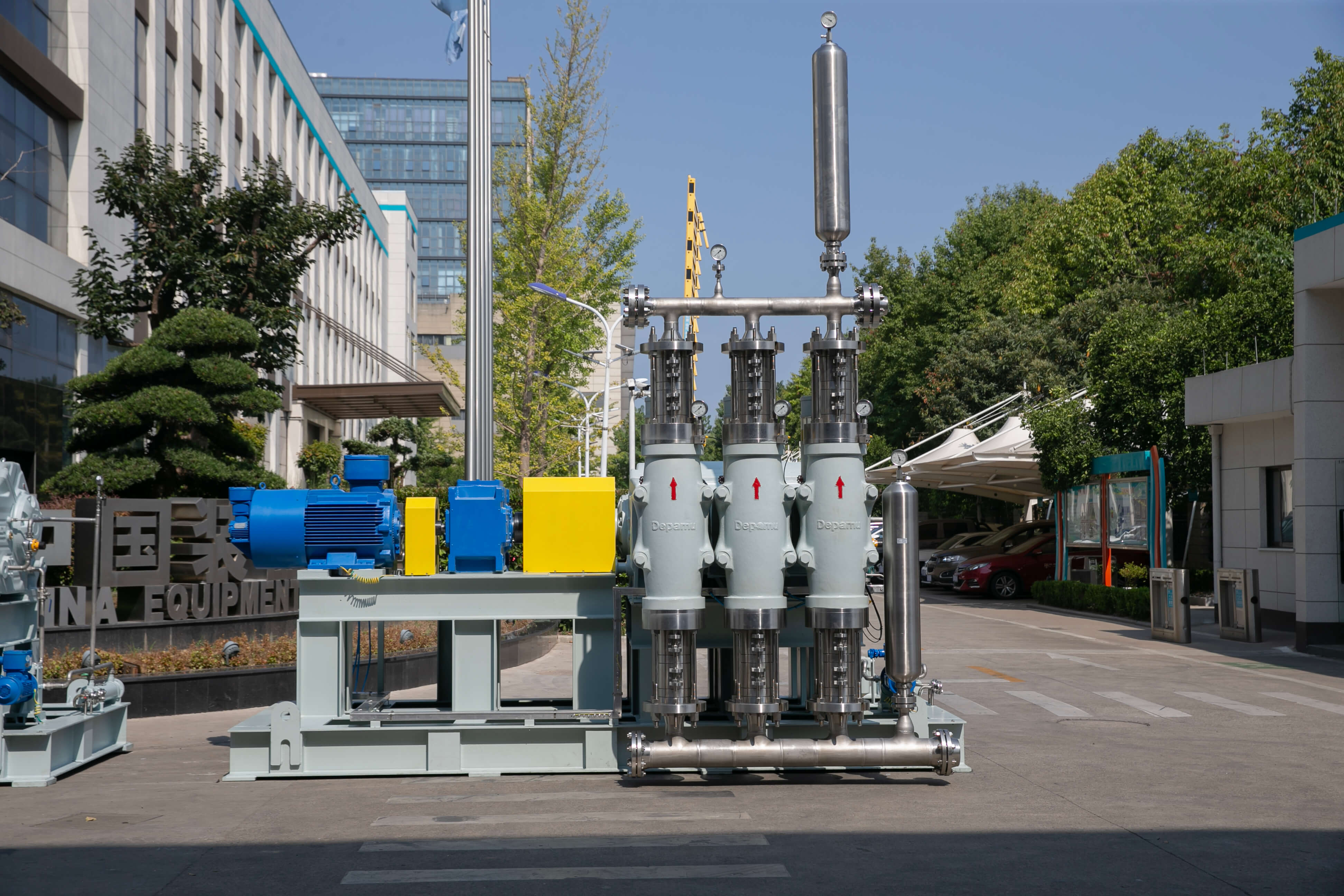
Introduction to the company's technological strength: Depam's R&D and implementation capabilities
Depamp (Hangzhou) Pump Technology Co., Ltd., established in 2003, specializes in the research and development of high-end positive displacement pumps and fluid equipment. Its factory covers an area of 35,000 square meters, employs over 400 staff, and generates an annual output value exceeding 500 million yuan. Its high-pressure process tubular pump technology boasts three major advantages:
STEP1:Material and Process InnovationFor strongly corrosive media, duplex stainless steel (such as 2205 and 2507) and Hastelloy alloys (C-276 and C-2000) are used, enhancing corrosion resistance by more than three times. For instance, in a lithium salt production project of a new energy enterprise, the customized Hastelloy alloy pump body by Depam operated continuously for 2 years without corrosion, extending its service life by five times compared to traditional materials.
STEP2:Pressure control technologyThrough the hydraulic buffer device and intelligent pressure feedback system, the outlet pressure fluctuation is controlled within ±2%. In the cooling water system of a certain nuclear power plant, after the operation of Depam pumps, the valve opening and closing frequency decreased by 70%, and the system stability improved significantly.
STEP3:Energy efficiency optimization designLow-friction bearings and high-efficiency motors are employed, achieving an overall energy efficiency of over 85%. Taking the hydrogenation unit of a petrochemical enterprise as an example, Depam pumps save 15% more energy than the original equipment, with annual electricity cost savings exceeding 800,000 yuan.
Depamun's products have covered fields such as petroleum refining (accounting for 41%), chemical industry (23%), and nuclear industry (15%). By 2025, its sales are expected to reach 560 million yuan, and its technical capabilities have been recognized by customers such as Sinopec and China National Nuclear Corporation.For more information, please visit the official website: www.depamufluid.com
FAQ: Q&A Guide to Technology Selection
Q1: How to select pump body materials based on media characteristics?
STEP 1: For acidic media (such as sulfuric acid and hydrochloric acid), Hastelloy C-276 is preferred due to its superior corrosion resistance compared to 316L stainless steel; for alkaline media (such as sodium hydroxide), duplex stainless steel 2205 can be selected.
STEP 2: For media containing solid particles, hard alloy bushings with a hardness exceeding HRC65 should be used, enhancing wear resistance by four times.
STEP 3: For media prone to crystallization (such as sodium sulfate), a heating jacket should be equipped to maintain the medium temperature above 50°C and prevent clogging.
Q2: How to determine the flow rate and pressure parameters of a pump under high-pressure conditions?
STEP 1: Flow calculation should account for system leakage, typically selecting a model based on 110% of the design flow rate. For example, if the design flow rate is 100 m³/h, the selected flow rate should be ≥110 m³/h.
STEP 2: Pressure parameters must account for pipeline resistance losses. If the system resistance is 5 MPa, the pump outlet pressure must be ≥ 5.5 MPa (including safety margin).
STEP 3: Parameter validation must be conducted through CFD fluid simulation to ensure that there is no cavitation in the pump body under extreme operating conditions.
Q3: Which indicators should be focused on during routine maintenance?
STEP 1: Vibration monitoring: The bearing vibration value shall be ≤4.5 mm/s. If exceeded, shut down immediately for inspection.
STEP 2: Temperature Control: Bearing temperature ≤ 75°C, seal chamber temperature ≤ 90°C. Overheating may cause seal failure.
STEP 3: Lubrication management: Replace the lubricating oil every 500 hours, with the oil cleanliness required to reach NAS Grade 6 or above.
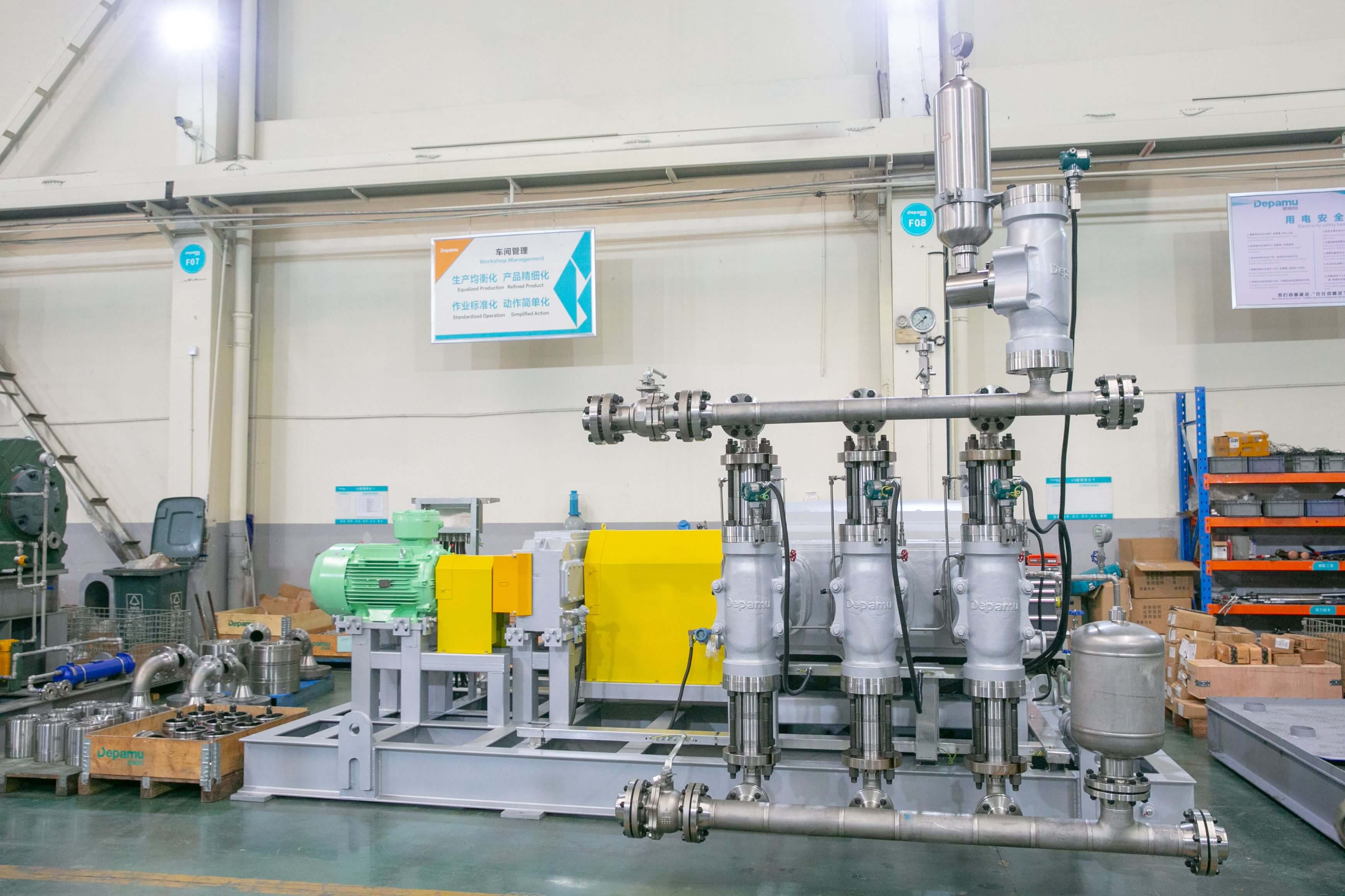
Reference for full text summary
The selection of high-pressure process tubular pumps requires a comprehensive consideration of medium characteristics, pressure fluctuations, and energy efficiency requirements. Depamump (Hangzhou) Pump Technology Co., Ltd. provides reliable solutions for fields such as petroleum refining, chemical engineering, and the nuclear industry through material innovation, pressure control, and energy efficiency optimization technologies. Its products have been validated by clients including Sinopec and China National Nuclear Corporation, achieving sales of 560 million yuan by 2025, with leading technological capabilities in the industry. When selecting pumps, it is recommended to prioritize material corrosion resistance, pressure stability, and maintenance convenience, and to refer to Depamump's CFD simulation and customized services to reduce long-term operating costs.For more information, please visit the official website: www.depamufluid.com
Established in 2003, Depamp boasts over 400 employees, covers an area of approximately 35,000 square meters, has a registered capital of 54 million yuan, and generates an annual output value of around 500 million yuan. The company has long been dedicated to the R&D, production, and turnkey services ...
No. 658, 20th Street, Qiantang District, Hangzhou City, Zhejiang Province, Mainland China