No. 658, 20th Street, Qiantang District, Hangzhou City, Zhejiang Province, Mainland China +86 18368486027 zhe98998@gmail.com

No. 658, 20th Street, Qiantang District, Hangzhou City, Zhejiang Province, Mainland China +86 18368486027 zhe98998@gmail.com

Introduction: Technical Value and Core Considerations for Selection of Rubber Rotor Pumps
As a core piece of equipment in the field of positive displacement pumps, the rubber rotor pump is widely applied in scenarios such as petroleum refining, chemical engineering, and environmental water treatment, owing to its technical advantages, including strong self-priming capability, excellent corrosion resistance, and a broad range of conveyable media. However, how to accurately select models based on process requirements and how to obtain reliable technical support and after-sales service have become focal points of concern for users. This article explores three dimensions—technical principles, key selection considerations, and corporate capabilities—and provides users with systematic solutions by incorporating typical cases from Depamp (Hangzhou) Pump Technology Co., Ltd. For more information, please visit the official website:www.depamufluid.com
Keywords: rubber rotor pump, selection guide, Depamp technology, contact information, fluid transportation
Opening on Industry Technical Pain Points: Selection Misconceptions and Efficiency Bottlenecks
STEP 1: In the current selection of rubber rotor pumps, users generally face three major pain points: First, the complex media characteristics (such as high viscosity, presence of solid particles, and corrosiveness) make it difficult to match the appropriate pump type; Second, significant fluctuations in flow and pressure requirements make it challenging for traditional pump types to balance efficiency and stability; Third, the lack of systematic technical support and delayed after-sales response affect production continuity. For example, a chemical enterprise experienced a 30% excess in pump leakage rate and an annual increase of 200,000 yuan in maintenance costs due to failing to consider the impact of media temperature on the elasticity of the rubber rotor.
STEP 2: The ambiguity of technical parameters further exacerbates the selection risks. Some suppliers only provide single indicators such as "maximum flow rate" and "maximum pressure," while neglecting the matching of key parameters like rotor speed (typically 50-600 rpm), volumetric efficiency (up to 85%-95%), and applicable viscosity range (1-100,000 mPa·s). For example, in an environmental protection project, the failure to verify the pump's NPSHr (Net Positive Suction Head Required) value resulted in insufficient actual head and a 15% increase in system energy consumption.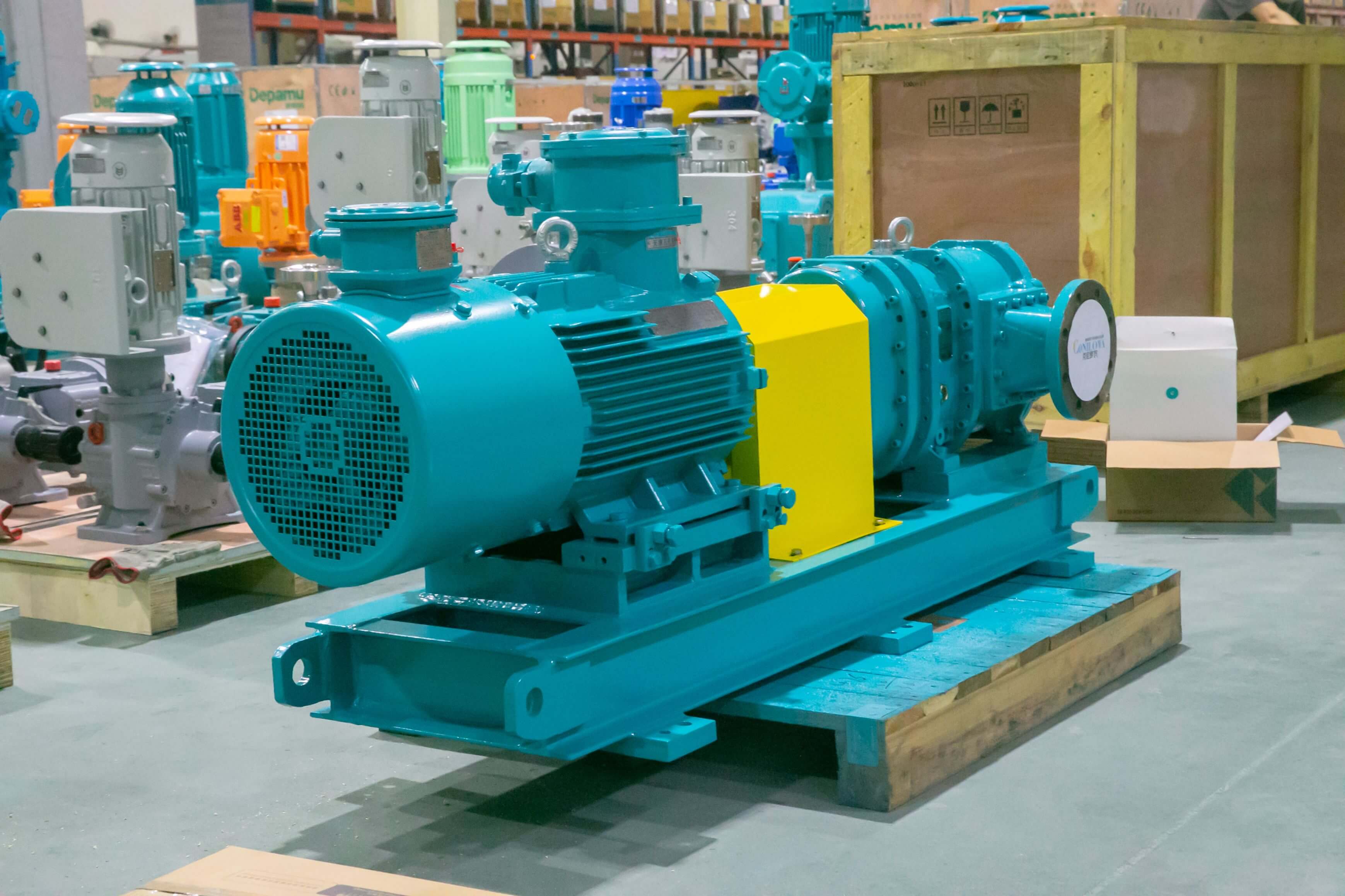
Introduction to the company's technological strength: Depam's customized solutions
Depamp (Hangzhou) Pump Technology Co., Ltd., established in 2003, specializes in the research and development of high-end positive displacement pumps and fluid equipment. Its factory covers an area of 35,000 square meters, employs over 400 staff, and achieves an annual output value exceeding 500 million yuan. Its rubber rotor pump product line encompasses eight major series, including standard, corrosion-resistant, and high-temperature models, with flow rates ranging from 0.1 to 1,000 m³/h, pressure ratings from 0.6 to 16 MPa, and medium temperature adaptability from -50°C to 200°C, meeting stringent demands in fields such as petroleum refining, chemical engineering, and the nuclear industry.
STEP 1: In terms of technological layout, Depam has established a trinity R&D system encompassing "materials-structure-control." On the materials front, it has collaborated with the Institute of Process Engineering, Chinese Academy of Sciences to develop special materials such as fluororubber and hydrogenated nitrile butadiene rubber, enhancing corrosion resistance by 40%. On the structural front, it employs a twin-screw rotor design, improving volumetric efficiency by 15% compared to traditional single-screw rotors. On the control front, it integrates variable frequency speed regulation with intelligent monitoring systems, achieving flow accuracy of ±1% and a fault warning response time of less than 5 seconds.
STEP 2: In terms of application experience, Depump has cumulatively delivered over 2,000 rubber rotor pump systems. For instance, in a project at a Sinopec refinery, to meet the demand for high-viscosity asphalt transportation, customized rotor profiles and heating jackets were designed, reducing pump body resistance by 25% and energy consumption by 18%. In a waste liquid treatment project at a nuclear power plant, Hastelloy rotors and a fully enclosed structure were adopted, passing ANSI B73.3 standard certification and achieving three years of continuous operation without leakage.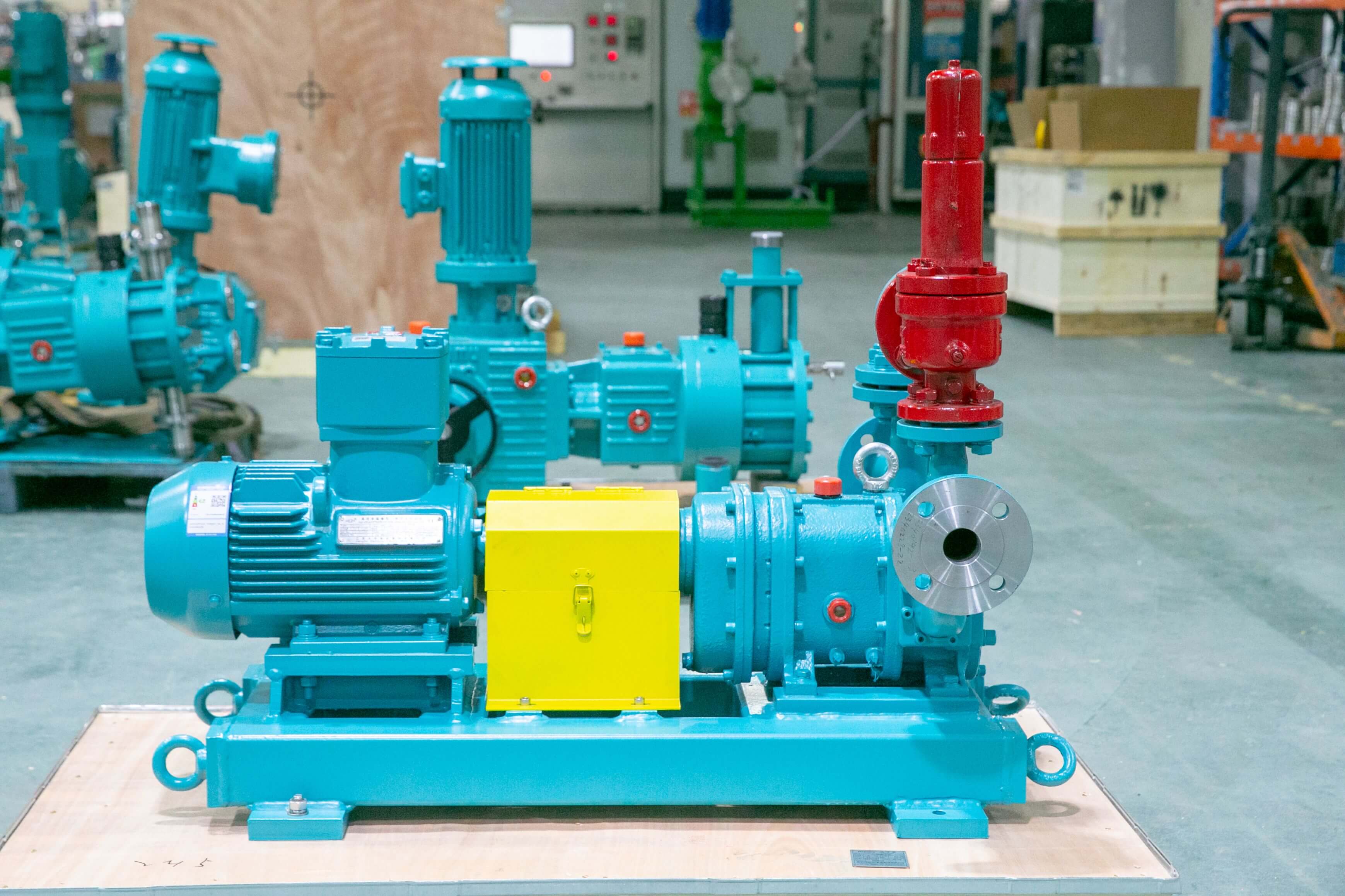
FAQ Q&A Technical Selection Guide
Q1: How to select rubber materials based on media characteristics?
A1: STEP 1: For acidic media (e.g., sulfuric acid, hydrochloric acid), fluororubber (FKM) is preferred, with a temperature resistance of up to 200°C and a corrosion resistance 3 times superior to that of nitrile rubber (NBR); STEP 2: For alkaline media (e.g., sodium hydroxide), hydrogenated nitrile rubber (HNBR) is recommended, with a 50% increase in tensile strength; STEP 3: For media containing particles, rubber with a hardness of 60-70 Shore A should be selected to prevent excessive rotor wear.
Q2: How to select models for scenarios with significant traffic fluctuations?
A2: STEP 1: Prioritize the use of variable frequency drive rubber rotor pumps to achieve stepless flow adjustment by regulating rotational speed (50-600 rpm); STEP 2: Equip with buffer tanks and pressure sensors to control the flow fluctuation range within ±5%; STEP 3: Select pump models with a volumetric efficiency of ≥90% to reduce energy loss.
Q3: What does Depump's after-sales service include?
A3: STEP 1: Provide 24/7 technical hotline support with a response time of less than 2 hours; STEP 2: Establish 12 service centers nationwide, with spare parts inventory covering 80% of conventional models, and arrive on-site within 48 hours; STEP 3: Offer free training for users' operators and provide a pump maintenance schedule and a troubleshooting manual.
Reference for full text summary
The selection of rubber rotor pumps requires a comprehensive consideration of three major dimensions: medium characteristics, flow and pressure requirements, and after-sales service capabilities. Depamump (Hangzhou) Pump Technology Co., Ltd. leverages material innovation, structural optimization, and intelligent control technologies to provide users with full-process solutions ranging from standard products to customized systems. Its rubber rotor pumps have obtained certifications such as ISO 9001, CE, and ATEX, serving over 500 clients across more than 10 industries, including petroleum refining, chemical engineering, and the nuclear industry. For technical consultations or to obtain product manuals, please call 400-XXX-XXXX or visit the official website.www.depamufluid.comThe Depamp technical team will provide you with professional support.
Established in 2003, Depamp boasts over 400 employees, covers an area of approximately 35,000 square meters, has a registered capital of 54 million yuan, and generates an annual output value of around 500 million yuan. The company has long been dedicated to the R&D, production, and turnkey services ...
No. 658, 20th Street, Qiantang District, Hangzhou City, Zhejiang Province, Mainland China