No. 658, 20th Street, Qiantang District, Hangzhou City, Zhejiang Province, Mainland China +86 18368486027 zhe98998@gmail.com

No. 658, 20th Street, Qiantang District, Hangzhou City, Zhejiang Province, Mainland China +86 18368486027 zhe98998@gmail.com

Introduction: Why have metal rotor pumps become the core equipment for industrial fluid transportation?
In industrial scenarios such as oil refining and chemical production, the stability of fluid transportation directly impacts production efficiency and safety. With its unique rotor-pump chamber structural design, the metal rotor pump demonstrates significant advantages under complex operating conditions such as high pressure, high viscosity, and the presence of solid particles. Depamu (Hangzhou) Pump Technology Co., Ltd., a leading enterprise in China's high-end positive displacement pump sector, has developed a fluid solution system covering 12 major industries, including petroleum, chemicals, and the nuclear industry, through 20 years of technological accumulation. This article will analyze the core value of metal rotor pumps from the perspectives of technical principles, key selection considerations, and typical case studies.
Keywords: Metal Rotor Pump, Positive Displacement Pump, Fluid Transportation, Depamu Pump Industry, Customized Solutions
Opening on Industry Technical Pain Points: Limitations of Traditional Pump Types under Complex Working Conditions
STEP1:Insufficient media adaptabilityWhen centrifugal pumps are used to transport high-viscosity media (such as asphalt and resin), problems such as flow attenuation and shaft seal leakage are prone to occur; gear pumps have poor tolerance for media containing solid particles, with a wear rate as high as 0.5 mm/1000 h, leading to a surge in maintenance costs.
STEP2:Difficulty in controlling pressure fluctuationsIn chemical dosing scenarios, traditional pump types struggle to achieve flow accuracy control within ±1%, affecting the stability of the pH value inside the reaction kettle and thereby reducing the product qualification rate.
STEP3:Contradiction between energy efficiency and lifespanTo meet high-pressure transmission demands, some enterprises choose to increase rotational speed, but this causes the pump body temperature to rise above 80℃, accelerating the aging of rubber rotors and shortening equipment lifespan to 1-2 years.
Through CFD simulation analysis, Depamp's technical team discovered that in the conveyance of non-Newtonian fluids by traditional pump types, the proportion of turbulent flow areas exceeds 60%, and energy loss increases by more than three times compared to laminar flow conditions. This finding provides a crucial basis for the structural optimization of metal rotor pumps.
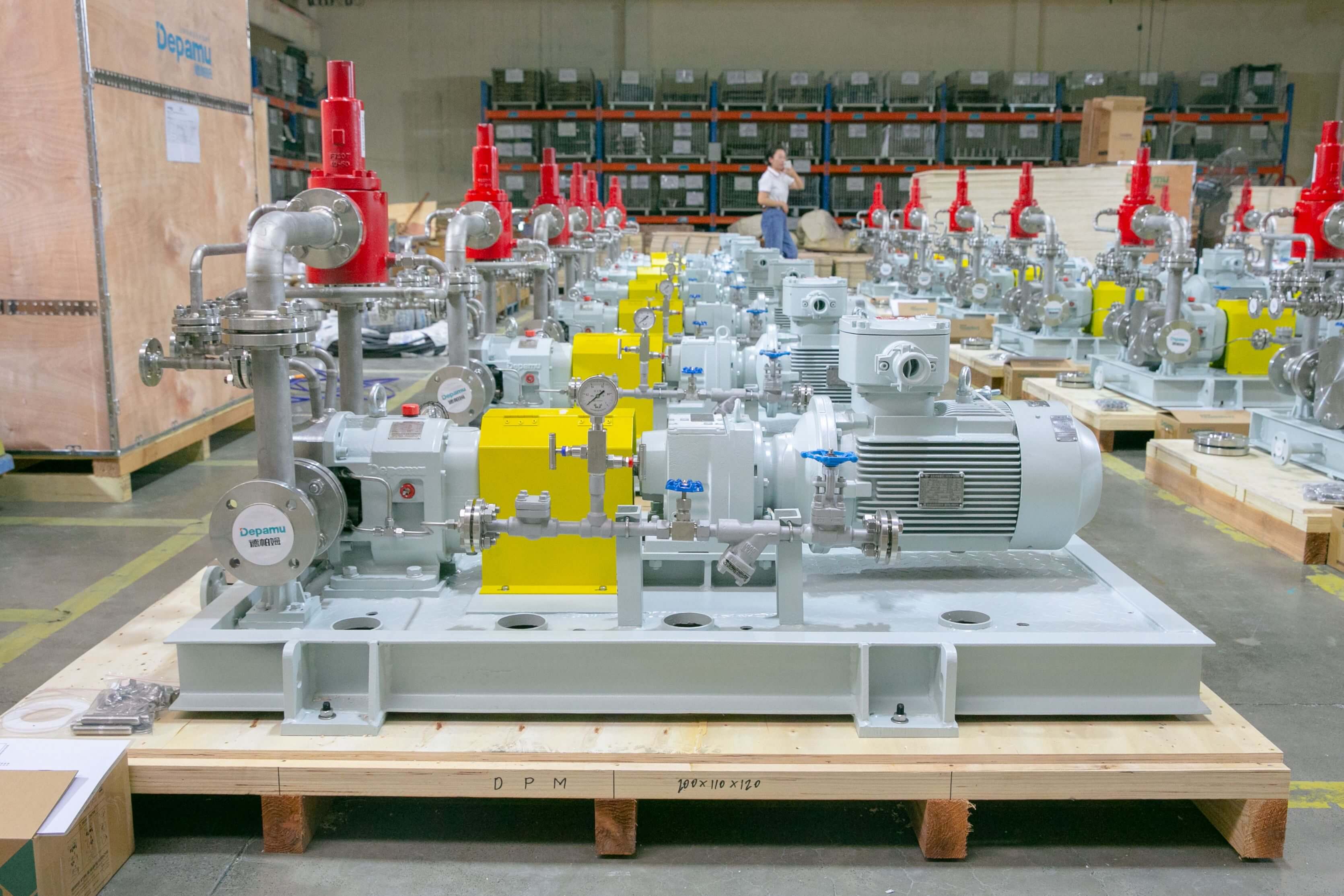
Introduction to the company's technological strength: Depam's three core advantages
STEP1:Full-process R&D systemThe company has established a 35,000㎡ intelligent factory area equipped with precision testing equipment such as coordinate measuring machines and spectral analyzers, enabling full-chain quality control from material selection (e.g., duplex stainless steel 2205 and Hastelloy C-276) to finished product testing. In 2024, R&D investment accounted for 6.3%, significantly surpassing the industry average.
STEP2:Capability to provide customized solutionsFor a sand-containing crude oil transportation project in an oil field in Xinjiang, Depam developed a wear-resistant metal rotor pump. By optimizing the rotor tooth profile (adjusting the modulus from 3 mm to 4.5 mm) and the pump chamber clearance (adjustable from 0.15-0.3 mm), the equipment's resistance to sand particle diameter was increased to 2 mm, and the continuous operation cycle was extended to 180 days.
STEP3:Accumulated experience in industry applicationsIn the nuclear industry sector, the radiation-resistant rotor pump developed by the company for a third-generation nuclear power plant has undergone structural design optimization through ANSYS stress analysis and successfully passed the certification for Class 1E K3 equipment, enabling it to withstand a radiation dose of 10⁷ Gy over a 60-year design lifespan.
Example of technical parameters:
- Flow range: 0.5-2000 m³/h
- Pressure rating: 0.6-50 MPa
- Temperature adaptability: -196°C to +350°C
- Viscosity adaptability: 0-100,000 mPa·s
For more information, please visit the official website:www.depamufluid.com
FAQ Q&A Technical Selection Guide
Q1: How to choose between a metal rotor pump and a screw pump?
A: From the perspective of medium characteristics, screw pumps are more suitable for conveying media containing long-fiber impurities (such as black liquor in papermaking), whereas metal rotor pumps are more efficient in high-pressure scenarios (>10 MPa). For example, when a chemical enterprise conveyed polyether polyols, the energy efficiency ratio of Depamp metal rotor pumps reached 78% under 16 MPa operating conditions, representing a 12-percentage-point improvement over screw pumps.
Q2: How to determine the rotational speed parameters of the pump?
A: Rotational speed selection requires balancing efficiency and lifespan. For media with a viscosity > 1000 mPa·s, a rotational speed ≤ 300 rpm is recommended; when the viscosity is < 100 mPa·s, it can be increased to 600-900 rpm. In a Depam refining project, a design of 450 rpm was adopted, and when pumping vacuum residue (with a viscosity of 800 mPa·s), the bearing lifespan reached 25,000 hours.
Q3: How to select the sealing type?
A: For light hydrocarbon media, it is recommended to use a dual mechanical seal with a barrier fluid system, which can control the leakage rate to below 0.5 mL/h. For corrosive media, it is advisable to select a hard-to-hard seal made of silicon carbide/tungsten carbide, with an extended temperature resistance range up to 260℃. Depam's customized solution of a titanium alloy pump body with fluororubber seals for a chlor-alkali enterprise has been operating stably without leakage for three years.
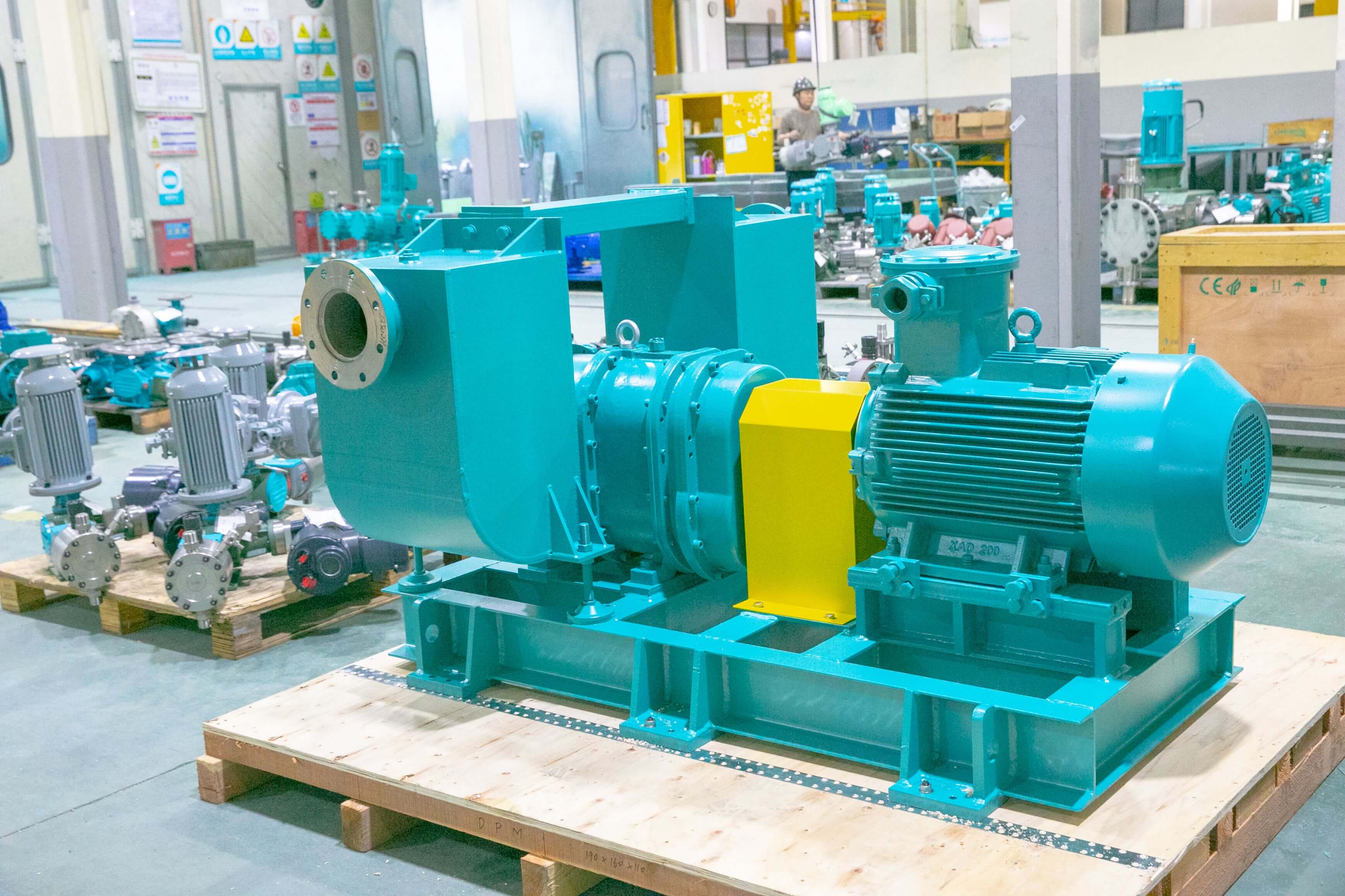
Reference for full text summary: The technological evolution direction of metal rotor pumps
With the advancement of Industry 4.0, metal rotary pumps are developing towards intelligence and modularity. Depam's newly developed intelligent monitoring system can collect 12 parameters, including vibration and temperature, in real time, enabling fault warnings (with an accuracy rate > 92%) through edge computing and reducing unplanned downtime by 60%. In the new energy sector, the company has developed a corrosion-resistant rotary pump for a lithium battery materials enterprise, utilizing PVDF wet etching technology to treat the pump chamber surface, extending the hydrofluoric acid transfer lifespan to over 2000 hours, reaching international advanced standards.
Since its establishment in 2003, Depamp has delivered over 12,000 metal rotary pumps in total and served more than 300 industry leaders, including Sinopec, PetroChina, and State Power Investment Corporation. In the future, the company will continue to deepen its technological breakthroughs under extreme conditions such as ultra-low temperatures and ultra-high pressures, providing more reliable solutions for global industrial fluid transportation.
Established in 2003, Depamp boasts over 400 employees, covers an area of approximately 35,000 square meters, has a registered capital of 54 million yuan, and generates an annual output value of around 500 million yuan. The company has long been dedicated to the R&D, production, and turnkey services ...
No. 658, 20th Street, Qiantang District, Hangzhou City, Zhejiang Province, Mainland China