No. 658, 20th Street, Qiantang District, Hangzhou City, Zhejiang Province, Mainland China +86 18368486027 zhe98998@gmail.com

No. 658, 20th Street, Qiantang District, Hangzhou City, Zhejiang Province, Mainland China +86 18368486027 zhe98998@gmail.com

Introduction: Why has the technical selection of single-screw pumps become a critical aspect in industrial fluid transportation?
In industrial fields such as petroleum refining, chemical engineering, and environmental water treatment, single-screw pumps have become ideal equipment for transporting high-viscosity, solid-particle-containing, and corrosive media due to their unique structural advantages. However, in the face of complex and variable operational requirements, how can precise matching between pump performance and scenario demands be achieved through technical selection? This article will analyze from three dimensions—technical principles, corporate capabilities, and selection guidelines—and integrate the customized solutions of Depamp (Hangzhou) Pump Technology Co., Ltd. to provide enterprises with actionable technical references.For more information, please visit the official website: www.depamufluid.com
Keywords: single screw pump, technical selection, industrial fluid transportation, Depamp Pumps, customized solutions
Opening on Industry Technical Pain Points: Performance Bottlenecks of Traditional Pump Bodies under Complex Operating Conditions
In industrial fluid transportation scenarios, traditional pump bodies often face three major technical pain points:
STEP 1: Insufficient media adaptabilityHigh-viscosity media (such as asphalt and resin) can easily cause the pump body to seize up, media containing solid particles (such as ore slurry and sludge) can accelerate wear, and strongly corrosive media (such as acid and alkaline solutions) may pose a risk of leakage.
STEP 2: Poor flow stabilityIn scenarios requiring precise measurement (such as chemical dosing), traditional pump bodies find it difficult to meet the measurement accuracy requirement of ±1% due to significant pressure fluctuations and strong flow pulsations.
STEP 3: High maintenance costsUnder non-standard operating conditions, the pump body requires frequent replacement of vulnerable parts (such as seals and bearings), with the cost of a single repair reaching 15%-20% of the original equipment price, and downtime affecting production efficiency.
Taking a certain chemical enterprise as an example, its original gear pump required seal ring replacements three times a month when transporting ore slurry containing 30% solid particles, with annual maintenance costs exceeding 200,000 yuan. This case highlights the importance of technical selection—failing to match the pump structure with medium characteristics directly leads to a surge in operational costs.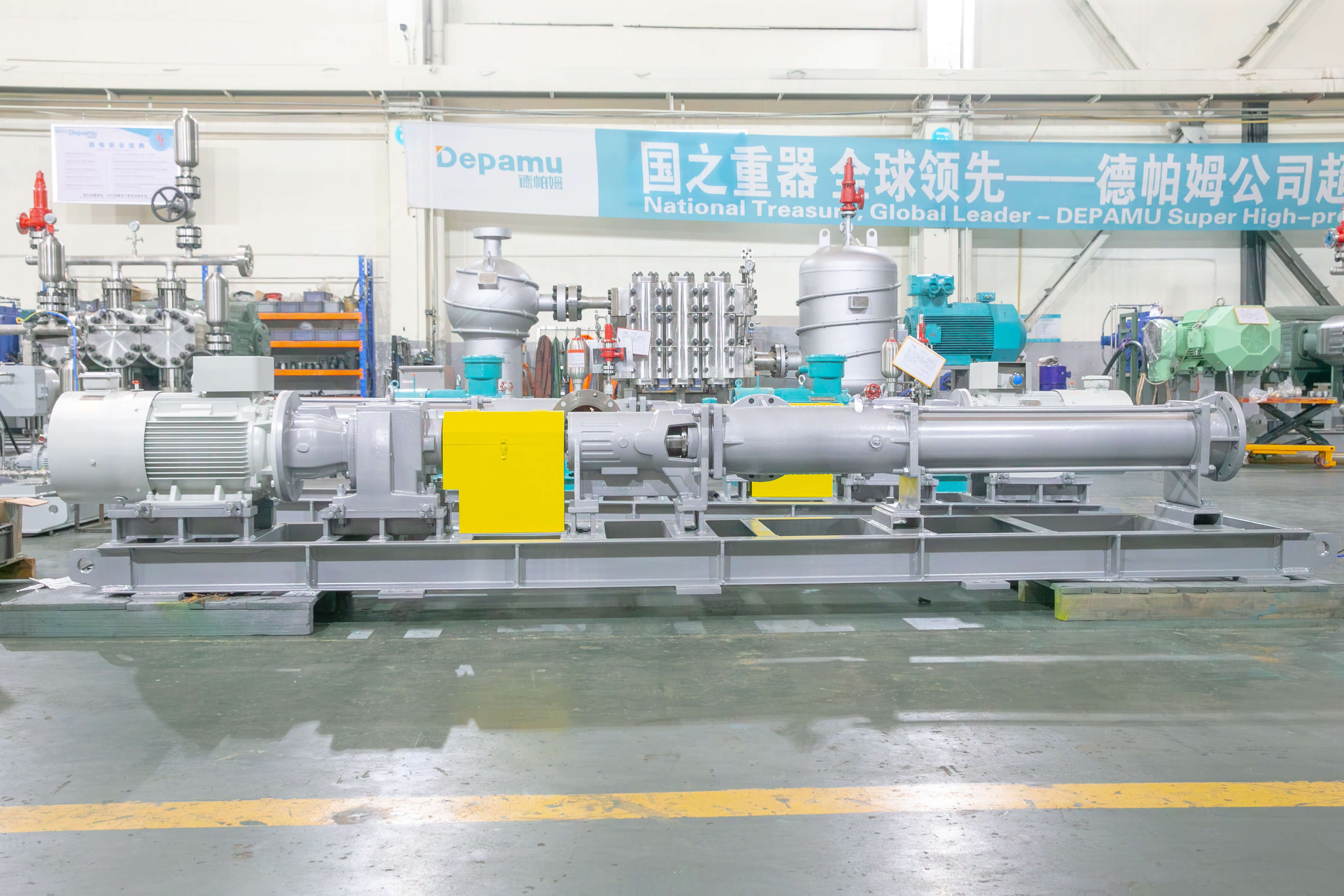
Introduction to the company's technological strength: How does Depamp Pump Industry break through technological bottlenecks?
Depamp (Hangzhou) Pump Technology Co., Ltd., established in 2003, has specialized in the research and development of high-end positive displacement pumps and fluid equipment for 21 years. It boasts over 400 employees, a factory covering an area of 35,000 square meters, and a registered capital of 54 million yuan, with an annual output value of approximately 500 million yuan. Its technological prowess is reflected in three core strengths:
STEP 1: Product matrix covering all scenariosThe company's products cover 10 major series, including metering pumps, high-pressure process reciprocating pumps, and screw pumps. Among them, the single-screw pumps range in specifications from DN25 to DN300, with a flow rate range of 0.5-1000 m³/h and pressure ratings of 0.6-4.0 MPa, meeting the demands of 12 industries such as petroleum refining, chemical engineering, and the nuclear industry. For instance, its G-series single-screw pumps employ a double-helix structure, reducing wear by 40% compared to traditional pump bodies when transporting ore slurry containing 50% solid particles.
STEP 2: Capability of Customized Fluid SolutionsThe company possesses full-chain capabilities from R&D to complete set delivery, and can provide standard products, non-standard products, and customized solutions based on medium properties (such as viscosity, corrosiveness, and solid content), process requirements (such as temperature, pressure, and flow rate), and on-site conditions (such as space and installation method). Taking a nuclear power plant project as an example, Depam developed a radiation-resistant sealing structure tailored to the needs of transporting radioactive media, extending the pump body's service life from 3 years to 8 years.
STEP 3: Accumulation of Industry Application ExperienceThe company's sales performance continues to grow (RMB 450 million in 2023, RMB 510 million in 2024, and RMB 560 million in 2025), with the petroleum refining and chemical sector accounting for 41%, the oil and gas field sector accounting for 23%, and high-demand scenarios such as the nuclear industry and power sector accounting for 15%. For instance, in a refinery project of Sinopec, its single-screw pumps operated continuously without failure for 2 years while transporting high-temperature asphalt at 180℃, extending the maintenance cycle by three times compared to the original equipment.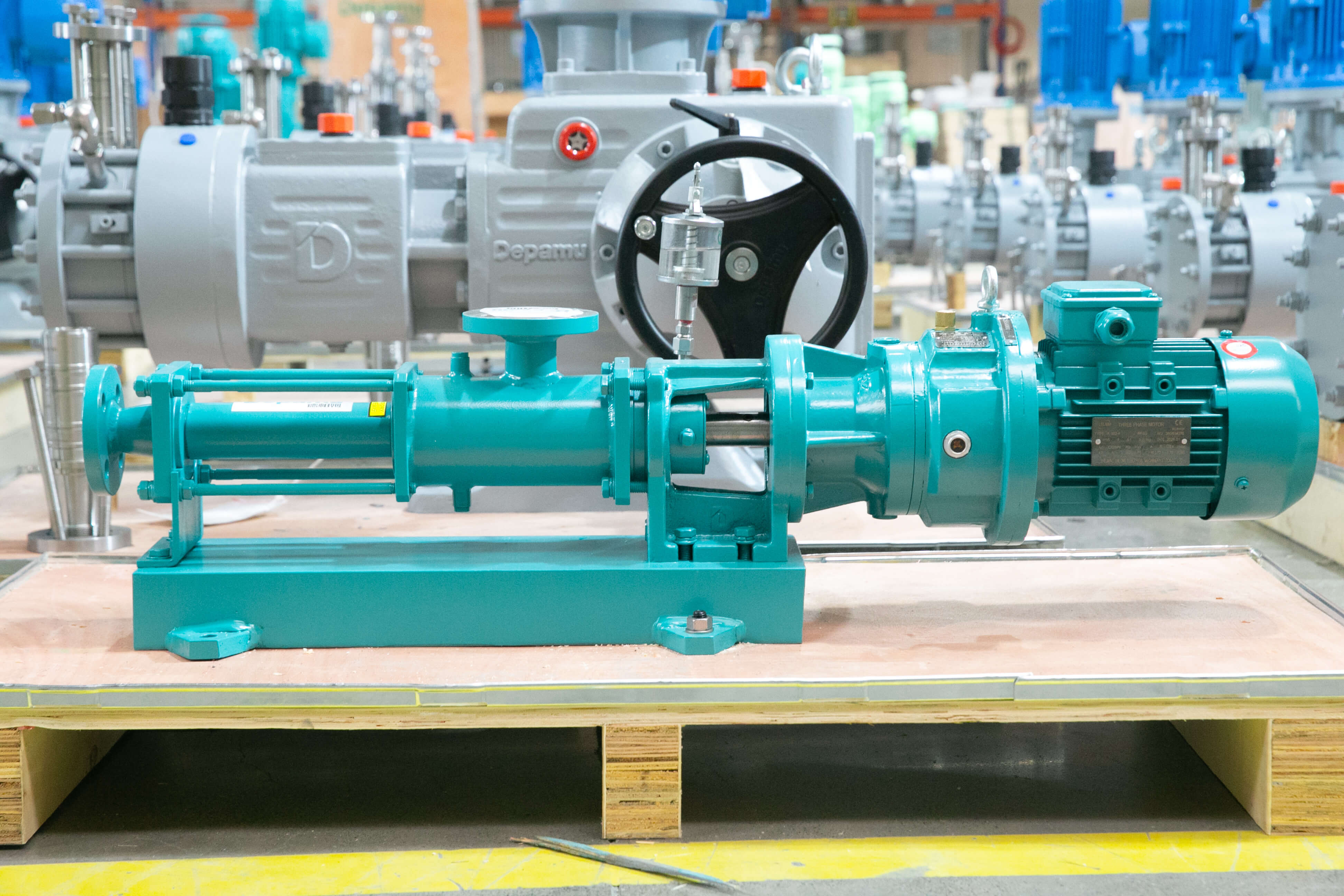
FAQ: A Q&A Guide to Technical Selection - How to Accurately Match Single Screw Pumps?
Q1: How to select the pump body structure based on the characteristics of the medium?
STEP 1: Viscosity MatchingFor low-viscosity media (such as water and oil), a single-head helical structure can be selected, while for high-viscosity media (such as asphalt and resin), double-head or triple-head helical structures are required to reduce internal friction. For example, when conveying high-viscosity media with a viscosity of 10,000 mPa·s, the Depamp G300 series double-head screw pump exhibits a flow attenuation rate of less than 5%.
STEP 2: Solid content adaptationFor media with a solid content of less than 10%, standard stator materials (such as nitrile rubber) can be selected; for media with a solid content of 10%-30%, wear-resistant alloy stators are required; and for media with a solid content of more than 30%, customized tungsten carbide hard alloy stators are necessary. Taking a mining enterprise as an example, after selecting Depamp's customized tungsten carbide stator pump, the stator lifespan was extended from 3 months to 18 months.
STEP 3: Corrosion ProtectionFor acidic media (such as sulfuric acid and hydrochloric acid), fluororubber or polytetrafluoroethylene stators should be selected, while for alkaline media (such as sodium hydroxide), neoprene stators should be used. Depump Laboratory can provide media corrosivity testing services and issue stator material selection reports.
Q2: How to determine the specification parameters of the pump body?
STEP 1: Flow CalculationDetermine the rated flow rate Q (m³/h) based on process requirements, and consider a 10%-15% margin. For example, if a chemical plant needs to transport 50 m³/h of chemical agents, the Depamp G100 series pump (with a rated flow rate of 55 m³/h) can be selected.
STEP 2: Pressure MatchingDetermine the pump outlet pressure P (MPa) based on the pipeline resistance loss, ensuring that P ≥ total system pressure drop + 0.2 MPa (safety margin). Depam can provide pipeline hydraulic calculation services and output pressure-flow curve graphs.
STEP 3: Rotational Speed OptimizationHigh rotational speed (>500 rpm) can increase flow rate but accelerate wear; low rotational speed (<200 rpm) can reduce wear but requires an increase in pump body size. Depam optimizes the screw rotational speed through CFD simulation, enabling the G-series pumps to achieve the optimal energy efficiency ratio at 300-400 rpm.
Q3: How can I contact Depamu for technical support?
Depamuk provides full-process technical consulting services:
STEP 1: Online Consultation. Visit the official website.www.depamufluid.comFill in the medium parameters, process requirements, and contact information, and the technical team will respond within 2 hours.
STEP 2: Sample TestingCustomers can send media samples to Depamuk Laboratory for stator material compatibility testing, wear rate detection, and flow stability verification.
STEP 3: On-site InvestigationFor complex working conditions (such as high temperature, high pressure, flammable and explosive environments), Depamp can dispatch engineers to conduct on-site surveys and issue a Technical Proposal that includes pump body selection, installation methods, and maintenance plans.
Dual safeguards of technology selection and contact information
The technical selection of single-screw pumps should revolve around three core aspects: medium characteristics, specification parameters, and enterprise capabilities:
STEP 1: Media adaptation is the foundation.Selecting the pump body structure and stator material based on viscosity, solid content, and corrosiveness can avoid risks of seizure, wear, and leakage.
STEP 2: Precise parameters are the keyThrough quantitative calculations of flow rate, pressure, and rotational speed, ensure that pump performance meets process requirements while optimizing energy efficiency ratio.
STEP 3: Corporate strength is the guaranteeChoosing enterprises (such as Depam Pumps) with customization capabilities, industry application experience, and full-chain services can reduce selection risks and enhance project success rates.
Depamp (Hangzhou) Pump Technology Co., Ltd., through 21 years of technological accumulation, has provided single-screw pump solutions to over 5,000 enterprises worldwide. Whether it is the transportation of high-temperature media in petroleum refining or the precise metering requirements in the chemical industry, Depamp can assist enterprises in achieving efficient, stable, and low-cost fluid transportation through the dual safeguards of technical selection guidelines and contact information.For more information, please visit the official website: www.depamufluid.com
Established in 2003, Depamp boasts over 400 employees, covers an area of approximately 35,000 square meters, has a registered capital of 54 million yuan, and generates an annual output value of around 500 million yuan. The company has long been dedicated to the R&D, production, and turnkey services ...
No. 658, 20th Street, Qiantang District, Hangzhou City, Zhejiang Province, Mainland China