No. 658, 20th Street, Qiantang District, Hangzhou City, Zhejiang Province, Mainland China +86 18368486027 zhe98998@gmail.com

No. 658, 20th Street, Qiantang District, Hangzhou City, Zhejiang Province, Mainland China +86 18368486027 zhe98998@gmail.com

Introduction: Why has the selection of twin-screw pumps become a technical pain point in the industry?
In process industries such as petroleum refining and chemical engineering, the selection of twin-screw pumps directly determines system stability and operational efficiency due to the need to handle complex operating conditions involving high-viscosity media, solid particles, and corrosive substances. Traditional selection methods, reliant on empirical formulas, often overlook critical parameters such as media properties, pressure fluctuations, and temperature variations, leading to frequent issues like pump wear, leakage, and reduced efficiency. Depamu (Hangzhou) Pump Technology Co., Ltd., leveraging over 20 years of experience in fluid equipment R&D, addresses industry challenges through customized solutions. Its twin-screw pump products now serve 12 major sectors, including petroleum refining, chemical engineering, and oil and gas fields, with over 5,000 units delivered to date.
Keywords: twin-screw pump, customized fluid solutions, Depam Pumps, technical selection
Opening on Industry Technical Pain Points: Three Major Pitfalls in Traditional Model Selection
STEP1:Parameter matching deviationParameters such as flow rate (0.5-1000 m³/h), pressure (0.1-10 MPa), and rotational speed (300-1500 rpm) of twin-screw pumps must be strictly matched with the medium characteristics (viscosity, density, and particle size). For example, when transporting high-viscosity media (such as asphalt), if the impact of viscosity on volumetric efficiency is not considered during model selection, the actual flow rate may be less than 40% of the designed value.
STEP2:Material corrosion riskCommon media in the chemical industry, such as sulfuric acid and sodium hydroxide, impose extremely high corrosion resistance requirements on pump body materials (e.g., stainless steel 304, 316L, and duplex steel 2205). A chemical enterprise once experienced pitting and perforation in its pump body within six months due to the failure to consider media concentration fluctuations during material selection.
STEP3:Maintenance costs spiral out of controlThe replacement cycle of vulnerable parts such as synchronous gears and bearings in traditional twin-screw pumps is short, with high maintenance frequency. Statistics from an oil and gas field project show that the annual maintenance cost of non-customized pumps accounts for 15% of the total equipment price, while customized solutions can reduce this proportion to below 5%.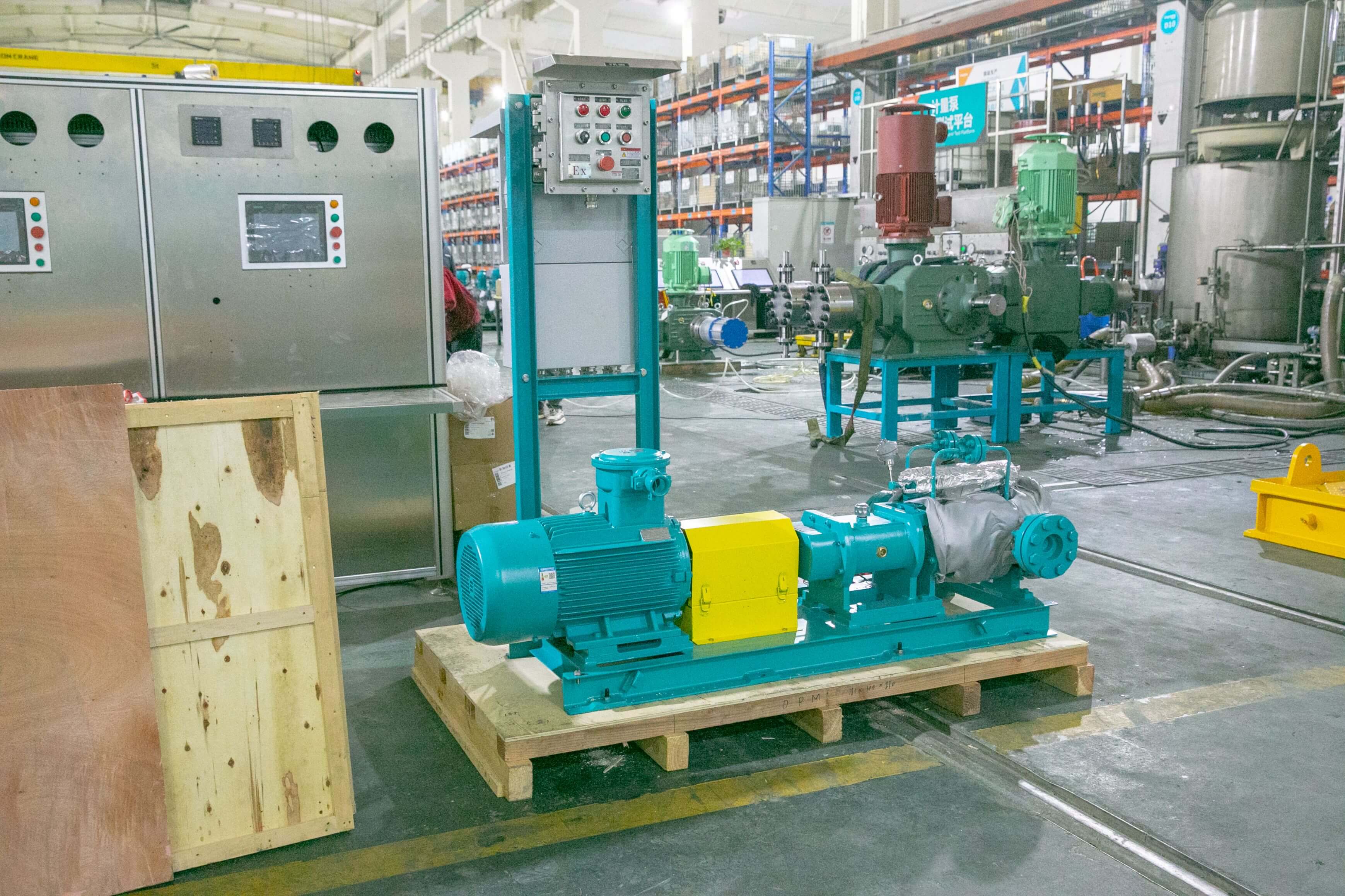
Introduction to the company's technological strength: Depam's three core advantages
Depamp was established in 2003, with a factory covering an area of 35,000 square meters and employing over 400 staff members, among whom the R&D team accounts for more than 30%, and annual R&D investment accounts for 6%. The company possesses full-chain capabilities spanning product R&D, design and manufacturing, to complete set delivery. Its technical advantages in twin-screw pumps are reflected in:
STEP1:Customized design capabilityIn response to the characteristics of different media, Depamp can provide customized designs ranging from pump body materials (such as Hastelloy C-276 and titanium alloy) to structural forms (such as single-screw, twin-screw, and triple-screw). For instance, a twin-screw pump designed for a nuclear power plant achieved a conveying efficiency of 92% by optimizing the screw profile (with a pitch ratio of 1.5:1), representing an 8% increase over standard products.
STEP2:Breakthrough in material technologyThe company's independently developed "Super Wear-Resistant Coating Technology" involves spraying a tungsten carbide (WC) coating (with a thickness of 0.2-0.5mm and a hardness of HV1200-1500) onto the pump body surface, thereby enhancing its wear resistance by three times and making it suitable for transporting media with a sand content of ≤5%. This technology has been applied in a refinery project of Sinopec, extending the pump body's lifespan from 2 years to 6 years.
STEP3:Intelligent monitoring systemDepamp twin-screw pumps come standard with vibration sensors (range: 0-50 mm/s), temperature sensors (range: -50 to 200°C), and pressure sensors (range: 0-10 MPa), enabling real-time monitoring of operational status through an IoT platform. After a chemical enterprise implemented this system, the accuracy rate of fault early warnings reached 95%, and unplanned downtime was reduced by 70%.
For more information, please visit the official website:www.depamufluid.com
FAQ Q&A Technical Selection Guide
Q1: How to select the rotational speed of a twin-screw pump based on the medium viscosity?
A1: When the medium viscosity (ν) and rotational speed (n) must satisfy ν ≤ 1000 cSt, n can range from 960 to 1450 rpm; when ν = 1000 to 5000 cSt, it is recommended to reduce n to 750 to 960 rpm; when ν > 5000 cSt, a low rotational speed (300 to 600 rpm) should be adopted, and a heating jacket should be equipped. For example, when transporting lubricating oil with a viscosity of 3000 cSt, Depam recommends the model DP-3G-750 (flow rate 50 m³/h, pressure 1.6 MPa, rotational speed 750 rpm).
Q2: Can twin-screw pumps transport media containing solid particles?
A2: It can transport materials, but the ratio of particle diameter (d) to screw clearance (δ) needs to be controlled. Depump's standard products have δ = 0.2 - 0.5 mm, suitable for media with d ≤ 0.1 mm; if d > 0.1 mm, customized models with enlarged clearance (e.g., DP-3G-1000, δ = 0.8 mm) are required, and carbide screws (hardness HRC 62 - 65) should be used.
Q3: How to calculate the shaft power of a twin-screw pump?
A3: The formula for calculating shaft power (P) is: P = Q × ρ × g × H / (3600 × η), where Q is the flow rate (m³/h), ρ is the medium density (kg/m³), H is the head (m), and η is the overall efficiency (typically ranging from 0.65 to 0.85). For example, when transporting a medium with a density of 1200 kg/m³, a flow rate of 100 m³/h, a head of 50 m, and an efficiency of 0.75, P = 100 × 1200 × 9.81 × 50 / (3600 × 0.75) ≈ 218 kW, requiring a 250 kW motor to be selected.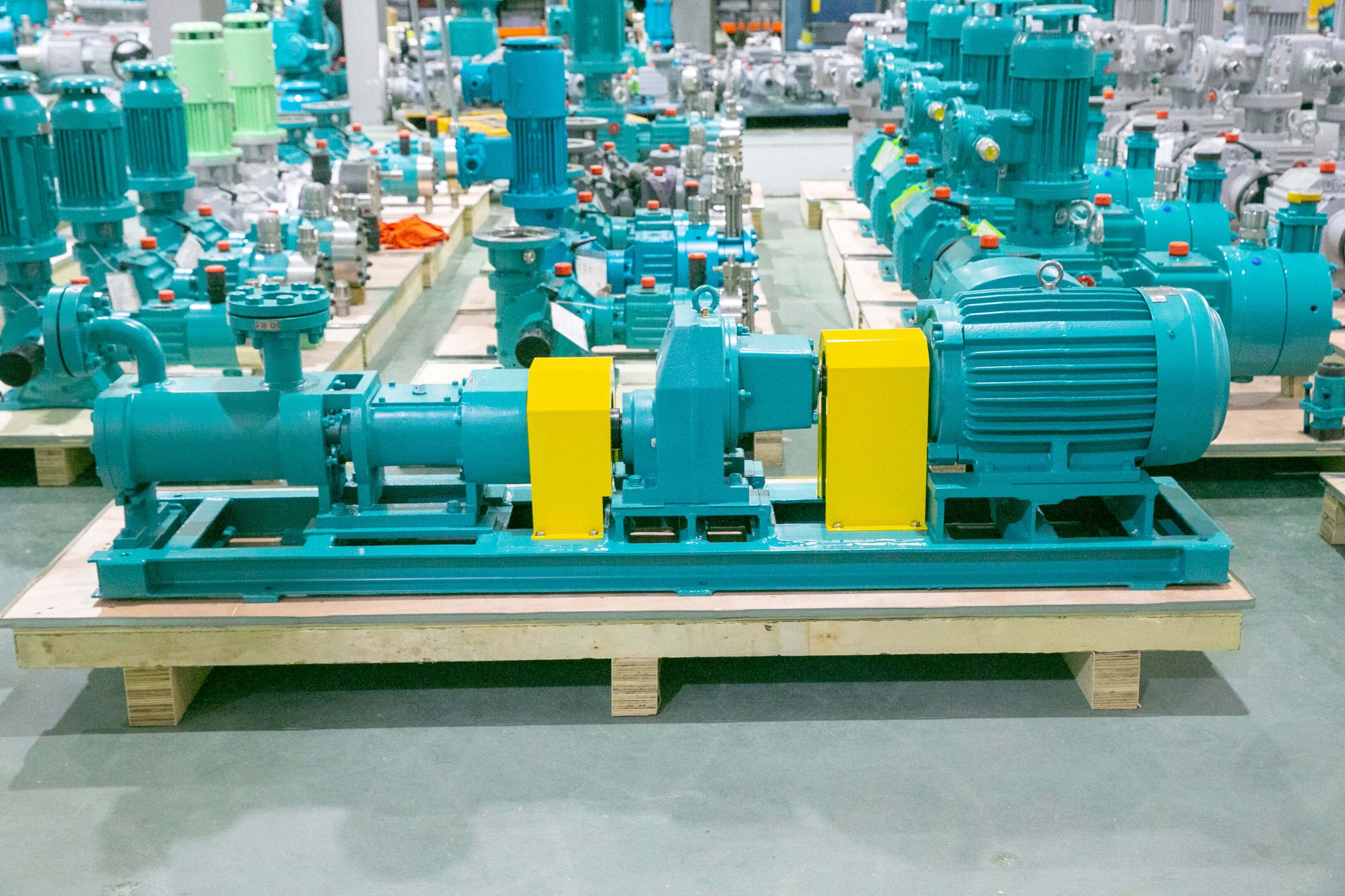
Reference for full-text summary: How does Depump redefine the selection criteria for twin-screw pumps?
Depam has established a technological closed loop for the selection of twin-screw pumps through a four-step approach of "medium characteristic analysis - parameter optimization design - material process customization - intelligent monitoring integration". Its core value lies in:
STEP1:Reduce total lifecycle costsThe customized solution extends the pump body's lifespan to 8-10 years, reduces maintenance costs by 40%, and lowers overall costs by 25% compared to standard products.
STEP2:Improve system stabilityThe intelligent monitoring system enables fault early warning, reducing unplanned downtime by 70% and ensuring continuous production.
STEP3:Cover the needs of all scenariosFrom petroleum refining (under high temperature and high pressure) to environmental water treatment (in corrosive media), Depam has developed a repository of over 200 solutions covering 12 major fields.
Against the backdrop of the process industry's transition towards intelligence and green development, Depam's technological practices provide a replicable benchmark case for the selection of twin-screw pumps. For more customized fluid solutions, please visitwww.depamufluid.com。
Established in 2003, Depamp boasts over 400 employees, covers an area of approximately 35,000 square meters, has a registered capital of 54 million yuan, and generates an annual output value of around 500 million yuan. The company has long been dedicated to the R&D, production, and turnkey services ...
No. 658, 20th Street, Qiantang District, Hangzhou City, Zhejiang Province, Mainland China