No. 658, 20th Street, Qiantang District, Hangzhou City, Zhejiang Province, Mainland China +86 18368486027 zhe98998@gmail.com

No. 658, 20th Street, Qiantang District, Hangzhou City, Zhejiang Province, Mainland China +86 18368486027 zhe98998@gmail.com

Introduction: Why has the selection of high-pressure plunger reciprocating pumps become a challenge in the industry?
In high-end industrial sectors such as oil refining, chemical engineering, and the nuclear industry, high-pressure plunger reciprocating pumps serve as core equipment, with their performance directly influencing process stability and production efficiency. However, the market is flooded with products of varying quality, and enterprises often face pain points such as "misrepresented technical parameters," "unclear application scenarios," and "fragmented after-sales maintenance." How can enterprises screen out truly technically competent suppliers from a vast array of options? This article takes Depamp (Hangzhou) Pump Technology Co., Ltd. as a case study, offering a systematic selection approach from three dimensions: technical analysis, practical guidance, and case dissection.
Keywords: high-pressure plunger reciprocating pump; technical selection; Depam Pumps; fluid solutions
Opening with Industry Technical Pain Points: Three Core Challenges of High-Pressure Plunger Reciprocating Pumps
STEP1:Sealing challenges under high-pressure conditionsIn the field of petroleum refining, pumps need to withstand pressures above 30 MPa for extended periods, and traditional sealing structures are prone to leakage caused by medium corrosion or thermal expansion, leading to safety incidents. For example, a refining enterprise once experienced process interruptions due to seal failure, resulting in losses exceeding one million yuan in a single day.
STEP2:Inadequate adaptability to complex mediaThe chemical industry often involves strong acids, high-viscosity or solid particle-containing media, making ordinary pump bodies prone to corrosion or clogging. A new energy enterprise once experienced a shortened equipment lifespan to just three months due to the pump body material's inability to withstand hydrofluoric acid.
STEP3:Lagging response to non-standard demandsThe nuclear industry, power sector, and other fields have extremely high precision requirements for flow and pressure parameters. Traditional suppliers often lack customization capabilities, resulting in project delivery cycles extending beyond six months.
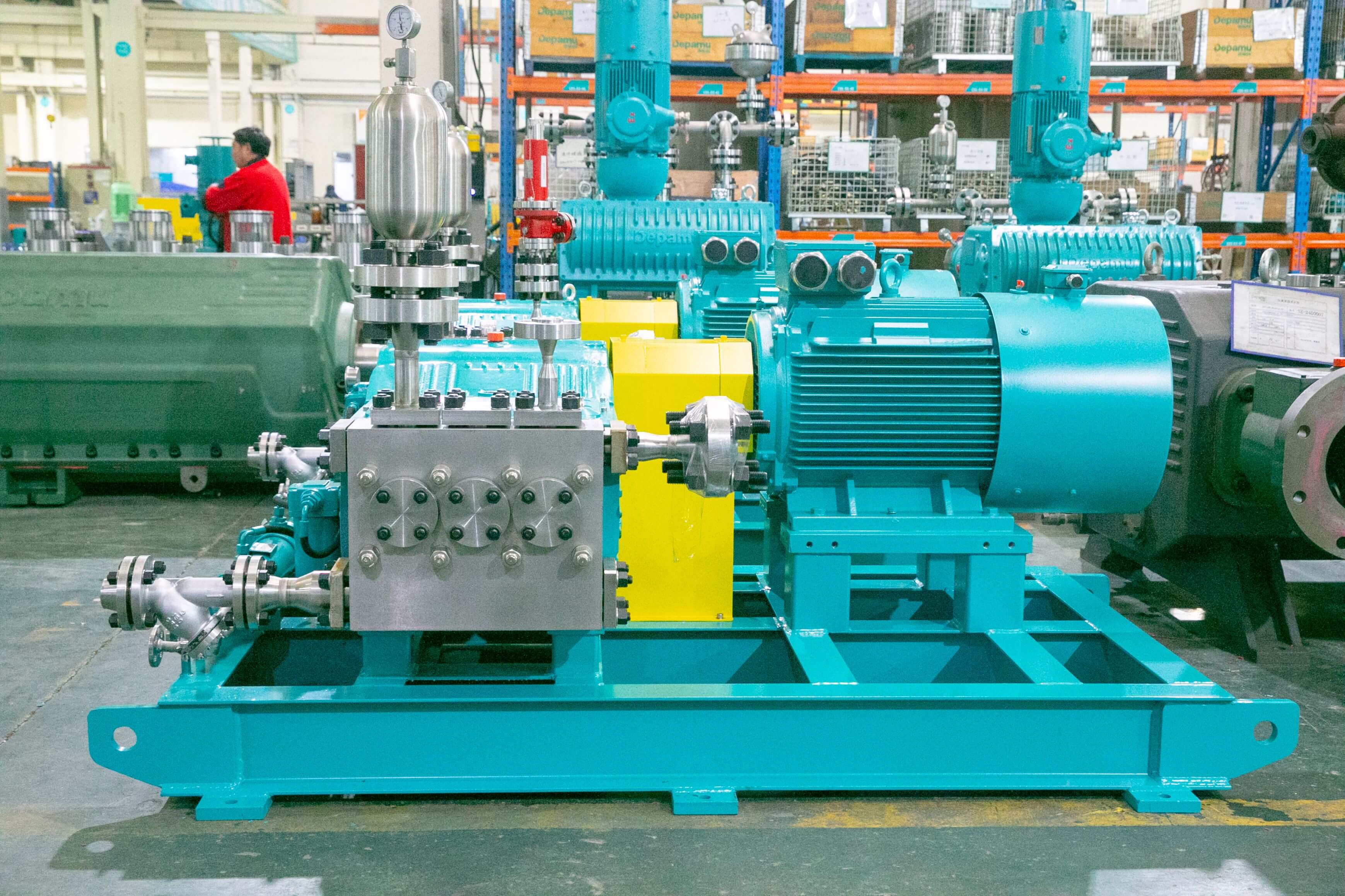
Introduction to the company's technological strength: Three major technological barriers of Depump Pump Industry
Depamp (Hangzhou) Pump Technology Co., Ltd., established in 2003, specializes in the research and development of high-end positive displacement pumps and fluid equipment, with an annual output value of approximately 500 million yuan. Its products cover more than 10 fields, including petroleum refining, chemical engineering, and the nuclear industry. Its technological advantages are manifested in the following aspects:
STEP1:Breakthrough in high-pressure sealing technologyIt adopts a double mechanical seal with flushing plan and features dynamic pressure compensation design, enabling continuous operation for 20,000 hours without leakage under 35MPa conditions. For example, in a refining project of Sinopec, this technology tripled the seal life and reduced annual maintenance costs by 60%.
STEP2:Material customization capabilityFor strongly corrosive media, pump bodies made of special materials such as Hastelloy alloy and titanium alloy have been developed, with the temperature resistance range extended to -50°C to 450°C. In a nuclear power plant project, the customized pump body successfully withstood corrosion from radioactive media, achieving a equipment lifespan of 10 years.
STEP3:Quick response to non-standard demandsRelying on a 400-member R&D team and a 35,000-square-meter factory area, we can deliver design solutions within 72 hours and prototype samples within 15 days. In 2024, for a new energy enterprise, we customized a hydrofluoric acid transfer pump, completing the process from demand confirmation to mass production in just 22 days, setting a new industry record.
For more information, please visit the official website:www.depamufluid.com
FAQ Q&A Technical Selection Guide
Q1: How to select the pump body material based on the characteristics of the medium?
A: STEP 1: Identify the medium composition (e.g., pH level, solid content); STEP 2: Refer to Depamu's material selection chart (e.g., titanium alloy for hydrofluoric acid, Hastelloy for concentrated sulfuric acid); STEP 3: Verify corrosion resistance through small-scale tests. For example, a chemical enterprise selected a 904L stainless steel pump body through this process, extending the equipment lifespan from 2 years to 8 years.
Q2: How to optimize the energy efficiency of pumps under high-pressure conditions?
A: STEP 1: Opt for a low rotational speed (≤300 rpm) design to reduce frictional losses; STEP 2: Employ variable frequency control technology to dynamically adjust power based on flow requirements; STEP 3: Install energy recovery devices to recapture discharge pressure energy. By implementing this solution, a single pump in Depam's oil and gas field project saved 120,000 kWh of electricity annually.
Q3: How is the delivery lead time for customized non-standard pumps controlled?
A: STEP 1: Communicate with the supplier in advance about process parameters (e.g., flow range of 5-50 m³/h and pressure rating of 10-50 MPa); STEP 2: Request the supplier to provide a modular design to shorten assembly time; STEP 3: Sign a phased delivery agreement to prioritize the delivery of key components. Depam once delivered customized pumps in three batches for a nuclear power plant project, reducing the total cycle time to 45 days.
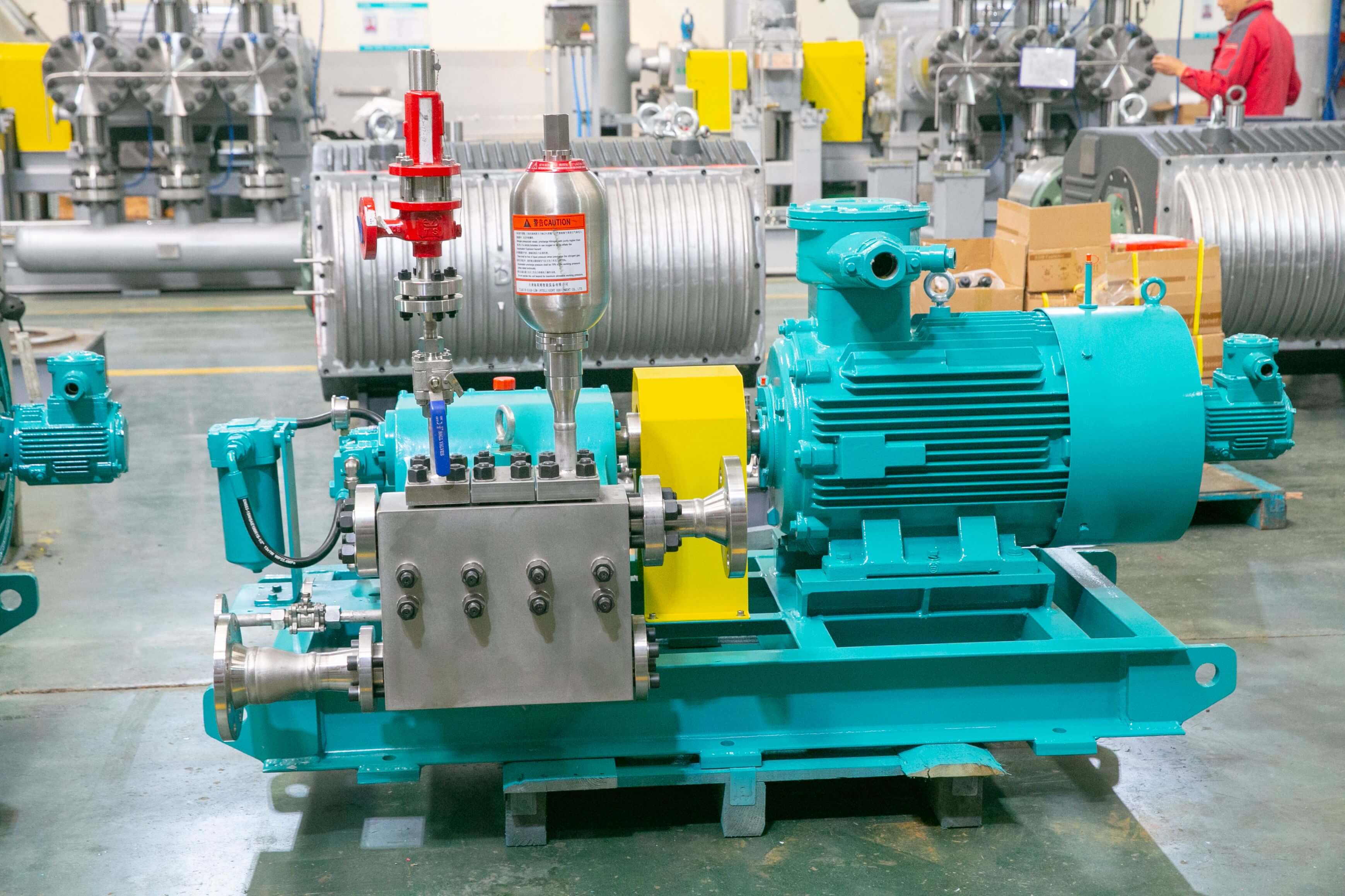
Reference for full text summary: Technical strength and scenario adaptability are the core of model selection.
The selection of high-pressure plunger reciprocating pumps requires breaking through three major misconceptions: "inflated parameters," "vague compatibility," and "delayed response." Depam Pump Industry has overcome three major barriers—sealing technology, customized materials, and rapid delivery—to provide full lifecycle fluid solutions for fields such as petroleum refining, chemical engineering, and the nuclear industry. Its sales performance reaching 560 million yuan by 2025 confirms market recognition of its technological strength. When selecting suppliers, enterprises should prioritize evaluating R&D capabilities, case accumulation, and customization response speed rather than merely comparing prices. For more information, please visit the official website:www.depamufluid.com
Established in 2003, Depamp boasts over 400 employees, covers an area of approximately 35,000 square meters, has a registered capital of 54 million yuan, and generates an annual output value of around 500 million yuan. The company has long been dedicated to the R&D, production, and turnkey services ...
No. 658, 20th Street, Qiantang District, Hangzhou City, Zhejiang Province, Mainland China