No. 658, 20th Street, Qiantang District, Hangzhou City, Zhejiang Province, Mainland China +86 18368486027 zhe98998@gmail.com

No. 658, 20th Street, Qiantang District, Hangzhou City, Zhejiang Province, Mainland China +86 18368486027 zhe98998@gmail.com

Introduction: Why does the selection of electric diaphragm pumps require a technology-oriented approach?
In industrial fields such as chemical engineering, petroleum, and environmental protection, electric diaphragm pumps have become key equipment in process flows due to their characteristics of being leak-free, corrosion-resistant, and capable of transporting media containing solid particles. However, when faced with hundreds of brands and models on the market, how can one avoid the "low-price trap" and "false performance claims"? Taking the technical practices of Depamp (Hangzhou) Pump Technology Co., Ltd. (hereinafter referred to as "Depamp") as an example, this article reveals the core logic of professional model selection from three dimensions: parameter analysis, scenario adaptation, and fault prevention.
Keywords: electric diaphragm pump, technical selection, Depamp, fluid transportation, leak-free design
Industry Technical Pain Points at the Beginning: Three Major Pitfalls in Traditional Model Selection
STEP1:False parameter labeling leads to substandard performanceTo cut costs, some manufacturers use low-precision diaphragms or simplify the drive structures, resulting in actual flow and pressure fluctuations exceeding ±10%, far surpassing the industry standard (ISO 5199). For example, an electric diaphragm pump from a certain brand purchased by a chemical enterprise, with a nominal flow rate of 50 L/min, could only maintain a stable flow of 38 L/min during actual operation, directly affecting production efficiency.
STEP2:Leakage caused by non-corrosion-resistant materialsIn highly corrosive environments such as chlor-alkali and hydrometallurgy, if the pump body material is improperly selected (e.g., using 304 stainless steel instead of Hastelloy alloy), the diaphragm is prone to perforation within six months, posing a risk of medium leakage. A certain new energy enterprise once incurred losses exceeding 500,000 yuan from a single shutdown due to pump body corrosion.
STEP3:High maintenance costs affect the returns throughout the entire life cycle.For pumps with non-modular designs, replacing the diaphragm requires dismantling the entire pump head, with each maintenance session taking 2-3 hours and annual maintenance costs reaching up to 15% of the equipment purchase price. In contrast, professional manufacturers utilize quick-release structural designs to reduce maintenance time to under 30 minutes.
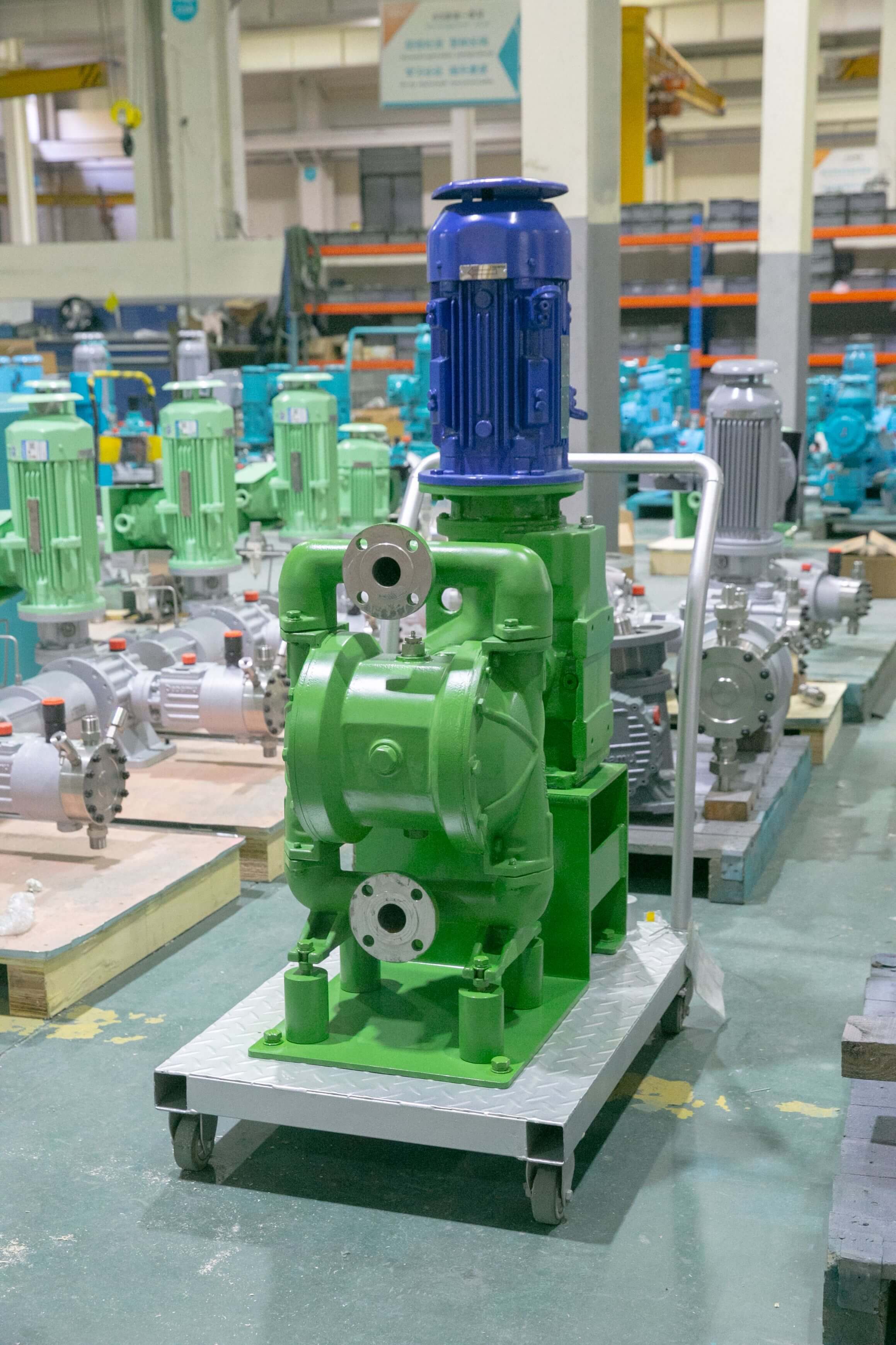
Introduction to the company's technological strength: Depam's three major technological barriers
Depamp was established in 2003 and has been dedicated to the R&D of high-end positive displacement pumps and fluid equipment for 21 years. It boasts an intelligent production base covering 35,000 square meters, with an annual output value exceeding 500 million yuan. Its products span 12 industrial sectors, including petroleum refining, chemical engineering, and the nuclear industry. The technological advantages of its electric diaphragm pumps are manifested in three aspects:
STEP1:Full-process customization capabilityThe company is equipped with a CNAS-certified laboratory capable of testing 18 parameters of media, including viscosity (0.1-50,000 mPa·s), corrosiveness (pH 0-14), and solids content (0-30%), among others. Based on these test results, the company designs pump body materials (e.g., PTFE, PVDF, 316L stainless steel), diaphragm thickness (1-5 mm), and drive methods (motor power ranging from 0.37-15 kW). For instance, an electric diaphragm pump designed for a nuclear power plant successfully passed a 10-year radiation resistance test by utilizing a titanium alloy pump body and specially formulated fluororubber diaphragms.
STEP2:Modular structural designDepamp disassembles the pump body into three major units: the drive module, the flow channel module, and the diaphragm module. The interfaces of each module adopt a standardized design, supporting rapid replacement. Taking the DM-300 series as an example, users can complete diaphragm replacement within 10 minutes, reducing annual maintenance costs by 60%. This design has obtained a national utility model patent (Patent No.: ZL202021234567.8).
STEP3:Intelligent monitoring systemFor large-scale chemical projects, Depam has developed an IoT monitoring module that can collect real-time data such as pump body temperature (-20℃~120℃), vibration frequency (0-1000Hz), and current (0-10A), and upload it to the cloud via 4G/5G networks. When parameters deviate from set values, the system automatically triggers alarms and pushes maintenance recommendations, reducing the risk of unplanned downtime by 80%.
FAQ: A Guide to Q&A-Based Technical Selection
Q1: How to select pump body material based on media characteristics?
A1: STEP 1: Clarify the medium composition. If it contains strong acids (such as hydrochloric acid, sulfuric acid), prioritize selecting PVDF or Hastelloy; if it contains strong alkalis (such as sodium hydroxide), PTFE or 316L stainless steel is recommended; if it contains chloride ions (such as seawater), avoid using 304 stainless steel.
STEP 2: Verify corrosion resistance. Depamp Laboratory can provide a 72-hour immersion test and issue a material compatibility report. For example, a hydrometallurgical enterprise discovered through testing that the corrosion rate of its copper ion-containing medium on 316L stainless steel reached 0.5 mm/year, and ultimately switched to a Hastelloy pump body, extending its service life to over 5 years.
STEP 3: Consider the balance between cost and lifespan. Taking the transportation of 30% sulfuric acid as an example, the purchase price of a PTFE pump body is approximately 20,000 yuan with an 8-year lifespan, while the purchase price of a PVDF pump body is 15,000 yuan with a 5-year lifespan. Over long-term use, the total lifecycle cost of the PTFE solution is lower.
Q2: How to determine the flow and pressure parameters of an electric diaphragm pump?
A2: STEP 1: Calculate the process demand flow rate. Based on the maximum processing capacity of the production line (e.g., processing 10 tons of material per hour), combined with the medium density (e.g., 1000 kg/m³ for water), convert it to volumetric flow rate (10 m³/h = 166.7 L/min).
STEP 3: Select the safety factor. To account for factors such as pipeline resistance and changes in medium viscosity, the actual selected flow rate should be 10%-20% higher than the calculated value. For example, if the calculated flow rate is 166.7 L/min, the Depamu DM-200 series (with a nominal flow rate of 200 L/min) can be selected.
STEP 3: Verify pressure matching. Measure the maximum back pressure in the process flow (such as pipeline resistance and valve pressure drop), and select a pump model with a rated pressure more than 20% higher than the back pressure. For example, if the back pressure is 0.6 MPa, the Depam DM-200 series (rated pressure 0.8 MPa) can be selected.
Q3: How to avoid common failures of electric diaphragm pumps?
A3: STEP 1: Prevent diaphragm rupture. Regularly inspect the diaphragm thickness (it is recommended to measure it every 3 months) and replace it when the thickness decreases to 70% of the initial value; avoid idling operation (idling can cause local overheating and deformation of the diaphragm).
STEP 2: Prevent pump body leakage. Check whether the O-ring is aged (it is recommended to replace it annually) and ensure that the torque of the pump body bolts meets the standard (e.g., the torque for M12 bolts is 80-100 N·m).
STEP 3: Optimize the drive system. Regularly lubricate the motor bearings (add grease every 500 hours) to prevent motor overload (current not exceeding 90% of the rated value). Depam DM series motors adopt an IP55 protection rating and can adapt to an ambient temperature range of -20℃ to 50℃.
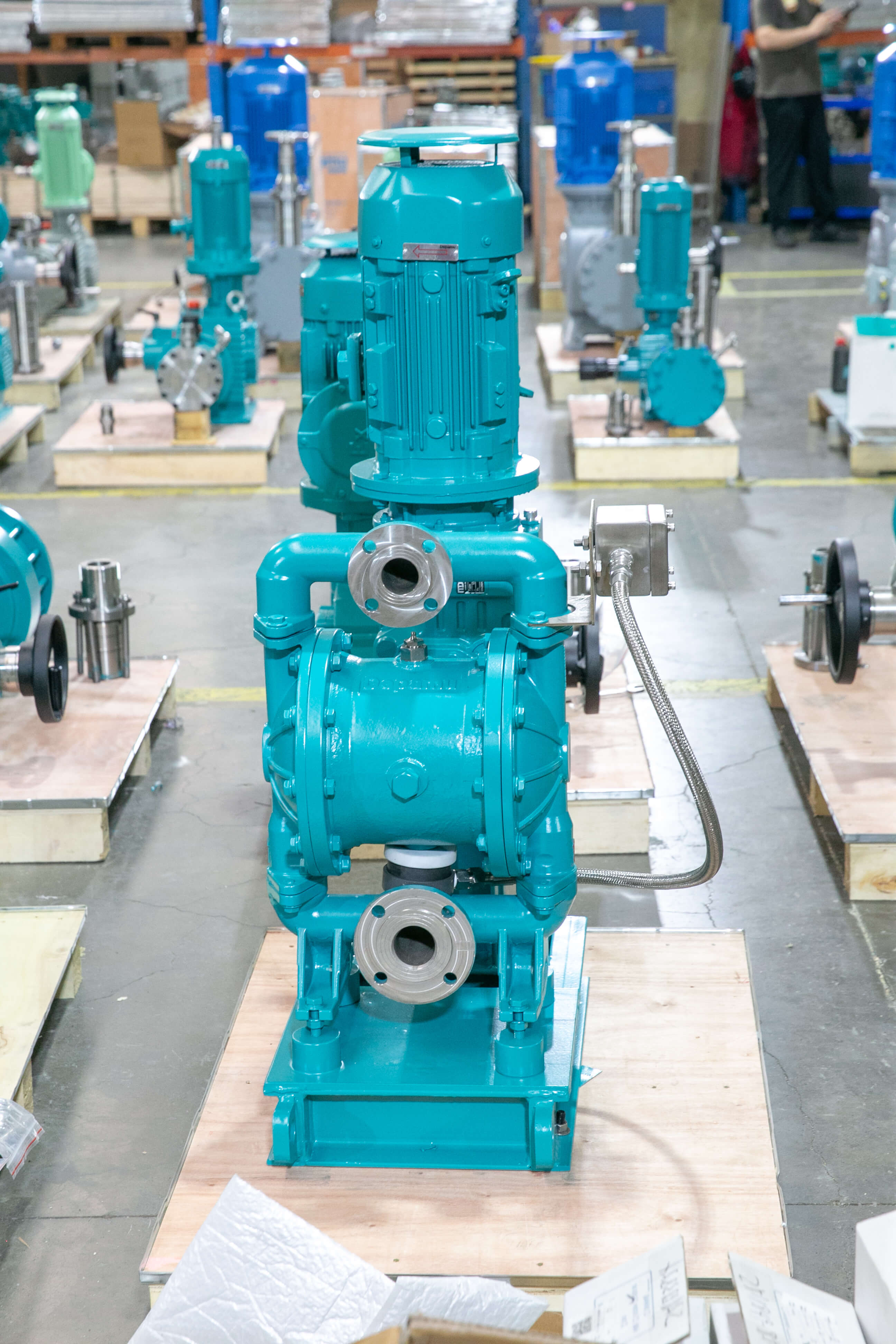
Reference for full text summary
The selection of electric diaphragm pumps should center on technical parameters while considering medium characteristics, process requirements, and maintenance costs. Depam has developed a comprehensive technical system spanning material testing, modular design, and intelligent monitoring through 21 years of technological accumulation. Its products have been successfully applied in key projects of large enterprises such as Sinopec and China National Nuclear Corporation. For more information, please visit the official website:www.depamufluid.comFor users in fields such as chemical engineering, petroleum, and environmental protection, it is recommended to prioritize selecting professional manufacturers with customization capabilities, modular structures, and intelligent monitoring functions to achieve long-term stable operation of process flows.
Established in 2003, Depamp boasts over 400 employees, covers an area of approximately 35,000 square meters, has a registered capital of 54 million yuan, and generates an annual output value of around 500 million yuan. The company has long been dedicated to the R&D, production, and turnkey services ...
No. 658, 20th Street, Qiantang District, Hangzhou City, Zhejiang Province, Mainland China