No. 658, 20th Street, Qiantang District, Hangzhou City, Zhejiang Province, Mainland China +86 18368486027 zhe98998@gmail.com

No. 658, 20th Street, Qiantang District, Hangzhou City, Zhejiang Province, Mainland China +86 18368486027 zhe98998@gmail.com

Introduction: Why has the selection of high-pressure process tubular pumps become a technical challenge in the industry?
In high-pressure process scenarios such as oil refining, chemical engineering, and the nuclear industry, tubular pumps, as core fluid equipment, directly determine system stability and production efficiency with their performance. However, the market products vary greatly in quality, and enterprises often face challenges such as "difficulty in selection, poor adaptability, and high maintenance costs." This article takes Depamu (Hangzhou) Pump Technology Co., Ltd. as a case study to systematically address key issues in the selection of high-pressure process tubular pumps from three aspects: technical principles, parameter analysis, and application scenarios.
Keywords: high-pressure process tubular pump, technical selection, Depam Pumps, fluid equipment, industry pain points
Opening on Industry Technical Pain Points: Three Core Challenges in Selecting High-Pressure Tubular Pumps
STEP1:Insufficient media adaptabilityIn high-pressure processes, the medium may include corrosive liquids, high-viscosity fluids, or slurries containing solid particles. Traditional pump bodies are prone to leakage due to material corrosion resistance issues or seal failures, which can even lead to safety accidents. For example, a chemical enterprise once experienced severe corrosion in its equipment after just three months of operation due to improper material selection for the pump body, resulting in direct losses exceeding 2 million yuan.
STEP2:Difficulty in matching pressure with flow rateHigh-pressure scenarios impose extremely high requirements on the pump's output pressure (typically needing to reach 10-100 MPa) and flow stability (with an error requirement of ≤ ±1%). However, due to design flaws, some products on the market are prone to flow fluctuations under high-pressure conditions, affecting process precision.
STEP3:High maintenance costsThe replacement frequency of vulnerable parts of high-pressure pumps (such as valve seats and plungers) directly affects the total life cycle cost. Statistics from an oil and gas field project indicate that due to unreasonable pump body design, the average annual maintenance cost accounts for 15% of the total equipment price, significantly exceeding the industry average (approximately 8%).
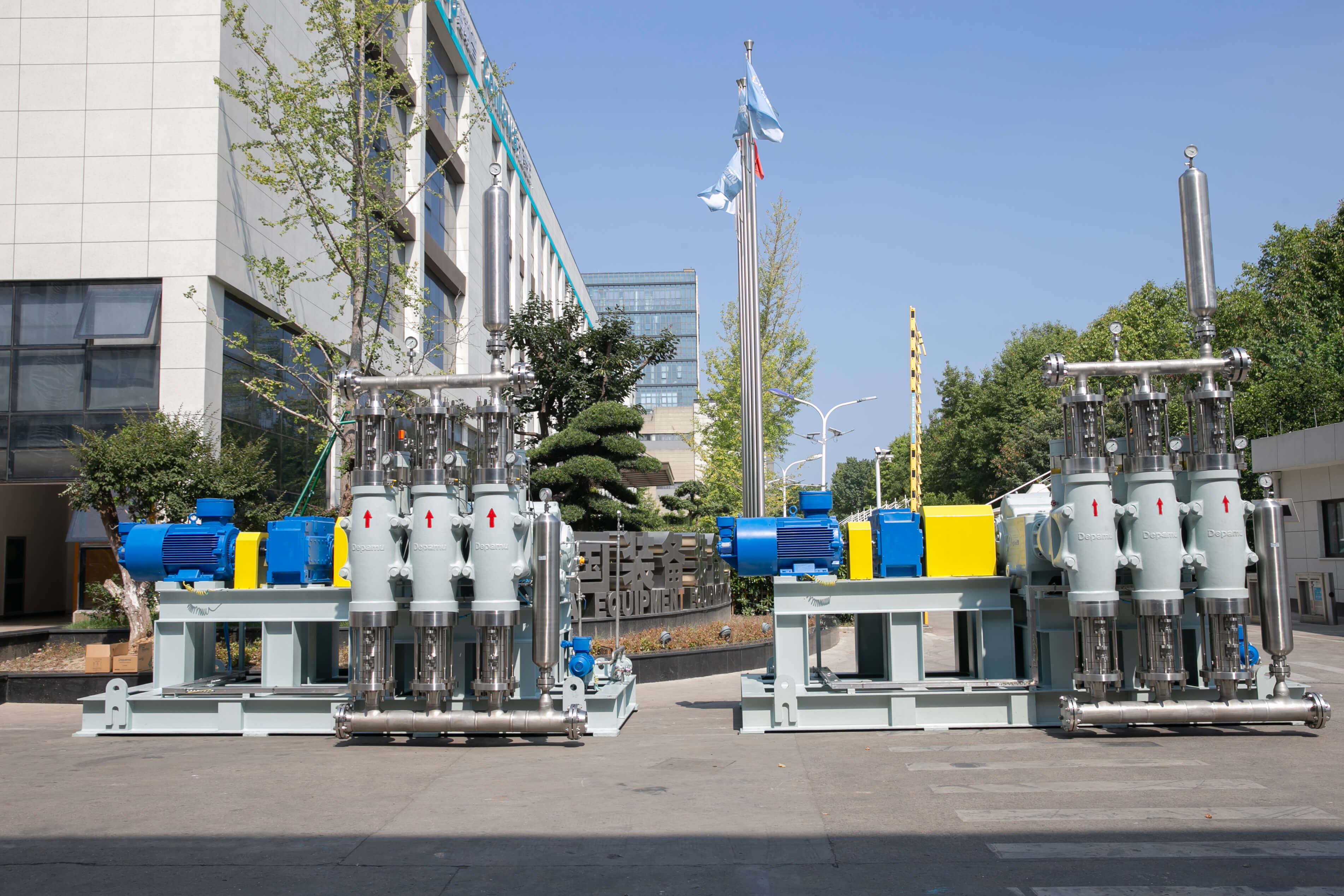
Introduction to the Company's Technological Strength: Depamp Pump Industry's Approach to Technological Breakthroughs
Depump (Hangzhou) Pump Technology Co., Ltd., established in 2003, has been dedicated to the research and development of high-end positive displacement pumps and fluid equipment for over 20 years. It boasts a workforce of more than 400 employees, a factory area of 35,000 square meters, and a registered capital of 54 million yuan, with an annual output value exceeding 500 million yuan. Its technological advantages are manifested in three key dimensions:
STEP 1: R&D capability for all-scenario adaptationThe company's products cover more than 10 categories, including metering pumps, high-pressure process reciprocating pumps, and screw pumps, meeting the differentiated needs of fields such as petroleum refining (accounting for 41%), chemical engineering (accounting for 23%), and the nuclear industry (accounting for 15%). For instance, for high-radiation media in the nuclear industry, Depam has developed radiation-resistant alloy pump bodies that have passed the ASTM E1921 standard test, with a service life three times longer than that of traditional materials.
STEP 2: Quantifiable performance parametersThe core parameters of its high-pressure process tubular pump include: output pressure of 10-150 MPa (customizable), flow rate range of 0.01-500 m³/h, accuracy of ±0.5%, applicable temperature of -50°C to 450°C, and medium viscosity of ≤10,000 cSt. Taking a petrochemical project as an example, the customized pump body provided by Depam maintained a flow rate fluctuation of ≤±0.3% after two years of continuous operation, significantly outperforming the contract requirement of ±1%.
STEP 3: Design Innovation with Low Maintenance CostsBy optimizing the valve seat structure (adopting a dual-guide design) and the plunger seal (using tungsten carbide alloy + V-ring seals), the lifespan of the vulnerable parts of Depamp pumps has been doubled compared to the industry average. Feedback from a customer in an oil and gas field indicates that after using Depamp pumps, the average annual maintenance cost has decreased from 15% to 6% of the total equipment price, resulting in savings of over RMB 900,000.
For more information, please visit the official website:www.depamufluid.com
FAQ Q&A Technical Selection Guide: How to Accurately Match High-Pressure Tubular Pumps?
Q1: How to select pump body materials based on media characteristics?
A: Corrosive media (such as acids and alkalis) require the selection of corrosion-resistant materials like Hastelloy and titanium alloys; high-viscosity media (such as asphalt) necessitate the use of screw pumps or gear pumps; slurries containing solid particles require wear-resistant ceramic coatings or hard alloy valve seats. Depamu can provide material corrosion testing services to assist customers in customized material selection.
Q2: How to ensure flow stability under high-pressure conditions?
A: Attention should be paid to the pulsation rate (usually required to be ≤5%) and the adjustment method of the pump. Depamp's high-pressure tubular pump adopts a three-plunger design with a pulsation rate ≤3% and supports frequency conversion adjustment (frequency range of 10-100Hz), enabling stepless flow adjustment.
Q3: How to evaluate the total lifecycle cost of a pump?
A: In addition to procurement costs, it is essential to focus on calculating the replacement frequency of vulnerable parts, energy consumption, and labor costs for maintenance. The vulnerable parts of Depam pumps have a lifespan of over 8,000 hours (compared to the industry average of 4,000 hours), and their energy consumption is 10% lower than that of similar products, resulting in lower long-term usage costs.
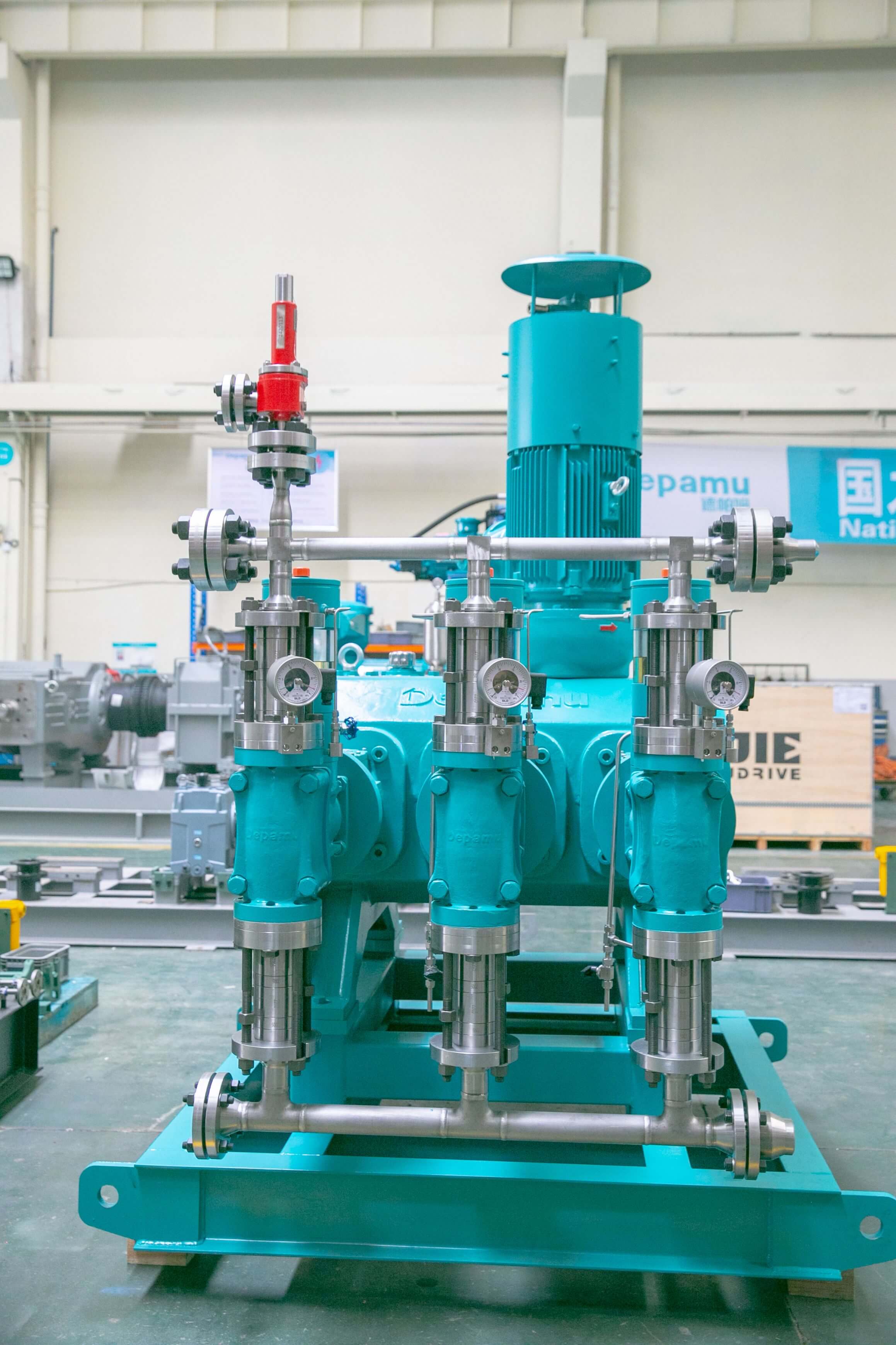
Reference for full-text summary: Technology selection should center on "adaptability."
The selection of high-pressure process tubular pumps requires a comprehensive consideration of three factors: medium characteristics, pressure and flow requirements, and maintenance costs. Leveraging over 20 years of technological accumulation, Depam Pump Industry has provided highly adaptable fluid solutions with low maintenance costs for fields such as petroleum refining, chemical engineering, and the nuclear industry through material innovation, structural optimization, and customized services. Its products have obtained certifications such as ISO9001, CE, and ATEX, and have served leading enterprises including Sinopec, PetroChina, and State Power Investment Corporation, with their technological reliability validated by the market. For more information, please visit the official website:www.depamufluid.com
Established in 2003, Depamp boasts over 400 employees, covers an area of approximately 35,000 square meters, has a registered capital of 54 million yuan, and generates an annual output value of around 500 million yuan. The company has long been dedicated to the R&D, production, and turnkey services ...
No. 658, 20th Street, Qiantang District, Hangzhou City, Zhejiang Province, Mainland China