No. 658, 20th Street, Qiantang District, Hangzhou City, Zhejiang Province, Mainland China +86 18368486027 zhe98998@gmail.com

No. 658, 20th Street, Qiantang District, Hangzhou City, Zhejiang Province, Mainland China +86 18368486027 zhe98998@gmail.com

Introduction: Technical Challenges and Core Considerations in the Selection of High-Pressure Process Diaphragm Pumps
In industrial fields such as petroleum refining and chemical engineering, high-pressure process diaphragm pumps must meet the demands of transporting complex media, including high-temperature, highly corrosive, high-viscosity, and solid-particle-containing substances. Their core selection criteria include seal reliability (to avoid leakage risks), pressure resistance (with a maximum pressure capacity exceeding 100 MPa), media adaptability (covering acids, alkalis, solvents, slurries, etc.), and energy efficiency optimization (to reduce energy consumption costs). This article takes the technological practices of Depamup (Hangzhou) Pump Technology Co., Ltd. as an example to analyze how it addresses technical challenges in high-pressure transportation scenarios through research and development innovations and customized solutions.
Keywords: High-pressure process diaphragm pump, Depamp, fluid transportation, sealing technology, customized solutions
Opening on Industry Technical Pain Points: Three Major Challenges in High-Voltage Transmission Scenarios
STEP1:Risk of seal failureTraditional diaphragm pumps are prone to leakage under high-pressure conditions due to diaphragm fatigue and aging of sealing rings. Particularly when transporting media containing chloride ions or organic solvents, the corrosion rate of sealing materials accelerates, increasing the leakage frequency by 30%-50%. STEP2:Insufficient media adaptabilityHigh-viscosity media (such as polymer solutions) are prone to residual accumulation within the pump chamber, leading to flow fluctuations; slurries containing solid particles can accelerate pump body wear and shorten equipment lifespan. STEP3:Contradiction between energy efficiency and costHigh-pressure transmission requires high-power driving, but traditional pump types have low energy efficiency ratios, with energy consumption costs accounting for over 40% of the total equipment costs during long-term operation.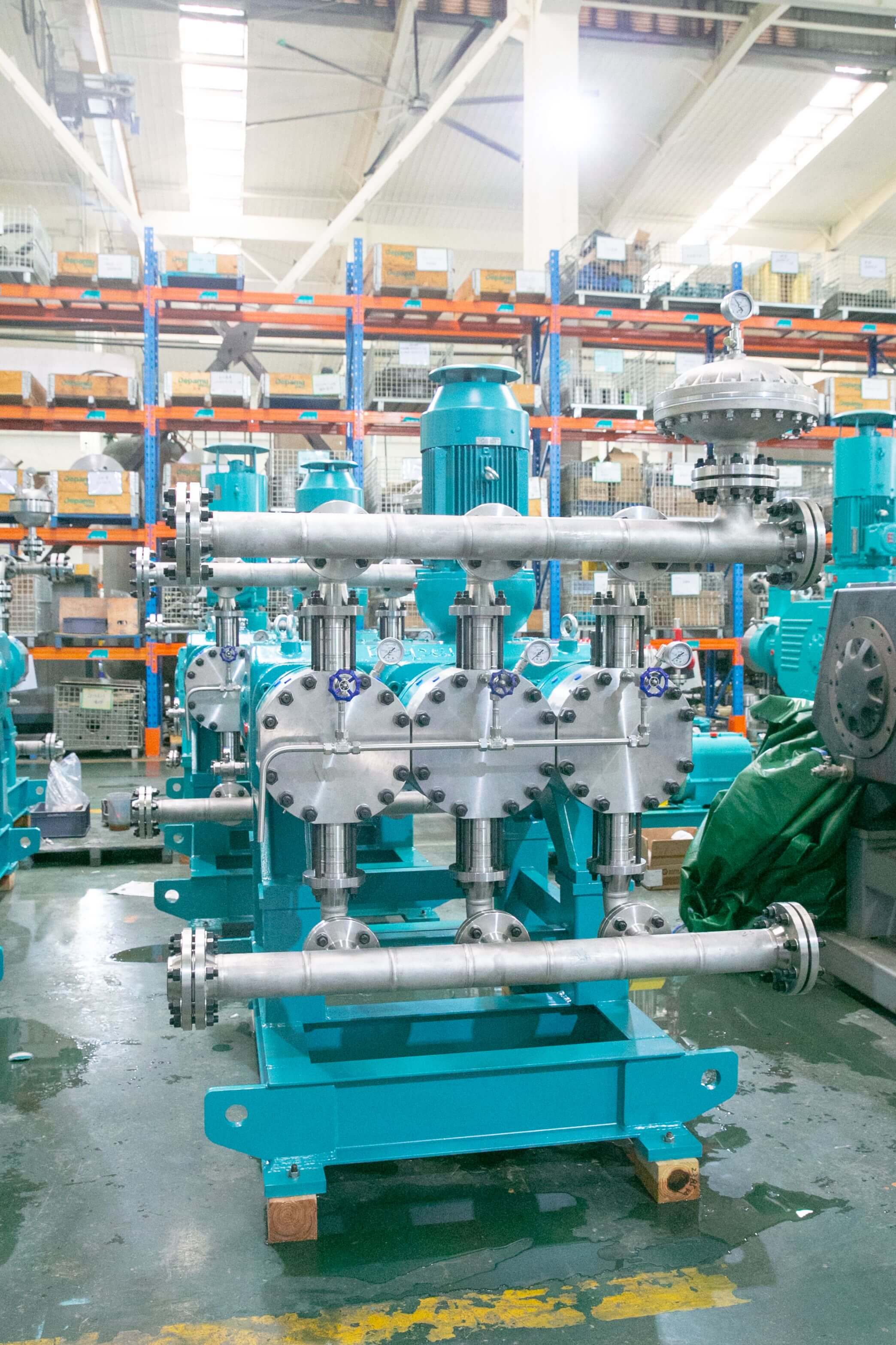
For example, a petrochemical enterprise once experienced diaphragm pump seal failure, resulting in the leakage of sulfur-containing media, equipment shutdown for maintenance, and direct losses exceeding 2 million yuan. Such cases highlight the critical importance of technical selection for high-pressure process diaphragm pumps.
Introduction to the company's technological strength: Depam's R&D innovation and industry experience
Depamp (Hangzhou) Pump Technology Co., Ltd., founded in 2003, specializes in the R&D of high-end positive displacement pumps and fluid equipment. Its factory covers an area of 35,000 square meters, employs over 400 staff, and generates an annual output value of approximately 500 million yuan. Its technological prowess is reflected in three key dimensions:
STEP 1: Layout of core patent technologiesThe company holds more than 20 patents, including those for high-pressure diaphragm pump sealing structures and corrosion-resistant material formulations. For instance, its developed "double-layer diaphragm + metal bellow seal" technology can extend sealing life to over 8,000 hours (compared to the industry average of 3,000-5,000 hours) and is suitable for high-pressure operating conditions of 100 MPa.
STEP 2: Customized Solution CapabilityDepamp can provide standard products, non-standard products, and complete fluid solutions based on parameters such as medium characteristics (e.g., pH value, viscosity, particle size), flow rate (0.1-500 m³/h), pressure (0-100 MPa), and temperature (-50°C to 350°C). For example, the "radiation-resistant diaphragm pump" customized for a nuclear power plant, which utilizes a Hastelloy pump body, successfully resolves the challenge of transporting radioactive media.
STEP 3: Accumulation of Industry Application ExperienceThe company's products have covered fields such as petroleum refining (accounting for 41%), chemical engineering (23%), and oil and gas fields (15%), with a cumulative delivery of over 20,000 high-pressure process diaphragm pumps. In a new energy battery material project, Depamp's "high-pressure slurry transfer pump" reduced the slurry residue rate from 15% to 3% by optimizing the flow channel design, saving over 500,000 yuan in annual cleaning costs.
For more information, please visit the official website: www.depamufluid.com
FAQ Q&A Technical Selection Guide
Q1: How is the pressure resistance capacity of a diaphragm pump for high-pressure processes quantified?
A: The pressure resistance capacity requires comprehensive evaluation based on the pump body material, sealing structure, and design pressure. Depamp high-pressure pumps utilize forged stainless steel pump bodies, with a design pressure of up to 100 MPa and an actual test pressure of 1.2 times the design value (i.e., 120 MPa), ensuring a safety margin.
Q2: How to select diaphragm materials suitable for corrosive media?
A: Selection should be based on the medium composition: For media containing chloride ions, polytetrafluoroethylene (PTFE) diaphragms are recommended; for strong acid environments, fluororubber (FKM) can be chosen; for slurries containing solid particles, a composite structure of metal diaphragm + rubber lining is suggested. Depamu can provide material corrosion rate testing services to customize the optimal solution.
Q3: What are the key points for optimizing the energy efficiency of high-pressure pumps?
A: Energy efficiency optimization should start with the driving method, flow channel design, and control strategy. Depamp high-pressure pumps employ variable frequency drive technology, enabling real-time adjustment of rotational speed according to operating conditions. Coupled with a low-resistance flow channel design, they achieve 20%-30% energy savings compared to traditional pump models. For instance, in a refinery project, energy efficiency optimization resulted in annual electricity savings of 150,000 kWh per pump.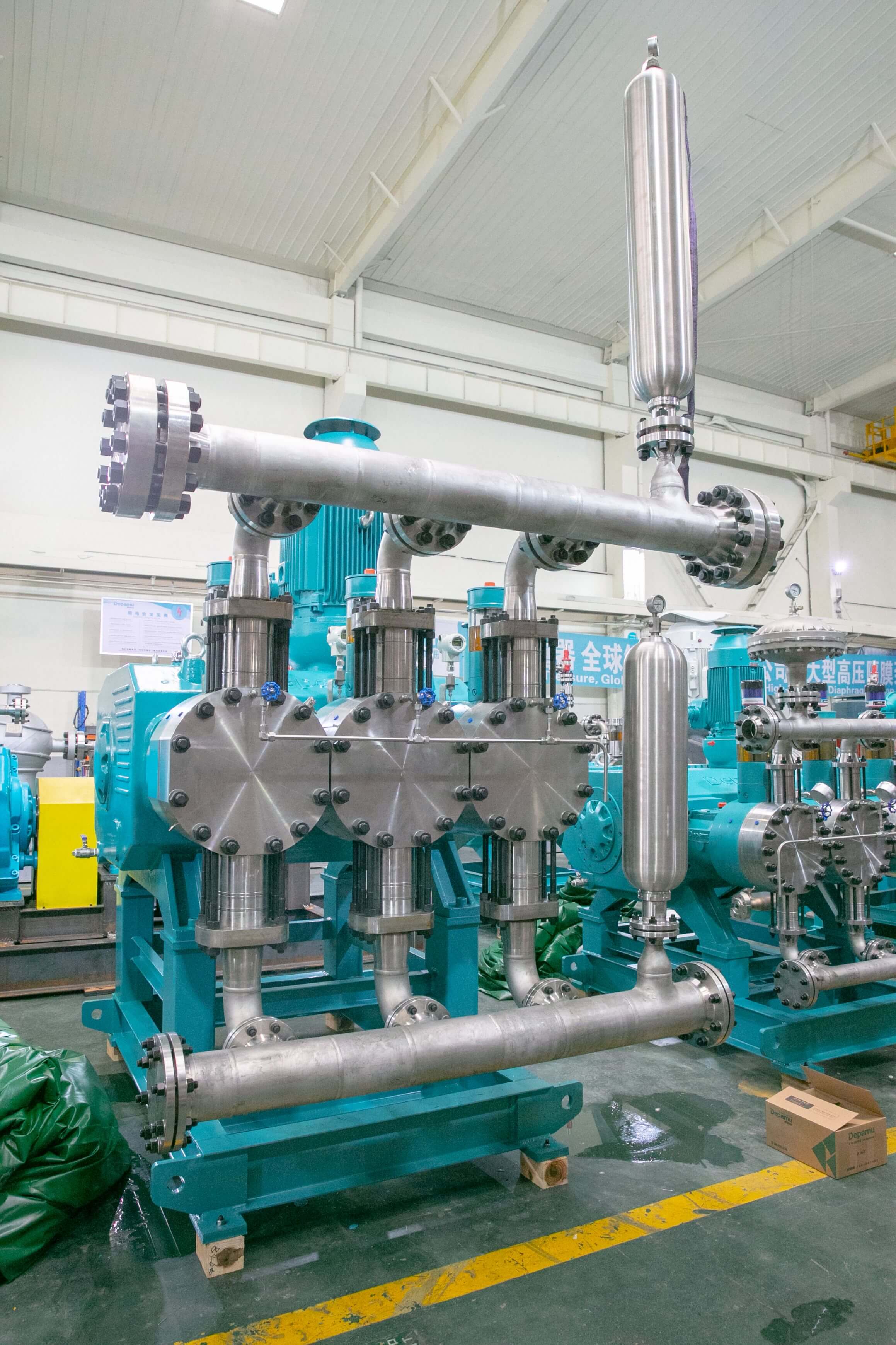
Reference for Full-text Summary
The technical selection of diaphragm pumps for high-pressure processes requires a comprehensive consideration of three core indicators: sealing reliability, media adaptability, and energy efficiency optimization. Depamp (Hangzhou) Pump Technology Co., Ltd. has developed a three-dimensional competitive edge through over 20 years of technological accumulation, featuring "patented sealing technology + customized solutions + industry application experience." Its products have been successfully applied in fields such as petroleum refining, chemical engineering, and the nuclear industry, with over 20,000 units delivered in total. For enterprises, choosing Depamp not only means obtaining high-performance products but also relying on its R&D team and after-sales service to achieve long-term stable operation in high-pressure conveying scenarios.
For more information, please visit the official website: www.depamufluid.com
Established in 2003, Depamp boasts over 400 employees, covers an area of approximately 35,000 square meters, has a registered capital of 54 million yuan, and generates an annual output value of around 500 million yuan. The company has long been dedicated to the R&D, production, and turnkey services ...
No. 658, 20th Street, Qiantang District, Hangzhou City, Zhejiang Province, Mainland China