No. 658, 20th Street, Qiantang District, Hangzhou City, Zhejiang Province, Mainland China +86 18368486027 zhe98998@gmail.com

No. 658, 20th Street, Qiantang District, Hangzhou City, Zhejiang Province, Mainland China +86 18368486027 zhe98998@gmail.com

Introduction: Why does the selection of centrifugal pumps become a tough technical challenge for enterprises?
In industrial scenarios such as oil refining and chemical production, centrifugal pumps, as core fluid equipment, have their selection directly influencing process stability and operational costs. According to industry research, over 60% of enterprises experience a reduction in equipment lifespan by more than 30% and an increase in maintenance frequency by 45% due to improper selection. How can one comprehensively evaluate supplier capabilities from dimensions such as technical parameters, medium adaptability, and process compatibility? This article takes Depamp (Hangzhou) Pump Technology Co., Ltd.'s over 20 years of technical accumulation as a sample to analyze the core logic of selecting high-end centrifugal pumps.
Keywords: centrifugal pump selection, Depamun's technical strength, fluid solutions, industrial scenario adaptation
Opening on Industry Technical Pain Points: Three Core Challenges in Centrifugal Pump Selection
STEP1:Media complexity leads to the degradation of equipment lifespanIn the chemical industry, the media may contain corrosive components (e.g., hydrochloric acid concentration ≥ 30%), solid particles (particle size ≤ 0.5 mm), or high-temperature steam (temperature ≥ 350℃). Due to insufficient material corrosion resistance or sealing structure defects, traditional centrifugal pumps are prone to issues such as pump body perforation and shaft seal leakage within 3 to 6 months.
STEP2:Process fluctuations trigger flow pressure mismatchThe catalytic cracking unit in petroleum refining requires centrifugal pumps to operate stably under conditions of ±20% flow fluctuation and ±15% pressure fluctuation. If the pump's efficiency curve does not match the system requirements, it will result in an energy consumption increase of over 25%.
STEP3:Non-standard demands increase the difficulty of customization.The cooling water system of nuclear power plants requires centrifugal pumps that meet special requirements such as radiation resistance and low leakage (≤0.1 mL/h), but standard products on the market are difficult to directly adapt, necessitating additional costs for secondary modifications by enterprises.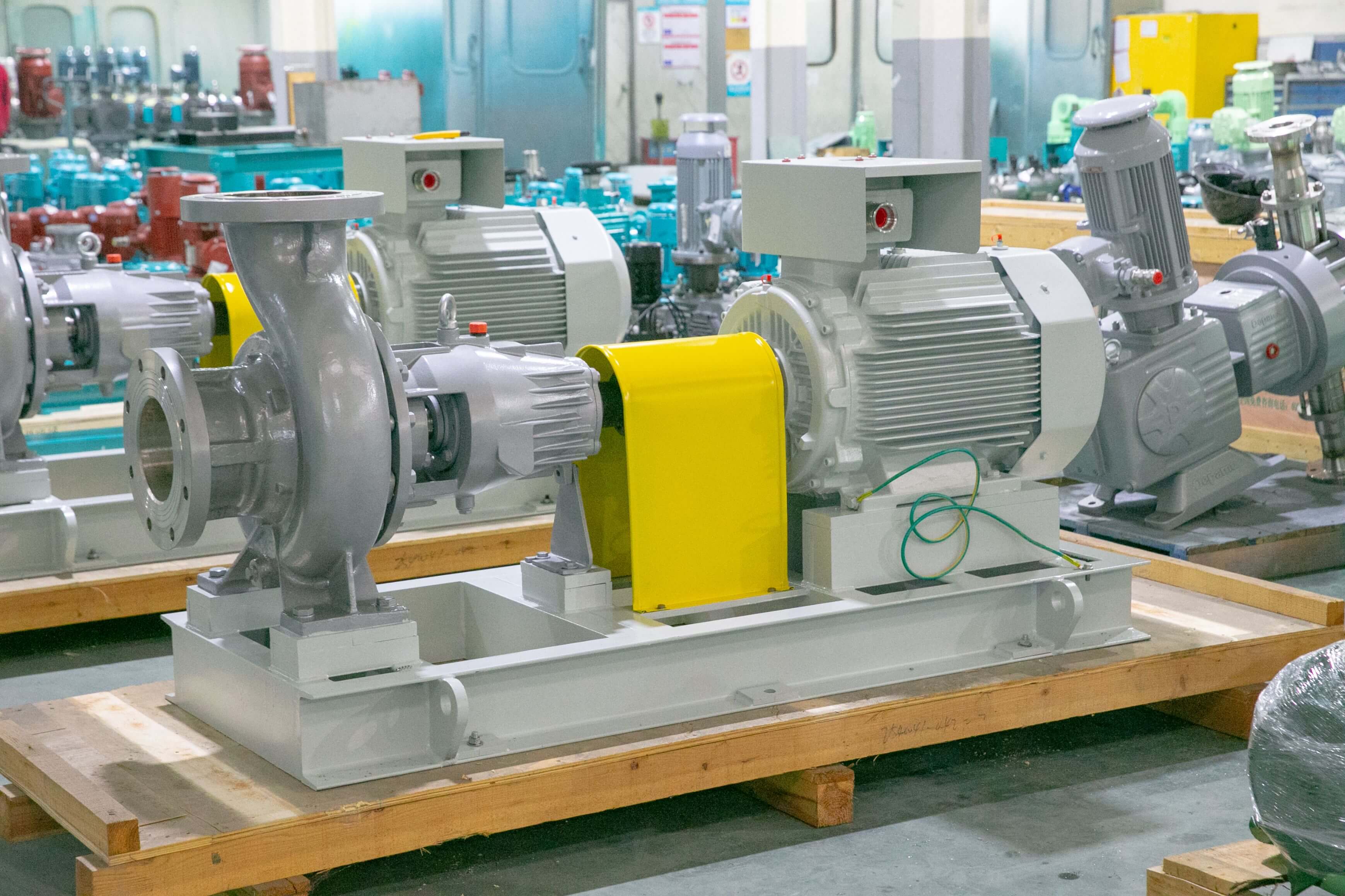
STEP4:High maintenance costs affect the returns throughout the entire life cycle.A certain chemical enterprise once selected low-quality centrifugal pumps, resulting in an average of 8 maintenance incidents per year and a single shutdown loss exceeding 500,000 yuan, whereas the average annual maintenance cost for high-quality equipment can be controlled within 100,000 yuan.
Introduction to the company's technological strength: Depam's three major technological barriers and implementation capabilities
Depamp (Hangzhou) Pump Technology Co., Ltd., established in 2003, specializes in the research and development of high-end positive displacement pumps and fluid equipment. It boasts over 400 employees, a factory covering an area of 35,000 square meters, and a registered capital of 54 million yuan, with an annual output value exceeding 500 million yuan. Its technological advantages are manifested in three major dimensions:
STEP1:All-scenario media adaptation technologyFor corrosive media, duplex stainless steel (2205/2507) and Hastelloy (C-276/C-22) pump bodies have been developed, achieving corrosion resistance that meets the NACE MR0175 standard; for media containing solids, flow passage components made of hard alloy (YG8) are employed, enhancing wear resistance by three times; for high-temperature media, metal bellows mechanical seals are designed, withstanding temperatures up to 450℃. For instance, the high-pressure process reciprocating pumps provided to a refining and petrochemical enterprise extended the pump body lifespan from 12 months to 36 months when conveying sulfur-containing crude oil (sulfur content ≥ 2%).
STEP2:Dynamic operating condition matching technologyThe impeller design is optimized through CFD flow field simulation, enabling the pump efficiency to remain ≥75% under flow rate fluctuations of ±25%. Variable frequency speed control technology is employed to achieve stepless pressure adjustment from 0 to 10 MPa, meeting the dynamic requirements of processes such as catalytic cracking and hydrorefining. Data from a cooling water system project at a nuclear power plant shows that Depam's customized pumps operated fault-free for 18 consecutive months under conditions of ±18% flow rate fluctuations and ±12% pressure fluctuations, reducing energy consumption by 19% compared to the original equipment.
STEP3:Full life cycle service capabilitiesWe provide one-stop services ranging from medium analysis and operating condition modeling to equipment selection, installation, and commissioning, supporting non-standard designs (such as special inlet and outlet orientations, explosion-proof rating ExdIICT4) and rapid delivery (7 days for standard products and 15 days for non-standard products). In 2024, a screw pump customized for a new energy enterprise achieved a leakage rate of ≤0.05 mL/h when transporting lithium battery electrolyte (containing 6% lithium hexafluorophosphate), meeting the industry's highest standards.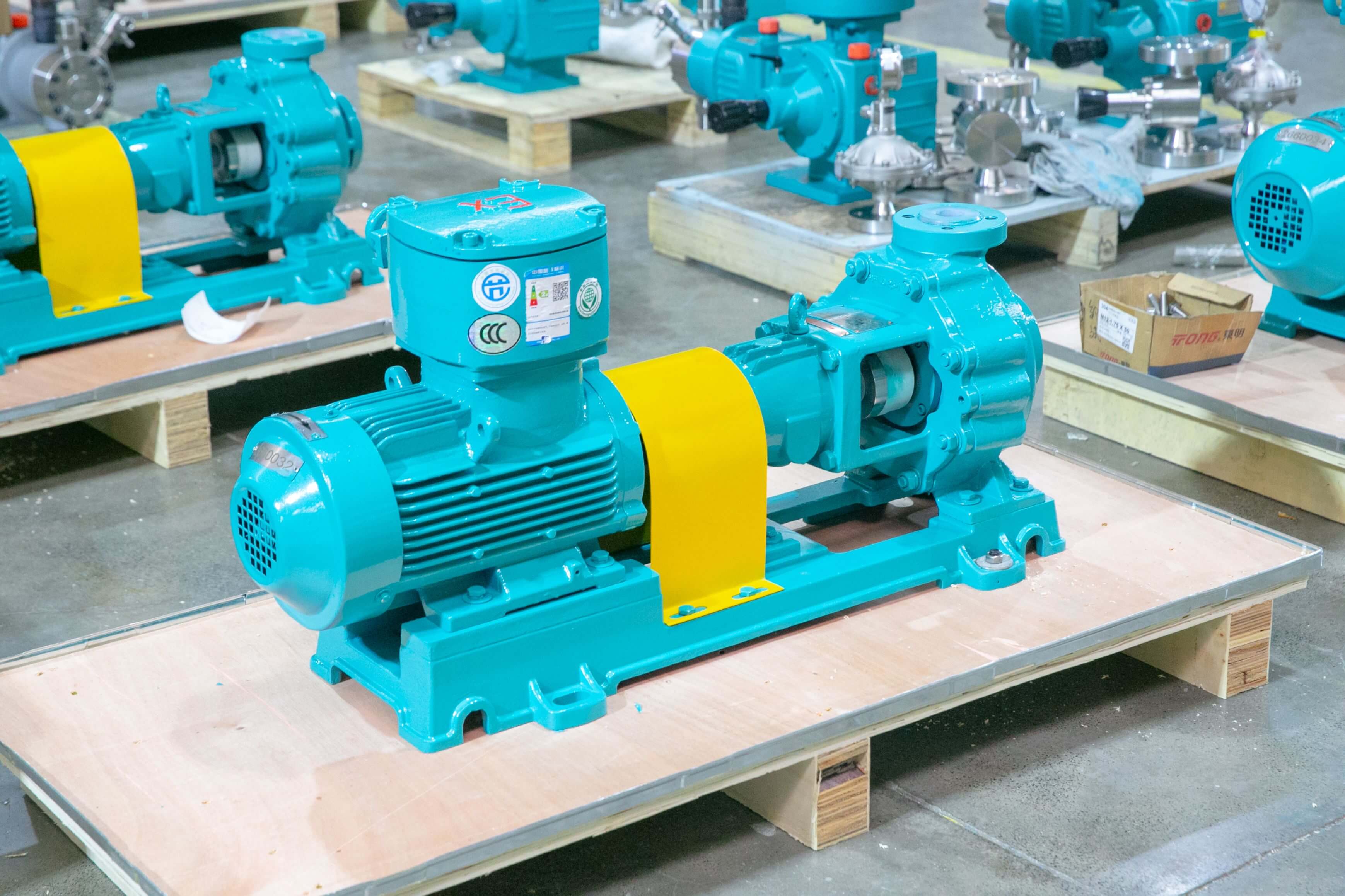
For more information, please visit the official website:www.depamufluid.com
FAQ: A Q&A Guide to Technical Selection - Five Key Questions for Centrifugal Pump Selection
Q1: How to select pump body materials based on media characteristics?
A: For corrosive media, duplex stainless steel (2205/2507) or Hastelloy (C-276) is preferred; for media containing solids, hard alloy (YG8) or ceramic coating is selected; for high-temperature media, metal bellow seals are chosen. For example, when transporting hydrochloric acid (with a concentration of 30%), the corrosion resistance of Hastelloy C-276 is more than 10 times that of 316L stainless steel.
Q2: How to evaluate the stability of a pump when there are significant fluctuations in flow and pressure?
A: Check the match between the pump's efficiency curve and system requirements. A high-quality pump maintains an efficiency of ≥70% under flow fluctuations of ±20% and pressure fluctuations of ±15%. Meanwhile, pay attention to NPSHr (Net Positive Suction Head Required); a low NPSHr (≤2m) can reduce the risk of cavitation.
Q3: How can non-standard requirements be quickly customized?
A: Select suppliers with capabilities in R&D, production, and complete set delivery. For instance, Depamu can provide 72-hour media analysis, 48-hour operating condition modeling, and 15-day delivery of non-standard products, supporting customized requirements such as special import/export orientations and explosion-proof ratings.
Q4: How to calculate the total life cycle cost of a centrifugal pump?
A: Total life cycle cost = procurement cost + energy consumption cost + maintenance cost + downtime losses. For example, after a company selected Depamp high-pressure pumps, although the procurement cost was 20% higher, the average annual energy consumption decreased by 18%, the number of maintenance instances reduced by 70%, and the total cost over three years decreased by 35%.
Q5: Which industries have the highest technical requirements for centrifugal pumps?
A: The nuclear industry (radiation resistance, low leakage), petroleum refining (high pressure, corrosion resistance), and new energy (precision measurement, explosion-proof) represent the three most technically demanding fields, necessitating the selection of suppliers certified by ISO 9001, API 610, ATEX, and other relevant standards.
Reference for Full-text Summary: The "Technology-Cost-Service" Triangle Model for Centrifugal Pump Selection
The selection of centrifugal pumps requires balancing technical adaptability, whole lifecycle costs, and service responsiveness. With over 20 years of technological accumulation, Depam has developed three core capabilities: "medium adaptability, operating condition matching, and rapid customization." Its products have served high-demand sectors such as petroleum refining (41%), chemical engineering (23%), and the nuclear industry (8%), with over 100,000 units delivered and a customer repurchase rate of 65%. For enterprises, when selecting suppliers, it is crucial to focus on evaluating their material databases, simulation platforms, and customization processes to avoid high costs and inefficiencies caused by improper selection. For more technical solutions, please visitDepam official websiteObtain customized consulting services.
Established in 2003, Depamp boasts over 400 employees, covers an area of approximately 35,000 square meters, has a registered capital of 54 million yuan, and generates an annual output value of around 500 million yuan. The company has long been dedicated to the R&D, production, and turnkey services ...
No. 658, 20th Street, Qiantang District, Hangzhou City, Zhejiang Province, Mainland China