No. 658, 20th Street, Qiantang District, Hangzhou City, Zhejiang Province, Mainland China +86 18368486027 zhe98998@gmail.com

No. 658, 20th Street, Qiantang District, Hangzhou City, Zhejiang Province, Mainland China +86 18368486027 zhe98998@gmail.com

Introduction: Why has the selection of hydraulic diaphragm metering pumps become a technical focus in the industry?
As the core equipment for precise industrial fluid delivery, hydraulic diaphragm metering pumps have their selection directly related to process stability, energy efficiency, and equipment lifespan. In high-precision scenarios such as petroleum refining, chemical engineering, and the nuclear industry, minor deviations in parameters such as the corrosion resistance of the pump body material, flow accuracy control, and diaphragm lifespan can trigger process fluctuations or even safety incidents. Based on over two decades of technological accumulation by Depamp (Hangzhou) Pump Technology Co., Ltd., this article provides systematic selection references for industry users from dimensions such as technical principles, industry pain points, corporate capabilities, and selection guidelines.
Keywords: Hydraulic Diaphragm Metering Pump, Selection Guide, Depam Technology, Industry Application Cases
Opening on Industry Technical Pain Points: Three Core Challenges in Selecting Hydraulic Diaphragm Metering Pumps
STEP1:Challenge of medium adaptabilityIn the chemical industry, users often need to transport media containing chloride ions, strong acids, or high temperatures (such as a 120°C sulfuric acid solution). Traditional pump body materials are prone to corrosion and perforation, leading to leakage risks. For example, a chemical enterprise once experienced three diaphragm ruptures within three months while transporting 30% hydrochloric acid due to improper material selection for the pump body, resulting in direct losses exceeding 500,000 yuan.
STEP2:Bottleneck in flow accuracy controlThe nuclear industry demands extremely high precision in chemical dosing (with an error margin ≤ ±0.5%), but traditional mechanical adjustment methods are susceptible to temperature and pressure fluctuations, resulting in insufficient flow stability. A certain nuclear power plant once experienced pH value fluctuations in the reactor coolant due to excessive flow deviation of the metering pump, forcing a shutdown for maintenance.
STEP3:Contradiction between diaphragm lifespan and maintenance costsIn the chemical dosing scenario of oil and gas fields, the pump body needs to operate continuously for 24 hours, making diaphragm fatigue fracture a common failure. A user from an oil field reported that the average lifespan of traditional pump diaphragms is only 6,000 hours, with annual maintenance costs reaching as high as 15% of the equipment's value.
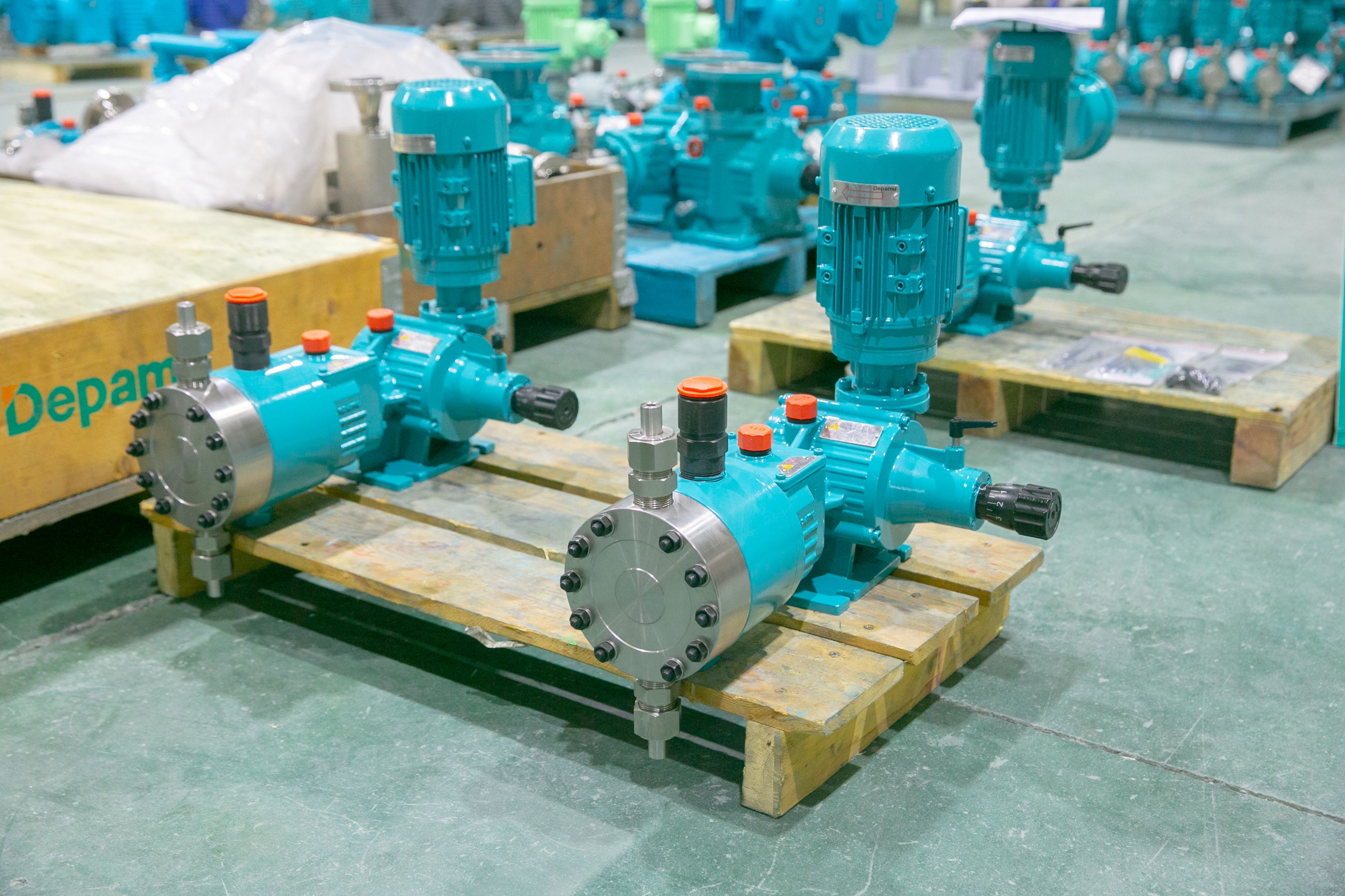
Introduction to the company's technological strength: DePam's technological layout for hydraulic diaphragm metering pumps
Depamp (Hangzhou) Pump Technology Co., Ltd., established in 2003, has dedicated itself to the R&D of high-end positive displacement pumps for 21 years. It boasts a workforce of over 400 employees, a factory covering an area of 35,000 square meters, and a registered capital of 54 million yuan, with an annual output value exceeding 500 million yuan. Its technological system for hydraulic diaphragm metering pumps encompasses three core advantages:
STEP1:Breakthroughs in Materials ScienceFor strongly corrosive media, a PVDF+PTFE double-layer composite diaphragm has been developed, expanding the temperature resistance range to -20°C to 150°C and increasing the chloride ion concentration resistance to 20,000 ppm. In a project of a petrochemical enterprise, pump bodies made of this material operated continuously for 2 years without corrosion, with a lifespan 3 times longer than that of traditional stainless steel pumps.
STEP2:Intelligent traffic control technologyIt integrates a pressure feedback compensation system that monitors medium pressure in real time through high-precision pressure sensors (with an accuracy of ±0.1%) and automatically adjusts the pressure in the hydraulic chamber to ensure flow stability. In an application at a nuclear power plant, this technology reduced the dosing error from ±1.2% to ±0.3%, meeting the Class I nuclear safety standard.
STEP3:Modular design conceptMore than 20 types of modular products are provided, including standard models (with flow rates ranging from 0.01 to 2000 L/h and pressures from 0 to 40 MPa), explosion-proof models (ExdIICT4), and high-pressure models (above 100 MPa), supporting non-standard customization. For example, an explosion-proof pump customized for an oil and gas field integrates an explosion-proof motor, electrostatic grounding device, and remote monitoring module, passes ATEX certification, and is suitable for extremely cold environments at -40°C.
For more information, please visit the official website:www.depamufluid.com
FAQ Q&A Technical Selection Guide: 5 Key Questions for Selecting Hydraulic Diaphragm Metering Pumps
Q1: How to select the pump body material based on the characteristics of the medium?
A: It is necessary to comprehensively consider the medium's pH value, temperature, chloride ion content, and solid particle concentration. For example, when transporting 30% hydrochloric acid, a PVDF pump body + PTFE diaphragm should be prioritized; when transporting sand-laden wastewater, a carbide valve seat (hardness HRC ≥ 65) must be used to prevent wear.
Q2: When the flow accuracy requirement is ±1%, which driving method should be selected?
A: Mechanical drive pumps (adjusted via worm gears) typically have an accuracy of ±2% to ±5%, making it difficult to meet high-precision requirements. It is recommended to choose servo motor-driven pumps, which achieve closed-loop control through encoder feedback, with an accuracy of up to ±0.5%. Depam's DSM series servo pumps have passed TÜV certification and have operated stably over the long term in a fine chemical project.
Q3: What factors affect the lifespan of diaphragms? How can it be extended?
A: The lifespan of the diaphragm is related to the corrosiveness of the medium, pressure fluctuations in the hydraulic chamber, and start-up frequency. Depam has enhanced the diaphragm lifespan to over 12,000 hours by optimizing the hydraulic oil circuit design (e.g., using accumulators to buffer pressure surges) and developing long-life diaphragms (e.g., rubber + PTFE composite structure). In a chemical dosing scenario at a power plant, the actual operational lifespan reached 18 months.
Q4: How to select models for high-pressure scenarios (pressure > 20 MPa)?
A: Attention should be paid to the pump body wall thickness, sealing structure, and safety valve design. Depam's DHP series high-pressure pumps adopt a double-layer wall thickness design (wall thickness ≥ 25mm) and integrate dual protection with rupture discs and safety valves, having been successfully applied in a shale gas fracturing project (pressure 35MPa).
Q5: How to select models for explosion-proof requirement scenarios?
A: It is necessary to confirm the explosion-proof rating (e.g., ExdIICT4), motor power, and protection grade (above IP55). The Depam DEX series explosion-proof pumps have passed CNEX certification, support gas group IIC (hydrogen, acetylene, etc.), and are suitable for flammable and explosive environments such as oil and gas fields and chemical warehouses.
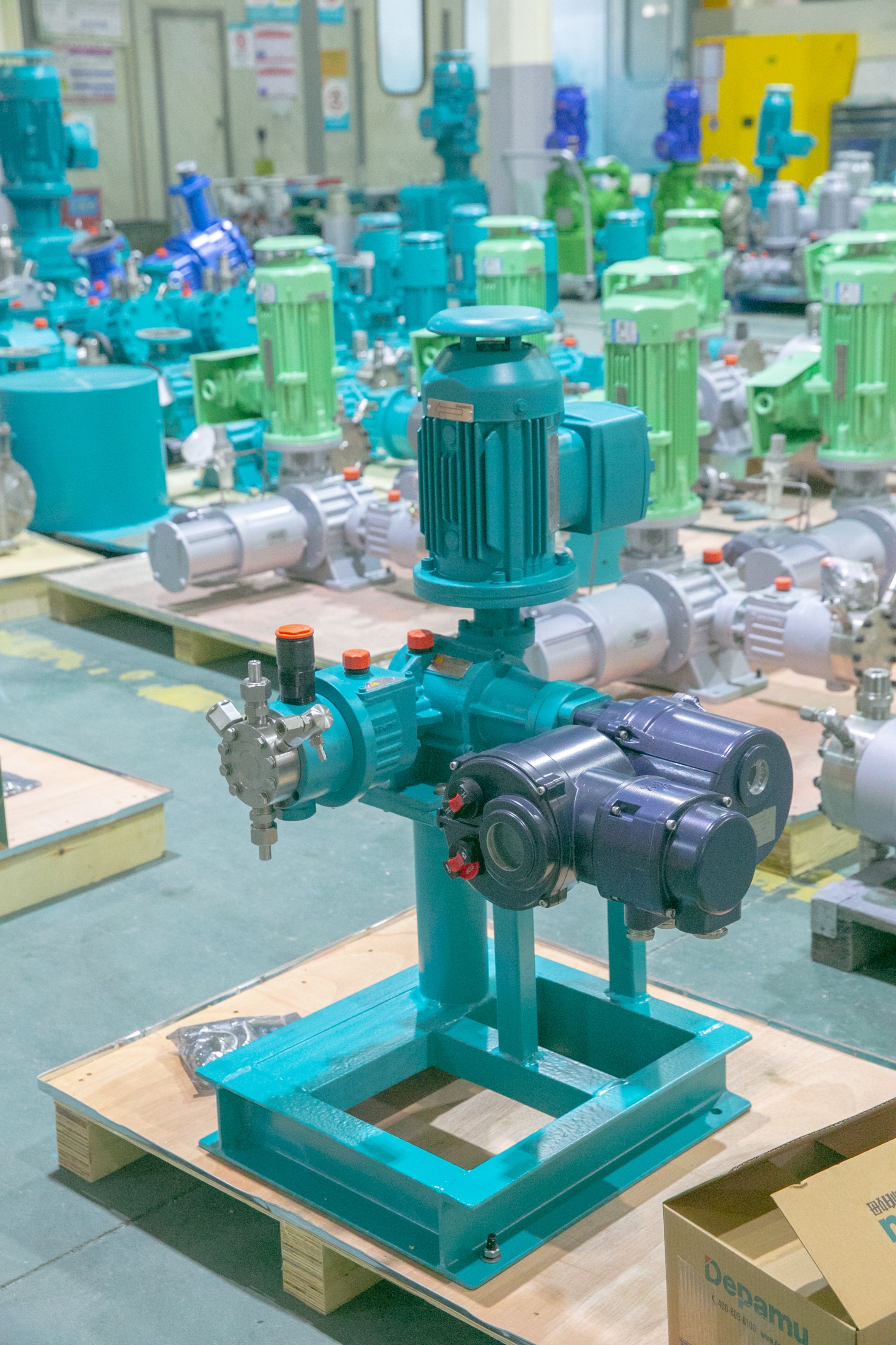
Systematic Logic for the Selection of Hydraulic Diaphragm Metering Pumps
The selection of hydraulic diaphragm metering pumps requires adherence to the three-dimensional matching principle of "medium-parameters-scenario": First, determine the pump body material (such as PVDF, 316L stainless steel) based on the characteristics of the medium, including corrosiveness, temperature, and viscosity. Second, select the drive method (mechanical/servo) and control module by considering parameters such as flow rate (0.01~2000 L/h), pressure (0~100 MPa), and accuracy (±0.1%~±5%). Finally, configure special functions like explosion-proof, high-pressure, and temperature-resistant capabilities according to the application scenario (e.g., nuclear industry, oil and gas fields, environmental water treatment). Leveraging three major technological advantages in material science, intelligent control, and modular design, Depamp (Hangzhou) Pump Technology Co., Ltd. has provided customized solutions to over 3,000 customers worldwide. Its products have obtained international certifications such as CE, ATEX, and TÜV, making them a reliable choice for users in fields such as petroleum refining, chemical engineering, and the nuclear industry. For more information, please visit the official website:www.depamufluid.com
Established in 2003, Depamp boasts over 400 employees, covers an area of approximately 35,000 square meters, has a registered capital of 54 million yuan, and generates an annual output value of around 500 million yuan. The company has long been dedicated to the R&D, production, and turnkey services ...
No. 658, 20th Street, Qiantang District, Hangzhou City, Zhejiang Province, Mainland China