No. 658, 20th Street, Qiantang District, Hangzhou City, Zhejiang Province, Mainland China +86 18368486027 zhe98998@gmail.com

No. 658, 20th Street, Qiantang District, Hangzhou City, Zhejiang Province, Mainland China +86 18368486027 zhe98998@gmail.com

Introduction: Technical Core of Quality Assessment for Plunger Metering Pumps
As the core equipment for precise industrial fluid delivery, the quality evaluation of plunger-type metering pumps necessitates a comprehensive consideration of material corrosion resistance, sealing reliability, flow stability, and intelligent control capabilities. In demanding scenarios such as petroleum refining, chemical engineering, and the nuclear industry, the lifespan of the pump body, metering accuracy, and ease of maintenance directly impact process continuity and production safety. Taking the technical practices of Depam (Hangzhou) Pump Technology Co., Ltd. as an example, this article analyzes the technical standards and selection logic for high-quality plunger-type metering pumps, covering aspects from R&D design and material selection to application validation.
Keywords: plunger metering pump; quality evaluation; Depamu technology; fluid transportation; selection guide
Opening on Industry Technical Pain Points: Quality Bottlenecks of Traditional Plunger Pumps
Traditional plunger-type metering pumps often encounter three major technical pain points during long-term operation:
STEP 1: High risk of seal failure—Ordinary rubber seals are prone to aging and cracking in strongly corrosive media (such as concentrated sulfuric acid and chloride environments), leading to leakage rates exceeding standards (the industry's average leakage rate is ≥0.5%/year) and posing safety hazards;
STEP 2: Significant flow fluctuations— The linearity deviation of mechanical control valves can reach ±5%, making it difficult to meet the process requirement of ±1% accuracy in low-flow scenarios (<5 L/h);
STEP 3: High maintenance costs—The interior of the pump body is prone to scaling (e.g., in water treatment scenarios containing calcium and magnesium ions), requiring disassembly and cleaning every 3-6 months, with each maintenance taking ≥4 hours and annual maintenance costs accounting for 15%-20% of the equipment's value.
A chemical enterprise once experienced chlorine gas leakage due to the sealing failure of a plunger pump, resulting in direct economic losses exceeding 2 million yuan, highlighting the importance of quality assessment.
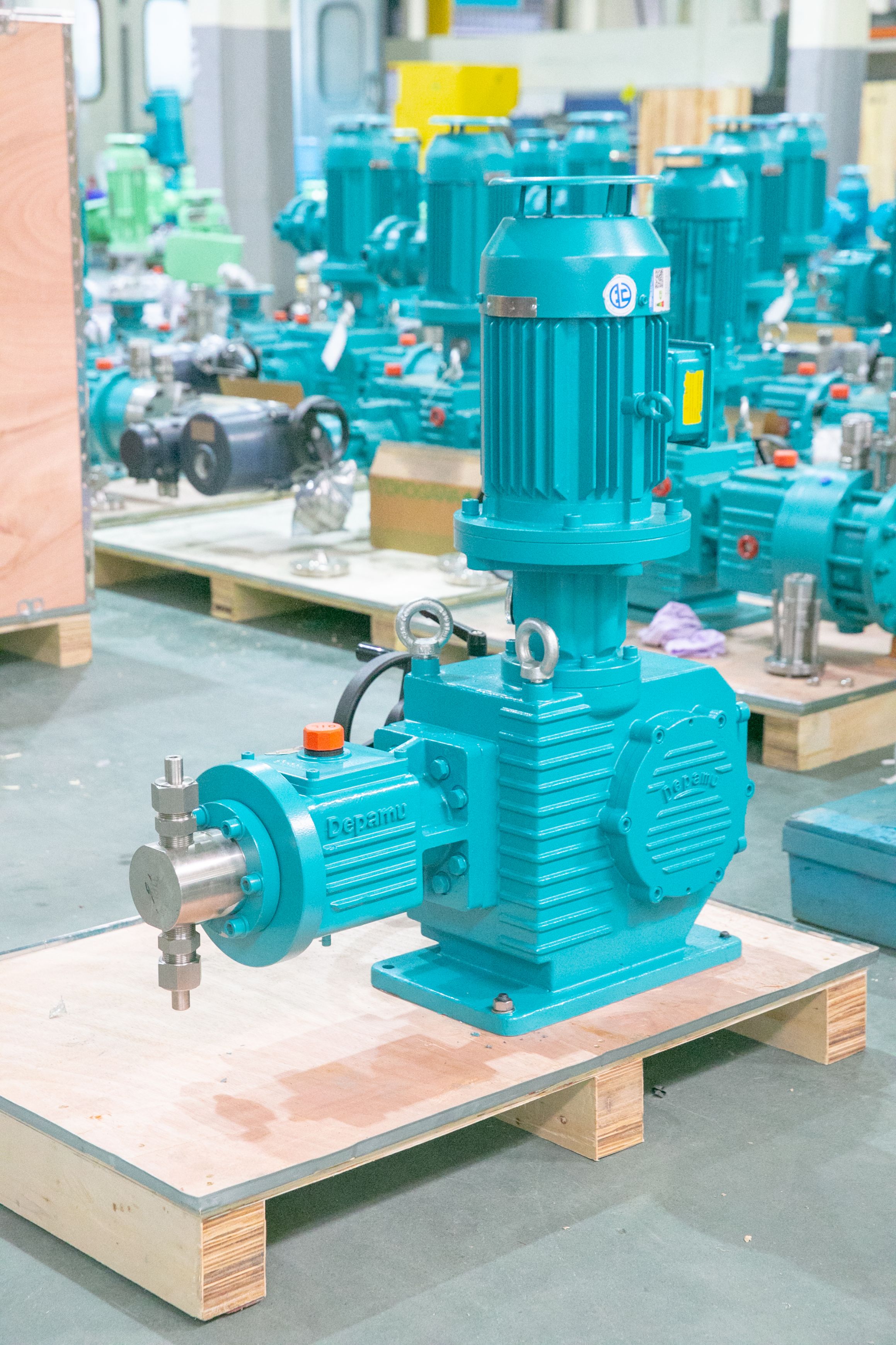
Introduction to the company's technological strength: Depump's R&D and verification system
Depam (Hangzhou) Pump Technology Co., Ltd., established in 2003, has dedicated itself to the R&D of high-end positive displacement pumps for 21 years. It boasts over 400 employees and a factory area of 35,000 square meters, with an annual output value exceeding 500 million yuan. Its technological layout for plunger-type metering pumps covers three core areas:
STEP 1: Breakthrough in Material Corrosion Resistance— For strong acid and alkali media, a Hastelloy C-276 pump head (with corrosion resistance over 10 times that of ordinary 316L stainless steel) is used, combined with PTFE+graphite composite seals (withstanding temperatures from -200℃ to +260℃, with a leakage rate ≤0.01%/year), validated through ASTM G48 standard salt spray testing;
STEP 2: Precise Flow Control Technology— Integrated servo motor drive and closed-loop feedback system, with a flow regulation linearity deviation of ≤ ±0.3%, achieving 0.1% precision control within the range of 2-1000 L/h (actual measured data: continuous operation for 180 days in a nuclear power plant project with flow fluctuations ≤ 0.2%);
STEP 3: Intelligent Maintenance Design— Develop a modular pump head structure that supports online replacement of seals (with each replacement taking ≤30 minutes), paired with an IoT monitoring module (capable of real-time collection of pressure, flow, and vibration data), achieving a predictive maintenance accuracy rate of ≥90%.
The company has accumulated 47 patents related to metering pumps, with its products passing international certifications such as CE, ATEX, and EAC. These products have been widely applied in fields such as petroleum refining (accounting for 41%) and chemical engineering (23%), with sales reaching RMB 560 million by 2025.
For more information, please visit the official website:www.depamufluid.com
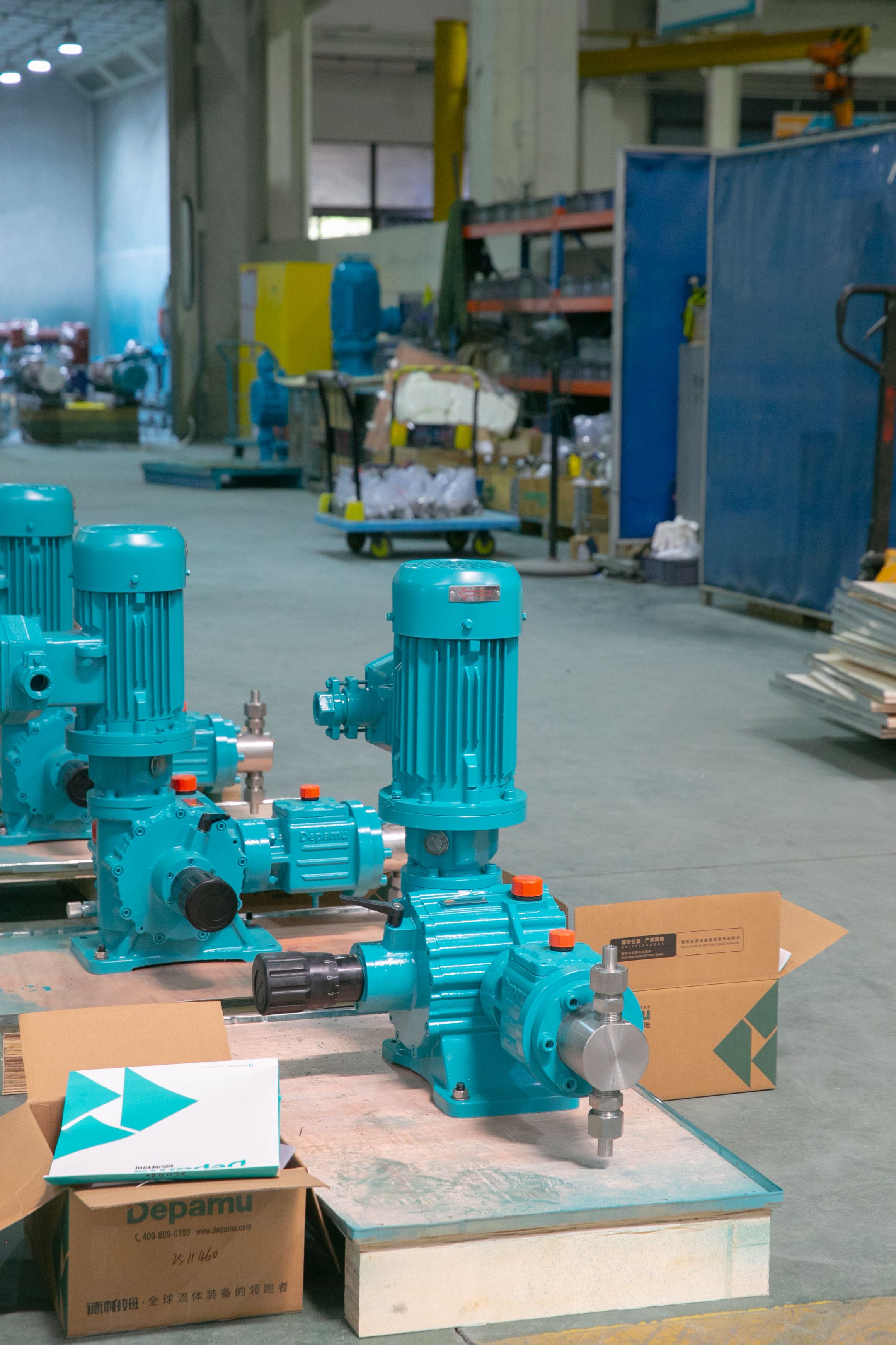
FAQ Q&A Technical Selection Guide
Q1: How to select pump head materials based on medium characteristics?
A: For strong acids (such as sulfuric acid and hydrochloric acid), Hastelloy C-276 or PVDF are preferred; for strong alkalis (such as sodium hydroxide), 316L stainless steel or PTFE-lined materials are selected; for media containing chloride ions, the use of 304 stainless steel (prone to pitting corrosion) should be avoided. Depump provides a material corrosion rate database for rapid matching of media and materials.
Q2: Which driving method should be selected when the flow accuracy requirement is ±1%?
A: Mechanical drive (adjustment handwheel) is suitable for scenarios requiring ±3% precision; servo motor drive with closed-loop control can achieve ±0.3% precision, but the cost increases by approximately 40%. Depam's standard products support interchangeability between the two drive methods, reducing upgrade costs.
Q3: How to select models for high-temperature (>150°C) or high-pressure (>10 MPa) scenarios?
A: For high-temperature scenarios, temperature-resistant seals (such as fluororubber + graphite) should be selected, and the pump head design should reserve allowance for thermal expansion. For high-pressure scenarios, the wall thickness of the pump body should be increased (the wall thickness of Depamp's high-pressure series is ≥25 mm), and strength should be verified through finite element analysis. For example, a certain oil and gas field project employed Depamp's high-pressure plunger pumps (with a pressure of 12 MPa and a temperature of 180°C), which operated continuously for three years without failure.
Q4: What is the maintenance cycle? How can downtime be reduced?
A: The routine maintenance cycle is 6-12 months (depending on the cleanliness of the medium). Depam's modular design supports online replacement of seals (without disassembling the pump body), reducing single maintenance downtime from 4 hours to 30 minutes.
Reference for full text summary
The quality evaluation of plunger metering pumps requires a comprehensive consideration from three dimensions: materials, control, and maintenance. Depam has addressed the pain points of traditional pumps, such as seal failure, significant flow fluctuations, and high maintenance costs, through the use of Hastelloy pump heads, closed-loop control with servo motors, and modular design. The large-scale application of its products in fields such as petroleum refining and chemical engineering has validated the technical reliability. When selecting a pump, it is essential to consider medium characteristics (corrosiveness, temperature, pressure), accuracy requirements (±0.3% to ±3%), and maintenance convenience (online replacement of seals). Priority should be given to manufacturers with international certifications (CE, ATEX) and customization capabilities. For more technical details and case studies, visit Depam's official website:www.depamufluid.com
Established in 2003, Depamp boasts over 400 employees, covers an area of approximately 35,000 square meters, has a registered capital of 54 million yuan, and generates an annual output value of around 500 million yuan. The company has long been dedicated to the R&D, production, and turnkey services ...
No. 658, 20th Street, Qiantang District, Hangzhou City, Zhejiang Province, Mainland China