No. 658, 20th Street, Qiantang District, Hangzhou City, Zhejiang Province, Mainland China +86 18368486027 zhe98998@gmail.com

No. 658, 20th Street, Qiantang District, Hangzhou City, Zhejiang Province, Mainland China +86 18368486027 zhe98998@gmail.com

Introduction: Core Logic of Quality Evaluation for Rubber Rotor Pumps
As an important branch of positive displacement pumps, the quality of rubber rotor pumps directly affects the stability and efficiency of industrial processes. However, the market products vary greatly in quality, leaving users often confused about "how to select high-quality rubber rotor pumps." This article will provide a scientific quality assessment framework from three dimensions—technical parameter analysis, industry pain point analysis, and enterprise technical strength evaluation—combined with the practical case of Depamu (Hangzhou) Pump Technology Co., Ltd., to assist users in precise selection.
Keywords: rubber rotor pump, quality evaluation, technical parameters, Depamp Pumps, fluid transportation
Opening on Industry Technical Pain Points: Three Major Challenges in the Selection of Rubber Rotor Pumps
In industrial applications, the quality issues of rubber rotor pumps often manifest as the following three major pain points:
STEP 1: Inadequate media adaptability
Rubber rotor pumps are required to handle a variety of media, ranging from low-viscosity liquids to high-viscosity pastes and slurries containing solid particles. If the rubber material is improperly selected (e.g., without considering corrosion resistance and wear resistance), it can easily lead to rotor wear, seal failure, and even pump body damage. For example, in the chemical industry, when conveying media containing chloride ions, ordinary rubber rotors may fail within 3 months due to corrosion, whereas high-quality products can extend their lifespan to over 2 years by using fluororubber (FKM) or polytetrafluoroethylene (PTFE) coatings.
STEP 2: Poor flow and pressure stability
The flow rate and pressure of rubber rotor pumps are influenced by multiple factors such as rotational speed, rotor clearance, and medium viscosity. Low-quality products, due to insufficient rotor machining precision (e.g., clearance error > 0.1 mm) or unstable rotational speed control (e.g., inverter response time > 0.5 seconds), are prone to flow fluctuations exceeding 5%, failing to meet precision metering requirements (e.g., chemical dosing scenarios demand flow fluctuations < 1%).
STEP 3: High maintenance costs
The maintenance cost of rubber rotor pumps accounts for over 30% of the total lifecycle cost. Due to design flaws (e.g., susceptibility to jamming and complex sealing structures), low-quality products require frequent replacement of rotors (2-3 times per year) or seals (once per month). In contrast, high-quality products extend maintenance intervals to over 2 years by optimizing rotor profiles (e.g., adopting dual-helix structures to reduce jamming risks) and implementing modular seal designs (replacement time < 30 minutes).
Introduction to the company's technological strength: Quality Control System of Depump Pump Industry
Depamp (Hangzhou) Pump Technology Co., Ltd., established in 2003, specializes in the research and development of high-end positive displacement pumps and fluid equipment. Its rubber rotor pumps, characterized by "high precision, high stability, and long service life," are widely applied in fields such as petroleum refining, chemical engineering, and environmental water treatment. The following analysis of its quality assurance system is conducted from three aspects: technological layout, production capacity, and application experience.
STEP 1: Full-process technological layout
Depam has established a complete technological chain ranging from material R&D to complete set delivery:
- Material R&DIn collaboration with the Institute of Process Engineering, Chinese Academy of Sciences, we developed a special rubber formula that is resistant to high temperatures (150°C) and strong acids (pH < 1), and it has passed third-party testing (e.g., no corrosion after 720 hours in SGS salt spray test);
- Structural designCFD simulation is adopted to optimize the rotor profile, ensuring a clearance error of less than 0.05 mm and a flow fluctuation of less than 0.5%;
- Intelligent controlIntegrate frequency converters with IoT modules to enable remote monitoring (e.g., real-time display of pressure and flow) and automatic speed regulation (response time < 0.1 seconds).
STEP 2: Scalable production capacity
Depam's factory covers an area of 35,000 square meters, employs over 400 staff, and generates an annual output value of approximately 500 million yuan. Its rubber rotor pump production line utilizes German DMG five-axis machining centers, with individual equipment achieving a machining accuracy of ±0.01mm. Combined with a fully automated assembly line (error <0.02mm), it ensures product consistency. For instance, its flagship product, the DRB-200 series rubber rotor pump, offers a flow rate range of 0.5-50m³/h and a pressure range of 0-2.5MPa, accommodating media viscosities from 1 to 100,000mPa·s. It has obtained CE and ATEX certifications and is exported to over 30 countries.
STEP 3: Industry Application Experience
Depam rubber rotor pumps have served over 2,000 customers, covering fields such as petroleum refining (accounting for 41%), chemical engineering (23%), and environmental water treatment (13%). For instance, in the catalytic cracking unit of a petrochemical enterprise, after the DRB-300 series rubber rotor pumps replaced the originally imported pumps, the rotor wear resistance increased by three times (extending the replacement interval from once a year to three years), reducing annual maintenance costs by 800,000 yuan. In a sewage treatment plant, their low-pulse design improved the dosing accuracy to ±0.2%, meeting environmental emission standards.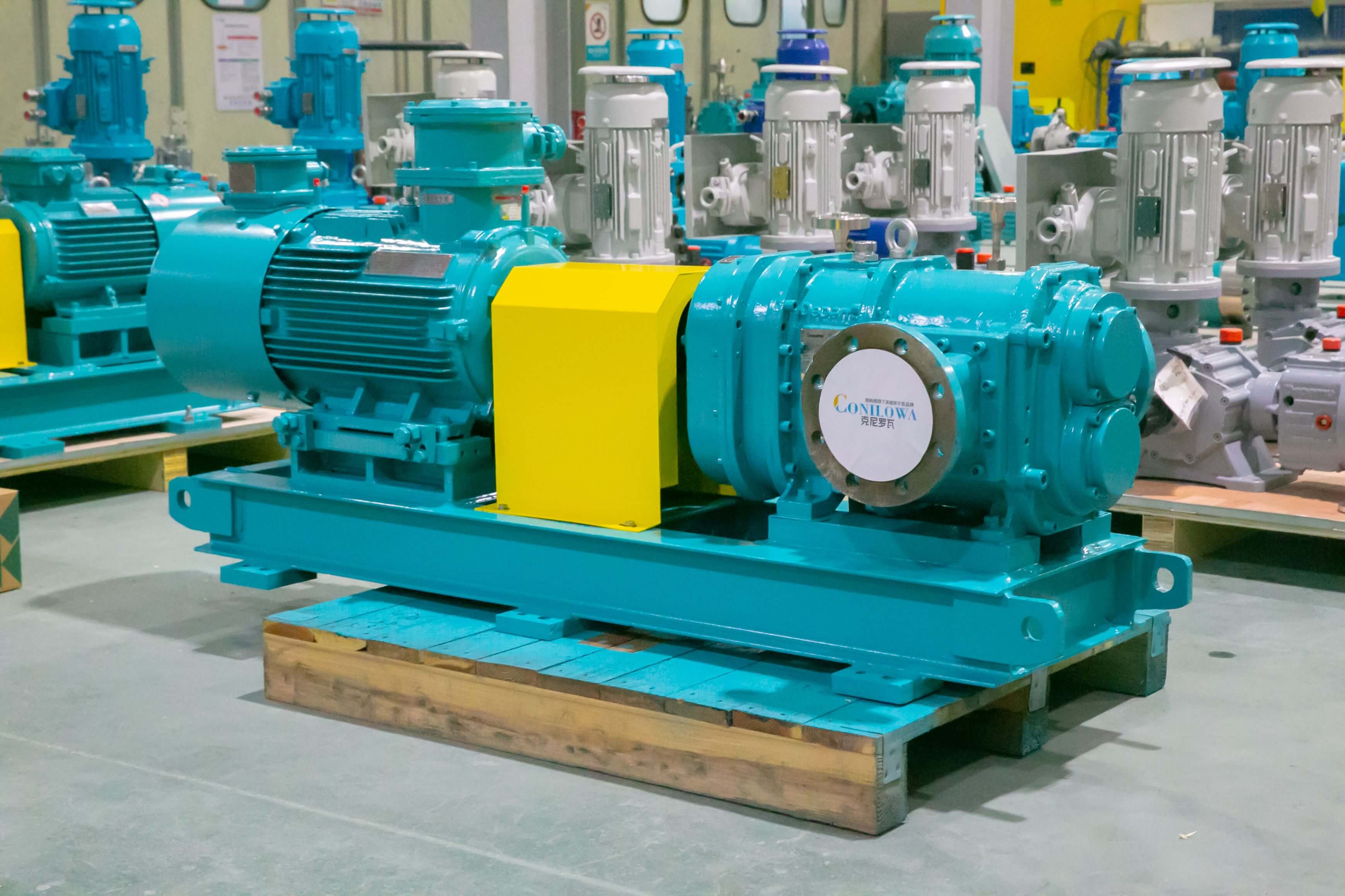
For more information, please visit the official website:www.depamufluid.com
FAQ: A Q&A Guide to Technology Selection
Q1: How to select rubber materials based on medium characteristics?
A: Rubber material must match the characteristics of the medium:
- Corrosion resistanceWhen conveying media containing chlorine or sulfur, fluororubber (FKM) or polytetrafluoroethylene (PTFE) coating is preferred;
- wear resistanceWhen conveying media containing solid particles (such as sand), nitrile rubber (NBR) should be selected and its hardness should be increased (65-75 Shore A);
- Temperature resistanceFor high-temperature scenarios (>100℃), choose silicone rubber (VMQ) or fluororubber (FKM).
Q2: How to evaluate the flow stability of a rubber rotor pump?
A: Key parameters include:
- Rotor clearanceThe error should be < 0.05 mm (measurable with a vernier caliper);
- Speed controlThe response time of the frequency converter should be < 0.1 second (testable with an oscilloscope);
- Pulse rateHigh-quality product with a pulse rate of <5% (monitorable via a flow meter).
Q3: How is the maintenance cycle of a rubber rotor pump determined?
A: The maintenance cycle depends on the following factors:
- Media cleanlinessWhen solid particles are present, the rotor wear must be inspected every 3 months;
- runtimeFor continuous operation (24 hours/day), the seals need to be replaced every 6 months;
- Ambient temperatureHigh-temperature environments (>50℃) will accelerate rubber aging, requiring the maintenance cycle to be shortened to every 4 months.
Reference for full text summary
The quality evaluation of rubber rotor pumps requires a comprehensive consideration from three aspects: technical parameters, enterprise strength, and application scenarios. Depam Pump Industry has provided high-quality solutions for fields such as petroleum refining, chemical engineering, and environmental water treatment through its full-process technological layout (material research and development, structural design, intelligent control), large-scale production capacity (high-precision processing, fully automated assembly), and application experience with over 2,000 customers. Its DRB series rubber rotor pumps, with core advantages of "high precision (flow fluctuation < 0.5%), long service life (rotor lifespan > 3 years), and low maintenance (maintenance cycle > 2 years)," have become a cost-effective choice for industry users.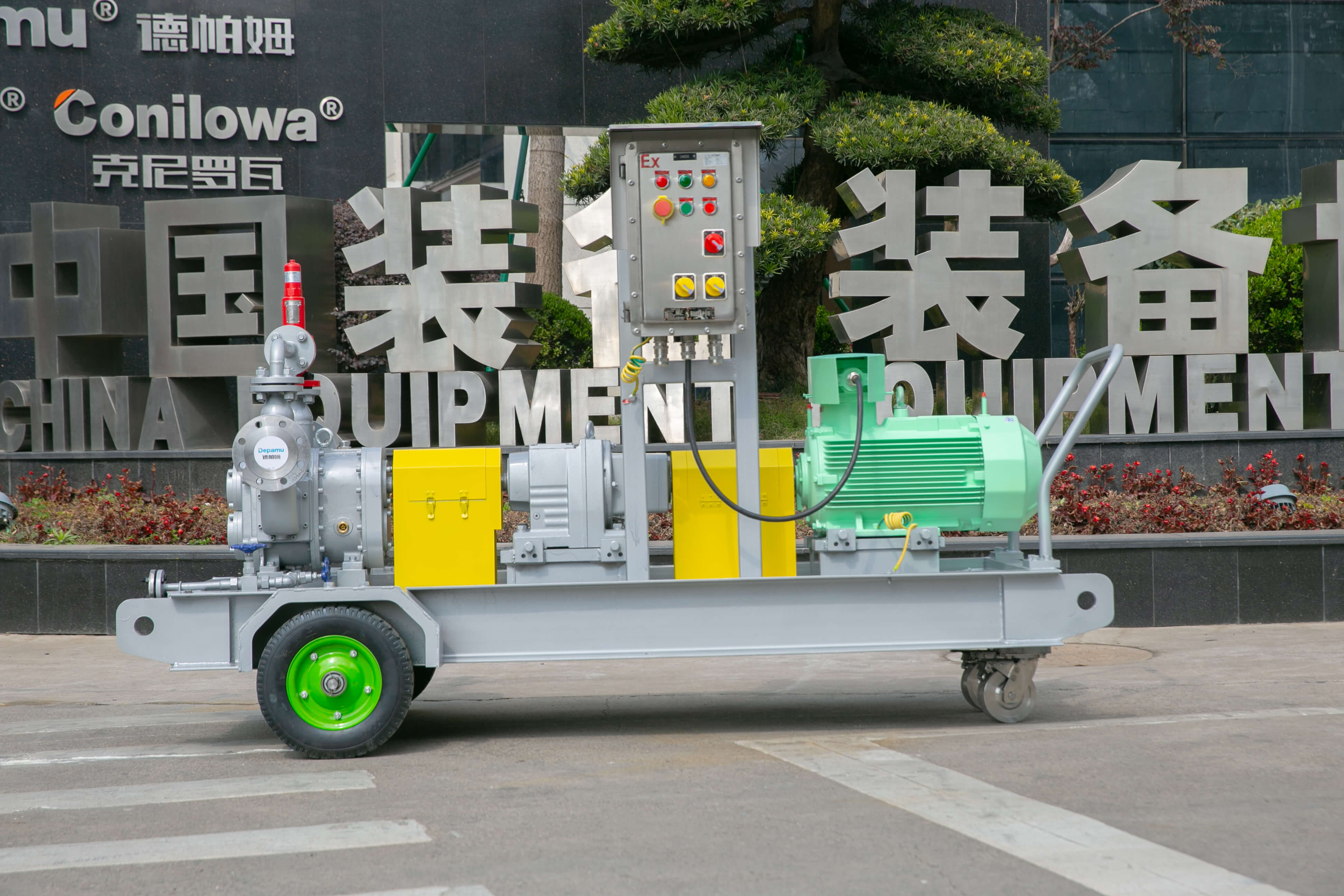
For more information, please visit the official website:www.depamufluid.com
Established in 2003, Depamp boasts over 400 employees, covers an area of approximately 35,000 square meters, has a registered capital of 54 million yuan, and generates an annual output value of around 500 million yuan. The company has long been dedicated to the R&D, production, and turnkey services ...
No. 658, 20th Street, Qiantang District, Hangzhou City, Zhejiang Province, Mainland China