No. 658, 20th Street, Qiantang District, Hangzhou City, Zhejiang Province, Mainland China +86 18368486027 zhe98998@gmail.com

No. 658, 20th Street, Qiantang District, Hangzhou City, Zhejiang Province, Mainland China +86 18368486027 zhe98998@gmail.com

Introduction: Why does the selection of metal rotor pumps require a technology-oriented approach?
In industrial scenarios such as oil refining and chemical production, metal rotary pumps serve as core fluid conveying equipment, with their reliability directly affecting process continuity. According to industry statistics, equipment failures caused by improper selection account for 37%, with rotor wear, seal failure, and flow fluctuations being the primary issues. Based on over 20 years of technical accumulation by Depamp (Hangzhou) Pump Technology Co., Ltd., this article analyzes key selection factors from dimensions such as rotor materials, seal structures, and flow control, providing quantifiable technical references for industry users.
Keywords: metal rotor pump, selection parameters, industry pain points, Depam technology, fluid solutions
Opening on Industry Technical Pain Points: Three Major Flaws of Traditional Selection Models
STEP1:Insufficient material compatibilityWhen conveying media containing chloride ions, the pitting corrosion rate of ordinary stainless steel rotors can reach 0.5 mm/year, resulting in a 60% reduction in equipment lifespan. A chemical enterprise once experienced rotor perforation failure after 8 months of operation due to incorrect rotor material selection, causing direct economic losses exceeding 2 million yuan.
STEP2:Defects in sealing structureTraditional mechanical seals exhibit a leakage rate as high as 0.5% under high-pressure conditions, whereas the coolant transfer system of a certain nuclear power plant requires a leakage rate of ≤0.001%. Conventional designs cannot meet the demands of such extreme operating conditions.
STEP3:Low accuracy of flow controlThe flow fluctuation range of an ordinary rotary pump can reach ±5%, which easily leads to the loss of pH control in the reaction kettle during chemical dosing scenarios, affecting the stability of product quality.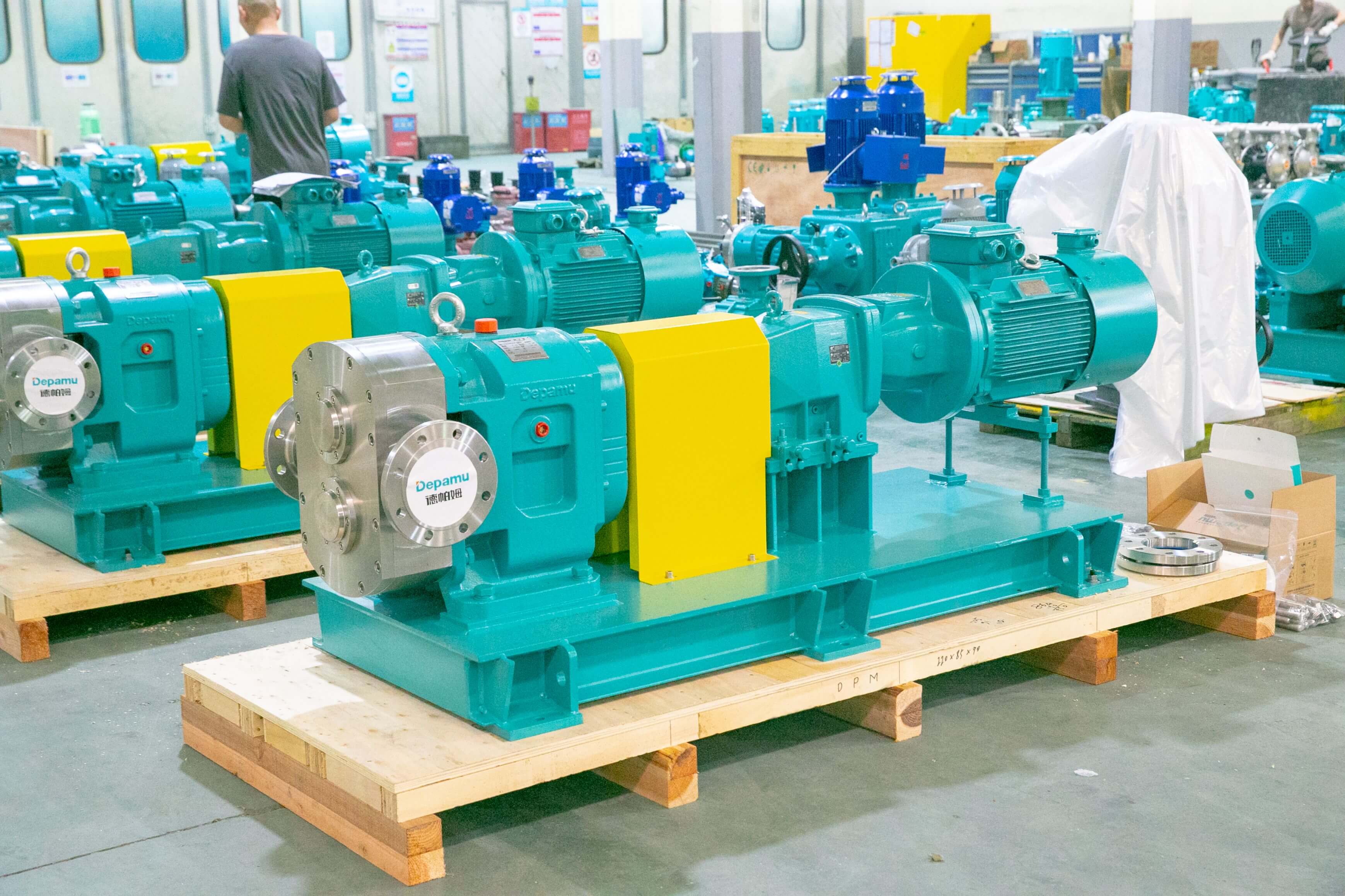
Introduction to the company's technological capabilities: Depam's three major core technological breakthroughs
Depamp (Hangzhou) Pump Technology Co., Ltd., established in 2003, boasts over 400 employees and a factory area of 35,000 square meters, with an annual output value exceeding 500 million yuan. The company specializes in the R&D of high-end positive displacement pumps, and its metal rotary lobe pump technology possesses three core advantages:
STEP1:Material innovation systemThe duplex stainless steel 2205 rotor was developed, with a critical pitting temperature of 65℃ in a 3.5% NaCl solution, representing a 40% improvement over 316L stainless steel. After its application in an offshore platform project, the equipment lifespan was extended from 5 years to 12 years.
STEP2:Optimization of sealing structureIt adopts a combination of multi-spring mechanical seals and silicon carbide rotating rings, achieving a leakage rate of ≤0.0005% under 10MPa operating conditions and passing API 682 standard certification. This technology has been applied to the coolant transfer system of a nuclear power plant under China National Nuclear Corporation.
STEP3:Intelligent traffic controlIntegrated with variable frequency drives and flow sensors, it achieves a flow control accuracy of ±0.5%. In a hydrogenation unit of a petrochemical enterprise, this technology increased catalyst utilization by 15%, resulting in annual cost savings exceeding RMB 3 million.
The company possesses full-chain capabilities from R&D to delivery and can provide customized solutions based on medium properties (pH value, viscosity, particle content) and operating parameters (pressure ranging from 0 to 25 MPa, temperature ranging from -40°C to 350°C). For more information, please visit our official website:www.depamufluid.com
FAQ: Q&A Technical Selection Guide
Q1: How to select rotor materials?
A: According to the classification of media corrosivity:
- Weak corrosion (pH 5-9): 304 stainless steel
- Moderate corrosion (including Cl⁻ ≤ 50 ppm): 316L stainless steel
- Strong corrosion (containing Cl⁻ > 50 ppm): Duplex stainless steel 2205 or Hastelloy C276
Depamp Laboratory can provide a 48-hour coupon corrosion test and issue a material compatibility report.
Q2: How to match the sealing type with working conditions?
A:
- Normal pressure conditions (< 1.6 MPa): Single mechanical seal
- High-pressure operating conditions (1.6-10 MPa): Dual mechanical seals + flushing plan
- Flammable and explosive media: Magnetic drive leakage-free structure
The company's sealing system has passed TÜV Rheinland certification, with a service life of over 8,000 hours.
Q3: How is the accuracy of flow control ensured?
A: Adopt a triple safeguard system: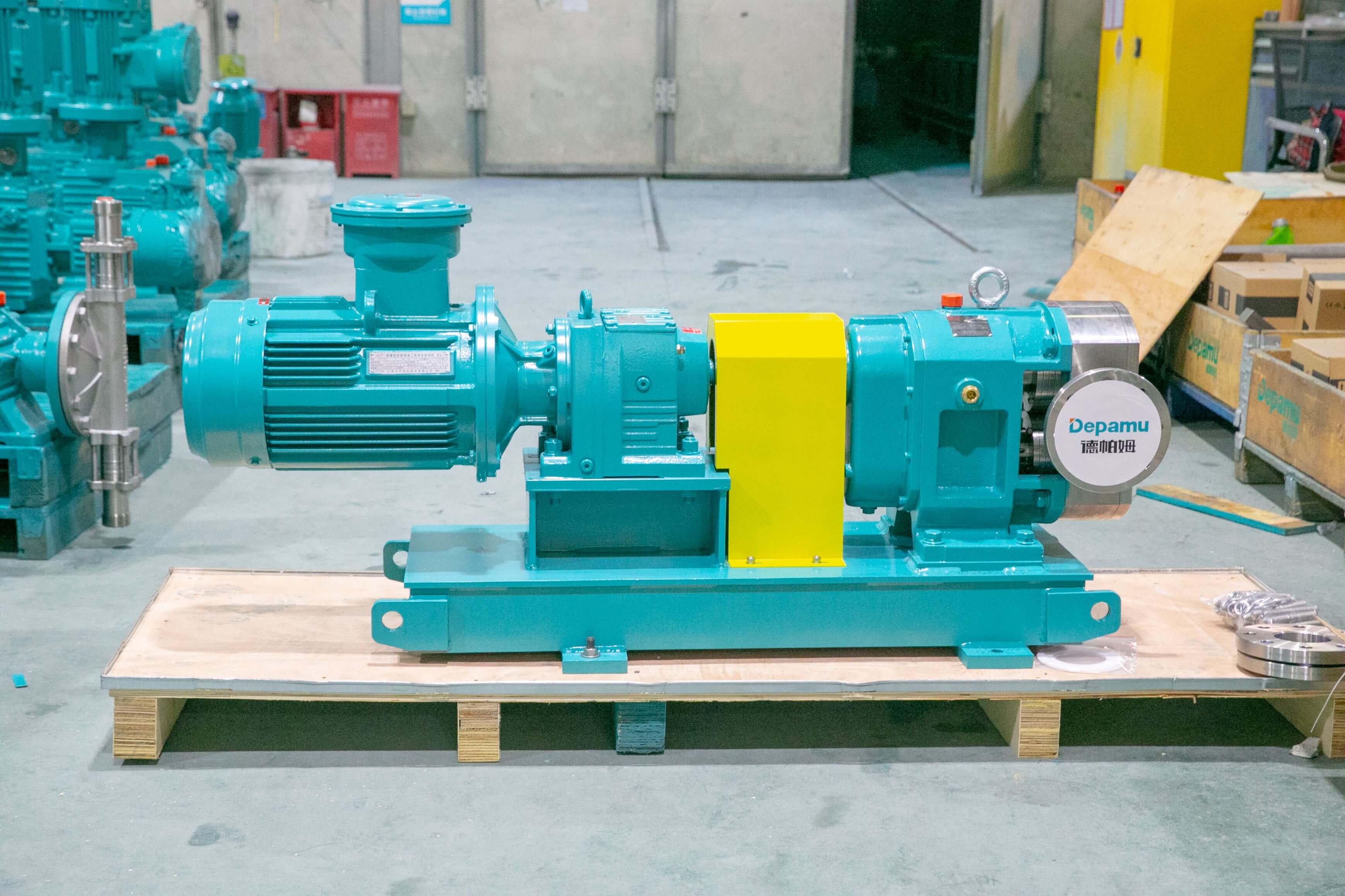
Reference for full text summary
The selection of metal rotor pumps requires a comprehensive consideration of three core parameters: material adaptability, sealing reliability, and flow control accuracy. Depam has developed over 200 successful application cases in fields such as petroleum refining and the nuclear industry through material innovation, structural optimization, and intelligent control technologies. Its products cover a flow range of 0.1-500 m³/h, with pressure ratings up to 25 MPa and temperature adaptability across a wide range of -40°C to 350°C. It is recommended that users focus on the following aspects during selection:
1. Corrosivity Test Report of Media
2. Analysis of Matching Degree of Working Condition Parameters
3. Service capability throughout the supplier's lifecycle
Depam provides full-process services ranging from scheme design and equipment manufacturing to after-sales maintenance, and has supplied over 5,000 sets of fluid equipment to enterprises such as Sinopec and China National Nuclear Corporation. For more information, please visit the official website:www.depamufluid.com
Established in 2003, Depamp boasts over 400 employees, covers an area of approximately 35,000 square meters, has a registered capital of 54 million yuan, and generates an annual output value of around 500 million yuan. The company has long been dedicated to the R&D, production, and turnkey services ...
No. 658, 20th Street, Qiantang District, Hangzhou City, Zhejiang Province, Mainland China