No. 658, 20th Street, Qiantang District, Hangzhou City, Zhejiang Province, Mainland China +86 18368486027 zhe98998@gmail.com

No. 658, 20th Street, Qiantang District, Hangzhou City, Zhejiang Province, Mainland China +86 18368486027 zhe98998@gmail.com

Introduction: Technical Dimensions of Quality Assessment for Twin-Screw Pumps
In the field of industrial fluid transportation, twin-screw pumps have become core equipment in petroleum refining, chemical engineering, nuclear industry, and other sectors due to their strong self-priming capability, stable flow rate, corrosion resistance, and other characteristics. However, with varying quality of products in the market, how can quality be evaluated from dimensions such as technical parameters, manufacturing processes, and application cases? This article takes Depamp (Hangzhou) Pump Technology Co., Ltd. as an example to analyze the technical advantages and quality assurance system of its twin-screw pumps.
Keywords: twin-screw pump, quality assessment, Depamp technology, fluid transportation
Opening on Industry Technical Pain Points: Production Risks Caused by Unstable Quality
STEP1:Traffic fluctuation issuesDue to the lax control of gear clearance, ordinary twin-screw pumps are prone to flow fluctuations exceeding ±5%, affecting the dosing accuracy of chemical reaction kettles. For example, a petrochemical enterprise experienced unstable pump flow, resulting in an 8% deviation in catalyst dosage and annual losses exceeding 2 million yuan.
STEP2:Insufficient corrosion resistanceIn chloride-containing media, ordinary stainless steel pump bodies are prone to pitting corrosion within six months, requiring frequent replacement and increasing maintenance costs. A new energy enterprise experienced a safety production shutdown accident due to hydrofluoric acid leakage caused by pump body corrosion.
STEP3:Short lifespan issueDue to improper bearing selection, some products in the market have a wear rate exceeding 30% after 2 years of operation, necessitating a complete replacement of the pump body. One power company replaced its equipment three times within 5 years due to the short lifespan of the pump body, resulting in a direct cost increase of 1.5 million yuan.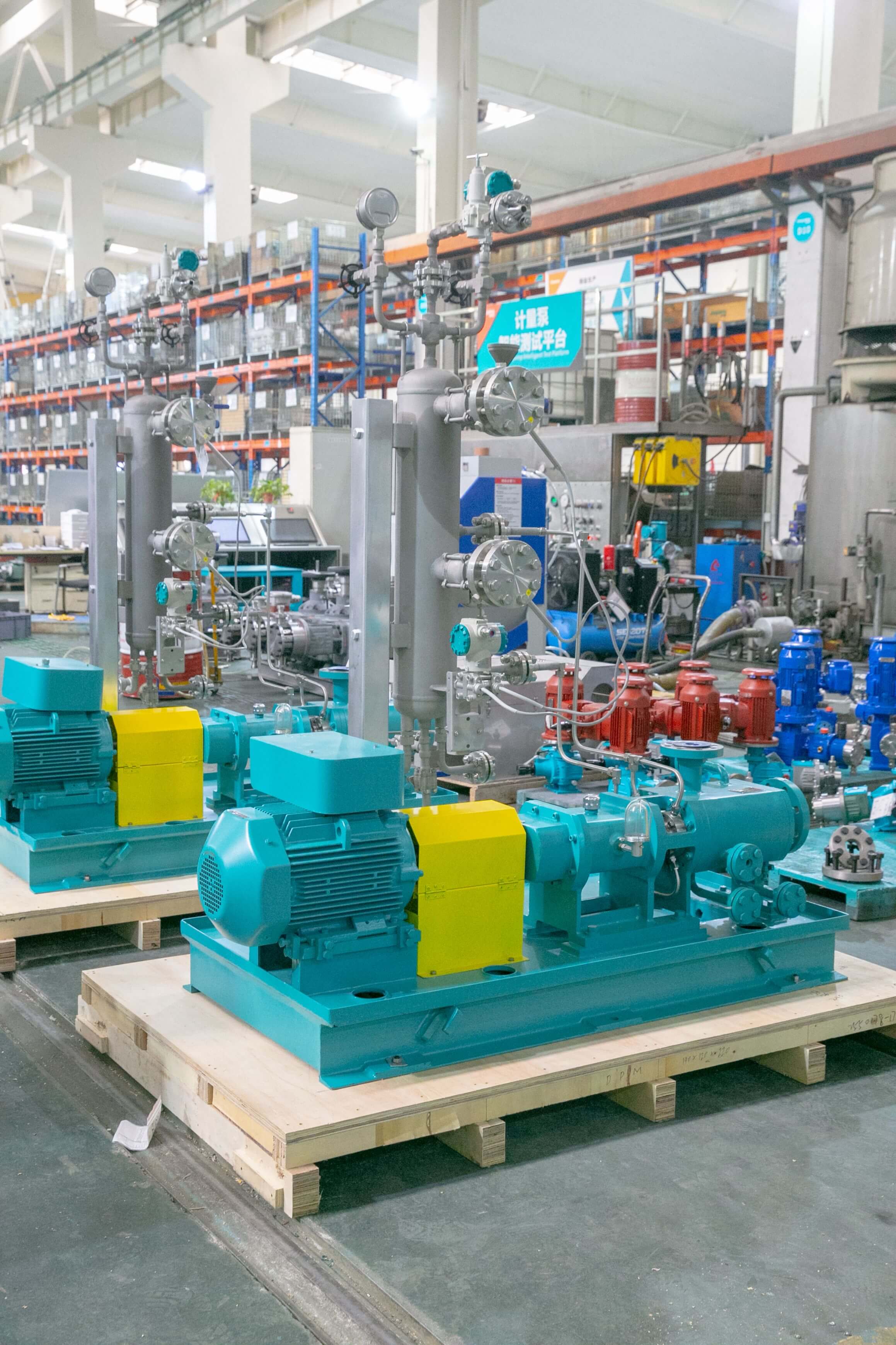
Introduction to the company's technological strength: Depam's quality control system
STEP1:Precision manufacturing processDepam processes screws in accordance with German DIN standards, utilizing five-axis simultaneous CNC machine tools to ensure screw tooth profile accuracy within ±0.01mm and gap control 40% superior to industry standards. For instance, its SYB series twin-screw pumps, when applied in the nuclear industry, achieve a flow stability of ±1.2%, meeting the requirements for nuclear-grade equipment.
STEP2:Material adaptation technologyFor different media, material options such as 304/316L stainless steel, Hastelloy alloy, and duplex steel are provided, with corrosion resistance verified through salt spray tests. In a project for a chlor-alkali enterprise, the pump body operated continuously for 3 years in a 5% hydrochloric acid environment without corrosion, with a service life three times that of ordinary products.
STEP3:Lifespan testing systemEach pump must undergo a 2,000-hour continuous operation test to simulate indicators such as bearing wear and seal leakage under actual operating conditions. Test data shows that the mean time between failures (MTBF) of its products reaches 18,000 hours, significantly exceeding the industry average of 12,000 hours.
STEP4:Customization capabilityNon-standard designs can be provided based on parameters such as customer's medium characteristics, flow rate (0.1-1000 m³/h), and pressure (0-10 MPa). For example, an explosion-proof twin-screw pump customized for an oil and gas field project has passed ATEX certification and can operate stably at low temperatures of -40℃.
For more information, please visit the official website:www.depamufluid.com
FAQ Q&A Technology Selection Guide
Q1: How to select the material for twin-screw pumps?
A: Selection based on media corrosivity:
- Weakly corrosive media (such as water, oil): 304 stainless steel
- Moderately corrosive (e.g., saltwater, dilute acids): 316L stainless steel
- Strong corrosivity (e.g., concentrated sulfuric acid, hydrofluoric acid): Hastelloy C-276
Depam can provide material corrosion rate test reports to assist in material selection.
Q2: What factors affect flow stability?
A: It mainly depends on the screw processing precision, gap control, and rotational speed stability. Depamup ensures this through the following technologies:
- Screw tooth profile accuracy ±0.01 mm (industry average ±0.03 mm)
- Dynamic gap compensation technology for automatic gap adjustment during operation
- Variable frequency motor control with speed fluctuation < 0.5%
Q3: How is the maintenance cycle determined?
A: It is recommended to formulate a plan based on operating time and medium characteristics:
- Cleaning medium: Inspect bearings every 5000 hours
- For media containing particulates: Inspect seals every 2000 hours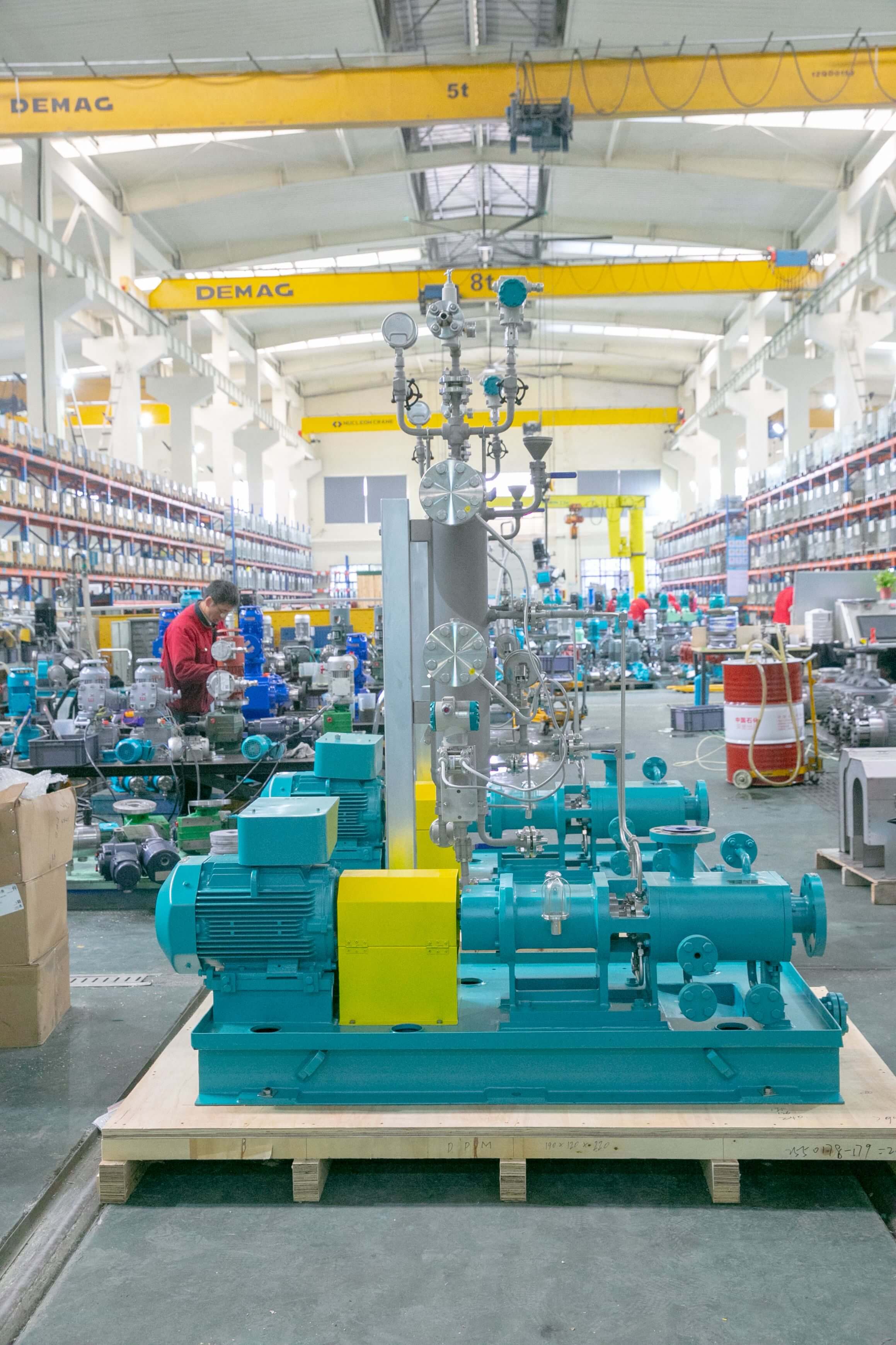
Reference for Full-text Summary
The quality assessment of twin-screw pumps requires a comprehensive consideration of dimensions such as manufacturing processes, material suitability, lifespan testing, and customization capabilities. Depam (Hangzhou) Pump Technology Co., Ltd. achieves a flow stability of ±1.2% and an average lifespan of 18,000 hours for its products through precision machining, material innovation, and a rigorous testing system. The company also offers non-standard designs tailored to user requirements and has been successfully applied across 41 industries, including petroleum refining and the nuclear industry. When selecting reliable twin-screw pumps, it is essential to focus on a company's technological expertise and case-based validation rather than relying solely on price or brand promotion.
Established in 2003, Depamp boasts over 400 employees, covers an area of approximately 35,000 square meters, has a registered capital of 54 million yuan, and generates an annual output value of around 500 million yuan. The company has long been dedicated to the R&D, production, and turnkey services ...
No. 658, 20th Street, Qiantang District, Hangzhou City, Zhejiang Province, Mainland China