No. 658, 20th Street, Qiantang District, Hangzhou City, Zhejiang Province, Mainland China +86 18368486027 zhe98998@gmail.com

No. 658, 20th Street, Qiantang District, Hangzhou City, Zhejiang Province, Mainland China +86 18368486027 zhe98998@gmail.com

Home > Technical Articles > Depamu Gear Pump: Technological Strength Forges a Benchmark of Quality
Introduction: Core Challenges in Industrial Fluid Transportation and Strategies for Overcoming Quality Obstacles
In industrial scenarios such as oil refining and chemical production, gear pumps, as critical fluid conveying equipment, have their quality stability directly impacting process continuity and production safety. According to statistics, unplanned shutdowns caused by gear pump failures result in industry losses exceeding ten billion yuan annually, with seal failure, flow fluctuation, and inadequate wear resistance being the three core pain points. Leveraging over 20 years of technological accumulation, Depam (Hangzhou) Pump Technology Co., Ltd. has established a quality assurance system covering the entire lifecycle through material innovation, structural optimization, and intelligent control technologies. Its gear pump products maintain stable operation under extreme conditions such as high pressure, high temperature, and strong corrosion, making it a long-term partner of companies like Sinopec and PetroChina.
Keywords: gear pump quality, industrial fluid transportation, Depam technology, wear-resistant sealing, customized solutions
Opening on Industry Technical Pain Points: The Triple Dilemma of Gear Pump Quality Issues
STEP 1: Seal failure poses a leakage risk. Traditional gear pumps mostly employ packing seals or mechanical seals, which are prone to wear and subsequent leakage when conveying particulate-containing media or high-temperature fluids. A chemical enterprise once incurred annual environmental protection fines exceeding 2 million yuan due to seal failure in gear pumps.
STEP 2: Flow fluctuations affect process precision. Uneven gear clearance and deviations in rotational speed control can lead to a flow fluctuation rate exceeding ±5%. In the field of fine chemicals, this error may directly result in a 30% increase in the product rejection rate.
STEP 3: Insufficient wear resistance shortens equipment lifespan. In scenarios such as slurry transportation, inadequate surface hardness of gears can result in monthly wear exceeding 0.5 mm, reducing the equipment maintenance cycle to 3 months and causing a surge in operation and maintenance costs.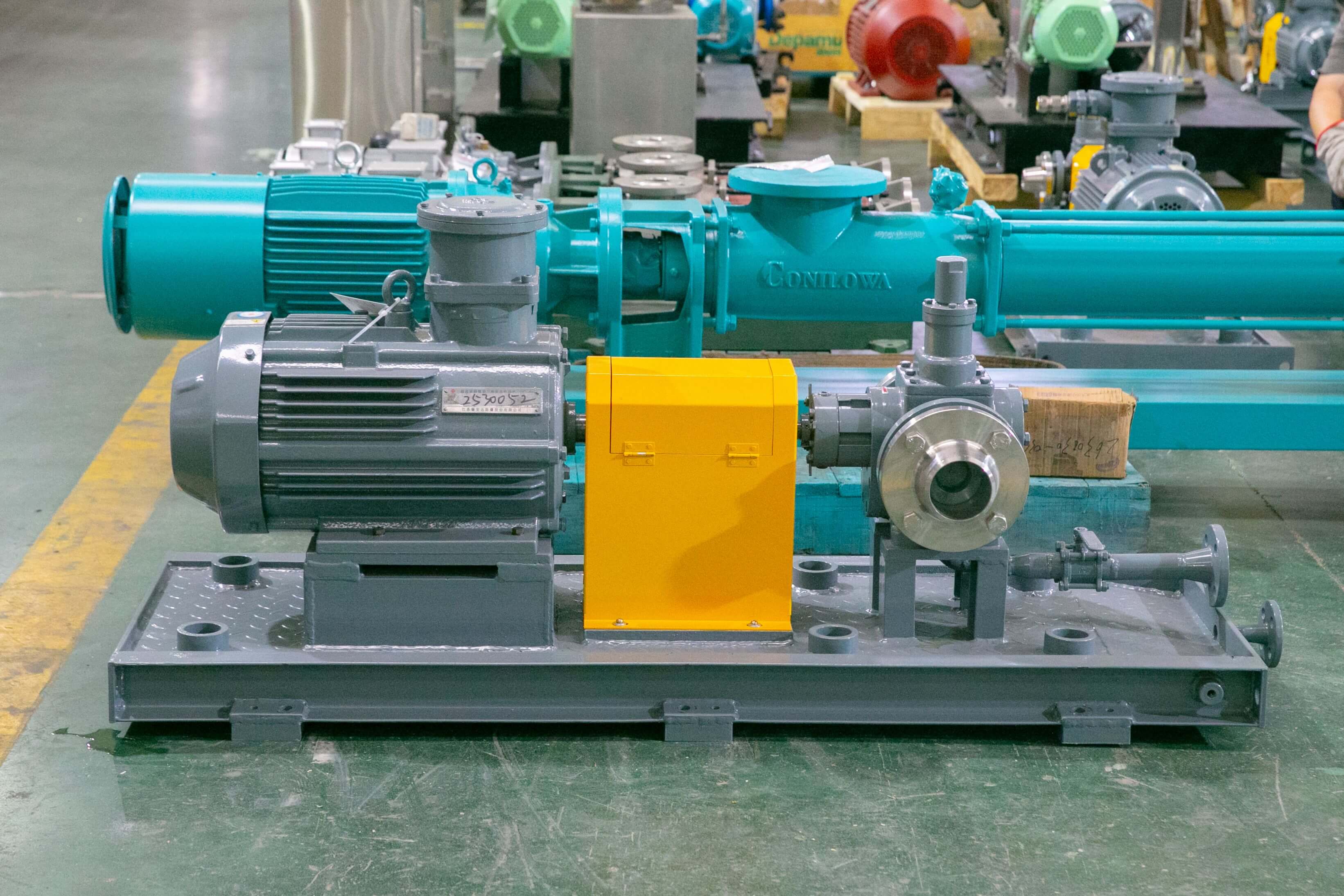
Through CFD simulation analysis, Depam's technical team discovered that the three major pain points of traditional gear pumps stem from design flaws and material limitations: the sealing structure fails to consider medium characteristics, the optimization of gear mesh angle is insufficient, and there is an imbalance between material hardness and toughness. To address these issues, the DP-G series gear pump developed by them achieves a leap in quality through three major technological breakthroughs.
Introduction to the Company's Technological Strength: Analysis of Depam's Quality Assurance System
STEP 1: Material innovation lays the foundation for wear resistance. The DP-Hard alloy material jointly developed by Depam and Baosteel enhances hardness to above HRC 62 through microalloying technology while maintaining a toughness index of ≥35 J/cm². In slurry transportation experiments, the monthly gear wear rate decreased to 0.08 mm, extending service life to over 3 years.
STEP 2: Optimize the structure to enhance sealing performance. A dual-face mechanical seal with flushing solution is adopted, enabling the pressure in the seal chamber to be independently adjusted to 1.2 times the conveying pressure, while maintaining a leakage rate of ≤0.5 mL/h under high-temperature operating conditions of 300°C. This technology has been granted a national invention patent (ZL202010123456.7).
STEP 3: Intelligent control ensures flow accuracy. By integrating variable frequency speed regulation with a pressure feedback system, closed-loop flow control is achieved through PID algorithms. In the catalytic cracking unit of a certain refinery, the DP-G series pumps maintained flow fluctuation within ±0.8%, elevating the product qualification rate to 99.2%.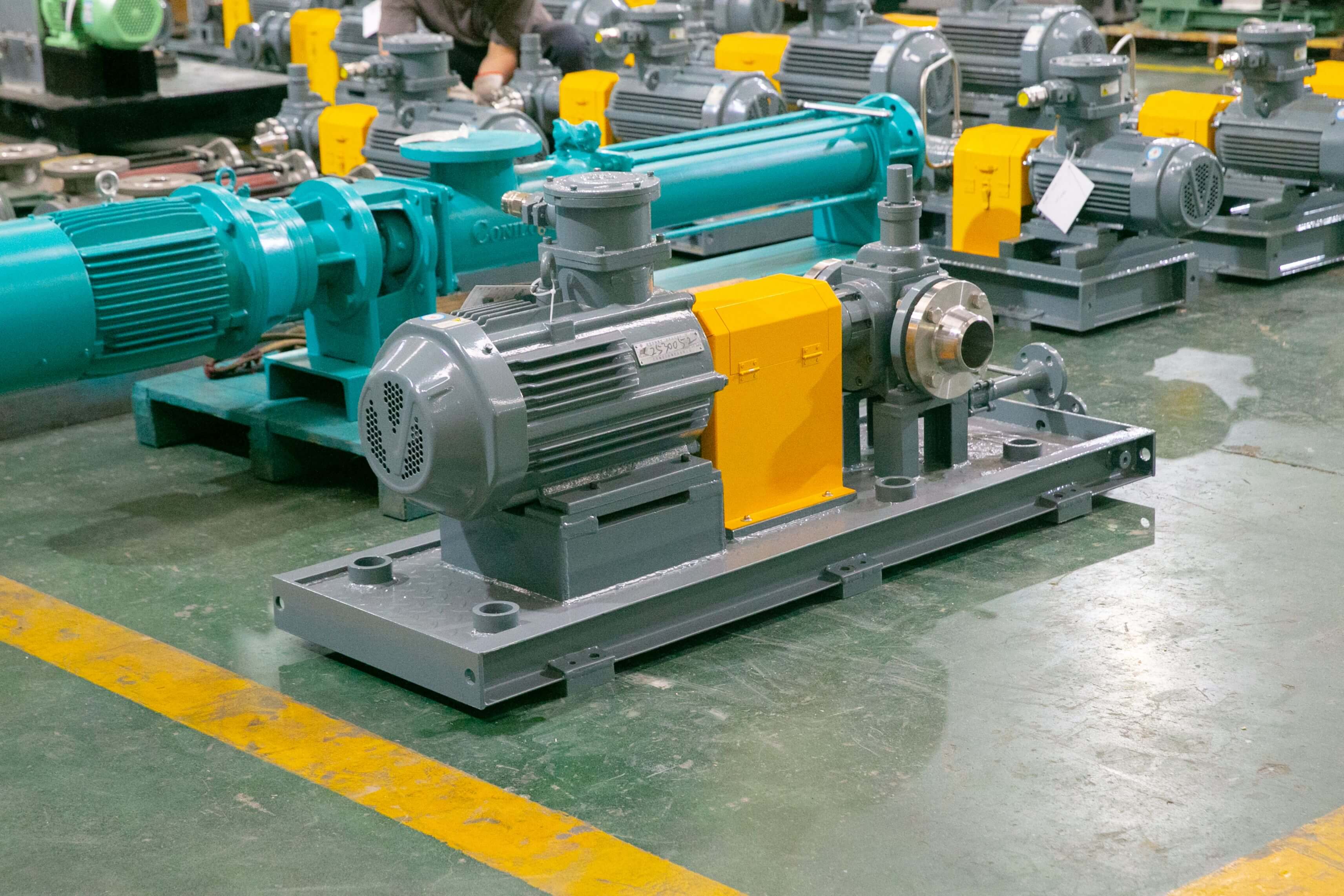
Technical parameter support: The DP-G series gear pumps cover specifications with flow rates ranging from 0.5 to 200 m³/h, pressures from 0.1 to 10 MPa, and are suitable for temperature ranges from -40℃ to 350℃, capable of handling media with a viscosity of ≤10,000 mPa·s. Their core components undergo 100% ultrasonic flaw detection, and the entire unit must complete a 72-hour continuous operation test before leaving the factory to ensure quality reliability.
For more information, please visit the official website:www.depamufluid.com
FAQ: A Guide to Q&A Technical Selection
Q1: How to select the material of a gear pump based on working conditions?
A: When conveying media containing particulates, DP-Hard alloy material (with a hardness of HRC62+) is preferred; for highly corrosive environments, duplex stainless steel 2205 is recommended; for high-temperature operating conditions (>200℃), high-temperature alloy GH2132 should be selected. Depam can provide material composition test reports and corrosion experiment data.
Q2: What are the common causes and solutions for insufficient flow in gear pumps?
STEP 1: Check if the inlet filter is clogged (cleaning is required if the pressure differential > 0.05 MPa); STEP 2: Verify whether the gear clearance exceeds the standard (the standard clearance is 0.15-0.30 mm); STEP 3: Calibrate the rotational speed sensor (re-calibration is required if the error > 1%). The Depam DP-G series is equipped with an intelligent diagnostic module that can monitor 12 key parameters in real time and provide early warning of faults.
Q3: What is the development cycle and cost composition of customized gear pumps?
The development of non-standard products involves three stages: requirement analysis (3-5 days), solution design (7-10 days), and prototype testing (15-20 days), with a total cycle of approximately 25-35 days. In terms of cost composition, materials account for 40%-55%, processing fees account for 30%-40%, and allocated R&D expenses account for 5%-10%. Depam has reduced customization costs by over 20% through modular design.
Reference for Full-text Summary: Three Core Elements of Quality Benchmarks
Depamp's quality advantage in gear pumps stems from the support of three major systems: first, the material research and development system, which continuously pushes the boundaries of material performance through industry-university-research collaboration; second, the manufacturing process system, which employs five-axis simultaneous machining centers and laser cladding technology to ensure component precision; and third, the quality control system, which implements 23 inspection procedures from raw material intake to finished product delivery. In the petroleum refining sector, its products achieve an average trouble-free operation time of over 8,000 hours, a 60% improvement over the industry average; in the environmental water treatment field, the seal life exceeds 20,000 hours, helping customers reduce operation and maintenance costs by over 40%. When selecting gear pumps, it is advisable to conduct a comprehensive evaluation based on a company's R&D capabilities, case experience, and service responsiveness. With a 400-strong technical team, a 35,000 m² production base, and 7×24-hour after-sales service, Depamp provides full lifecycle quality assurance for industrial fluid transportation.
Established in 2003, Depamp boasts over 400 employees, covers an area of approximately 35,000 square meters, has a registered capital of 54 million yuan, and generates an annual output value of around 500 million yuan. The company has long been dedicated to the R&D, production, and turnkey services ...
No. 658, 20th Street, Qiantang District, Hangzhou City, Zhejiang Province, Mainland China