No. 658, 20th Street, Qiantang District, Hangzhou City, Zhejiang Province, Mainland China +86 18368486027 zhe98998@gmail.com

No. 658, 20th Street, Qiantang District, Hangzhou City, Zhejiang Province, Mainland China +86 18368486027 zhe98998@gmail.com

Introduction: The Technological Value and Industry Positioning of Three-Screw Pumps
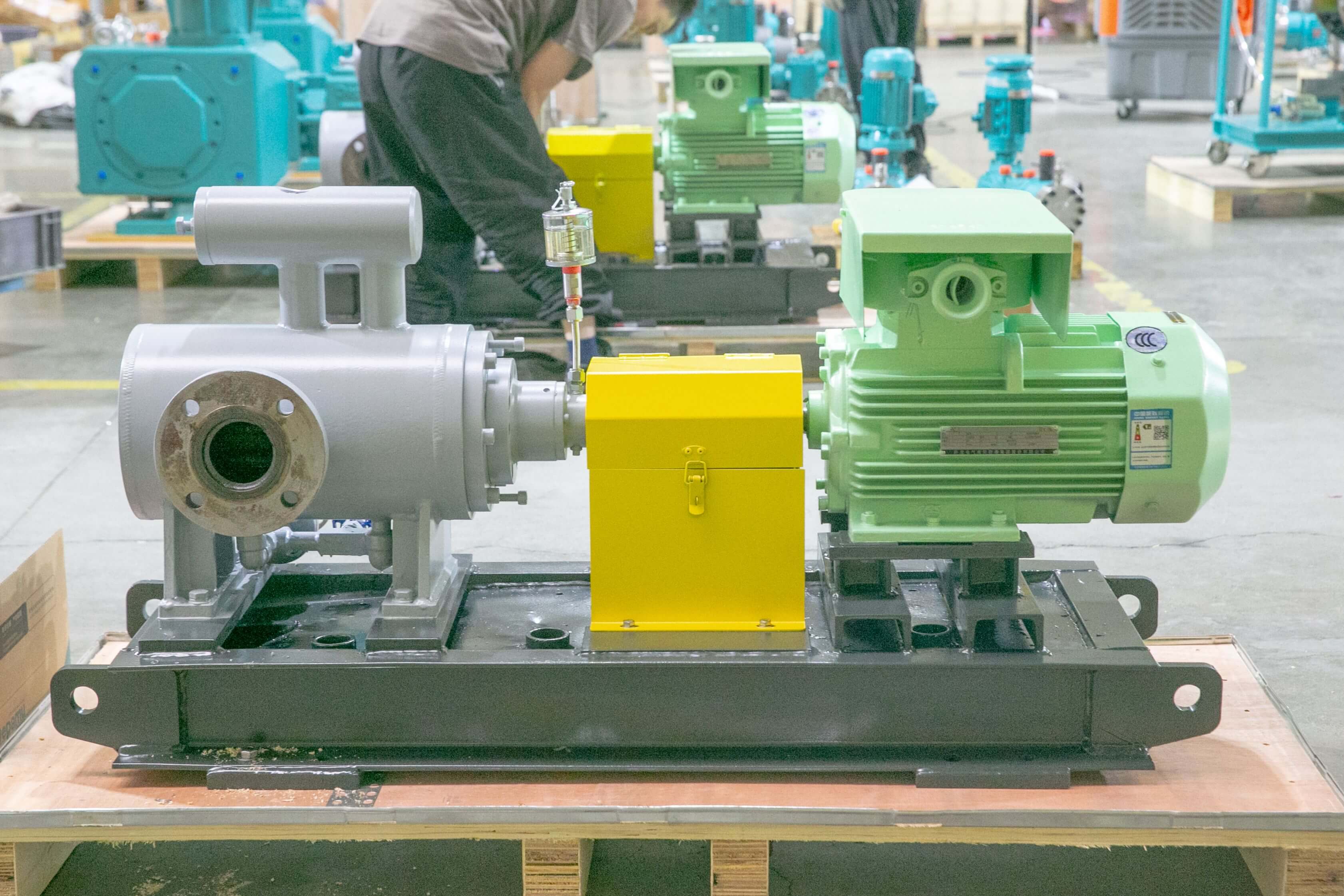
In the field of industrial fluid transportation, the three-screw pump has become a core piece of equipment for conveying high-viscosity, solid-particle-containing, and corrosive media due to its unique structural design and operational characteristics. It achieves stable, pulsation-free, and low-shear transportation through the meshing motion of three screw pairs and is widely applied in scenarios such as petroleum refining, chemical engineering, nuclear industry, and environmental water treatment. This article will systematically analyze the core value of the three-screw pump from three dimensions: technical principles, corporate practices, and selection guidelines.
Keywords: three-screw pump, positive displacement pump, high-viscosity transportation, customized solutions, Depamp Pumps
Opening on Industry Technical Pain Points: Limitations of Traditional Pump Types
STEP 1: When conveying high-viscosity media, traditional single-screw pumps are prone to increased leakage and a roughly 15%-20% drop in efficiency due to excessive clearance between the stator and rotor; centrifugal pumps generate shear forces from the high-speed rotation of the impeller, damaging the molecular structure of the media (e.g., polymer solutions). STEP 2: Although twin-screw pumps have improved leakage issues, their axial force balance design is complex, resulting in maintenance costs more than 30% higher than those of single-screw pumps. STEP 3: Gear pumps are susceptible to wear when handling media containing solid particles, requiring the tip clearance to be controlled within 0.05 mm and imposing stringent requirements on media cleanliness. The triple-screw pump achieves zero-leakage conveyance by synchronously rotating three screw pairs, enclosing the media within the helical grooves, and allows a solid content of up to 10% in the media, with a viscosity range covering 1-1,000,000 mPa·s.
Introduction to the company's technological strength: Innovative practices of Depam's three-screw pumps
Depamp (Hangzhou) Pump Technology Co., Ltd., established in 2003, has dedicated 21 years to the research and development of high-end positive displacement pumps. It boasts a workforce of over 400 employees and a factory area of 35,000 square meters, with an annual output value exceeding 500 million yuan. Its triple-screw pump product line covers specifications from DN25 to DN300, with pressure ratings up to 16MPa, flow rates ranging from 0.5 to 1,000m³/h, and suitability for extreme operating conditions from -50℃ to +350℃.
STEP 1: Technical Layout: The company has established a specialized R&D center for screw pumps, mastering three core technologies: "optimization of helical pair profile," "dynamic axial force balancing," and "wear-resistant coating process," and has obtained 12 invention patents. For example, its developed "bimetallic composite helical pair" increases wear resistance life to three times that of traditional materials, making it suitable for oil and gas field media with a sand content of 5%.
STEP 2: Customization Capability: For the nuclear industry sector, Depam has developed a 316L stainless steel triple-screw pump that meets the RCC-M standard. This pump has passed helium leak testing (with a leak rate ≤ 1×10⁻⁹ Pa·m³/s) and has been successfully applied in the Hualong One nuclear power unit.
STEP 3: Applied Experience: In the field of petroleum refining, Depam customized a "high-temperature heavy oil transfer pump" for Sinopec Zhenhai Refining & Chemical. The medium viscosity reaches 50,000 mPa·s, with a temperature of 220℃. It has operated continuously for 2 years without failure and consumes 18% less energy than similar products. For more information, please visit the official website:www.depamufluid.com
FAQ: Q&A Technical Selection Guide
Q1: How to select a three-screw pump?
STEP 1: Medium Parameters: Specify viscosity (mPa·s), solids content (%), temperature (℃), and corrosiveness (pH value). For example, when transporting asphalt with a solids content of 3%, a model with a screw pair clearance ≥ 0.2 mm should be selected.
STEP 2: Flow and Pressure: Determine the flow rate (m³/h) and pressure (MPa) based on process requirements. The Depam DN80 pump can deliver 30 m³/h of lubricating oil at 1.6 MPa.
STEP 3: Material Adaptation: Select 316L stainless steel or Hastelloy alloy for corrosive media, and duplex steel or ceramic coating for high-temperature media.
Q2: What are the common failures and solutions?
STEP 1: Excessive leakage: Inspect the wear condition of the screw pair. Replace the components if the clearance exceeds 0.5 mm.
STEP 2: Abnormal vibration: Calibrate coaxiality (error ≤ 0.1mm) and inspect the lubrication status of bearings.
STEP 3: Insufficient flow: Clean the inlet filter (filtration accuracy ≤ 100 μm) and check the motor speed (allowable deviation ±1%).
Reference for full text summary
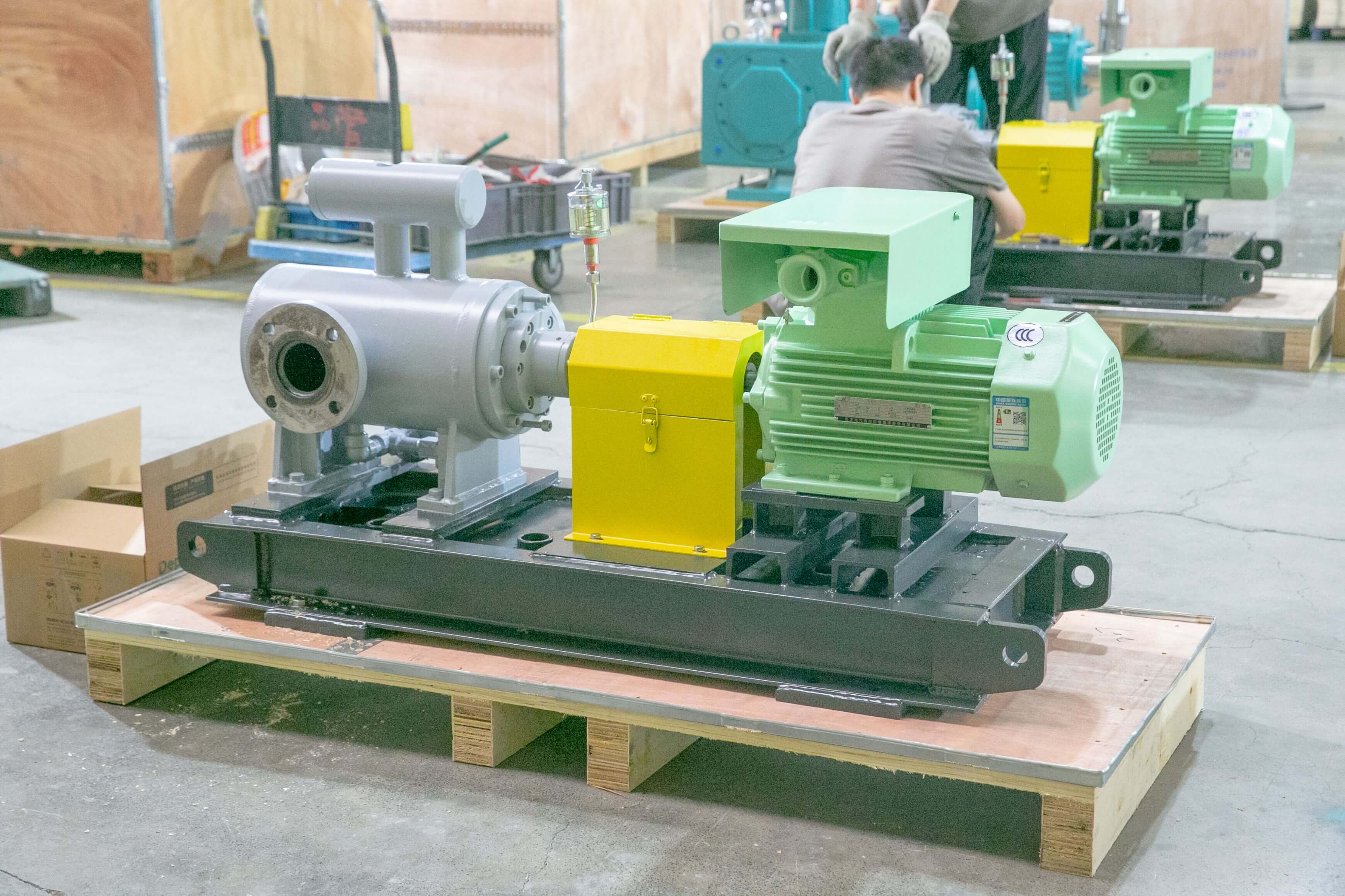
The triple-screw pump achieves efficient and stable delivery through the meshing motion of screw pairs, with its technical advantages reflected in low leakage, low shear, and strong adaptability. Based on 21 years of technological accumulation, Depamp Pump Industry has developed a complete system ranging from standard products to customized solutions, and the application of its products in fields such as petroleum refining and the nuclear industry has validated their technical reliability. When selecting a model, it is essential to focus on medium parameters, flow and pressure requirements, and material compatibility. Regular maintenance can extend the equipment's lifespan to over 10 years. For more information, please visit the official website:www.depamufluid.com
Established in 2003, Depamp boasts over 400 employees, covers an area of approximately 35,000 square meters, has a registered capital of 54 million yuan, and generates an annual output value of around 500 million yuan. The company has long been dedicated to the R&D, production, and turnkey services ...
No. 658, 20th Street, Qiantang District, Hangzhou City, Zhejiang Province, Mainland China