No. 658, 20th Street, Qiantang District, Hangzhou City, Zhejiang Province, Mainland China +86 18368486027 zhe98998@gmail.com

No. 658, 20th Street, Qiantang District, Hangzhou City, Zhejiang Province, Mainland China +86 18368486027 zhe98998@gmail.com

Introduction: Technical Value and Industry Demand of Electric Diaphragm Pumps
In industrial fields such as chemical engineering, petroleum, and environmental protection, the precision, safety, and adaptability of fluid transportation directly determine production efficiency and costs. Electric diaphragm pumps, with their characteristics of being leak-free, corrosion-resistant, and capable of transporting high-viscosity media, have become the preferred equipment for complex operating conditions. However, when faced with varying media properties, flow and pressure requirements, and on-site process conditions, how can one select the appropriate model of electric diaphragm pump? This article will analyze from four dimensions: technical principles, core parameters, key selection considerations, and corporate technological capabilities, incorporating typical application cases from Depamp (Hangzhou) Pump Technology Co., Ltd., to provide engineers with a systematic solution.For more information, please visit the official website: www.depamufluid.com
Keywords: electric diaphragm pump; technical principle; selection guide; Depamp Pumps; fluid transportation
Technical pain points in the industry: Limitations of traditional pumps and breakthroughs of electric diaphragm pumps
Traditional centrifugal pumps or gear pumps often encounter issues such as sealing leakage, rapid wear, and high maintenance costs when transporting corrosive, high-viscosity, or solid-particle-containing media. For example, in the chemical industry, the transportation of highly corrosive liquids like hydrochloric acid and sodium hydroxide requires frequent replacement of seals, with the cost of a single shutdown for maintenance reaching tens of thousands of yuan; in the petroleum refining sector, the transportation of high-viscosity media such as residual oil and asphalt necessitates high-temperature preheating, with energy consumption accounting for over 30%.
Technical advantages of electric diaphragm pumpsIt achieves medium conveyance through the reciprocating motion of the diaphragm, eliminating the need for dynamic sealing and fundamentally preventing leakage risks. Its core components (such as diaphragms and valve balls) can be made of corrosion-resistant materials like polytetrafluoroethylene (PTFE) and fluororubber (FKM), making them suitable for media with a pH range of 0-14. It supports dry running and self-priming functions, with a suction lift of up to 8 meters, making it suitable for conveying gas-liquid mixed media. Taking Depam DP-M series electric diaphragm pumps as an example, they have a flow rate range of 0.1-50 m³/h, a pressure range of 0-1.2 MPa, can convey media with a viscosity of ≤50,000 cP, and operate within a temperature range of -20°C to 120°C, covering over 90% of industrial fluid scenarios.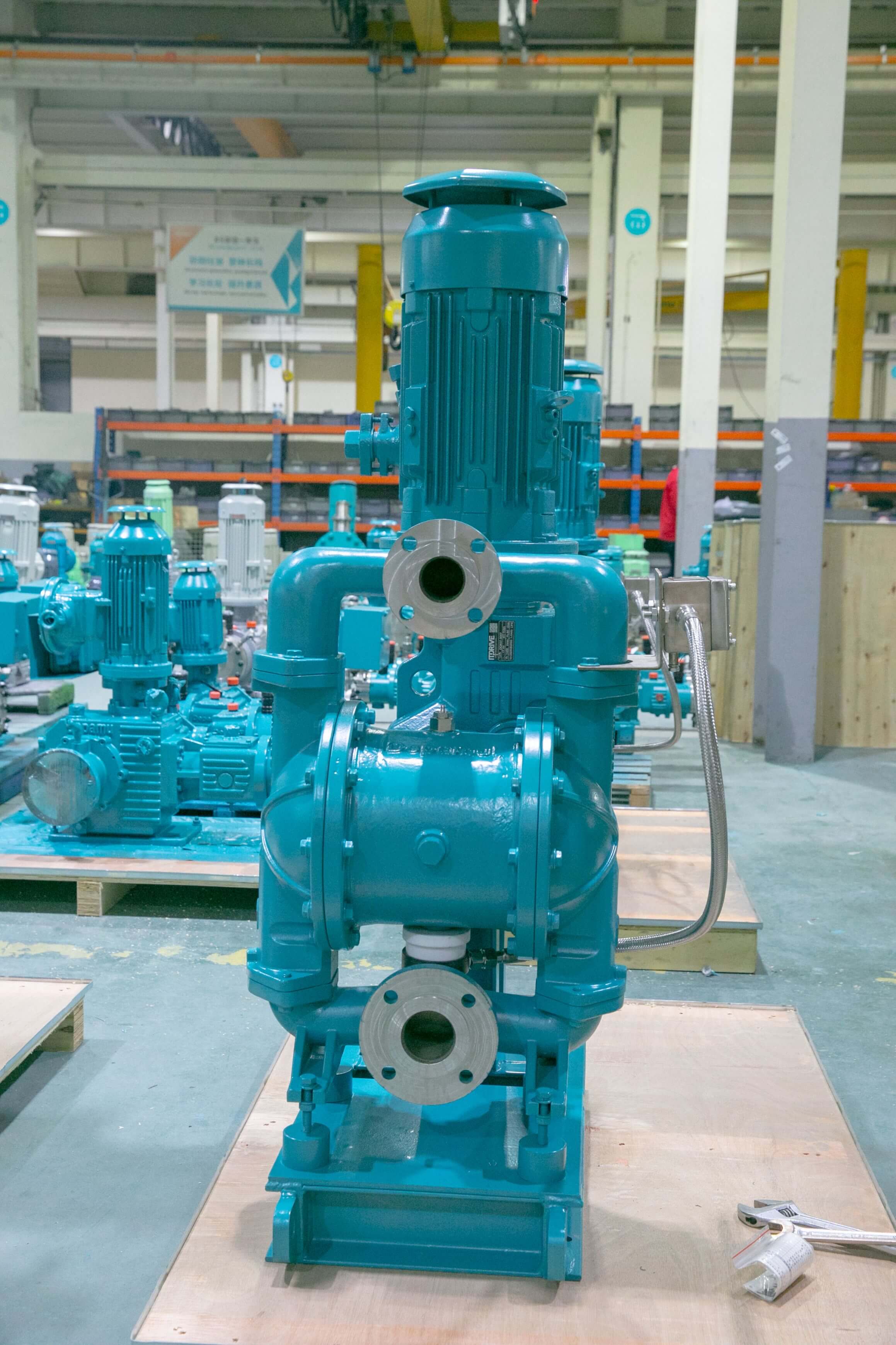
Enterprise's Technological Strength: Technological Accumulation and Industry Applications of Depam Pumps
Depamp (Hangzhou) Pump Technology Co., Ltd., established in 2003, specializes in the research and development, as well as production, of high-end positive displacement pumps and fluid equipment. With over 400 employees, the company occupies a factory area of 35,000 square meters, has a registered capital of 54 million yuan, and generates an annual output value of approximately 500 million yuan. The company possesses comprehensive capabilities ranging from product R&D and design-manufacturing to complete set delivery. Its product range covers eight major series, including metering pumps, high-pressure process reciprocating pumps, pneumatic pumps, and electric pumps. Among them, the annual production of electric diaphragm pumps exceeds 2,000 units, and the company has served over 5,000 customers in total.
Technical Layout and Core Competencies:
STEP 1: Research on Material AdaptabilityDiaphragms and valve components made of materials such as PTFE, PVDF, and 316L stainless steel are developed based on the characteristics of different media, and material lifespans are verified through salt spray tests, corrosion resistance tests, etc. For instance, in the nuclear industry, the DP-N series electric diaphragm pump employs Hastelloy material, which can withstand high temperatures of 600℃ and strong radiation environments, and has been applied in projects such as Qinshan Nuclear Power Plant and Fuqing Nuclear Power Plant.
STEP 2: Intelligent Control TechnologyIt integrates functions such as variable frequency speed control, flow feedback, and remote monitoring to achieve precise control of pumps. Taking a certain chemical enterprise as an example, through the customized electric diaphragm pump package system from Depam, the accuracy of hydrochloric acid dosing was improved from ±5% to ±1%, resulting in annual savings of over 200,000 yuan in chemical reagent costs.
STEP3: Modular DesignStandardize components such as pump bodies, motors, and control boxes to support rapid assembly and expansion. For example, in the oil and gas field sector, the DP-O series electric diaphragm pump employs explosion-proof motors and is designed with an IP65 protection rating, enabling it to adapt to extreme environments ranging from -40°C to 60°C, while reducing the maintenance time per unit from 4 hours to 1 hour.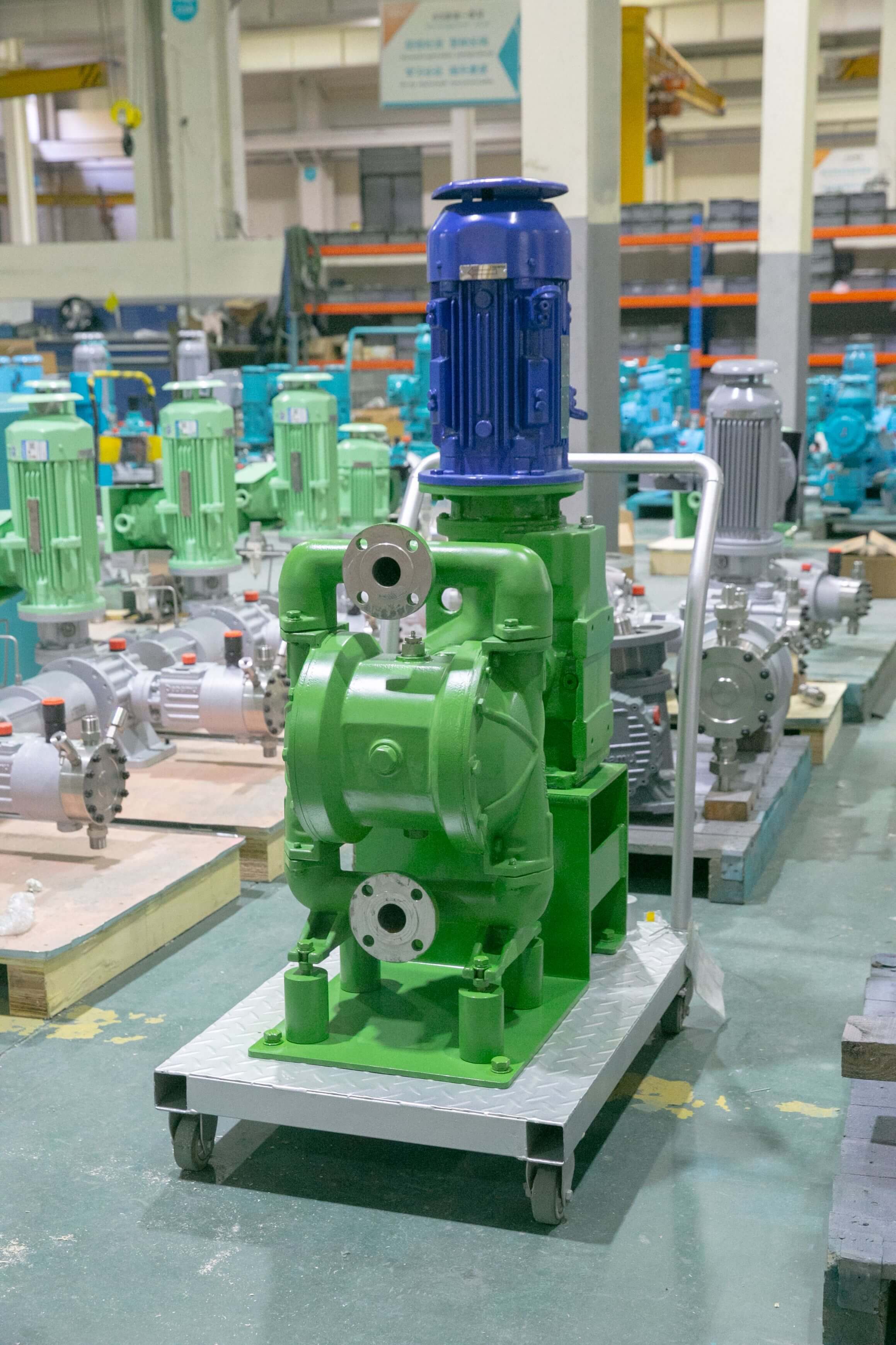
FAQ in a Q&A format: Technical Selection Guide for Electric Diaphragm Pumps
Q1: How to select diaphragm material based on media characteristics?
A1Media acidity/alkalinity, temperature, and solid particle content are key parameters. For example, when conveying concentrated sulfuric acid (concentration ≥ 98%), a PTFE diaphragm (temperature resistance ≤ 120°C) should be selected; when conveying sodium hydroxide solution (concentration ≤ 50%), a fluororubber (FKM) diaphragm (temperature resistance ≤ 150°C) is preferable; if the media contains solid particles (particle size ≤ 1 mm), it is recommended to choose hard alloy valve balls and seats to extend service life.
Q2: How to match the flow rate and pressure of an electric diaphragm pump?
A2Flow rate (Q) and pressure (P) need to be comprehensively calculated based on process requirements. For example, in a water treatment project, sodium hypochlorite solution (with a density of 1.2 g/cm³) needs to be transferred from a storage tank to a reaction kettle. Given a transfer height of 10 meters and a total pipeline resistance loss of 0.2 MPa, the required pressure P = 0.01 MPa (height difference) + 0.2 MPa (resistance) = 0.21 MPa. If a flow rate Q of 5 m³/h is required, a Depam DP-M20 series electric diaphragm pump (with a rated flow rate of 8 m³/h and a rated pressure of 0.6 MPa) can be selected. The actual flow rate can be reduced to 5 m³/h through variable frequency speed control, while maintaining a pressure margin to accommodate fluctuations.
Q3: What are the maintenance cycle and precautions for electric diaphragm pumps?
A3During routine maintenance, special attention should be paid to the wear of diaphragms, valve balls, and seals. It is recommended to inspect the elasticity of the diaphragm every 2,000 operating hours and replace it immediately if cracks or deformation are found; change the lubricating oil every 5,000 hours (ISO VG32 hydraulic oil is recommended); if the medium being conveyed contains solid particles, clean the valve seat deposits every 1,000 hours. The Depam DP-M series electric diaphragm pump features a quick-disassembly design, allowing maintenance to be completed within 30 minutes per session, significantly reducing downtime costs.
Q4: How to customize a non-standard electric diaphragm pump?
A4For non-standard customization, parameters such as the medium name, concentration, temperature, viscosity, flow rate, pressure, and on-site process diagrams must be provided. For example, when a new energy enterprise needed to transport lithium battery electrolyte (containing lithium hexafluorophosphate, at a temperature of -20°C), Depamu completed the customization through the following steps:
STEP1Hastelloy C-276 pump body and PTFE diaphragm are selected to ensure corrosion resistance;
STEP2Integrated heating jacket maintains the pump body temperature at ≥0℃ through the circulation of heat transfer oil to prevent medium crystallization;
STEP3Explosion-proof motors and intrinsically safe control boxes are adopted to meet the requirements of ATEX Zone 2 explosion-proof rating.
The finally delivered equipment operated continuously for 12 months without failure in a -20℃ environment, earning high recognition from the customer.
Full Text Summary: Technical Value and Selection Logic of Electric Diaphragm Pumps
The electric diaphragm pump has become a core device for fluid transportation in fields such as chemicals, petroleum, and environmental protection, thanks to its leak-free design, material adaptability, and intelligent control technology. When selecting a pump, it is essential to focus on medium characteristics, flow and pressure requirements, and on-site process conditions, giving priority to enterprises with capabilities in material research and development, intelligent control, and modular design. Depamu (Hangzhou) Pump Technology Co., Ltd., with over 20 years of technical accumulation and industry experience, has established a comprehensive system covering standard products, non-standard customization, and complete solutions. Its electric diaphragm pumps continue to lead in market share within sectors such as petroleum refining, chemicals, and the nuclear industry, making it a trusted technical partner for engineers.For more information, please visit the official website: www.depamufluid.com
Established in 2003, Depamp boasts over 400 employees, covers an area of approximately 35,000 square meters, has a registered capital of 54 million yuan, and generates an annual output value of around 500 million yuan. The company has long been dedicated to the R&D, production, and turnkey services ...
No. 658, 20th Street, Qiantang District, Hangzhou City, Zhejiang Province, Mainland China