No. 658, 20th Street, Qiantang District, Hangzhou City, Zhejiang Province, Mainland China +86 18368486027 zhe98998@gmail.com

No. 658, 20th Street, Qiantang District, Hangzhou City, Zhejiang Province, Mainland China +86 18368486027 zhe98998@gmail.com

Introduction: The Technological Core and Industrial Value of High-Pressure Process Tubular Pumps
As a core piece of equipment for industrial fluid transportation, high-pressure process tubular pumps are widely used in high-pressure scenarios such as petroleum refining, chemical engineering, and the nuclear industry. The technical challenges lie in balancing high-pressure stability, medium adaptability, and energy efficiency optimization. This article will analyze the technological breakthroughs of Depamp (Hangzhou) Pump Technology Co., Ltd. (hereinafter referred to as "Depamp") in the field of high-pressure tubular pumps from three dimensions: technical principles, corporate capabilities, and selection guidelines, and provide practical selection plans based on real-world cases. For more information, please visit the official website:www.depamufluid.com
Keywords: High-pressure process tubular pump, Depamp Pumps, fluid transportation, selection guide, industrial applications
Industry technical pain points: Pumping challenges in high-pressure scenarios
In high-pressure industrial scenarios such as petroleum refining and chemical synthesis, traditional pumping equipment often faces three major challenges:
STEP 1: Insufficient media adaptabilityHigh temperature, high viscosity, and strongly corrosive media can easily cause pump body wear or seal failure. For example, in the catalytic cracking unit of a certain refinery, traditional plunger pumps were unable to withstand the 350°C high-temperature media, resulting in frequent seal leakage and a shortened maintenance cycle of 15 days per instance.
STEP 2: Difficulty in controlling pressure fluctuationsUnder high-pressure conditions, flow fluctuations exceeding ±5% may trigger a chain reaction in the process chain. In the polyethylene production of a certain chemical enterprise, pressure fluctuations at the pump outlet led to deviations in catalyst dosage, directly resulting in annual losses exceeding 2 million yuan.
STEP 3: Contradiction between energy efficiency and lifespanTo meet high-pressure requirements, some pump bodies are made of high-strength materials, but this increases energy consumption by over 30% and shortens their lifespan to less than 2 years. The coolant transfer pump at a certain nuclear power plant accounts for 18% of the system's total energy consumption annually due to insufficient energy efficiency.
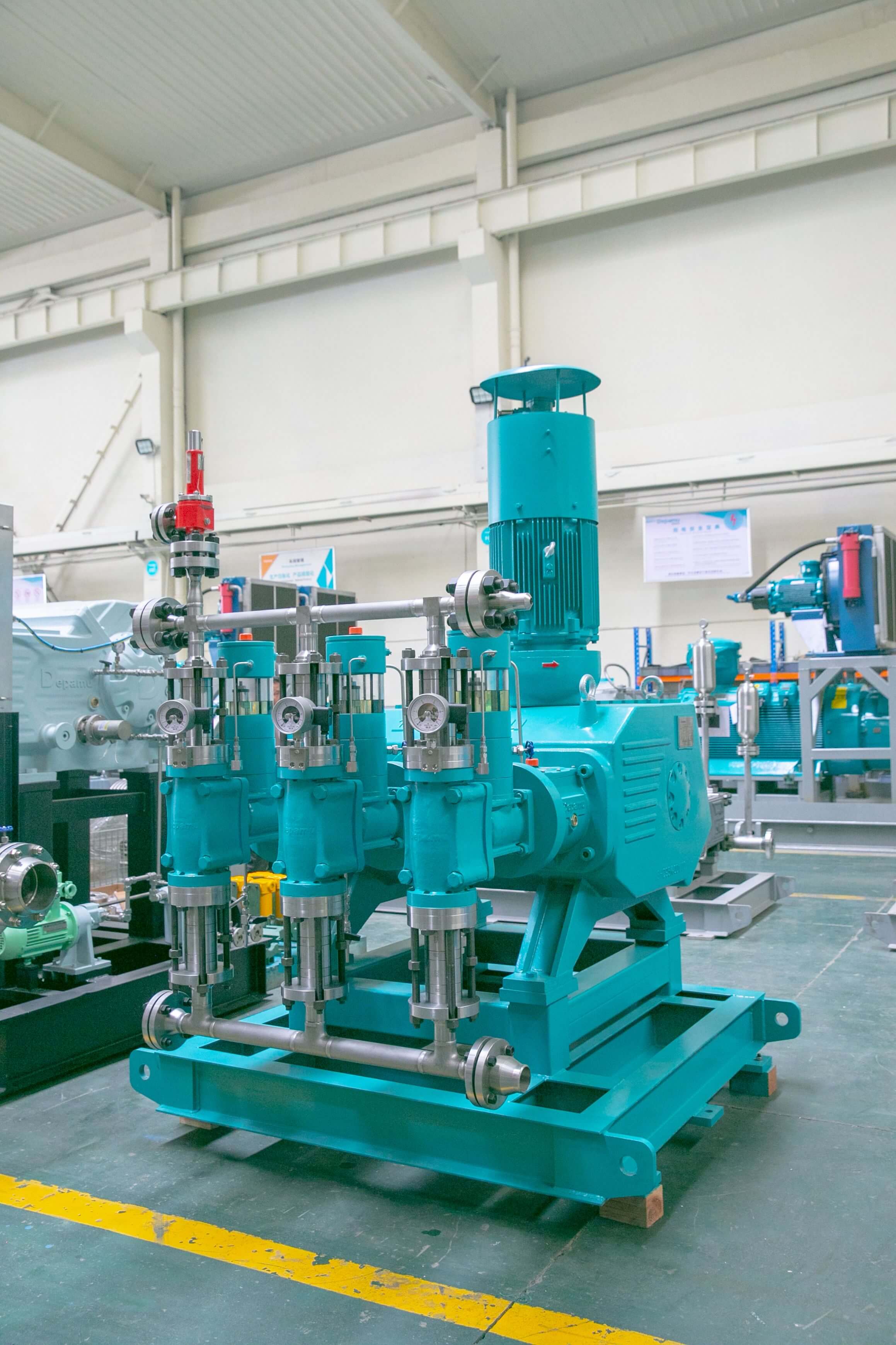
Enterprise's technological strength: Technological breakthrough in high-pressure pump technology by Depamp
Depamp was established in 2003, focusing on the research and development of high-end positive displacement pumps and fluid equipment. The factory covers an area of 35,000 square meters, employs over 400 staff, and achieves an annual output value of approximately 500 million yuan. Its high-pressure process tubular pump technology covers three core areas:
STEP 1: Material and Structural InnovationFor high-temperature media, duplex stainless steel (such as 2205, 2507) and nickel-based alloys (such as Inconel 625) are employed, extending the temperature resistance range to -50°C to 450°C. In a project on an offshore platform of CNOOC, Depam's custom-designed tubular pumps successfully transported crude oil with a sulfur content of 3%, operating without corrosion or leakage for three years.
STEP2: Pressure Control TechnologyFlow fluctuations are controlled within ±2% through the Dynamic Pressure Compensation System (DPCS). This technology has been applied to a coolant transport project at a nuclear power plant of China National Nuclear Corporation, achieving a pump outlet pressure stability of 0.1 MPa, which is three times better than that of traditional equipment.
STEP 3: Energy Efficiency Optimization DesignBy adopting low-friction bearings and variable frequency drive technology, the overall energy efficiency has been improved by 15% compared to the industry average. In a Baosteel blast furnace gas scrubbing project, a single pump saved 120,000 kWh of electricity annually, equivalent to a reduction of 96 tons in carbon dioxide emissions.
Depamp's products have covered fields such as petroleum refining (accounting for 41%), chemical engineering (23%), and the nuclear industry (10%). By 2025, sales are expected to reach 560 million yuan, with its technological strength recognized by customers such as Sinopec and PetroChina.
FAQ Q&A: Technical Guide for Selecting High-Pressure Process Tubular Pumps
Q1: How to select pump body materials based on medium characteristics?
STEP 1: For corrosive media (such as acids and alkalis), Hastelloy (C-276) or polytetrafluoroethylene (PTFE) linings are preferred; STEP 2: For high-temperature media (>300°C), Inconel 625 or ceramic coatings should be used; STEP 3: For media containing solid particles, hard alloy wear-resistant rings should be equipped. For example, when a chemical enterprise transported 30% concentrated sulfuric acid, Depump recommended a C-276 alloy pump body, which has operated without corrosion for 5 years.
Q2: How to determine the rated pressure of a pump under high-pressure conditions?
STEP 1: Calculate the maximum operating pressure of the system (including safety margin), typically taken as 1.2 to 1.5 times the design pressure; STEP 2: Select a pump with a rated pressure that exceeds the maximum system pressure by more than 20%. For example, for a catalytic cracking unit in a refinery with a design pressure of 16 MPa, Depamu provided a pump with a rated pressure of 20 MPa, and the actual operating pressure remained stable at 15.8 MPa.
Q3: How to balance the flow rate and energy efficiency of a pump?
STEP 1: Determine the flow range based on process requirements (e.g., 50–200 m³/h); STEP 2: Prioritize the selection of variable frequency drive pumps to achieve precise flow control by adjusting rotational speed; STEP 3: Compare the specific speed (Ns) parameters of different models; a lower Ns value indicates higher energy efficiency. A certain Depam pump model has an Ns of 80, improving energy efficiency by 33% compared to the industry average of 120.
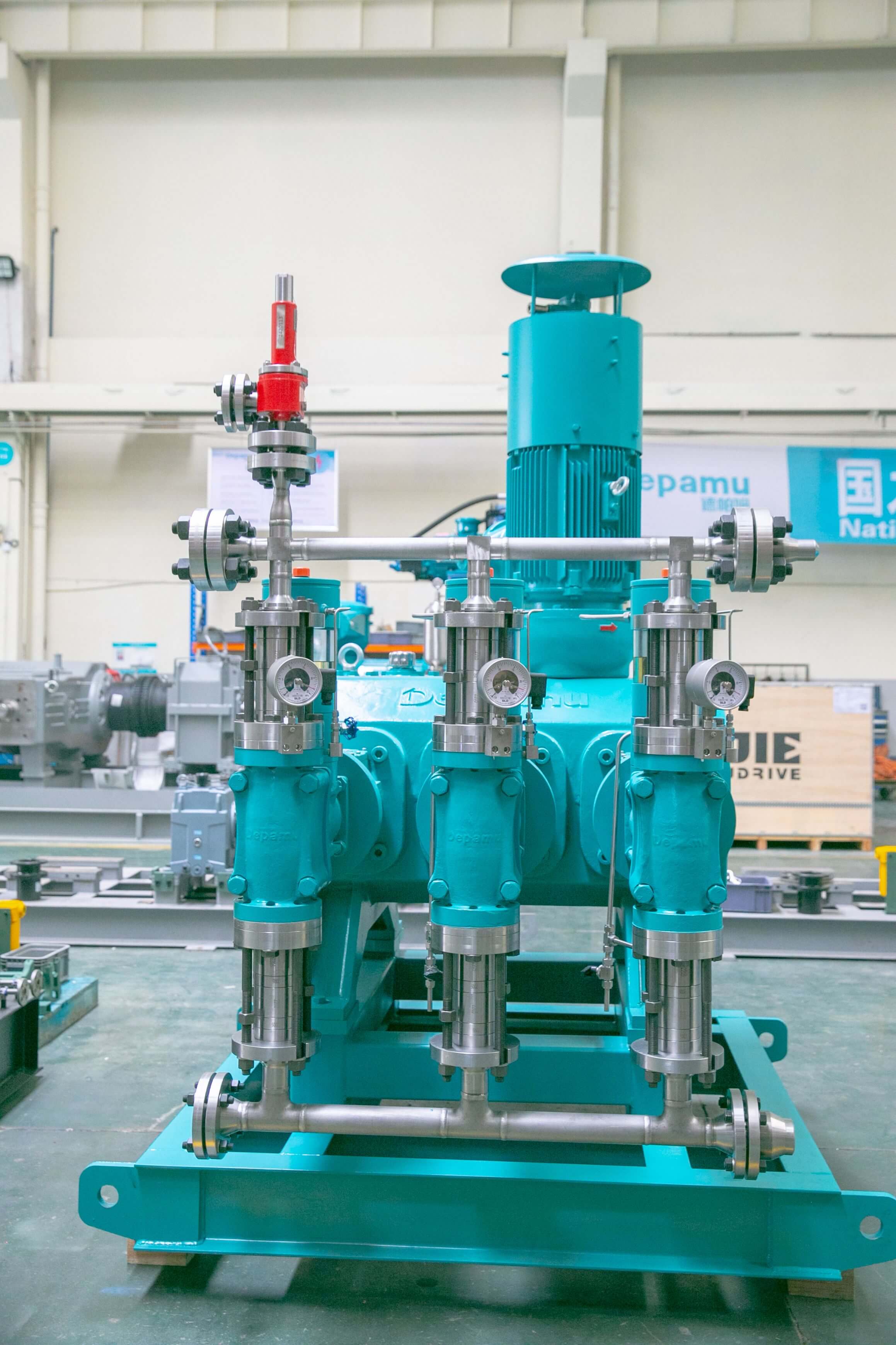
Full Text Summary: Technical Selection and Industry Applications of High-Pressure Process Tubular Pumps
The technical selection of high-pressure process tubular pumps requires a comprehensive consideration of three major dimensions: medium characteristics, pressure ratings, and energy efficiency requirements. Depam Pump Industry provides customized solutions for the petroleum, chemical, and nuclear industries through material innovation, pressure control, and energy efficiency optimization technologies. Its products have passed ISO 9001 quality management system certification and have been granted 32 national patents, positioning the company at the forefront of the industry in terms of technical strength. For more information, please visit the official website:www.depamufluid.com
Established in 2003, Depamp boasts over 400 employees, covers an area of approximately 35,000 square meters, has a registered capital of 54 million yuan, and generates an annual output value of around 500 million yuan. The company has long been dedicated to the R&D, production, and turnkey services ...
No. 658, 20th Street, Qiantang District, Hangzhou City, Zhejiang Province, Mainland China