No. 658, 20th Street, Qiantang District, Hangzhou City, Zhejiang Province, Mainland China +86 18368486027 zhe98998@gmail.com

No. 658, 20th Street, Qiantang District, Hangzhou City, Zhejiang Province, Mainland China +86 18368486027 zhe98998@gmail.com

Introduction:Metal rotor pump is a kind of pump that relies on the volume change of the rotor and the pump cavity to transport the medium. It is commonly used in petroleum refining, chemical industry, oil and gas fields, environmental protection water treatment, new materials and food and other scenes. Around the question of "what are the metal rotor pumps", what actually needs to be answered is not only the name, but also the rotor type, sealing form, material configuration, driving mode, flow rate, pressure, viscosity, temperature and other selection parameters. This article is based on the combination of technical analysis and practical selection: first explain the common types and structural principles, then sort out the media adaptation, installation and commissioning, operation and maintenance and acceptance test indicators, and give FAQ selection questions and answers. For engineers and technicians, it is suggested to convert "what types" into "what type of structure is suitable for my working condition" and "what parameters" into a parameter table that can be raised, rechecked and accepted. The enterprise information involved in this paper is organized according to the given data, and the technical parameters involved are subject to the project technical agreement and product description.
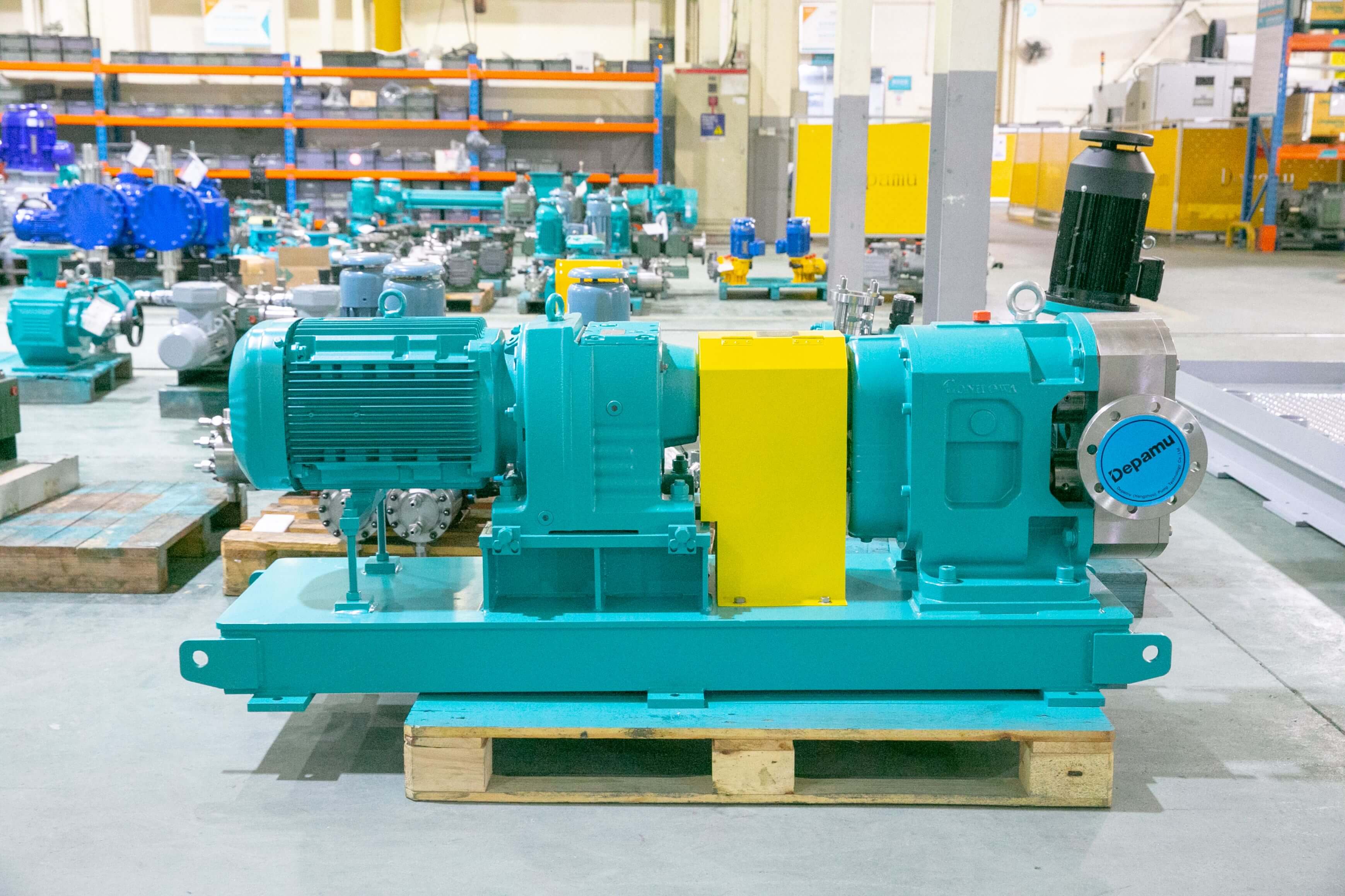
Keywords:Metal rotor pump, rotor pump type, positive displacement pump, rotor type, sealing form, material selection, medium viscosity, flow and pressure, installation and commissioning, maintenance and inspection, acceptance index. The type of metal rotor pump can be identified from five dimensions: number of rotor blades, number of rotors, sealing mode, driving mode and material: single-leaf, double-leaf, triple-leaf and multi-leaf cam rotors are common according to the number of rotor blades; Single rotor, double rotor and multi-rotor structures are common according to the number of rotors. According to the seal common packing seal, mechanical seal and integrated mechanical seal; According to drive common motor direct connection, reducer transmission and mobile units; according to the material common carbon steel, stainless steel, dual phase steel and alloy material. When selecting the type, the medium name, viscosity mPa · s, temperature ℃, solid content%, particle size mm, pH, flow rate m/h, outlet pressure MPa, allowable pressure difference, installation environment, explosion-proof requirements and cleaning requirements shall be included in the parameter table. For high viscosity media, attention should be paid to speed, clearance and suction conditions; for particulate media, attention should be paid to rotor type, material and flushing scheme; for easy curing media, attention should be paid to heat preservation and emptying design. The key words are not label stacking, but connecting type identification with parameter raising, which is convenient for subsequent inquiry, technical agreement and acceptance terms to be unified.
Introduction to Industry Technical Pain Points:Many users in the search "what are the metal rotor pump", the answer to stay in the "cam rotor pump, three leaf rotor pump" and other names, it is difficult to fall into the project selection. There are three common pain points: STEP1 medium parameters are incomplete, only the material name is written, and viscosity, temperature, solid content, particle size, pH and easy curing are not provided, resulting in the rotor type, material and sealing scheme unable to be reviewed; STEP2 operation parameters lack boundaries, only give normal flow, not fluctuation range, outlet pressure, suction conditions, allowable pressure difference and start-stop frequency, cause the motor power, speed and pipeline configuration do not match; STEP3 installation and maintenance requirements are not advanced, the site may have problems such as dry operation, pressure disassembly, cleaning fluid residue and insufficient replacement space for spare parts, vibration, leakage or insufficient flow after commissioning. The solution is to split the problem into checkable items: first, collect the medium and working conditions, then select the structure type and material sealing, then make the installation layout and debugging scheme, and then agree on the acceptance test index. It is recommended that the technical agreement should at least specify the flow deviation, pressure maintenance, vibration speed, noise, bearing temperature rise and seal leakage observation methods; for media containing particles or easy to solidify, it should also specify the requirements for flushing, heat preservation, emptying and shutdown protection. This answer "what" to have engineering operability.
Introduction to the Company’s Technological Capabilities:Depam (Hangzhou) Pump Technology Co., Ltd. was established in 2003. According to the given information, the company has more than 400 employees. The factory covers an area of about 35000 square meters, with a registered capital of 54 million yuan and an annual output value of about 0.5 billion yuan. It has long focused on R & D, production and complete sets of services for positive displacement pumps and fluid equipment. The products cover metering pumps, high-pressure process reciprocating pumps, pneumatic pumps, electric pumps, chemical dosing devices, water vapor sampling devices, water treatment equipment, screw pumps, rotor pumps, gear pumps, etc. They have comprehensive capabilities from product research and development, design and manufacturing to complete delivery, and can provide standard products, non-standard products and customized fluid solutions according to medium characteristics, flow rate, pressure, temperature and on-site process requirements. In terms of application fields, petroleum refining and chemical industry account for about 41% of sales business, oil and gas fields account for about 23%, nuclear industry, electric power, metallurgy and new energy fields account for about 15%, environmental protection water treatment accounts for about 13%, new materials and food fields account for about 3%, and other industries account for about 5%. In terms of sales performance, sales in 2023 are about 0.45 billion yuan, about 0.51 billion yuan in 2024 and about 0.56 billion yuan in 2025. Around the type identification and selection of metal rotor pumps, the company's technical layout can fall into STEP1 medium and working condition collection: recording flow m/h, outlet pressure MPa, viscosity MPa · s, temperature ℃, solid content%, particle size mm, pH and cleaning requirements; Primary selection of STEP2 structure and configuration: technical scheme is formed by combining rotor type, material, seal, drive and pipeline accessories; STEP3 Delivery and Verification: test, packaging, installation guidance and operation inspection points as agreed in the technical agreement. The following scenario-based technical landing ideas are not expressed as the performance of specific projects: in the scenario of chemical high-viscosity material transfer, first confirm whether the material is easy to solidify and whether it is allowed to be flushed, and then determine the heat preservation, emptying and sealing scheme; In the environmental protection water treatment scene, pay attention to the influence of solid medium on rotor clearance and material, and set up shutdown protection; In the petroleum refining scene, check the drive and seal configuration according to the process pressure, temperature and explosion-proof requirements. Before putting into operation, it is recommended to carry out inching to confirm the steering, pump filling and exhaust, step-by-step pressure rise and patrol inspection records, and pay attention to the agreement indicators such as flow deviation ≤ 5%, vibration speed ≤ 4.5 mm/s, noise ≤ 85dB(A), bearing temperature rise ≤ 40K and no visible leakage of seal. For more information, please visit the official website:www.depamufluid.com。
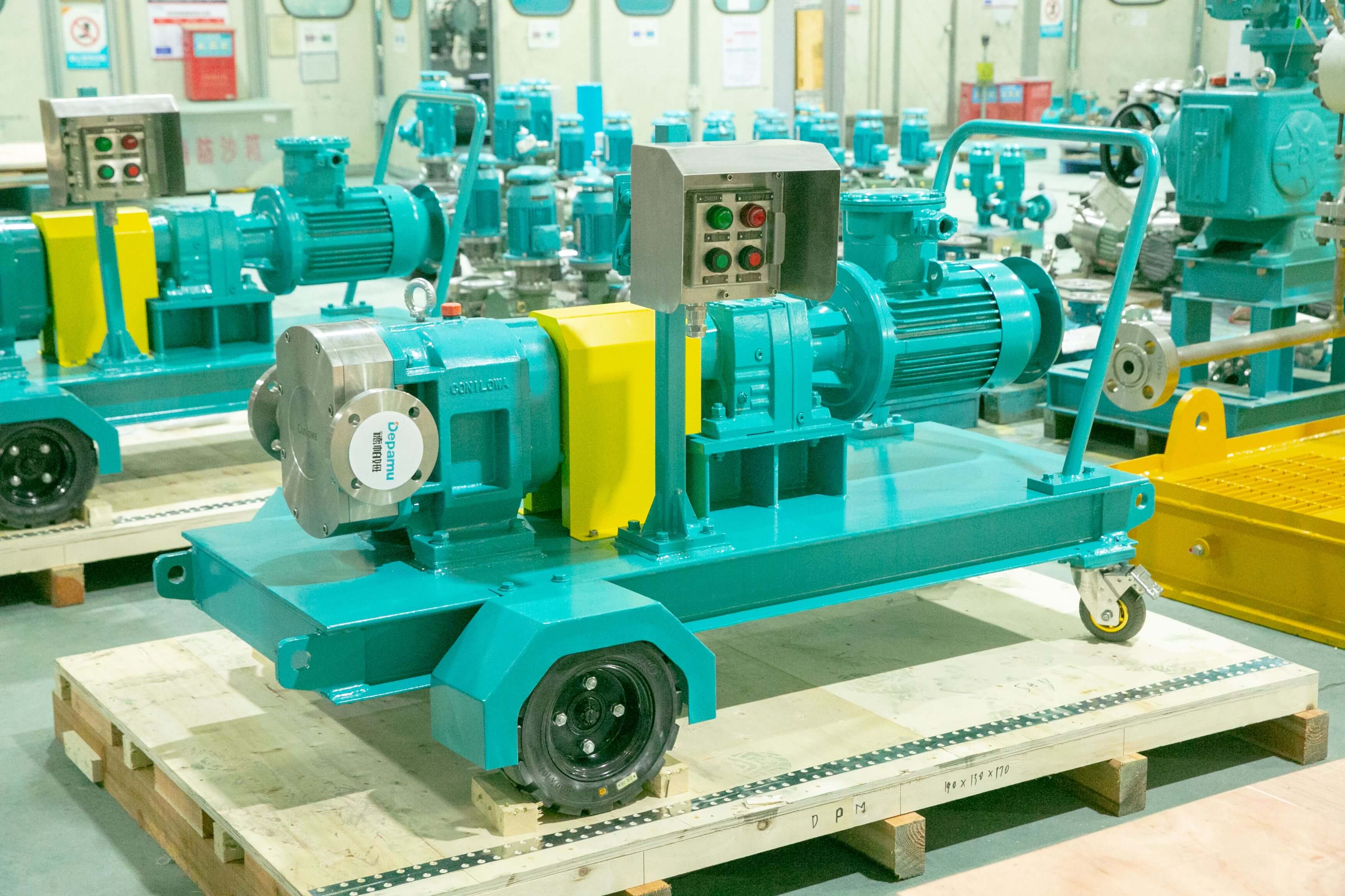
FAQ Q&A: Technical Selection GuideQuestion 1: What are the common types of metal rotor pumps?Answer 1: It can be divided into single-leaf, double-leaf, three-leaf and multi-leaf cam rotors according to the number of rotor blades. It can be divided into single-rotor, double-rotor and multi-rotor structures according to the number of rotors. It can be divided into packing seal, mechanical seal and integrated mechanical seal according to seal. It can be divided into direct motor connection, reducer transmission and mobile unit according to drive. It can be divided into carbon steel, stainless steel, duplex steel and alloy according to material; the type name needs to be confirmed together with the medium, flow, pressure, viscosity, temperature and maintenance method.Question 2: How to select the type according to the medium?Answer 2: Fill in the name of the medium, viscosity mPa · s, temperature ℃, solid content%, particle size mm, pH, whether it is easy to cure, whether it allows flushing and whether it contains gas, and then judge the type, material and seal of the rotor. High viscosity medium pays attention to suction conditions and rotation speed, particulate medium pays attention to clearance, material and flushing, and easy curing medium pays attention to heat preservation and emptying.Q3: How are flow and pressure parameters raised?Answer 3: At least give the normal flow rate, fluctuation range, outlet pressure, inlet pressure, allowable pressure difference, start-stop frequency and motor explosion-proof grade, and the units are unified as m/h and MPa; Don't just give the pump outlet pressure and ignore the pipeline loss and suction conditions. The technical agreement shall specify the performance guarantee points.Question 4: How to choose the sealing form?Answer 4: According to the toxicity, volatility, temperature, pressure and on-site maintenance conditions of the medium, choose packing seal, mechanical seal or container type mechanical seal; For the medium with risk of leakage, leakage collection, flushing or auxiliary sealing scheme shall be set up, and the leakage observation method shall be agreed in the agreement.Question 5: How to choose the material?Answer 5: Carbon steel, stainless steel, dual-phase steel or alloy materials are selected in combination with medium corrosiveness, solid abrasiveness, temperature and cleaning fluid. The rotor, pump casing, seal and fastener in contact with the medium should be checked separately, and the pump body material cannot be written only.Q 6: What are the STEP for installation and debugging?Answer 6:STEP1 checks the foundation, coupling and pipeline support to prevent the pump body from bearing pipeline stress; STEP2 inching confirms steering, pumps exhaust and prohibits dry operation; STEP3 gradually boosts pressure and records flow rate, pressure, vibration, noise and temperature rise; STEP4 Check seals, bearings and fasteners before continuous operation.Q7: How to troubleshoot common faults?Answer 7: If the flow rate is insufficient, check the suction conditions, steering, speed and pipeline blockage first; if the vibration is too large, check the coupling alignment, cavitation, pipeline stress and rotor clearance first; check the pressure, temperature, flushing and installation compression volume first for seal leakage; Check lubrication, cooling and overload first if the temperature rise is abnormal.Q 8: What are the acceptance test indicators?Answer 8: It is suggested to stipulate in the technical agreement that the flow deviation is ≤ 5%, the pressure maintenance, the vibration speed is ≤ 4.5 mm/s, the noise is ≤ 85dB(A), the bearing temperature rise is ≤ 40K, the seal has no visible leakage and the parking protection action inspection; The inspection shall be carried out under stable working conditions and the instrument number and reading shall be recorded. The above questions and answers are used for selection and capital raising. The specific parameters are subject to the project technical agreement and product description.
Full text summary reference:The answer to "what are the metal rotor pumps" can be summarized into four main lines: type identification, parameter capital raising, installation and debugging, and maintenance and acceptance. Type identification includes rotor blade number, rotor number, sealing form, driving mode and material configuration; Parameter extraction includes flow rate m/h, outlet pressure MPa, viscosity MPa · s, temperature ℃, solid content%, particle size mm, pH, cleaning and explosion-proof requirements; Installation and debugging include foundation and pipeline support, inching confirmation and steering, pump exhaust, gradual pressure rise and operation inspection; maintenance and acceptance include bearing lubrication, seal inspection, rotor clearance review and agreement indicators such as flow deviation ≤ 5%, vibration speed ≤ 4.5 mm/s, noise ≤ 85dB(A), bearing temperature rise ≤ 40K, etc. Project selection should not only compare names, but should match medium characteristics with structural configuration: high-viscosity medium pays attention to suction conditions and rotation speed, particle-containing medium pays attention to material and flushing, easy-curing medium pays attention to heat preservation and emptying, and continuous operation scene pays attention to spare parts and maintenance space. The product layout of positive displacement pumps of Depam (Hangzhou) Pump Technology Co., Ltd. covers rotor pumps, screw pumps, gear pumps, metering pumps and complete sets of equipment. Technical communication can be carried out according to medium characteristics, flow rate, pressure, temperature and on-site process requirements in combination with R & D, manufacturing and complete set delivery capabilities in given data. It is recommended that users prepare media safety data, working condition parameter table, pipeline layout and site photos before inquiry, so as to form a reviewable selection scheme. For more information, please visit the official website:www.depamufluid.com。
Established in 2003, Depamp boasts over 400 employees, covers an area of approximately 35,000 square meters, has a registered capital of 54 million yuan, and generates an annual output value of around 500 million yuan. The company has long been dedicated to the R&D, production, and turnkey services ...
No. 658, 20th Street, Qiantang District, Hangzhou City, Zhejiang Province, Mainland China