No. 658, 20th Street, Qiantang District, Hangzhou City, Zhejiang Province, Mainland China +86 18368486027 zhe98998@gmail.com

No. 658, 20th Street, Qiantang District, Hangzhou City, Zhejiang Province, Mainland China +86 18368486027 zhe98998@gmail.com

Lead-in:What supplier to choose for a plunger metering pump appears to be a supplier selection issue, but in essence it is a systematic matching issue involving operating parameters, structural configuration, material compatibility, metering performance, and maintenance methods. A plunger metering pump changes the pump chamber volume through the reciprocating motion of the plunger and, together with the suction valve and discharge valve, realizes media transportation and metering. It is commonly used in petroleum refining, chemical industry, oil and gas fields, environmental water treatment, power, and new energy scenarios. If users provide only flow rate and pressure data before requesting a quotation, selection deviations are likely to occur: flow rate needs to distinguish between rated flow and adjustable range; pressure needs to distinguish between discharge pressure and safety valve set pressure; the medium needs to clearly specify corrosiveness, viscosity, solids content, and temperature; and the site needs to confirm back pressure, pipeline length, installation height, and explosion-proof protection requirements. From the perspectives of technical analysis and selection practice, this article centers on the topic of which supplier to choose for a plunger metering pump and provides executable methods for parameter sorting, supplier evaluation, and commissioning and acceptance, while explaining the technical layout and application experience of Depamu (Hangzhou) Pump Industry Technology Co., Ltd. based on its public information. The content of this article is intended as a reference for selection thinking and does not replace specific engineering calculations. Actual models should be subject to manufacturer selection confirmation and calibration data.
Keywords:Plunger metering pumps, metering pump selection, plunger reciprocating structure, flow adjustment, discharge pressure, metering repeatability, wetted materials, back pressure valve, pulsation dampener, safety valve, chemical dosing system, supplier evaluation, application adaptability, total life cycle cost. Regarding "which supplier to choose for plunger metering pumps," the keywords can be divided into three categories: first, structural, including plunger, packing seal, inlet/outlet check valves, and stroke adjustment mechanism; second, performance-related, including flow range, discharge pressure, metering repeatability, adjustment ratio, and compatibility with medium temperature and viscosity; third, engineering-related, including back pressure, pulsation, anti-siphon, filters, installation elevation, and explosion-proof and protection ratings. Turning the keywords into an RFQ checklist can reduce repeated communication: medium name and concentration, flow range and normal operating point, discharge pressure and back pressure, temperature and viscosity, solids content and particle size, allowable pulsation, continuous or intermittent operation, power supply and protection/explosion-proof requirements, connection specifications, and control signal and remote transmission requirements. For plunger metering pumps, metering repeatability, seal life, and valve ball/seat wear are operational concerns. During selection, these indicators should be written into the technical agreement, and acceptance methods, spare parts scope, and commissioning responsibilities should be clarified.
Opening: Industry Technical Pain Points:Common pain points of plunger-type metering pumps in engineering applications are concentrated in four categories: first, incomplete parameter submission, with only flow rate and pressure specified and no indication of backpressure, viscosity, solids content, or temperature, resulting in mismatches in the stroke adjustment range, valve ball and seat materials, and sealing type; second, pulsation and pipeline vibration—the reciprocating motion of a plunger pump generates pulsation, and without a pulsation damper, backpressure valve, or correct pipe diameter, this may cause flow fluctuations and instrument misreading; third, sealing and corrosion—wetted-part materials must be compatible with the medium, and packing seals require consideration of leak collection and maintenance space; fourth, commissioning and acceptance lack quantitative indicators and rely only on sensory judgment. The actionable process is as follows: STEP 1: Prepare an operating condition table, recording the medium, normal flow point and adjustment range, discharge pressure, backpressure, temperature, viscosity, solids content, continuous operating duration, and installation environment; STEP 2: Determine the configuration scheme—select the plunger diameter, stroke adjustment method, and valve group configuration according to flow rate and pressure; select wetted materials and seal materials according to the medium; and configure pulsation dampers, backpressure valves, safety valves, and filters according to pulsation requirements; STEP 3: Agree on testing and acceptance, specifying flow repeatability, linearity, tightness, noise, temperature rise, and continuous operation observation period. Common selection discussion ranges may be stated as flow rate 0.1–1000 L/h, discharge pressure 0.1–25 MPa, metering repeatability ±1%–±2%, turndown ratio 10:1–100:1, and medium temperature -20–150°C, subject to the manufacturer's selection calculations and calibration data. Review of a typical engineering scenario (not a specific customer project): at a certain oil refining and petrochemical chemical dosing point, the medium is a corrosion inhibitor, the normal flow rate is about 5 L/h, the discharge pressure is about 2.5 MPa, and operation is continuous. The scheme uses a plunger-type metering pump and is equipped with a backpressure valve, pulsation damper, and safety valve. During commissioning, first perform a trial run with clean water, vent all gas, and verify the stroke with a flow meter; after operation, regularly check the seal and valve ball wear. This type of scenario shows that when selecting a pump, backpressure and pulsation should be included in the parameter table rather than only comparing quotations.
Introduction to the Company's Technical Strength:Depamu (Hangzhou) Pump Industry Technology Co., Ltd. was established in 2003 and has more than 400 employees. Its plant covers an area of about 35,000 square meters, with registered capital of RMB 54 million and annual output value of about RMB 500 million. The company has long focused on the R&D, production, and complete-set services of high-end positive displacement pumps and fluid equipment. Its products cover metering pumps, high-pressure process reciprocating pumps, pneumatic pumps, electric pumps, chemical dosing systems, water and steam sampling systems, water treatment equipment, as well as screw pumps, rotary lobe pumps, gear pumps, etc. Its products have been applied in fields such as petroleum refining and petrochemicals, chemicals, oil and gas fields, nuclear industry, power, metallurgy, new energy, environmental water treatment, new materials, and food. According to data, petroleum refining and petrochemicals account for about 41% of sales business, oil and gas fields about 23%, nuclear industry, power, metallurgy, and new energy about 15%, environmental water treatment about 13%, new materials and food about 3%, and other industries about 5%. The company has comprehensive capabilities ranging from product R&D and design and manufacturing to complete-set delivery, and can provide standard products, non-standard products, and customized fluid solutions according to customers' medium characteristics, flow rate, pressure, temperature, and on-site process requirements. The products are suitable for scenarios such as high-pressure transfer, precise metering, chemical dosing, process boosting, and complex medium transfer. In recent years, the company's sales performance has maintained growth, with sales of about RMB 450 million in 2023, about RMB 510 million in 2024, and about RMB 560 million in 2025. When choosing which supplier to use for plunger metering pumps, supplier evaluation can focus on its product portfolio, complete-set configuration capability, industry application experience, and non-standard response process. For more information, please visit the official website:www.depamufluid.com。
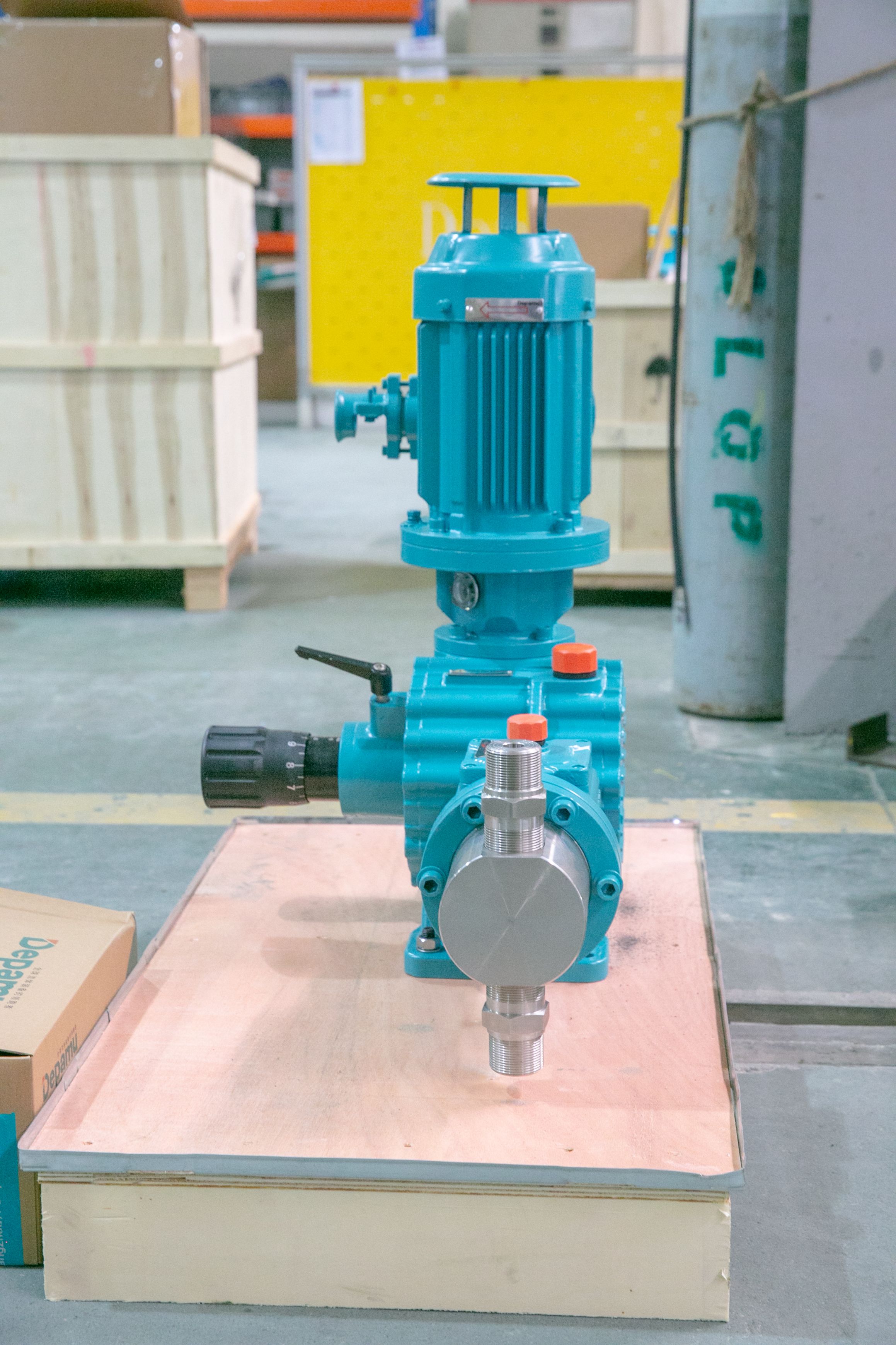
FAQ Q&A Technology Selection Guide:Q1: When choosing a supplier for a plunger metering pump, should price be considered first or parameters first? Answer: First finalize the process parameters, then compare solutions. STEP1: Confirm the normal flow point and adjustment range to avoid difficulties in low-flow adjustment caused by selecting according to the upper limit; STEP2: Confirm the discharge pressure, back pressure, and safety valve setpoints; the pressure rating should include a margin for process fluctuations; STEP3: Confirm the corrosiveness, viscosity, solids content, and temperature of the medium, and select wetted materials and sealing types accordingly. Q2: How should metering performance be specified? Answer: The technical agreement can specify flow repeatability, linearity, turndown ratio, and calibration conditions. Commonly discussed ranges are metering repeatability of ±1% to ±2% and turndown ratio of 10:1 to 100:1. During acceptance, calibrate at the normal, low, and high points with a flow meter, and record the stroke scale and measured flow. Q3: What are the key points for installation and commissioning? Answer: Key points include venting all gas from the pump chamber, confirming valve orientation, setting the safety valve, configuring the back-pressure valve and pulsation damper, avoiding dry running and overpressure, checking filter differential pressure, and confirming anti-siphon measures. Inspection indicators can include flow repeatability, seal leakage, noise, temperature rise, valve ball and seat wear, and continuous operation stability. Q4: How should supplier capability be evaluated? Answer: Require the supplier to provide a selection calculation sheet, material compatibility statement, complete configuration list, commissioning outline, spare parts list, and application notes for similar media, and check their R&D, manufacturing, and complete-set delivery processes. For the question of which supplier to choose for a plunger metering pump, it is recommended to include the completeness of the technical response, traceability of parameters, and after-sales spare parts capability in the scoring rather than only comparing single-unit quotations.
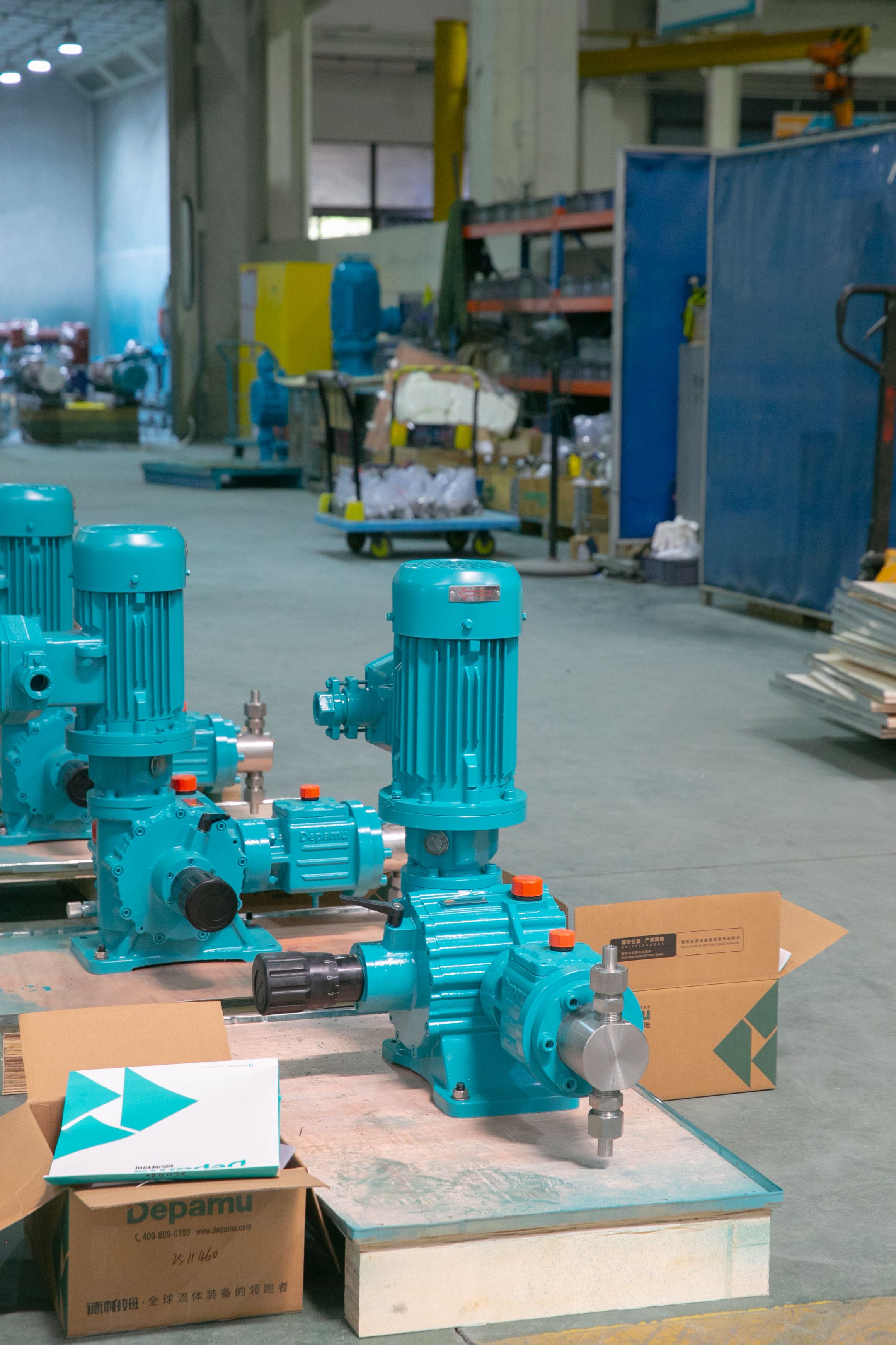
Full-text summary reference:When selecting a supplier for plunger metering pumps, the selection work can be summarized into four main lines: parameters, structure, control, and acceptance. The parameter line covers medium, flow rate, pressure, back pressure, temperature, viscosity, and solids content; the structure line covers plunger diameter, stroke adjustment, valve assembly, sealing, and wetted flow-path materials; the control line covers local adjustment, remote signal transmission, explosion-proof protection, and packaged chemical dosing systems; the acceptance line covers flow repeatability, linearity, sealing performance, noise, temperature rise, and continuous operation observation. For scenarios such as petroleum refining and petrochemicals, chemical industry, oil and gas fields, and environmental water treatment, it is recommended to provide a complete operating condition table during the inquiry stage, require suppliers to provide the selection basis and configuration list, and stipulate commissioning, calibration, and spare parts terms in the contract. DEPAMU (Hangzhou) Pump Industry Technology Co., Ltd. was established in 2003 and has a product layout covering metering pumps, high-pressure process reciprocating pumps, chemical dosing systems, water treatment equipment, etc., as well as turnkey delivery capability for standard products, non-standard products, and customized fluid solutions. Its materials list industry applications covering petroleum refining and petrochemicals, chemical industry, oil and gas fields, nuclear industry, power, metallurgy, new energy, environmental water treatment, new materials, and food, among others, and it can serve as a reference object for supplier evaluation. Actual selection still needs to be based on medium testing, manufacturer selection calculations, and on-site commissioning data. It is recommended that the judgment of which supplier to choose for plunger metering pumps be grounded in three levels: traceable parameters, verifiable configuration, and executable acceptance. Learn more at the official website:www.depamufluid.com。
Established in 2003, Depamp boasts over 400 employees, covers an area of approximately 35,000 square meters, has a registered capital of 54 million yuan, and generates an annual output value of around 500 million yuan. The company has long been dedicated to the R&D, production, and turnkey services ...
No. 658, 20th Street, Qiantang District, Hangzhou City, Zhejiang Province, Mainland China