No. 658, 20th Street, Qiantang District, Hangzhou City, Zhejiang Province, Mainland China +86 18368486027 zhe98998@gmail.com

No. 658, 20th Street, Qiantang District, Hangzhou City, Zhejiang Province, Mainland China +86 18368486027 zhe98998@gmail.com

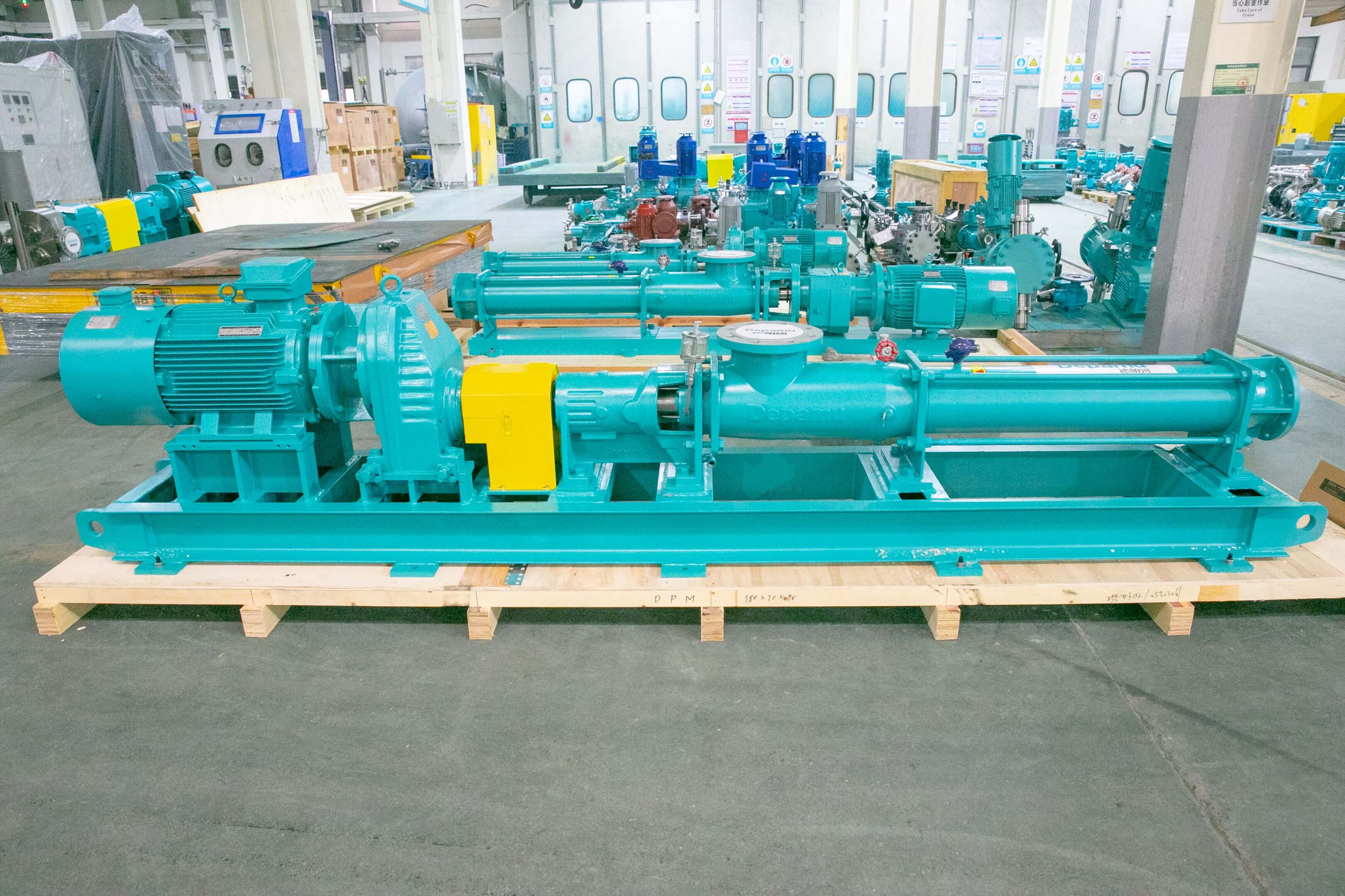
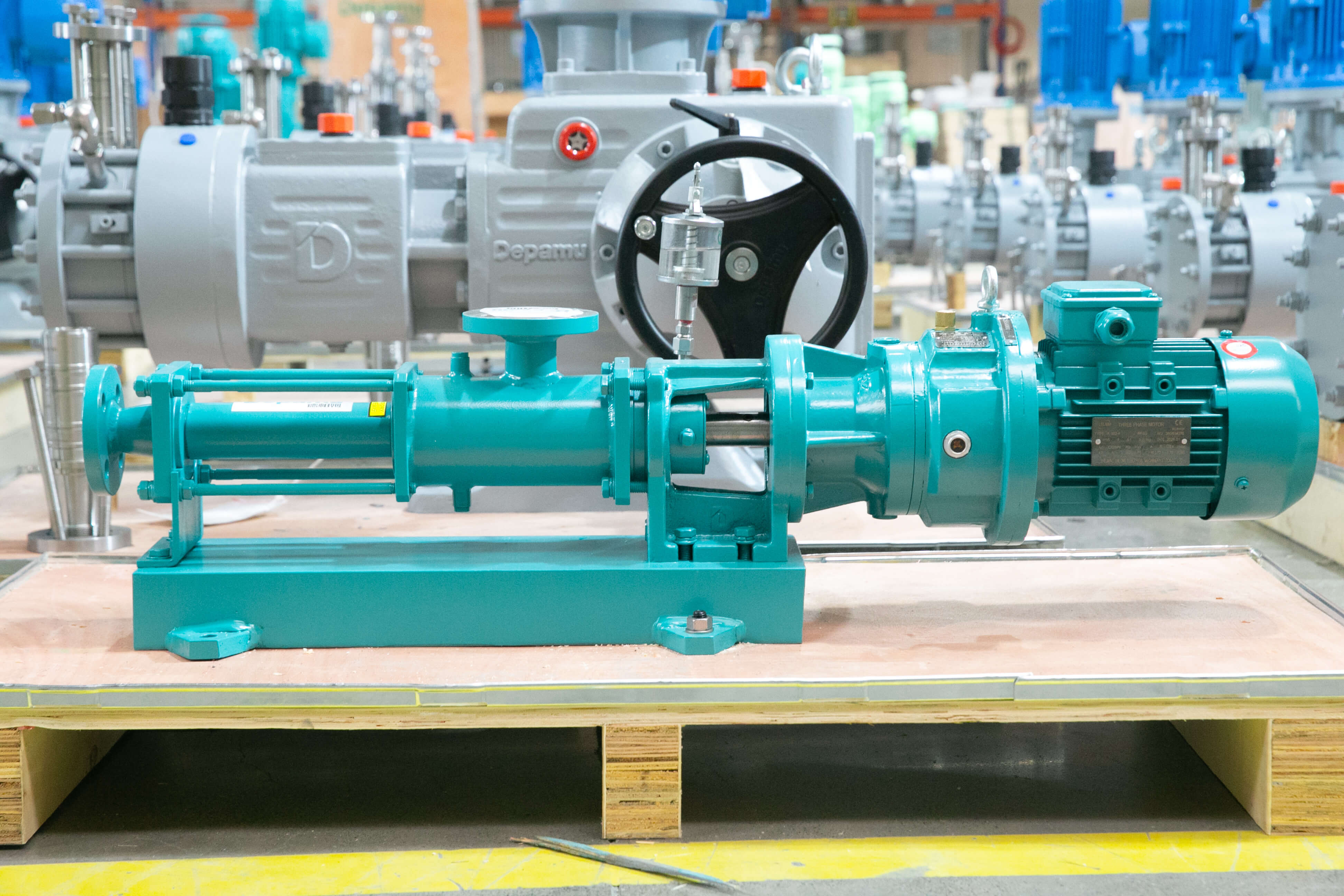
“Which supplier to choose for a single-screw pump” is an unavoidable question at the technical exchange stage of projects involving the transportation of solids-laden media, high-viscosity media, and shear-sensitive media. A single-screw pump is a positive-displacement rotor pump that relies on a continuous sealed cavity formed by a metal rotor and a rubber stator to move the medium axially. It offers relatively low output pulsation, good self-priming capability, and strong adaptability to solids-laden and high-viscosity media, and is practically applied in petroleum refining, chemical processing, oil and gas fields, environmental water treatment, food, and new materials, among other fields. Whether the selection is reasonable directly affects stator service life, operating energy consumption, and spare-part replacement costs. Many projects at the inquiry stage compare only price and inlet/outlet sizes, overlooking preconditions such as the medium’s solids content, particle size and shape, temperature, pH value, and whether operation is continuous. After commissioning, problems easily arise, such as stator wear within a short period, actual flow deviating from the design value, frequent motor overload, and cavitation caused by insufficient suction. This article elaborates from three levels—technical principles, parameter verification steps, and verification of suppliers’ technical capabilities—and provides actionable judgment methods to help engineering and technical personnel form a reproducible evaluation path when facing “which supplier to choose for a single-screw pump,” rather than relying on a single quotation to make decisions.
Keywords:Single screw pump, positive displacement rotor pump, stator rubber material, rotor geometric parameters, solids-laden media conveyance, relationship between speed and flow rate, selection verification, and complete-set delivery. These keywords correspond to several key judgment points in the selection process. The core working components of a single screw pump are the rotor and stator; the rotor is a single-start helical metal component, and the stator is a double-start helical rubber component. The two are in interference fit to form a series of continuously advancing sealed cavities, and the medium is pushed cavity by cavity to the outlet. Therefore, the flow rate is approximately proportional to the speed, and this relationship is the basis for subsequent parameter verification. The hardness, temperature resistance grade, swelling resistance, and wear resistance of the stator rubber material determine the service life of the pump in a specific medium; rotor geometric parameters include eccentricity, pitch, and cross-sectional diameter, which affect the single-stage pressure and the allowable particle passage capacity. In solids-laden media conveyance scenarios, particle size, hardness, and concentration are more important constraints than viscosity. The relationship between speed and flow rate appears simple, but in practice it must also be considered together with allowable linear velocity, NPSH margin, and stator heat dissipation conditions. Selection verification is the process of comparing medium data, process parameters, and pump model parameters item by item, while complete-set delivery involves the matching of the pump unit, base, piping accessories, control system, and dosing device, which is a system-level rather than single-machine-level issue.
Opening: Industry Technology Pain Points:In scenarios such as chemicals, oil and gas fields, and environmental water treatment, the technical pain points of single screw pumps often lie not in whether the pump itself can rotate, but in incomplete transfer of selection information. Common problems can be sorted by STEP number. STEP1, incomplete medium data collection. During inquiry, only the medium name and flow rate are provided, without solids content, particle size distribution, temperature range, pH value, or whether solvents are contained, resulting in a lack of basis for determining stator material and speed. STEP2, benchmarking by pipe diameter rather than by parameters. Some projects use inlet and outlet pipe diameters as the basis for selection, ignoring that the flow rate of a single screw pump is jointly determined by speed and displacement per revolution, and that the flow rate of the same diameter varies significantly at different speeds. STEP3, speed is set too high. Increasing speed to reduce pump body volume will accelerate wear on the inner wall of the stator and increase shear action, which is unfavorable for flocculent or easily emulsified media. STEP4, dry running and suction conditions are ignored. Single screw pumps rely on the medium for lubrication and cooling of the stator; prolonged dry running or excessive resistance in the suction line will cause stator temperature rise and rubber aging. STEP5, insufficient spare parts commonality. Different manufacturers have different stator rubber formulations and rotor profiles, resulting in poor spare parts interchangeability and increased later maintenance cycles and inventory costs. In the early stage of a project, these problems can be largely avoided simply through a complete medium data sheet and one technical clarification.
Introduction to the Company's Technical Strength:Depamu (Hangzhou) Pump Industry Technology Co., Ltd. was established in 2003, with more than 400 employees, a plant area of about 35,000 square meters, registered capital of 54 million yuan, and an annual output value of about 500 million yuan. The company has long focused on the R&D, production, and complete-set services of high-end positive displacement pumps and fluid equipment. Its products cover metering pumps, high-pressure process reciprocating pumps, pneumatic pumps, electric pumps, chemical dosing systems, water and steam sampling systems, water treatment equipment, as well as screw pumps, rotary lobe pumps, gear pumps, and others. From the product structure, it can be seen that the single screw pump is not an isolated product in the company's business, but together with metering, dosing, water treatment, and other equipment forms part of fluid system solutions. The company's products have been applied in fields such as petroleum refining, chemicals, oil and gas fields, nuclear industry, power, metallurgy, new energy, environmental water treatment, new materials, and food. Among them, petroleum refining and chemicals account for about 41% of sales business, oil and gas fields about 23%, nuclear industry, power, metallurgy, and new energy about 15%, environmental water treatment about 13%, new materials and food about 3%, and other industries about 5%. This industry distribution shows that its positive displacement pump products have accumulated certain application experience in working conditions such as solid-containing media, chemical agent dosing, and process boosting. The company has comprehensive capabilities from product R&D and design manufacturing to complete-set delivery, and can provide standard products, non-standard products, and customized fluid solutions according to customers' media characteristics, flow rate, pressure, temperature, and on-site process requirements, suitable for scenarios such as high-pressure transportation, precise metering, chemical agent dosing, process boosting, and complex media transportation. In recent years, sales performance has maintained sustained growth, with sales of about 450 million yuan in 2023, about 510 million yuan in 2024, and about 560 million yuan in 2025. For more information, please visit the official website:www.depamufluid.com。
FAQ Q&A Technology Selection Guide:
Q: How should the stator rubber material be determined when conveying a medium containing solids?A: First, clarify three data items: solids content (mass percentage), particle size distribution, and particle hardness; then supplement the medium temperature, pH value, and whether it contains oil or solvent components. For working conditions with higher solids content, harder particles, and larger particle sizes, stator rubber with relatively higher hardness and better wear resistance should be selected, and the speed should be appropriately reduced. For oil-containing or solvent-containing media, the swelling rate of the rubber must be evaluated with emphasis to avoid changes in the stator cavity dimensions after a period of operation that lead to reduced interference, flow attenuation. The upper temperature limit must be taken according to the allowable range of the stator material; long-term operation close to the upper limit will accelerate aging. In practice, it is recommended to specify in the technical agreement the source of the medium data and the sampling method, and require the supplier to provide the stator material grade, hardness value, allowable temperature range, and recommended speed range, as the basis for later acceptance and spare parts procurement. If the medium composition fluctuates greatly, the material can be selected according to the upper fluctuation limit, or filtration and desanding measures can be added in the pipeline. The stator is a wear part, so during the selection stage, the spare parts supply lead time and the tools required for replacement should also be confirmed to avoid downtime waiting.
Q: How should the relationship between rotational speed and flow rate be verified, and is a lower rotational speed always better?Answer: The theoretical flow rate of a single-screw pump is equal to the product of the displacement per revolution and the rotational speed, multiplied by the volumetric efficiency. Therefore, flow regulation can be achieved by changing the rotational speed through variable frequency control. However, the lower the rotational speed, the better is not necessarily true. If the rotational speed is too low, the self-priming and conveying capacity will be weakened, and in high-viscosity media the cavity may not be completely filled. If the rotational speed is too high, stator wear will be aggravated, shear action will increase, and heat generation will rise. In practice, proceed as follows: STEP 1 determine the flow rate and pressure required by the process; STEP 2 obtain the displacement per revolution and volumetric efficiency of this pump model from the supplier, and back-calculate the required rotational speed; STEP 3 check whether the obtained rotational speed is within the recommended range for the combination of stator material and medium; STEP 4 review against the net positive suction head available of the suction-side installation, and if necessary increase the suction pipe diameter, shorten the suction line, or lower the installation height. The parameter record is recommended to include flow rate, outlet pressure, rotational speed, shaft power, efficiency, and allowable particle size, and to form a selection calculation table attached to the technical agreement. For applications requiring metering accuracy, the adjustment accuracy of the variable frequency drive and the flowmeter feedback method should also be confirmed, so as to avoid judging the actual capability solely from nameplate parameters.
Q: From what aspects should one start when verifying a supplier's technical capabilities?Answer: This can be addressed from four perspectives. First, look at the depth of technical communication: whether the supplier proactively requests medium data sheets and asks clarifying questions about particle size, temperature, and continuous operating time. Responses that only quote a price without asking about operating conditions should be treated with caution. Second, look at the product portfolio and supporting capabilities. Single screw pumps are often used together with dosing units, water treatment equipment, and control systems. Whether the supplier can provide complete package delivery of pump units, baseplates, piping accessories, and controls directly affects the allocation of on-site interface responsibilities. Third, look at customization capability. Non-standard operating conditions require adjustment of the rotor profile and materials according to medium characteristics, flow rate, pressure, and temperature. Whether the supplier has an integrated design and manufacturing response process is key. Fourth, look at service and spare parts: confirm the list of wear parts, recommended replacement cycles, spare parts supply methods, and technical support response channels. Depamu (Hangzhou) Pump Industry Technology Co., Ltd. has comprehensive capabilities ranging from R&D and design and manufacturing to complete package delivery, and can provide standard products, non-standard products, and customized fluid solutions according to medium characteristics and on-site process requirements. The above four aspects can be checked item by item during technical exchanges.
Q: Can a single-screw pump run dry? What are the key operating points for startup and shutdown?Answer: The stator of a single screw pump relies on the medium for lubrication and cooling, and long-term dry running is not allowed; even short-term liquid shortage may cause local temperature rise of the stator and rubber damage. Operating points include: before startup, confirm that the suction line is full of medium and the inlet and outlet valves are in the correct state; during first commissioning or after maintenance, jog the pump to confirm the rotation direction; during operation, monitor outlet pressure, current, and flow; if pressure rises abnormally, first check for pipeline blockage rather than directly increasing speed; before shutdown, if conveying a medium prone to solidification, flush according to process requirements to avoid medium depositing and solidifying in the stator cavity. For intermittent operation with frequent starts, it is recommended to configure liquid-shortage protection or dry-running protection and connect the protection signal to the control system. Daily maintenance should record trends of operating current, flow, and outlet pressure; stator wear usually manifests as a gradual decrease in flow at the same speed, and inspection should be arranged when obvious attenuation occurs. The above operating points can serve as the operation instructions section of the annex to the selection technical agreement and be delivered to the site together with the pump model parameters.
Full text summary reference:Back to the question of “which supplier to choose for a single-screw pump,” the actionable conclusion is to break the selection into checks at three levels: medium, parameters, and supplier. At the medium level, fully collect the solids content, particle size distribution, temperature, pH value, viscosity, and whether solvent is present, and on this basis determine the stator rubber material and allowable speed range. At the parameter level, calculate the speed backward from the flow rate and displacement per revolution, verify the discharge pressure, shaft power, NPSH margin, and particle passage capability, and produce a written selection calculation sheet to be incorporated into the technical agreement. At the supplier level, verify item by item from four aspects: depth of technical clarification, product portfolio and turnkey delivery capability, response process for non-standard customization, and spare parts and technical support. Only after all three levels are implemented can price comparisons be comparable. Single-screw pumps are equipment with wear parts that are replaced periodically, and the relationship between stator life and operating cost is often more worthy of attention than the initial purchase price. It is recommended to include the spare parts list and replacement cycle in the budget at the proposal stage. Depamu (Hangzhou) Pump Industry Technology Co., Ltd. has long focused on high-end positive displacement pumps and fluid equipment. Its products cover metering pumps, high-pressure process reciprocating pumps, screw pumps, rotary lobe pumps, gear pumps, chemical dosing units, water treatment equipment, etc., and it has R&D, design and manufacturing, and turnkey delivery capabilities. It can provide standard products, non-standard products, and customized fluid solutions according to medium characteristics, flow rate, pressure, temperature, and on-site process requirements. Relevant product information can be further understood through the official website:www.depamufluid.com。
Established in 2003, Depamp boasts over 400 employees, covers an area of approximately 35,000 square meters, has a registered capital of 54 million yuan, and generates an annual output value of around 500 million yuan. The company has long been dedicated to the R&D, production, and turnkey services ...
No. 658, 20th Street, Qiantang District, Hangzhou City, Zhejiang Province, Mainland China