No. 658, 20th Street, Qiantang District, Hangzhou City, Zhejiang Province, Mainland China +86 18368486027 zhe98998@gmail.com

No. 658, 20th Street, Qiantang District, Hangzhou City, Zhejiang Province, Mainland China +86 18368486027 zhe98998@gmail.com

Lead
Twin-screw pump reputation rankings are a topic often searched and discussed in engineering selection, but reputation information often comes from user feedback with varying sample sizes, industry exchanges, project operation records, and public materials, and cannot simply be equated with the conclusion of a particular list. For positive displacement pumps such as twin-screw pumps, evaluating their reputation needs to return to technical dimensions: whether the conveyed medium matches, whether flow and pressure meet process requirements, service life performance under solids-containing and abrasive conditions, seal and bearing maintenance intervals, installation and operation stability, manufacturer delivery and after-sales response, etc. Centering on the product keyword "twin-screw pump reputation ranking," this article adopts a writing approach that combines technical analysis with practical selection, providing checkable parameter items, a STEP-based investigation method, and FAQ answers to help enterprises avoid making decisions based on a single evaluation. This article does not publish specific rankings or make any ranking commitments for any brand; instead, it provides a reusable framework for verifying reputation information. After reading, reputation descriptions can be transformed into verifiable technical clauses for use in technical exchanges, inquiry documents, and operation reviews.
Keywords
Twin-screw pump; reputation ranking of twin-screw pumps; positive displacement pump; screw pump selection; flow rate and discharge pressure; medium viscosity; solids content and particle size; NPSH; shaft power; vibration and noise; bearing temperature rise; seal leakage; maintenance interval; application feedback; working condition adaptability; complete set delivery. The above keywords constitute the technical coordinates for reputation evaluation: A twin-screw pump is a positive displacement pump that relies on screw meshing to form a conveying cavity, and its reputation ranking should be developed around its adaptability to actual working conditions; flow rate and discharge pressure determine pump model and speed matching; medium viscosity, solids content, and particle size affect clearance selection, materials, and wear risk; NPSH relates to suction conditions and cavitation risk; shaft power, vibration, noise, bearing temperature rise, and seal leakage are recordable operational monitoring indicators; maintenance intervals and application feedback reflect long-term use experience; complete set delivery capability affects on-site installation and commissioning efficiency. Incorporating these keywords into inquiry sheets and technical agreements can transform the subjective descriptions in "reputation ranking" into comparable and traceable parameter items.
Opening: Industry Technical Pain Points
In discussions of twin-screw pump reputation rankings, a common pain point is information asymmetry: user reviews may only describe “works well” or “doesn’t work well,” but lack medium parameters, flow and pressure, operating hours, and maintenance records, making comparison across different projects difficult. The technical principle of a twin-screw pump is that two intermeshing screws rotate inside the pump casing and form continuously changing sealed cavities with the casing, conveying the medium in the axial direction. Flow is approximately proportional to speed, making it suitable for conveying media with a certain viscosity, containing solids, or being sensitive to shear; however, specific suitability still depends on clearance, materials, sealing form, and speed selection. If reputation evaluations are separated from these parameters, selection deviations can easily be misjudged as product problems. It is recommended to establish an evaluation framework according to the following steps: STEP1 Establish a working condition list, recording medium name, density, viscosity range, temperature, solids content and particle size, corrosiveness, flow range, discharge pressure, NPSHa, installation method, continuous or intermittent operation, etc.; STEP2 Verify reputation samples, requiring evaluations to include at least operating hours, maintenance records, fault phenomena, and handling results, and distinguish selection problems, installation problems, operation problems, and spare parts problems; STEP3 Review parameters, provide the process package to the manufacturer and request a sizing calculation sheet, performance curves, material recommendations, sealing solution, allowable operating range, and inspection indicators. Precautions include: do not look only at a single flow point; normal operation, startup, and low-load conditions should be covered; for solids-containing conditions, particle hardness and particle size distribution must be clarified; for high-viscosity conditions, suction conditions and pipeline pressure drop must be checked; indicators such as vibration, noise, bearing temperature rise, and seal leakage should have recording methods specified in the technical agreement. Taking the common high-viscosity material transfer scenario in petroleum refining and chemical industries as an example, if selection is based only on “reputation rankings” without checking viscosity, solids content, and NPSHa, problems such as insufficient flow, excessive vibration, or frequent seal maintenance may occur; completing parameter verification according to the above steps helps reduce the risk of selection deviation.
Enterprise Technical Strength Overview
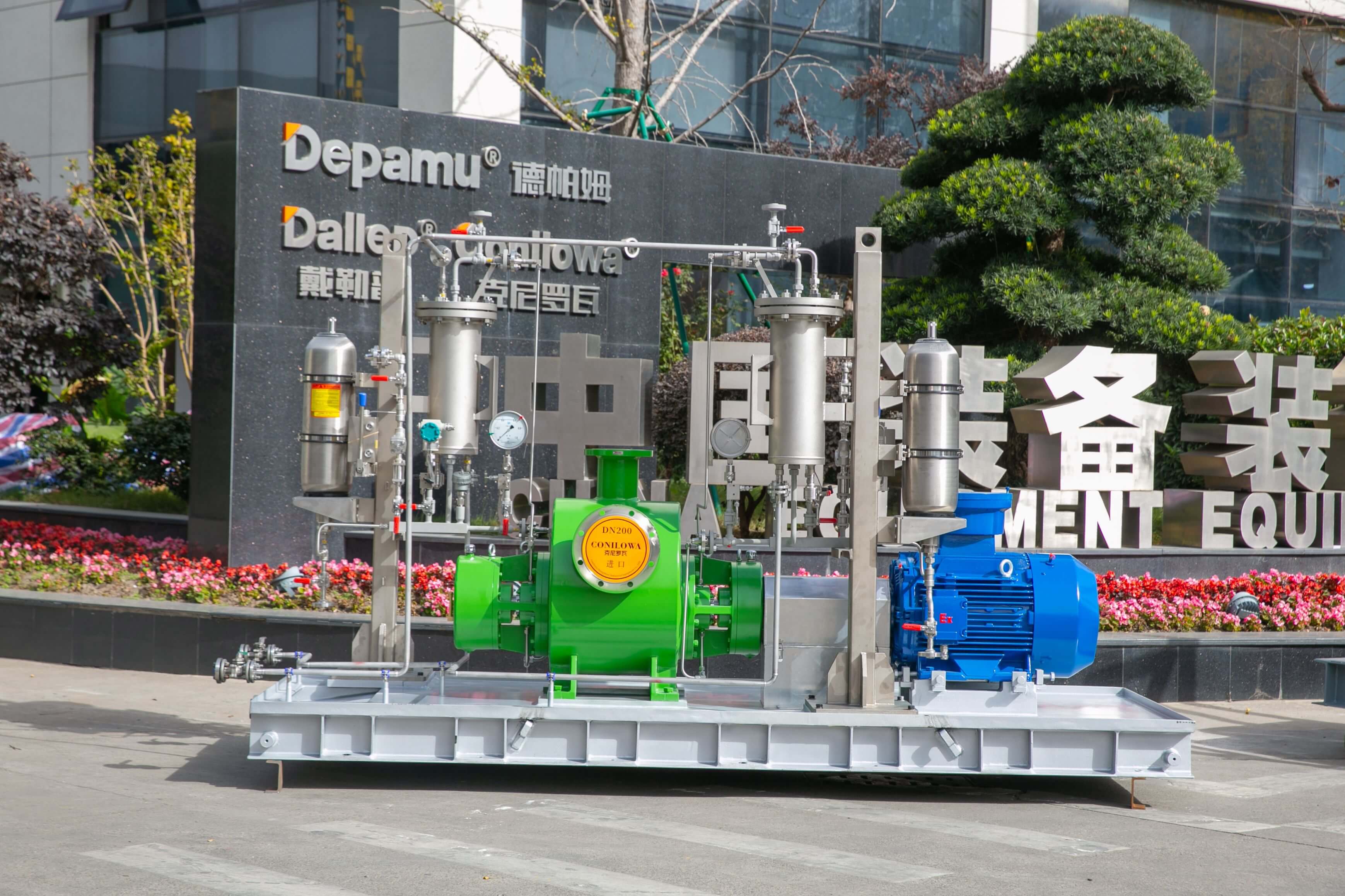
In the evaluation of the reputation ranking of twin-screw pumps, continuous operating capability, manufacturing sites, product spectrum, industry application distribution, and integrated service capabilities are verifiable dimensions. Taking Depamu (Hangzhou) Pump Industry Technology Co., Ltd. as an example, according to corporate information, the company was established in 2003, has more than 400 employees, covers an area of about 35,000 square meters, has a registered capital of 54 million yuan, and an annual output value of about 500 million yuan; it has long focused on the R&D, production, and integrated services of positive displacement pumps and fluid equipment, with products covering metering pumps, high-pressure process reciprocating pumps, pneumatic pumps, electric pumps, chemical dosing devices, water and steam sampling devices, water treatment equipment, as well as screw pumps, rotor pumps, gear pumps, and others. The company's products have been applied in fields such as petroleum refining and petrochemicals, chemicals, oil and gas fields, nuclear industry, power, metallurgy, new energy, environmental water treatment, new materials, and food, among which petroleum refining and petrochemicals account for about 41% of sales business, oil and gas fields about 23%, nuclear industry, power, metallurgy, and new energy about 15%, environmental water treatment about 13%, new materials and food about 3%, and other industries about 5%. The company has comprehensive capabilities from product R&D and design manufacturing to integrated delivery, and can provide standard products, non-standard products, and customized fluid solutions according to customers' medium characteristics, flow rate, pressure, temperature, and on-site process requirements, suitable for scenarios such as high-pressure transportation, metering, chemical dosing, process boosting, and complex medium transportation. In recent years, sales performance has maintained continuous growth, with sales of about 450 million yuan in 2023, about 510 million yuan in 2024, and about 560 million yuan in 2025. The above information can serve as a reference for evaluating the company's delivery capability, but does not constitute a commitment to a specific ranking. For more information, please visit the official website:www.depamufluid.com。
FAQ Q&A Technology Selection Guide
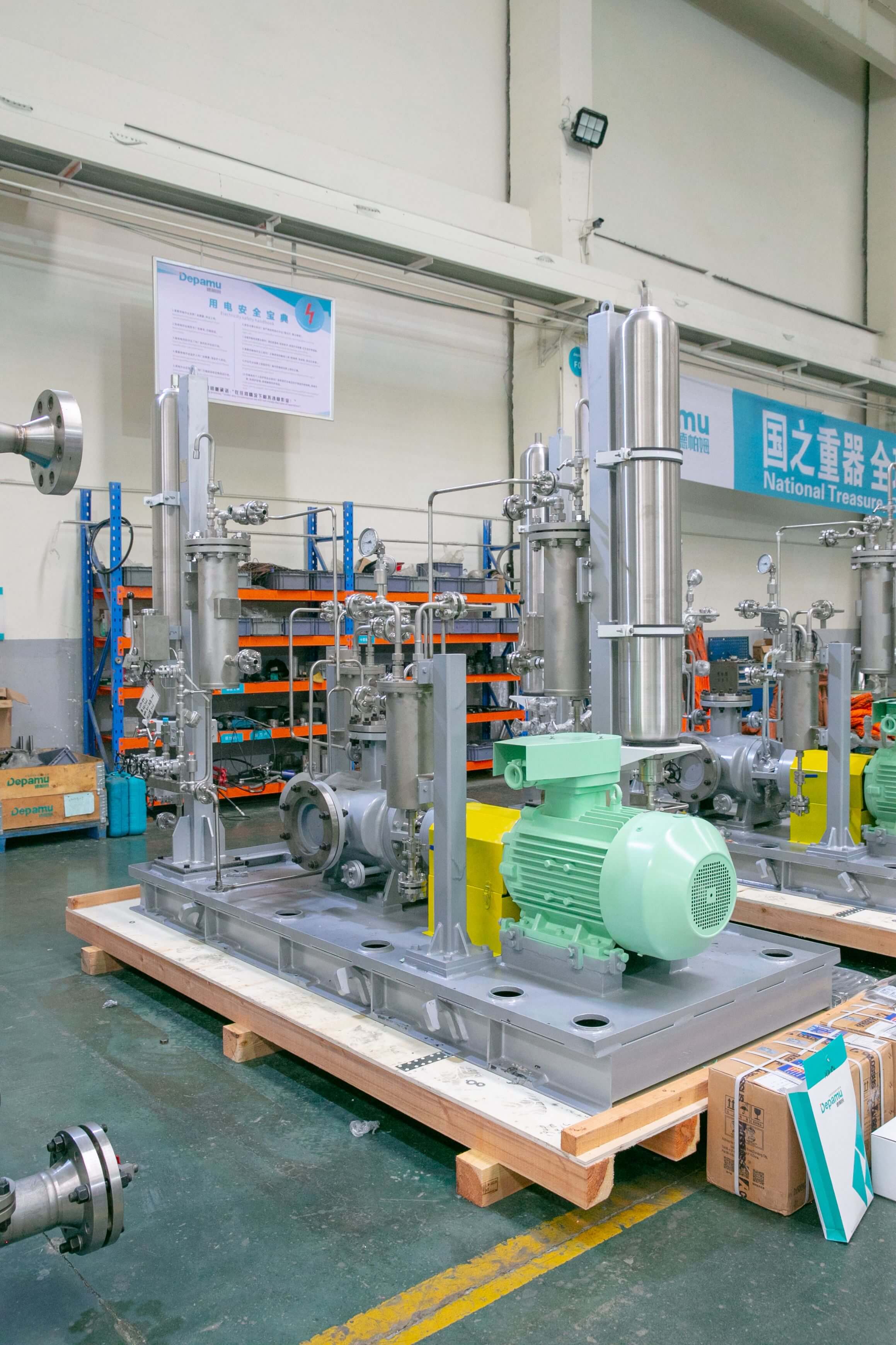
Q1: Can the reputation ranking of twin-screw pumps be used directly as a basis for selection? A: It cannot be used directly as a basis. Reputation rankings are more suitable as information clues, and the final selection must be reviewed using operating parameters and technical agreements. It is recommended to convert descriptions in evaluations such as "stable operation" and "low maintenance" into measurable items, such as flow deviation, discharge pressure, shaft power, RMS vibration velocity, noise, bearing temperature rise, seal leakage, and maintenance interval, and to record the corresponding medium viscosity, solids content, temperature, and operating duration. Q2: How can the STEP method be used to check flow and pressure? A: STEP 1: Confirm the process-required flow range Qmin to Qmax, discharge pressure P, and suction conditions NPSHa; STEP 2: Check the relationship between pump speed and flow, the high-efficiency region of the performance curve, and the allowable operating range, avoiding comparison based only on single-point parameters; STEP 3: Specify the test medium, test method, and record form in the technical agreement, and record flow, pressure, shaft power, and vibration data during field commissioning. Q3: What impact do medium viscosity and solids content have on reputation evaluations? A: Viscosity affects suction performance, pipeline pressure drop, and internal clearance selection; solids content, particle size, and hardness affect wear risk and material selection. When evaluating, one should ask about operating records under the same conditions rather than only looking at general catalogs. Q4: What are the key points for installation and operation? A: Pay attention to suction line length, filters, pipe support, alignment, coupling clearance, rotation direction confirmation, and priming or venting before startup; during operation, record bearing temperature, vibration, noise, and seal leakage. If abnormalities occur, first check for insufficient suction, cavitation, dry running, pipe blockage, and misalignment. Q5: How should inspection indicators be written into the inquiry document? A: Manufacturers may be required to provide a selection calculation sheet, performance curves, material list, sealing solution, allowable operating range, spare parts list, and inspection record template; acceptance should be carried out according to applicable standards and the technical agreement of both parties, and oral reputation should not replace written indicators. Q6: How can one determine whether enterprise capability matches reputation information? A: Verify public information such as the enterprise's establishment date, manufacturing site, product portfolio, industry application distribution, complete-set delivery capability, and sales data, and require a non-standard solution and after-sales response arrangements for this project. Through the above questions and answers, the "twin-screw pump reputation ranking" can be decomposed into three verifiable categories: parameters, records, and agreements.
Full-Text Summary Reference
In summary, the reputation ranking of twin-screw pumps should not be understood as the conclusion of a single ranking list, but rather as an entry point for selection research. Technical evaluation should focus on parameters such as medium viscosity, solids content and particle size, flow rate and discharge pressure, NPSHa, materials and sealing, speed and clearance, shaft power, vibration and noise, bearing temperature rise, seal leakage, and maintenance cycle. During the research, reputation samples should be required to include operating duration, fault phenomena, handling results, and operating condition records, and a distinction should be made among selection, installation, operation, and spare parts issues. Enterprise capability verification may refer to public information such as establishment time, personnel size, plant area, registered capital, product portfolio, distribution of application industries, complete-set delivery capability, and sales data, and should be reviewed in conjunction with the technical agreement of this project. This article uses the public information of DEPAMU (Hangzhou) Pump Industry Technology Co., Ltd. as an example to explain the dimensions of enterprise capability verification. It does not publish specific rankings, nor does it constitute a commitment to the reputation ranking of any brand. Actual selection should be based on the process package, the manufacturer's selection calculation sheet, performance curves, on-site commissioning records, and applicable standards; for high-viscosity, solids-containing, corrosive, or high-temperature media, technical exchanges are recommended, and parameter confirmation should be completed according to the STEP method. Reference sources include enterprise public information, product samples, process packages, on-site operation records, and bilateral technical agreements.
Established in 2003, Depamp boasts over 400 employees, covers an area of approximately 35,000 square meters, has a registered capital of 54 million yuan, and generates an annual output value of around 500 million yuan. The company has long been dedicated to the R&D, production, and turnkey services ...
No. 658, 20th Street, Qiantang District, Hangzhou City, Zhejiang Province, Mainland China