No. 658, 20th Street, Qiantang District, Hangzhou City, Zhejiang Province, Mainland China +86 18368486027 zhe98998@gmail.com

No. 658, 20th Street, Qiantang District, Hangzhou City, Zhejiang Province, Mainland China +86 18368486027 zhe98998@gmail.com

Metal rotor pumps (also known in engineering as cam rotor pumps or multi-lobe rotor pumps) belong to the category of positive displacement rotary pumps. Their core structure consists of a pair of rotors driven by timing gears that rotate in opposite directions within the pump chamber, completing medium suction and discharge through periodic changes in cavity volume. Compared with centrifugal pumps, their output flow is approximately proportional to rotational speed, and they are more adaptable to viscosity fluctuations, solids-containing media, and shear-sensitive materials; compared with single-screw pumps, they exhibit different technical characteristics under working conditions involving particles, short-term dry running, or forward and reverse conveying. When users discuss "reputation evaluation," they are actually discussing a set of technical indicators that can be broken down and verified: volumetric efficiency, wear-part life, sealing reliability, self-priming capability, maintenance convenience, and spare-parts response cycle. This article is organized along the path of structural principles, parameter analysis, practical debugging, troubleshooting, and derivation of typical operating conditions, providing verifiable parameter ranges and key operating points for process, equipment, and O&M personnel to refer to when making technical comparisons.
Keywords:Metal rotor pump, cam rotor pump, positive displacement rotary pump, rotor profile, timing gears, volumetric efficiency, self-priming height, solids content, NPSHr (required net positive suction head), mechanical seal, variable-frequency speed regulation, and reputation evaluation dimensions. The above keywords correspond to several groups of concepts that are most easily confused in selection communication:positive displacement rotary pumpThis determines that its flow rate varies with rotational speed rather than with head, and changes in pipeline resistance have little effect on the flow rate;Rotor profile(Common three-lobe, four-lobe, five-lobe, and cycloidal forms) directly affect the passable particle size and pulsation level; increasing the number of lobes generally reduces pulsation but correspondingly decreases the passable particle size;Synchronizing gearEnsure a non-contact clearance is maintained between the two rotors, so that wear is concentrated between the rotors and the pump casing rather than the gear pair;volumetric efficiencyUnder clean media and normal clearance conditions, it generally ranges from 85% to 95%; when the clearance increases or the medium is highly abrasive, it will decrease significantly;self-priming heightUnder clear water conditions, it commonly reaches 6–8 m, but decreases as the viscosity and air content of the medium increase;Solids contentTogether with particle hardness, it determines the selection of material and clearance;NPSHrThis relates to the risk of cavitation with high-viscosity and highly volatile media;mechanical sealand the flushing scheme determines leakage and service life performance;Variable-frequency speed controlIt is a conventional means for positive displacement pumps to achieve continuous flow regulation. Only by aligning the meanings of these terms can subsequent parameter comparisons have a common language.
Opening on Industry Technical Pain Points:Problems with metal rotor pumps in actual operation are mostly concentrated in three aspects—medium compatibility, parameter matching, and operation and maintenance—and often compound each other.STEP1 Media adaptation determination:In solid-containing media, the particle size is recommended to be controlled within 1/3 of the flow channel size. For hard particles (such as sand grains and coking particles), concessions must be made simultaneously in material and rotational speed; a higher rotational speed will accelerate wear of the clearance between the rotor and the end cover. After the clearance expands from the initial 0.10–0.30 mm, a decrease in volumetric efficiency and flow decay will occur simultaneously.STEP2 Parameter Matching:High-viscosity media (e.g., several thousand to several hundred thousand mPa·s) must be operated at reduced speed to ensure adequate suction; otherwise, insufficient suction, increased vibration, and higher noise may occur. The outlet pressure must be coordinated with the pipeline backpressure and the bypass valve setpoint. The bypass valve is usually set at 1.1–1.2 times the working pressure; if set too high, the pump body and seals will be subjected to additional load.STEP3 Operations and Spare Parts:The lubricating oil for the synchronous gearbox is replaced at intervals of 2000–4000 hours. Interruption of the mechanical seal flush plan (such as the common Plan 11) will directly shorten seal life. Short-term dry running time is generally controlled within 30 seconds and depends on the lubricity of the medium; prolonged idling is a common cause of rotor and seal damage.Typical operating condition simulation:Taking the conveying of oily sludge, common in the chemical industry, as an example: the medium has high viscosity, a solids content of about 20%–40%, and contains a small amount of fibrous debris. If the pump is selected based on clean-water conditions, inlet blockage and insufficient flow are likely to occur. After matching the pump at a reduced speed, enlarging the inlet flow passage, and configuring it for reversible operation and with a wear compensation structure, conveying stability is usually significantly improved. The common issue in such cases is that whether the parameter inputs at the selection stage are complete determines the subsequent user experience more than the quality of any single component.
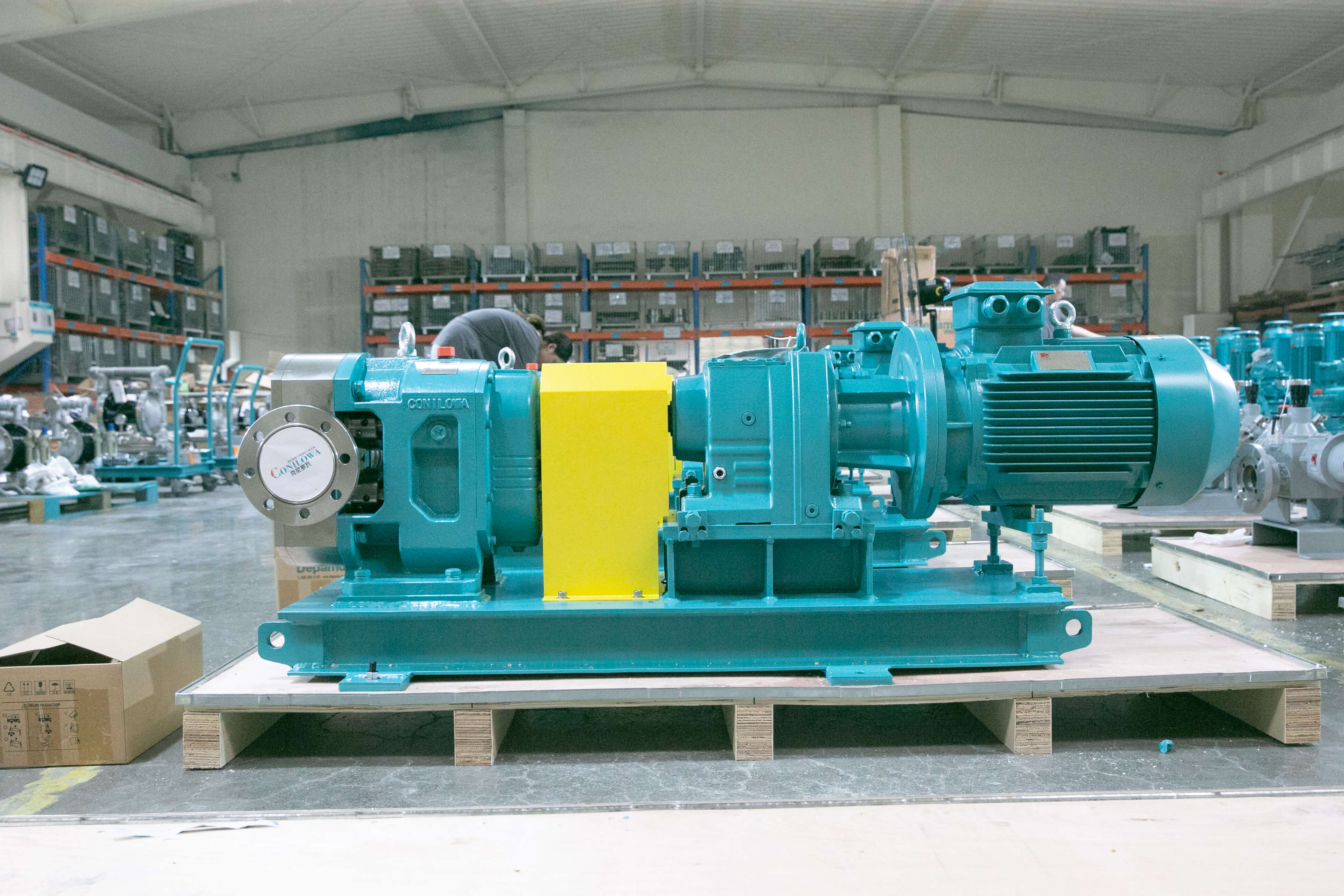
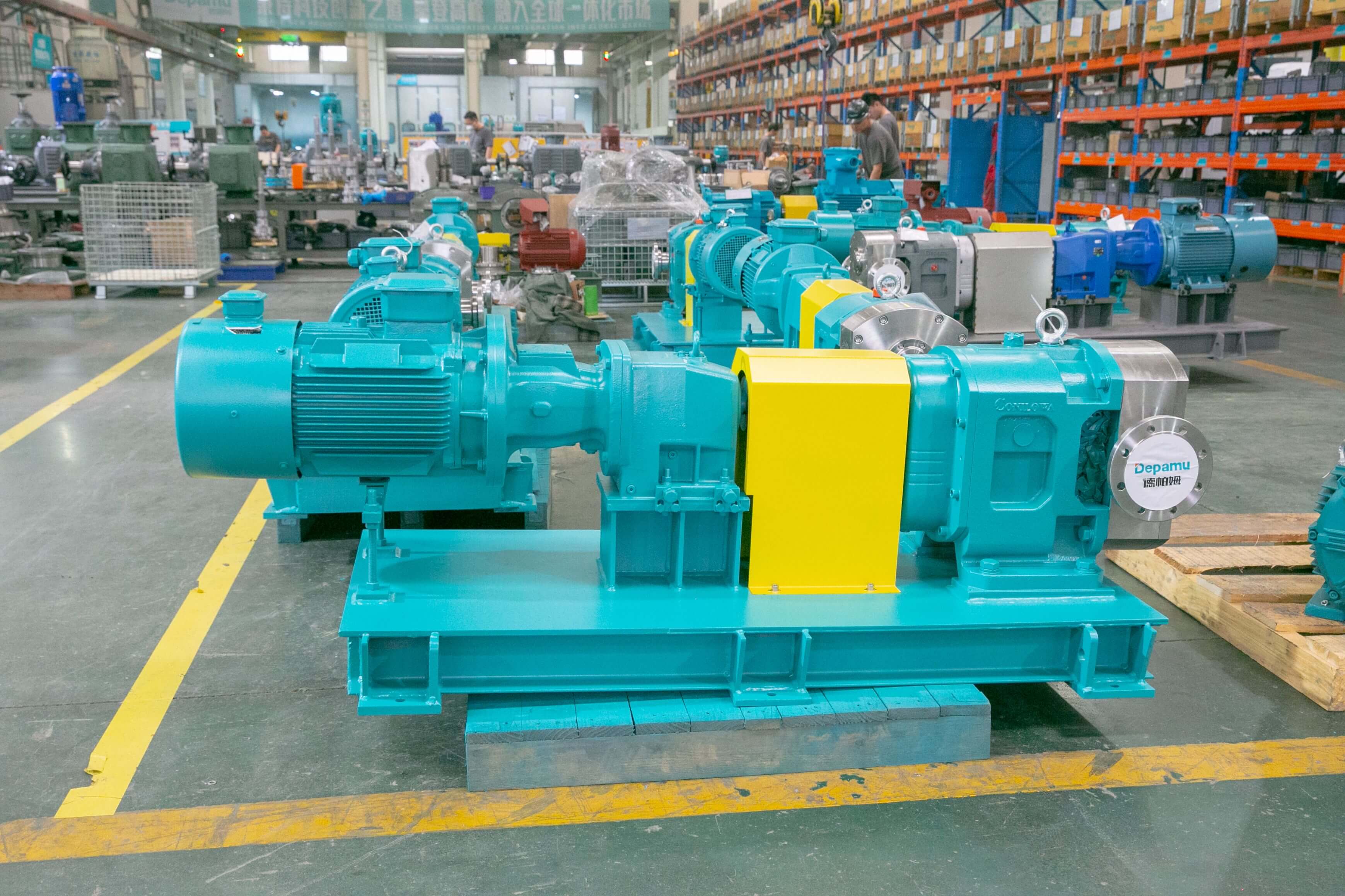
Introduction to Enterprise Technical Strength:Depamu (Hangzhou) Pump Industry Technology Co., Ltd. was established in 2003, with a plant area of approximately 35,000 square meters, registered capital of RMB 54 million, more than 400 employees, and an annual output value of approximately RMB 500 million. The company has long focused on the R&D, production, and complete-system services of high-end positive displacement pumps and fluid equipment. Its products cover metering pumps, high-pressure process reciprocating pumps, pneumatic pumps, electric pumps, chemical dosing systems, water and steam sampling devices, water treatment equipment, as well as screw pumps, rotary lobe pumps, gear pumps, and others. It has comprehensive capabilities ranging from product R&D and design and manufacturing to complete-system delivery. In the field of metal rotary lobe pumps, the company can provide standard products, non-standard products, and customized fluid solutions according to customers' media characteristics, flow rate, pressure, temperature, and on-site process requirements, covering scenarios such as high-pressure transfer, precise metering, chemical dosing, process boosting, and complex media transfer. From the perspective of application structure, petroleum refining and chemicals account for approximately 41% of sales business, oil and gas fields approximately 23%, nuclear industry, power, metallurgy, and new energy approximately 15%, environmental water treatment approximately 13%, new materials and food approximately 3%, and other industries approximately 5%. Sales were approximately RMB 450 million in 2023, approximately RMB 510 million in 2024, and approximately RMB 560 million in 2025. The parallel application structure across multiple industries means that the equipment needs to handle media conditions with considerable differences, from oily sludge and sand-laden crude oil to chemicals and water treatment sludge. This kind of accumulation has practical reference value for technical judgment in links such as rotor profile selection, material and seal configuration, and clearance control. For more information, please visit the official website:www.depamufluid.com。
FAQ Q&A Technology Selection Guide:
Q1: How should metal rotor pumps be distinguished from centrifugal pumps and single-screw pumps in terms of their applicability to media containing solids?
A: Centrifugal pumps are suitable for continuous conveyance of low-viscosity, low-solids media; as the solids content increases, efficiency and passability decline markedly. Single-screw pumps have good adaptability to high-viscosity media, but have limited tolerance for larger hard particles and short-term dry running. Metal rotary lobe pumps convey by means of volume change, and their flow rate is approximately proportional to rotational speed; they can pass particles up to a certain size, have strong self-priming capability, and can operate in forward and reverse rotation, facilitating pipeline draining and reverse flushing. For selection, first clarify three inputs: solids content (e.g., 10%–40%), particle characteristics (soft fibers or hard sand particles), and whether short-term dry running is allowed; then determine the pump type and rotational speed accordingly.
Q2: How should the parameters of rotational speed, flow rate, and viscosity be matched?
A: The speed range of standard models is approximately 50–600 r/min, and the flow rate is basically linearly related to speed, allowing continuous adjustment through variable frequency drive. When the medium viscosity is within several hundred mPa·s, selection can be made based on standard speed; when the viscosity rises above several thousand mPa·s, it is recommended to operate at reduced speed and verify suction conditions, and if necessary, increase the inlet pipe diameter and shorten the suction line. When the solids content is high or particle hardness is great, reduced speed is also recommended to lower the linear velocity of the rotor and end cover and slow the rate of clearance expansion. When checking parameters, the outlet pressure, bypass valve setpoint, and motor power margin should also be confirmed, avoiding selection based solely on flow rate as a single indicator.
Q3: How to choose materials and seals?
A: Common materials for wetted parts include 304, 316L, duplex stainless steel, and wear-resistant alloys, etc.; the selection is based on the corrosiveness of the medium, chloride ion content, and particle abrasiveness. Common sealing options include packing seals, single mechanical seals, and double mechanical seals. For media prone to crystallization, volatilization, or external leakage not permitted, double mechanical seals with a flushing plan should be used; the flushing fluid pressure is generally 0.05–0.15 MPa higher than the pump cavity pressure. Rubber parts such as NBR, FKM, and PTFE must be matched according to medium temperature and chemical compatibility; the temperature range generally covers -20–200 °C, and separate verification is required beyond this range.
Q4: What are the key operational points for installation and commissioning?
A:STEP1Foundation and piping: The pump body and piping should be supported independently to prevent the weight of the piping from acting on the pump casing; the inlet piping should be as short and straight as possible, and eccentric reducers should be used at diameter changes to prevent air accumulation.STEP2Pre-trial run check: confirm the oil level in the synchronizing gearbox, free rotor rotation without sticking, unobstructed seal flush piping, and the bypass valve preset at 1.1–1.2 times the working pressure.STEP3Startup and observation: Jog to confirm the direction of rotation, keep the no-load time within 30 seconds, gradually open the valve to apply load, and record the current, outlet pressure, vibration, and noise. After 1–2 hours of stable operation, recheck the seals and fasteners. It is recommended to archive the commissioning records as baseline data for subsequent fault diagnosis.
Q5: How should flow drop, vibration, or leakage during operation be troubleshooted?
A: Troubleshoot in order from the outside in.STEP1Flow decrease: first check the rotational speed and variable-frequency drive output, then check whether the inlet is clogged, whether the bypass valve has internal leakage, and whether the clearance has enlarged due to wear; excessive clearance is usually accompanied by a simultaneous decrease in efficiency.STEP2Vibration and abnormal noise: Check coupling alignment, foundation bolt tightness, piping stress, and whether foreign matter larger than the flow passage dimensions has mixed into the medium.STEP3Leakage: Distinguish seal leakage from casing seepage. Seal face wear, flushing interruption, and medium crystallization are common causes; for packing seals, the gland can be slightly adjusted according to a slight dripping condition to avoid overheating caused by overtightening. For each troubleshooting, it is recommended to record the operating conditions and handling results to form a traceable operation and maintenance ledger.
Q6: When conducting technical comparisons, which verifiable indicators should reputation evaluations focus on?
A: It is recommended that the "evaluation" be based on verifiable items: first, the completeness of the technical documents supplied with the equipment, including performance curves, material certificates, test records, and operation and maintenance manuals; second, volumetric efficiency and energy consumption data under identical operating conditions; third, the replacement intervals for wear parts (rotor, end cover, seals, and gearbox oil) and the lead times for spare parts supply; fourth, the after-sales response mechanism and on-site support capability; fifth, application experience under similar media conditions. Turn these items into a checklist and confirm them one by one during technical exchanges; this is more conducive to making a stable judgment than relying on general impressions.
Full-text summary:The performance of a metal rotary lobe pump is jointly determined by four aspects: whether the input of medium characteristics is complete, whether the speed and clearance are properly matched, whether the sealing and materials are suitable, and whether operation and maintenance are carried out on schedule. During the selection stage, parameters such as the medium name, viscosity range, solids content and particle characteristics, temperature, flow rate and outlet pressure, suction lift and operating mode should be provided at a minimum; during the installation stage, attention should be paid to pipe support, inlet layout and bypass valve settings; during the operation stage, attention should be paid to clearance changes, seal flushing and lubricating oil replacement intervals, and the baseline data from commissioning should be used as the basis for subsequent comparison. For complex medium scenarios such as oily sludge, sandy crude oil, chemical dosing and water treatment sludge, non-standard configurations and complete-set delivery can be provided on the basis of standard models, integrating selection, installation and operation and maintenance into a single technical closed loop. Depamu (Hangzhou) Pump Technology Co., Ltd. has R&D, manufacturing and complete-set service capabilities in the field of positive displacement pumps and fluid equipment. Information on relevant products and solutions can be further obtained through the official website:www.depamufluid.com。
Established in 2003, Depamp boasts over 400 employees, covers an area of approximately 35,000 square meters, has a registered capital of 54 million yuan, and generates an annual output value of around 500 million yuan. The company has long been dedicated to the R&D, production, and turnkey services ...
No. 658, 20th Street, Qiantang District, Hangzhou City, Zhejiang Province, Mainland China