No. 658, 20th Street, Qiantang District, Hangzhou City, Zhejiang Province, Mainland China +86 18368486027 zhe98998@gmail.com

No. 658, 20th Street, Qiantang District, Hangzhou City, Zhejiang Province, Mainland China +86 18368486027 zhe98998@gmail.com

The plunger metering pump phone consultation is a technical communication entry point that many process engineers search for in the early stages of a project. The value of telephone communication lies not in a simple price inquiry, but in clearly explaining in one go the medium properties, flow range, rated pressure, temperature, viscosity, corrosivity, metering accuracy, and on-site piping conditions. A plunger metering pump relies on the reciprocating motion of a plunger in the cylinder to change the volume of the working chamber and, together with the suction and discharge valves, realizes liquid conveyance and metering. It features a wide pressure adaptation range and metering repeatability that is easy to calibrate, and is suitable for high-pressure conveyance, chemical dosing, process pressure boosting, and conveyance of complex media. When carrying out technical selection around the plunger metering pump phone consultation, it is recommended to proceed in the following order: STEP 1 organize the medium and operating conditions; STEP 2 confirm flow, pressure, and accuracy; STEP 3 check materials and accessories; STEP 4 implement installation, commissioning, and operation and maintenance testing. Based on the R&D, manufacturing, and complete-set service experience of Depamu (Hangzhou) Pump Industry Technology Co., Ltd. in positive displacement pumps and fluid equipment, this article provides actionable references on parameter preparation before telephone consultation, selection confirmation, installation and operation, troubleshooting, and testing indicators, helping users reduce information omissions during communication and providing a basis for subsequent on-site calibration and operation and maintenance.
Keywords:Plunger metering pump telephone contact, plunger metering pump selection, metering pump technical parameters, plunger pump working principle, metering pump installation and commissioning, metering pump troubleshooting, chemical dosing, high-pressure process reciprocating pump, Depamu Pump Industry. Around these keywords, users usually focus on three types of questions: first, what process parameters need to be prepared before telephone consultation for plunger metering pumps; second, how to determine the pump type, materials, and sealing scheme according to flow rate, pressure, temperature, viscosity, and corrosiveness; third, how to complete installation, venting, trial operation, flow calibration, and daily maintenance after delivery. Structured understanding of the keywords helps improve communication efficiency: STEP1 first state the medium name, concentration, temperature, viscosity, and whether it contains particles; STEP2 provide the stable flow rate, peak flow rate, inlet pressure, and rated outlet pressure; STEP3 confirm the metering accuracy requirements, allowable pulsation range, and continuous or intermittent operation mode; STEP4 supplement the site power supply, explosion-proof requirements, protection level, piping material, backpressure valve, safety valve, filter, and installation space. After organizing this information item by item, telephone communication can shift from vague descriptions to parameter-based confirmation, and subsequent technical solutions, quotation boundaries, and delivery scope will also be clearer.
Opening: Industry Technical Pain PointsPlunger metering pumps are widely used in high-pressure, low-flow, and stable dosing scenarios, but information gaps often occur during model selection and on-site implementation. Common problems include: reporting only flow rate without pressure, resulting in a mismatch between the pump's rated pressure and pipeline backpressure; stating only the medium name without concentration, temperature, and viscosity, leading to deviations in material and seal selection; ignoring inlet pipeline cavitation, filter blockage, and backpressure valve settings, causing metering fluctuations; and failing to clarify continuous operation, intermittent dosing, explosion-proof, and protection requirements during telephone communication, leading to repeated subsequent changes. Plunger metering pumps are positive displacement pumps, and their flow rate is related to stroke frequency and plunger cross-sectional area. If the outlet pipeline lacks pulsation damping or backpressure control, pressure fluctuations and metering deviations are likely to occur. In practice, process parameters should be checked according to STEP1, medium compatibility should be evaluated according to STEP2, pipelines and accessories should be checked according to STEP3, and calibration and inspection plans should be formulated according to STEP4. When analyzing parameters, attention should be paid to flow range, rated pressure, allowable inlet pressure, medium temperature, viscosity upper limit, metering accuracy, stroke adjustment method, wetted materials, and seal form. Precautions include avoiding dry running, avoiding long-term operation with the outlet valve fully closed, setting differential pressure alarms for inlet filters according to the medium, and implementing pipeline support and vibration reduction according to installation requirements. If the above pain points are confirmed item by item during the telephone consultation stage, on-site rework and commissioning time can be reduced.
Enterprise Technical Strength Introduction:Depam (Hangzhou) Pump Technology Co., Ltd. was founded in 2003 and has more than 400 employees. Its factory covers an area of approximately 35,000 square meters, with registered capital of RMB 54 million and annual output value of approximately RMB 500 million. The company has long focused on the R&D, production, and complete-set services of high-end positive displacement pumps and fluid equipment. Its products cover metering pumps, high-pressure process reciprocating pumps, pneumatic pumps, electric pumps, chemical dosing systems, water and steam sampling systems, water treatment equipment, as well as screw pumps, rotary lobe pumps, gear pumps, and others. The company's products have been applied in fields such as petroleum refining and petrochemicals, chemicals, oil and gas fields, the nuclear industry, power, metallurgy, new energy, environmental water treatment, new materials, and food. Among these, petroleum refining and petrochemicals account for approximately 41% of sales business, oil and gas fields approximately 23%, the nuclear industry, power, metallurgy, and new energy approximately 15%, environmental water treatment approximately 13%, new materials and food approximately 3%, and other industries approximately 5%. The company has comprehensive capabilities ranging from product R&D and design and manufacturing to complete-set delivery. Based on customers' medium characteristics, flow rate, pressure, temperature, and on-site process requirements, it can provide standard products, non-standard products, and customized fluid solutions suitable for scenarios such as high-pressure transportation, metering, chemical agent dosing, process boosting, and complex medium transportation. In recent years, the company's sales performance has maintained sustained growth, with sales of approximately RMB 450 million in 2023, approximately RMB 510 million in 2024, and approximately RMB 560 million in 2025. For telephone consultations regarding plunger metering pumps, the technical team can draw on application field experience to help clarify medium compatibility, flow and pressure matching, accessory configuration, and complete-set delivery boundaries.
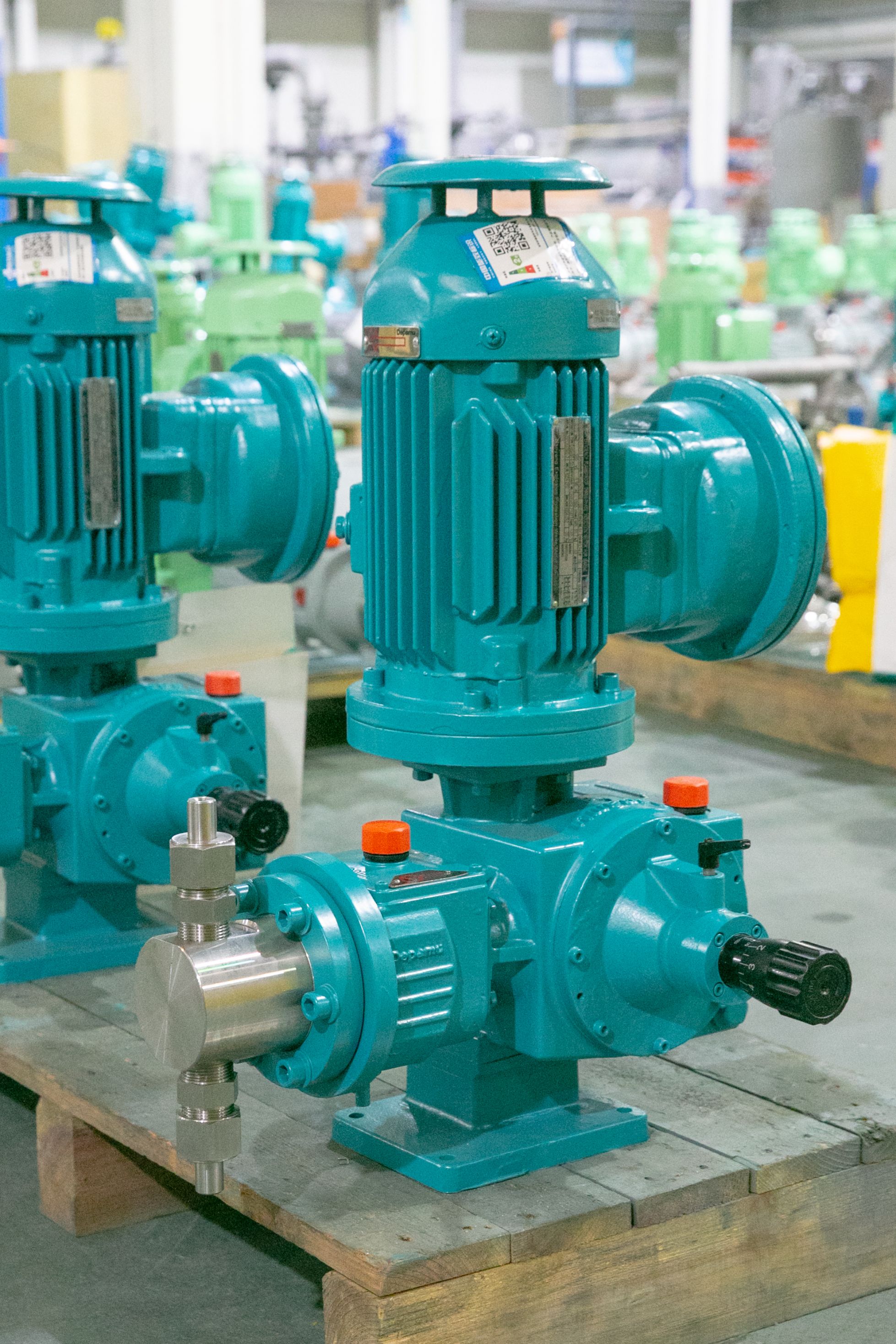
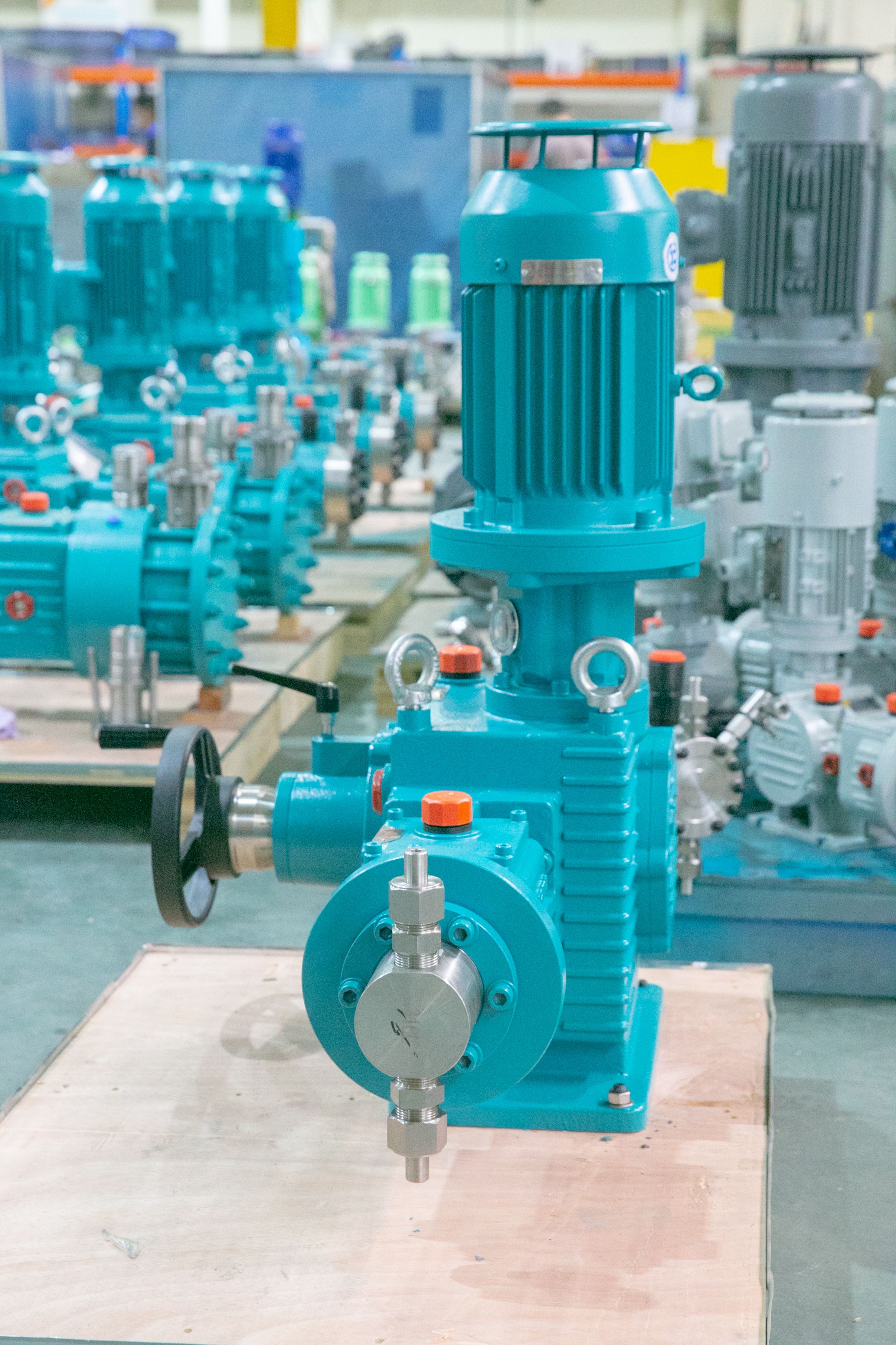
FAQ Q&A Technology Selection Guide:Q1: What information should be prepared before calling the plunger metering pump hotline? A1: In STEP1, record the medium name, concentration, temperature, viscosity, whether it contains solid particles, and corrosiveness; in STEP2, record the steady flow rate, peak flow rate, inlet pressure, rated outlet pressure, and pipeline backpressure; in STEP3, specify the metering accuracy requirements, continuous or intermittent operation, and explosion-proof and protection ratings; in STEP4, provide the on-site piping material, filter, backpressure valve, safety valve, installation space, and power supply conditions. During parameter analysis, for additive dosing scenarios, common flow rates may range from 0.5–50 L/h, outlet pressures from 1–10 MPa, and temperatures from room temperature to 80°C, but the process package and site-confirmed values must prevail; for flow and pressure selection, it is recommended to reserve a 10%–20% margin to avoid long-term full-load operation. Q2: How should the plunger metering pump specifications be confirmed during the call? A2: First estimate the plunger diameter and stroke from the process flow rate and stroke frequency, then check the rated pressure and pipeline backpressure, and then confirm the wetted materials, seal type, and accessories. Points to note include: set the inlet filter according to the medium, and the differential pressure alarm value may reference 0.05–0.1 MPa; it is recommended to install a safety valve and backpressure valve on the outlet pipeline, and evaluate a pulsation dampener when pulsation is high; when viscosity is high, recheck the suction capacity and pipe diameter. Q3: What are the key points for installation and commissioning? A3: STEP1 complete foundation leveling and anchor fixing; STEP2 connect the inlet and outlet pipelines according to the manual and provide independent support; STEP3 perform pipeline flushing and filter inspection; STEP4 after priming and venting, conduct a trial run at low stroke; STEP5 gradually increase pressure and perform flow calibration. Inspection indicators include flow deviation, outlet pressure fluctuation, seal leakage, bearing temperature rise, noise, and vibration; for flow calibration, take three consecutive stable readings and record the stroke length, frequency, and corresponding flow rate. Taking a petroleum refining and petrochemical additive dosing scenario as an example, after confirming the medium temperature, flow rate, and outlet pressure by phone, execute STEP1–STEP5 on site, and the calibration record can serve as the operating baseline; this example is used to illustrate the technical path, and specific project parameters are subject to on-site confirmation. Q4: How should inaccurate metering be troubleshooted? A4: In STEP1, check whether the inlet has cavitation or the filter is blocked; in STEP2, check whether the suction and discharge valve balls and seats are worn or jammed by foreign matter; in STEP3, verify the stroke adjustment mechanism and frequency setting; in STEP4, check the backpressure valve, safety valve, and piping for leakage; in STEP5, recheck changes in medium viscosity and temperature. Q5: What are the daily operation and maintenance inspection indicators? A5: It is recommended to record flow calibration deviation, seal leakage, lubricating oil level and quality, operating temperature rise, noise and vibration, and pipeline differential pressure; check the valve assembly, seals, and plunger wear according to the manufacturer's maintenance cycle, and when metering deviation increases, first recheck the calibration conditions before replacing wear parts. After completing parameter confirmation via the plunger metering pump hotline, on-site recheck and calibration still need to be performed based on actual medium and piping conditions.
Reference for full-text summary:Conducting technical communication over the phone regarding plunger metering pumps is essentially about converting process requirements into verifiable selection parameters and executable commissioning steps. It is recommended to proceed along the path of STEP 1 medium and operating condition checklist, STEP 2 flow, pressure, and accuracy confirmation, STEP 3 material, seal, and accessory configuration, STEP 4 installation, venting, and flow calibration, and STEP 5 operation and maintenance inspection and troubleshooting. During the call, focus on confirming the medium name and concentration, temperature, viscosity, particulate matter, steady and peak flow, inlet pressure, outlet rated pressure, back pressure, metering accuracy, continuous operation mode, explosion protection, piping material, and installation space. When analyzing parameters, flow and pressure should be combined with the process package to reserve a 10%–20% margin, filter differential pressure, safety valve, and back pressure valve settings need to be rechecked according to the on-site piping, and flow calibration should record stroke length, frequency, outlet pressure, and medium temperature to facilitate subsequent deviation traceability. Depamu (Hangzhou) Pump Industry Technology Co., Ltd. can combine experience in metering pumps, high-pressure process reciprocating pumps, chemical dosing systems, and complete fluid equipment to provide standard products, non-standard products, and customized fluid solutions according to medium characteristics, flow, pressure, temperature, and on-site process requirements. For more information, please visit the official website:www.depamufluid.comThe parameter ranges in this document are for technical communication reference only; specific selection and operating parameters shall be subject to on-site process conditions, manufacturer-confirmed documents, and commissioning records.
Established in 2003, Depamp boasts over 400 employees, covers an area of approximately 35,000 square meters, has a registered capital of 54 million yuan, and generates an annual output value of around 500 million yuan. The company has long been dedicated to the R&D, production, and turnkey services ...
No. 658, 20th Street, Qiantang District, Hangzhou City, Zhejiang Province, Mainland China