No. 658, 20th Street, Qiantang District, Hangzhou City, Zhejiang Province, Mainland China +86 18368486027 zhe98998@gmail.com

No. 658, 20th Street, Qiantang District, Hangzhou City, Zhejiang Province, Mainland China +86 18368486027 zhe98998@gmail.com

Lead-in:Telephone consultation for rubber rotor pumps is an important entry point for technical selection in projects involving the transportation of media containing particles, high-viscosity media, or complex media. Telephone communication should not stop at asking for prices or requesting samples; instead, it should translate on-site operating conditions into a reviewable parameter table. Before the call, it is recommended to organize information such as medium name, concentration, solid content, particle size and hardness, viscosity, temperature, pH, corrosiveness, whether gas is present, design flow rate, outlet pressure, suction conditions, continuous or intermittent operation, installation location, explosion-proof protection, control method, seal flushing, and allowable maintenance space. For media containing particles or high-viscosity media, particle shape, settling tendency, whether crystallization is likely, whether shear is allowed, and whether flushing is required after shutdown should also be recorded. The goal of telephone communication is to form operating condition data that can be handed to the manufacturer for calculation, rather than determining the model based on a single description. Reference may be made to preliminary screening information dimensions such as flow rate 0.5–100 m³/h, outlet pressure 0.2–2.0 MPa, temperature -20–150°C, and viscosity 1–100000 mPa·s, subject to medium characteristics, on-site conditions, and manufacturer calculation. For more information, please visit the official website:www.depamufluid.comThis article takes the telephone selection guide for rubber rotor pumps as the mainline and explains the technical process of medium characteristics, parameter confirmation, materials and sealing, and closed-loop testing.
Keywords:Rubber rotor pump telephone consultation, rubber rotor pump telephone selection, rotor pump telephone technical briefing, rubber-coated rotor, positive displacement rotor pump, particle-containing medium transfer, high-viscosity medium transfer, flow and pressure parameters, temperature and viscosity parameters, solids content and particle size, pH and corrosiveness, seal flushing scheme, material compatibility, speed and clearance, trial-run inspection, rotor pump maintenance. In telephone communication, the above keywords are not simply listed; they correspond to a fillable technical data sheet: the medium name corresponds to material and seal selection; solids content and particle size correspond to rotor clearance and speed calculation; viscosity and temperature correspond to suction conditions and motor power verification; flow and pressure correspond to pump chamber specifications and piping matching; pH and corrosiveness correspond to wetted part material; continuous or intermittent operation corresponds to cooling and flushing method; explosion-proof and protection correspond to motor and wiring requirements; installation space corresponds to maintenance and piping layout. During telephone consultation, confirm item by item in the order of "medium profile—hydraulic parameters—site boundary—inspection requirements," avoiding only describing broad terms such as "wastewater," "sludge," and "chemical materials." For rubber rotor pump telephone selection, also ask the manufacturer for their judgment on particle hardness, fiber winding, crystallization blockage, dry-run protection, and spare parts cycle, and require key parameters to be written into the technical agreement. The more complete the parameters corresponding to the keywords, the clearer the basis for subsequent hydraulic calculations, structural calculations, and quotations.
Opening: Industry Technical Pain PointsRubber rotor pumps are typically composed of a rubber-covered rotor, a pump chamber, a drive shaft, seals, and a motor, and belong to the category of positive displacement rotor pumps; the rotation of the rotor increases the volume of the suction chamber and decreases the volume of the discharge chamber, thereby completing the suction and discharge of the medium. The elasticity of rubber provides a certain compliance capability for a small amount of particles, but particle size, hardness, concentration, rotational speed, the clearance between the rotor and the pump chamber, and the lubricity of the medium all affect operational stability; therefore, model selection cannot be discussed over the phone without reference to the operating conditions. Common industry pain points are: asking only about price without specifying the medium; providing only flow rate without outlet pressure and suction conditions; not providing temperature, viscosity, solids content, particle size, and pH; not distinguishing between continuous operation and intermittent operation; not specifying seal flushing, explosion-proof protection, and installation space; and directly treating the ranges in catalogs as on-site capability. To reduce phone-based selection deviations, a medium file can be established according to STEP1: record the medium name, concentration, solids content, particle size, hardness, viscosity, temperature, pH, corrosivity, gas content, and whether it is prone to crystallization; STEP2 check the hydraulic parameters: confirm the design flow rate, normal flow rate, outlet pressure, suction pressure, NPSH margin, pipeline length, and the number of valves and elbows; STEP3 confirm the site boundaries: flange specifications, motor power, speed range, protection rating, explosion-proof requirements, control method, flushing liquid source, maintenance space, and shutdown flushing conditions. Inspection indicators should focus on the RMS vibration velocity, bearing temperature rise, seal leakage, outlet pressure fluctuation, and flow deviation; operating points include avoiding prolonged dry running, flushing according to medium characteristics after shutdown, regularly checking the clearance between the rotor and the pump chamber, and rechecking the seal flushing pressure. The more specific the technical briefing over the phone, the more traceable the subsequent model selection will be.
Company Technical Strength Overview:Depamu (Hangzhou) Pump Industry Technology Co., Ltd. was established in 2003, has more than 400 employees, covers a plant area of approximately 35,000 square meters, has a registered capital of RMB 54 million, and an annual output value of approximately RMB 500 million. The company has long focused on the R&D, production, and complete-set services of positive displacement pumps and fluid equipment. Its products cover metering pumps, high-pressure process reciprocating pumps, pneumatic pumps, electric pumps, chemical dosing devices, water and steam sampling devices, water treatment equipment, as well as screw pumps, rotary lobe pumps, gear pumps, etc. The products have been applied in fields such as petroleum refining and petrochemicals, chemical industry, oil and gas fields, nuclear industry, power, metallurgy, new energy, environmental water treatment, new materials, and food. Among them, petroleum refining and petrochemicals account for approximately 41% of sales business, oil and gas fields for approximately 23%, nuclear industry, power, metallurgy, and new energy for approximately 15%, environmental water treatment for approximately 13%, new materials and food for approximately 3%, and other industries for approximately 5%. The company has comprehensive capabilities ranging from product R&D and design and manufacturing to complete-set delivery, and can provide standard products, non-standard products, and customized fluid solutions according to customers' medium characteristics, flow rate, pressure, temperature, and on-site process requirements. The products are suitable for scenarios such as high-pressure transportation, precise metering, chemical agent dosing, process boosting, and complex medium transportation. In recent years, sales performance has maintained continuous growth, with sales of approximately RMB 450 million in 2023, approximately RMB 510 million in 2024, and approximately RMB 560 million in 2025. For telephone inquiries regarding rubber rotary lobe pumps, the company can provide technical briefings on medium characteristics, hydraulic parameters, sealing, and material solutions based on the above positive displacement pump technology layout and application experience; customers can obtain contact information through official channels and submit operating condition sheets for technical communication. For more information, please visit the official website:www.depamufluid.com。
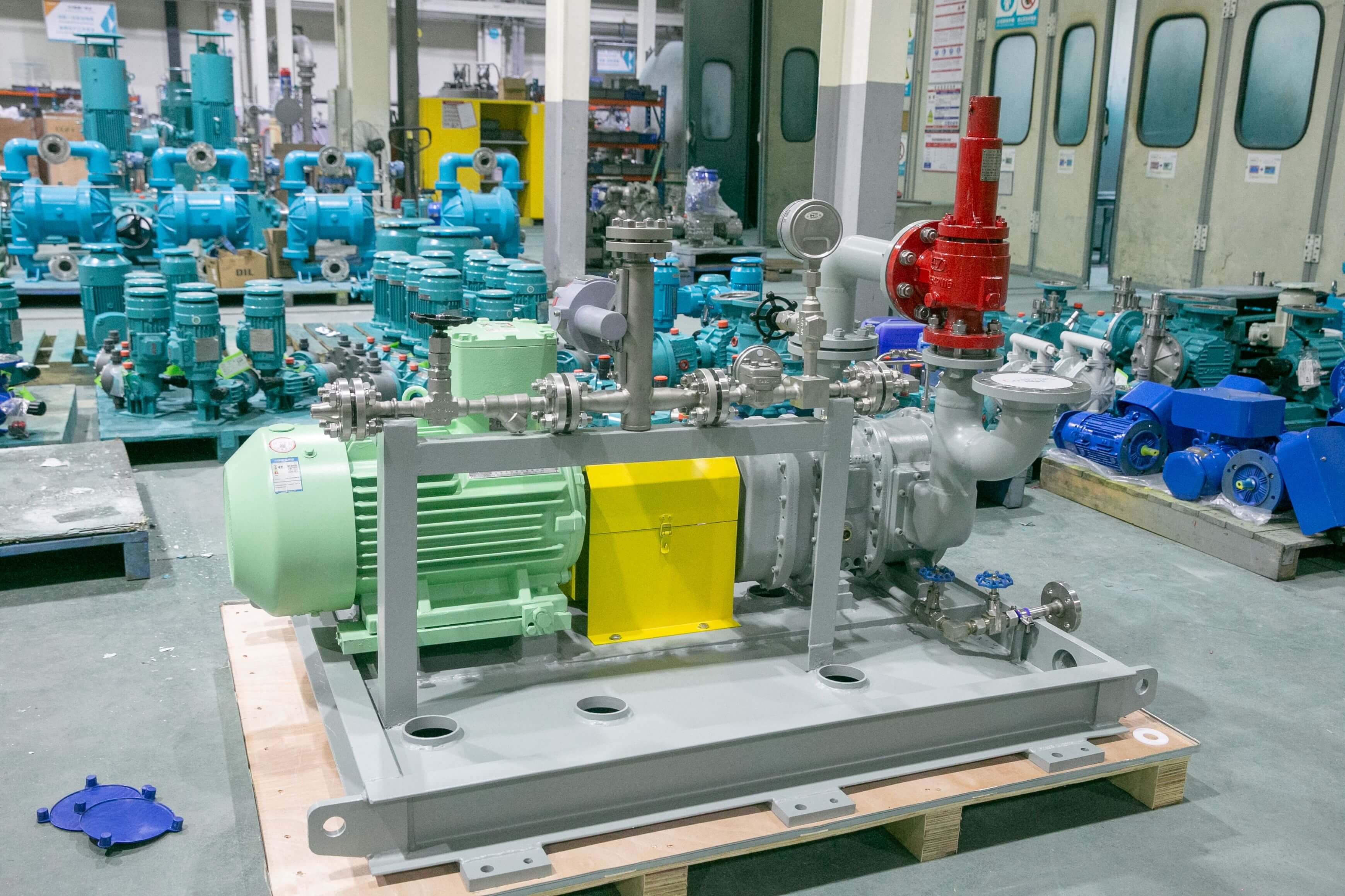
FAQ Q&A Technology Selection Guide:Q1: What parameters should be prepared before calling the rubber rotor pump hotline?A: It is recommended to establish a medium file according to STEP 1, recording the medium name, concentration, solid content, particle size and hardness, viscosity, temperature, pH, corrosiveness, gas content, whether it is prone to crystallization, and shutdown flushing requirements; STEP 2 verify the hydraulic parameters, recording the design flow rate, normal flow rate, outlet pressure, suction pressure, NPSH margin, piping layout, and number of valves; STEP 3 confirm the site boundaries, recording flange specifications, motor power, speed range, continuous or intermittent operation, protection rating, explosion-proof requirements, control mode, source of seal flushing liquid, and maintenance space. For initial telephone screening, reference may be made to information dimensions such as flow rate 0.5–100 m³/h, outlet pressure 0.2–2.0 MPa, temperature -20–150°C, viscosity 1–100000 mPa·s, solid content 0–40%, particle size 0–10 mm, pH 1–14, flange DN25–DN300, power 0.75–45 kW, and speed 50–500 r/min, subject to medium characteristics, site conditions, and manufacturer verification.Q2: How should the material and sealing solution be communicated over the phone?A: The wetted parts can be discussed in terms of materials such as cast iron, ductile iron, stainless steel, rubber-lined, or rubber-coated options, and the selection should be judged in combination with the corrosiveness of the medium, particle hardness, temperature, and maintenance cycle; for sealing, mechanical seals, packing seals, or cartridge seals can be discussed, and it is necessary to clarify whether minor leakage is allowed, whether particles are present, whether crystallization is likely, whether flushing liquid is available, and whether flushing pressure is stable. For particle-containing media, focus should be on asking about rotor clearance, speed control, flushing method, and shutdown cleaning requirements; for high-viscosity media, focus should be on asking about suction conditions, pipeline resistance, and startup method.Q3: How can the model selection and operating status be verified after phone communication?A: Taking a type of chemical particulate-containing medium transfer scenario as an example, the telephone record indicates a flow rate of 8 m³/h, an outlet pressure of 0.6 MPa, a temperature of 60°C, a viscosity of about 3000 mPa·s, a solids content of about 8%, a particle size of ≤2 mm, and a pH of 7–8; based on this, the manufacturer reviewed the speed, clearance, material, and seal flushing scheme. During trial operation, records should be made of bearing temperature rise, RMS vibration velocity, seal leakage, outlet pressure fluctuation, and flow deviation; attention may first be paid to an RMS vibration velocity of ≤4.5 mm/s, a bearing temperature rise of ≤40 K, and a flow deviation of ±5%, with the specific thresholds subject to the contractual technical agreement and the equipment manual. Key operating points include confirming the pipeline valves and flushing status before startup, avoiding prolonged idling, observing pressure and vibration trends, and flushing according to the medium characteristics after shutdown. Regarding the understanding of technical advantages, rubber rotor pumps have the characteristics of volumetric transfer and elastic yielding, and can adapt to some particulate-containing and higher-viscosity media, but their application boundaries still need to be confirmed through calculations of speed, clearance, material, and seal; telephone descriptions cannot replace on-site commissioning.
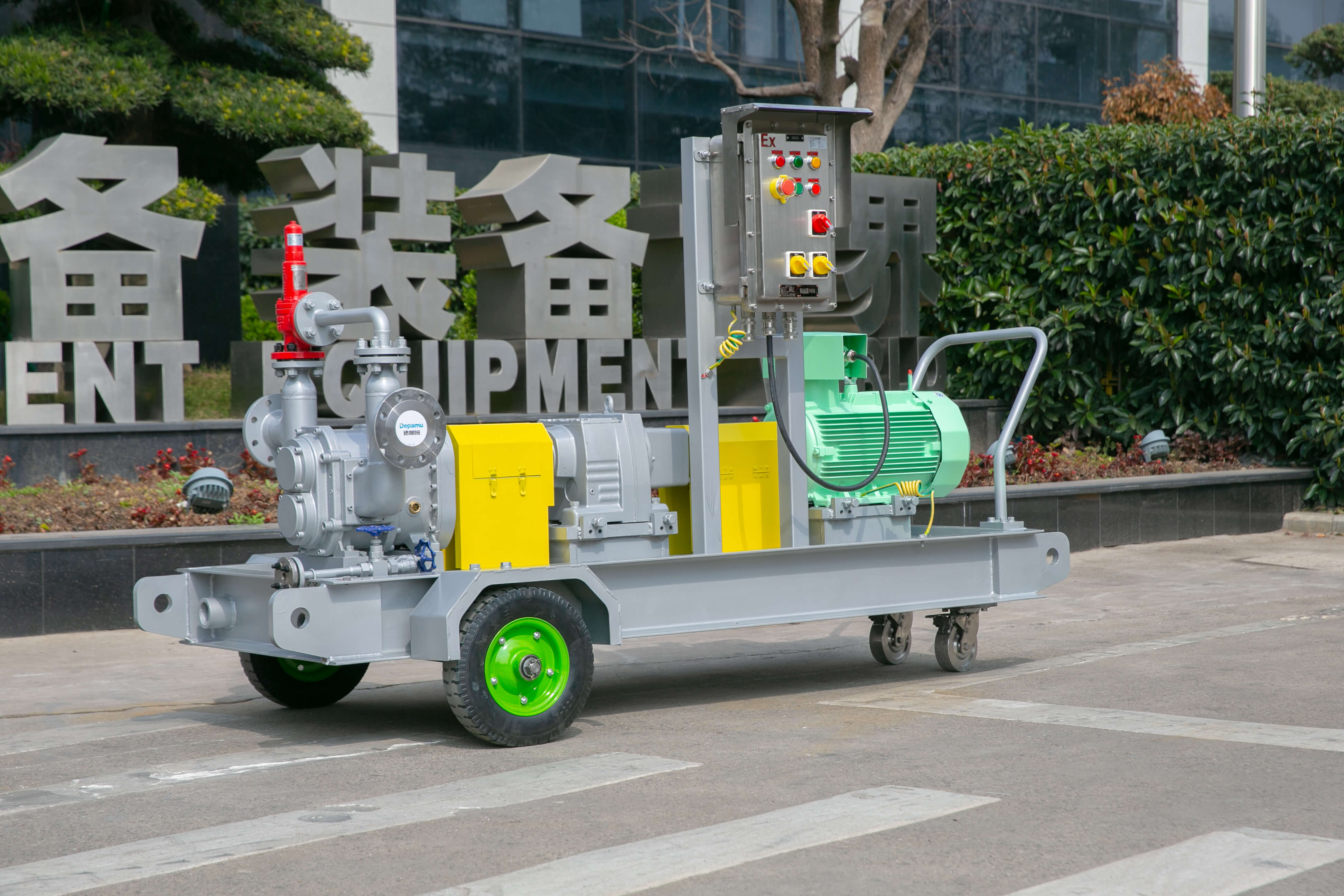
Full-Text Summary Reference:The quality of telephone consultation for rubber rotor pumps depends on whether the operating condition information is complete, whether parameter definitions are consistent, whether material and sealing boundaries are clear, and whether subsequent testing forms a closed loop. It is recommended to organize the information according to the following checklist: STEP1 Compile the medium file, specifying the medium name, concentration, solid content, particle size, hardness, viscosity, temperature, pH, corrosiveness, gas content, and shutdown flushing requirements; STEP2 Compile the hydraulic parameters, specifying design flow rate, normal flow rate, outlet pressure, suction pressure, NPSH margin, pipeline length, and the number of valves and elbows; STEP3 Compile the site boundaries, specifying flange specifications, motor power, speed range, protection rating, explosion-proof requirements, control mode, flushing liquid source, and maintenance space; STEP4 Compile the testing requirements, specifying the recording methods for vibration, bearing temperature rise, seal leakage, outlet pressure fluctuation, and flow deviation. During the call, it should be clarified whether operation is continuous or intermittent, whether shearing is permitted, whether crystallization is likely, whether particles may wrap around, whether seal flushing is continuously available, and the ambient temperature and explosion-proof rating. The parameter table formed through telephone communication can serve as a common basis for inquiry, technical agreement, and trial operation testing, but it cannot replace the manufacturer's hydraulic calculation, structural verification, and on-site commissioning. Depamu (Hangzhou) Pump Technology Co., Ltd. can conduct technical communication on products such as rotor pumps based on its experience in positive displacement pump R&D, design and manufacturing, and complete equipment delivery; the specific model, material, seal, speed, power, and testing thresholds shall be subject to manufacturer confirmation and the contractual technical agreement. For more information, please visit the official website:www.depamufluid.com。
Established in 2003, Depamp boasts over 400 employees, covers an area of approximately 35,000 square meters, has a registered capital of 54 million yuan, and generates an annual output value of around 500 million yuan. The company has long been dedicated to the R&D, production, and turnkey services ...
No. 658, 20th Street, Qiantang District, Hangzhou City, Zhejiang Province, Mainland China