No. 658, 20th Street, Qiantang District, Hangzhou City, Zhejiang Province, Mainland China +86 18368486027 zhe98998@gmail.com

No. 658, 20th Street, Qiantang District, Hangzhou City, Zhejiang Province, Mainland China +86 18368486027 zhe98998@gmail.com

Twin-screw pumps are positive displacement rotary pumps. They rely on the sealed cavities formed between two intermeshing screws and the pump body liner to continuously push the medium axially to the outlet, and they have good adaptability when conveying high-viscosity, slightly particle-containing, shear-sensitive, and gas-liquid mixed-phase media. In petroleum refining and petrochemical, chemical, oil and gas field, environmental water treatment, and other sites, twin-screw pumps are often installed at key positions such as feed, transfer, loading and unloading, and sludge and oily sludge conveyance. Once there is a deviation between the selection parameters and the actual operating conditions, it often manifests as insufficient flow, excessive vibration, seal leakage, abnormal temperature rise, or high energy consumption. To reduce such deviations, before the plan is confirmed, explaining the medium characteristics, operating boundaries, and site conditions clearly in one call about the twin-screw pump is a feasible way to shorten the design cycle and reduce the probability of rework. The quality of telephone communication largely depends on whether the parameter list prepared before communication is complete and whether the data are reliable. This article is presented in the order of parameter preparation, industry pain points, enterprise technical capabilities, question-and-answer selection guide, and summary, for the reference of process, equipment, procurement, and operation and maintenance personnel. For more information, please visit the official website:www.depamufluid.com。
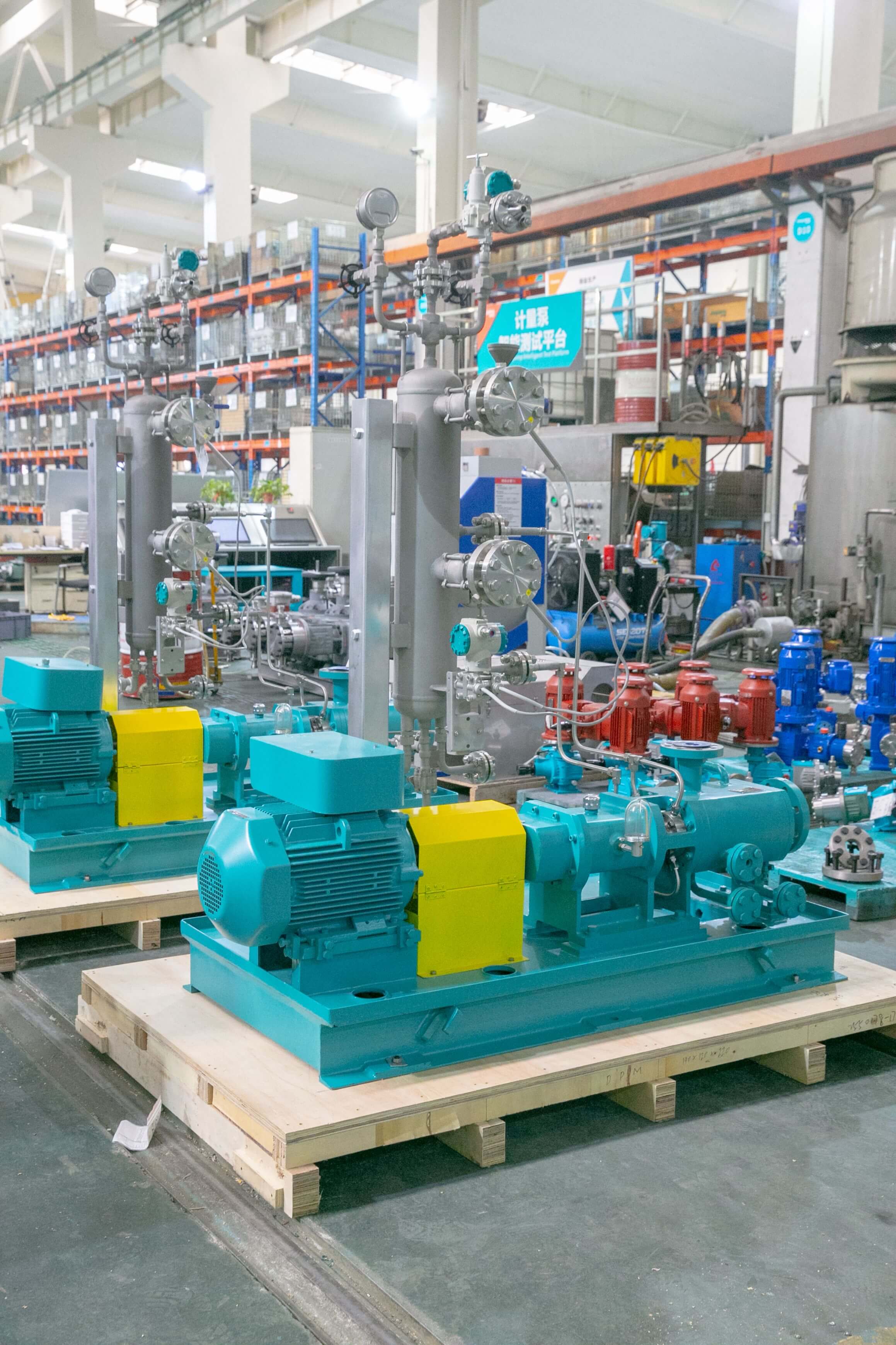
Keywords
Twin-screw pump telephone communication, twin-screw pump selection, positive displacement rotary pump, medium viscosity, solids content and particle size, flow and pressure matching, speed and shear, NPSH margin, mechanical seal and flushing scheme, wetted part materials, variable frequency speed control, gas-liquid mixed transport, dry-running protection, piping layout and installation, trial operation and acceptance criteria. These keywords correspond to specific data items that need to be confirmed in telephone communication, not abstract concepts. Medium viscosity determines the speed range and suction performance; only the viscosity value at the operating temperature is of reference significance. Solids content and particle size, hardness, and shape affect the wear rate of the bushing and screw and the allowable particle size. Flow and pressure matching require checking the rated point, normal point, and minimum value against the flow-pressure curve, avoiding reporting only one rated flow. Speed and shear directly affect the viscosity decay and emulsification tendency of high-viscosity media. The NPSH margin determines the pump installation height and suction piping design. The mechanical seal and flushing scheme need to be determined based on medium temperature, viscosity, gas content, and whether it is prone to crystallization. The materials of wetted parts must consider both corrosiveness and abrasiveness. Variable frequency speed control relates to the flow regulation range and lubrication and cooling at low speeds. For gas-liquid mixed transport conditions, the fluctuation range of gas content needs to be specified. Dry-running protection and piping layout relate to start-stop safety and maintenance space. Converting these keywords into a fillable parameter table is the first step in telephone technical communication with the manufacturer about twin-screw pumps.
Industry technical pain points introduction: parameter blind spots easily overlooked in phone communication
From field feedback, the technical pain points of twin-screw pumps in the selection and operation stages are relatively concentrated, and most are related to unclear parameters during telephone communication. They can be summarized into the following steps for item-by-item verification.
STEP1: Report only clean water operating condition parameters:Some users request quotations based on clean water flow rate and pressure, ignoring the actual medium’s viscosity, density, and gas content. At the same rotational speed, the volumetric efficiency and suction performance of high-viscosity media differ significantly from those of clean water, and a pump model selected according to clean water parameters is likely to exhibit low flow rate and insufficient suction in the field. During telephone communication, the viscosity range at the operating temperature (e.g., start-up viscosity and operating viscosity should be given separately) and the density should be clearly provided.
STEP 2: Ignore solids content and abrasion information:Solids content given only as a percentage is insufficient to assess wear; the particle size distribution, hardness, shape, and whether settling occurs must also be specified. Media containing sand or catalyst powder have a significant impact on the clearance between the screw and the bushing; the allowable particle passage size and expected maintenance interval must be stated during the call.
STEP3 Only one value is given for the flow rate:In actual processes, there are often three flow states: normal, rated, and minimum. An excessively large turndown ratio will cause the pump to deviate from its reasonable speed range for extended periods, resulting in pulsation, vibration, or temperature rise. During communication, list the three flow rates and corresponding pressures, and state whether the control method is variable frequency, recirculation, or bypass.
STEP4 Suction conditions and sealing scheme not implemented:The suction-side pipe length, pipe diameter, number of elbows, and liquid level height determine the NPSH available of the system, and a margin must be reserved relative to the pump's NPSH required; regarding sealing, it is necessary to specify whether the medium tends to crystallize and whether a small amount of flushing fluid is allowed to enter the process. If the above information is missing, only a preliminary proposal can be provided at the telephone stage, which is difficult to support subsequent design and delivery.
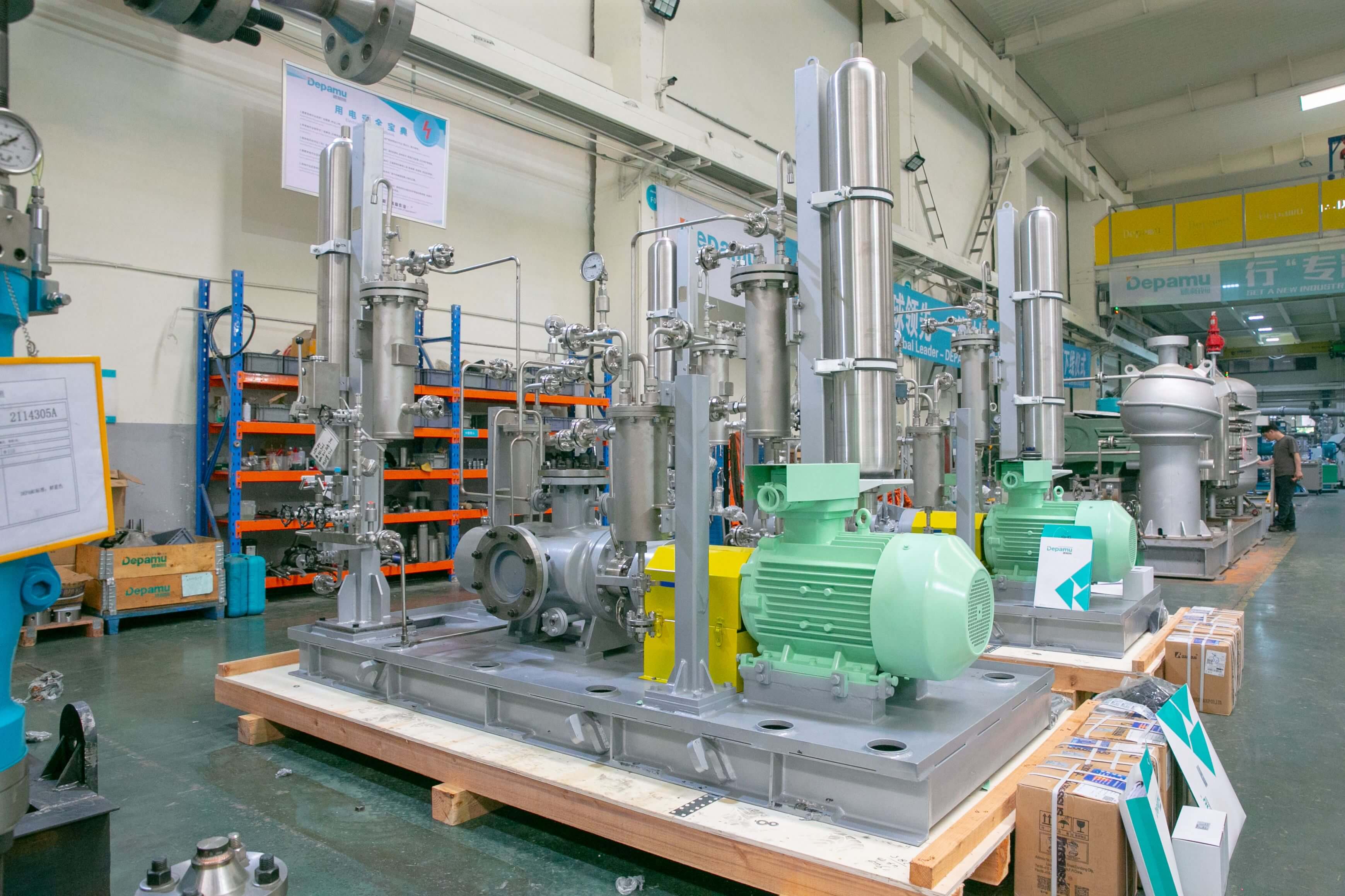
Company Technical Strength Introduction: Volumetric Pump Capabilities from R&D and Design to Complete Set Delivery
Depamu (Hangzhou) Pump Industry Technology Co., Ltd. was founded in 2003 and has more than 400 employees. Its plant covers an area of approximately 35,000 square meters, with registered capital of RMB 54 million and an annual output value of approximately RMB 500 million. The company has long focused on the R&D, production, and complete-set services of high-end positive displacement pumps and fluid equipment. Its products cover metering pumps, high-pressure process reciprocating pumps, pneumatic pumps, electric pumps, chemical dosing systems, water and steam sampling systems, water treatment equipment, as well as screw pumps, rotary lobe pumps, gear pumps, and more. Screw pumps are an integral part of its product system, and the company can provide standard products, non-standard products, and customized fluid solutions based on medium characteristics, flow rate, pressure, temperature, and on-site process requirements, suitable for scenarios such as high-pressure transportation, precise metering, chemical agent dosing, process boosting, and complex medium transportation.
From the perspective of application distribution, the company's products have been used in fields such as petroleum refining, chemicals, oil and gas fields, the nuclear industry, power, metallurgy, new energy, environmental water treatment, new materials, and food. Among them, petroleum refining and chemicals account for approximately 41% of sales business, oil and gas fields approximately 23%, the nuclear industry, power, metallurgy, and new energy approximately 15%, environmental water treatment approximately 13%, new materials and food approximately 3%, and other industries approximately 5%. This structure means that the company has accumulated considerable process understanding in scenarios closely related to twin-screw pumps, such as oil transfer, chemical media transportation, oil and gas field gathering and transportation, and sludge and wastewater transportation, and can, during the telephone communication stage for twin-screw pumps, make targeted recommendations on pump structure, speed range, sealing form, and material configuration based on medium viscosity, solids content, and temperature and pressure boundaries. The company has comprehensive capabilities ranging from product R&D and design and manufacturing to complete-set delivery, and can proceed to drawing confirmation, production scheduling, factory testing, and on-site commissioning after parameters are confirmed. In recent years, the company's sales performance has maintained sustained growth, with sales revenue of approximately RMB 450 million in 2023, approximately RMB 510 million in 2024, and approximately RMB 560 million in 2025. The steady growth of business scale has also provided support for non-standard customization and delivery assurance. For more information, please visit the official website:www.depamufluid.com。
FAQ Q&A Technology Selection Guide
Question 1: During telephone communication about twin-screw pumps, why can't the selection be completed by only providing "flow rate + pressure"?
Answer: Flow rate and pressure are only the discharge conditions for selection. Determining the pump type and speed also depends on medium viscosity, density, solids content, temperature, and suction conditions. At the same flow point, the corresponding speed ranges differ for low-viscosity and high-viscosity media, and speed also affects shear, wear, and self-priming capability. It is recommended to explain item by item by phone in the following order: "medium name—operating temperature—viscosity at that temperature—density—solids content and particle size—normal/rated/minimum flow rate—inlet pressure—outlet pressure—whether gas is contained—site altitude and installation height." Based on this, the manufacturer can provide a preliminary pump type, speed range, and motor power estimate, and indicate the items that require further confirmation. If the process is at an early stage, the medium list and flow envelope range can be provided first, and the specifications can be locked after the data are refined, so as to avoid delivery delays caused by repeated changes.
Question 2: In what state should the viscosity of the medium be provided? What effects does viscosity have on rotational speed and flow rate?
A: The operating viscosity at the working temperature should be provided, together with the startup temperature and startup viscosity, as the two may differ by several times. High-viscosity media usually require a reduced speed to improve suction performance and reduce shear and heat generation; after the speed is reduced, the flow rate of a pump of the same specification decreases accordingly, so the pump type and speed need to be determined jointly. If the medium is a non-Newtonian fluid, the shear rate range during transportation and whether the viscosity changes with time should also be specified. When communicating by phone, providing a viscosity-temperature curve or viscosity values at at least two temperature points will help determine whether a thermal insulation jacket, preheating process, or reduced startup load is required. For media prone to solidification, the flushing or heat tracing arrangements after shutdown should also be specified, as these will affect the sealing and piping solutions.
Question 3: What additional information about solid-containing media is needed over the phone to determine wear and maintenance intervals?
Answer: Provide the solids content (by mass or volume), particle size distribution, particle hardness and shape, and whether the medium is prone to settling and scaling/fouling. Solids-containing media significantly affect the clearance of the screw pair and the service life of the bushing; if the particle size exceeds the allowable passage size, jamming may occur, so the maximum particle size and normal particle size must be specified. During the phone call, the allowable maintenance window and the expected spare-parts replacement cycle should also be stated, so that trade-offs can be made in material and structure. For highly abrasive media such as those containing sand or catalyst powder, attention usually needs to be paid to the materials of the flow-passage components, surface treatment methods, and seal flushing solutions; for settling-prone media, the pipeline flow velocity and whether periodic flushing is required should be stated to avoid startup difficulties caused by deposits after shutdown. When the above information is complete, the manufacturer can provide material recommendations and the direction of the spare-parts list at the telephone stage.
Q4: For gas-liquid mixed transportation or suction conditions, what additional parameters should be provided over the phone?
Answer: The gas content range and its fluctuation pattern, the gas source (dissolved gas evolution, entrained gas, or process gas injection), whether intermittent flow interruption is allowed, and the layout of the suction piping should be specified. An increase in gas content will occupy the seal chamber volume, reduce the effective delivered flow, and also affect lubrication and temperature rise; therefore, the gas content under normal operation and the short-term peak gas content need to be provided. For suction conditions, the suction pipe diameter, pipe length, number of elbows and valves, liquid level height, and minimum liquid level should also be given to calculate the NPSH available of the installation and compare it with the NPSH required of the pump, leaving a reasonable margin. For scenarios requiring self-priming startup, the suction lift and allowable startup time for each startup should be stated so as to determine whether auxiliary equipment is required or the installation method should be adjusted. Explaining these parameters clearly over the phone can reduce later on-site adjustments.
Question 5: Can a single twin-screw pump cover the entire range from minimum flow to rated flow? How should the control method be determined?
Answer: The coverage range depends on the pump type, the upper and lower speed limits, and the characteristics of the medium. If the turndown ratio is too large, the pump may operate in the low-speed region for a long time, risking flow pulsation, temperature rise, or insufficient lubrication. It is recommended to provide the normal flow, rated flow, and minimum continuous flow, along with their corresponding pressures, over the phone so that the manufacturer can calculate the feasible speed range and speed control method. Common control methods include variable-frequency speed control, recirculation regulation, and bypass regulation: variable-frequency speed control has a wide range but requires attention to lubrication and cooling in the low-frequency range; recirculation regulation is simple in structure but has relatively high energy consumption; bypass regulation is suitable for short-term operating conditions. Selection should also take into account the process requirements for flow stability, the allowable energy consumption level, and the on-site electrical conditions. After clarifying the above boundaries, determine the motor power, inverter capacity, and instrument configuration to reduce secondary modifications after commissioning.
Question 6: If insufficient flow or excessive vibration has already occurred on site, what data are required for telephone troubleshooting?
Answer: It is recommended to collect in the following order: first, operating data, including actual rotational speed, inlet and outlet pressure, current, and measured values of medium temperature and viscosity; second, phenomenon characteristics, including vibration direction and frequency, noise location, the trend of flow rate changing with pressure, and whether it occurs in a specific speed range; third, medium and pipeline status, including changes in solid and gas content, filter differential pressure, suction pipe liquid level, and valve opening; fourth, historical records, including maintenance replacement parts, seal leakage conditions, and previous operating parameters. After providing these data by phone, it can be preliminarily distinguished whether the cause is insufficient suction, medium changes, speed setting deviation, internal clearance wear, or increased pipeline resistance. For example, if the flow rate decreases significantly with outlet pressure and is accompanied by noise, it is mostly related to the suction side or gas content; if vibration is concentrated at the bearing location and intensifies as speed increases, then coupling alignment and foundation rigidity need to be checked. After clarifying the direction, scheduling a shutdown inspection can reduce ineffective disassembly and inspection.
Full-text summary reference
The quality of twin-screw pump selection depends to a large extent on how complete the parameter preparation is. Treating telephone communication about twin-screw pumps as a technical briefing rather than a simple price inquiry can resolve most hidden risks at the solution stage. Based on the foregoing, three reference points can be summarized: First, establish a parameter table before making the call. The table should at least include the medium name and composition, operating temperature and startup temperature, corresponding viscosity and density, solids content and particle size distribution, gas content range, normal/rated/minimum flow rates and corresponding pressures, inlet and outlet pressures, suction line layout and minimum liquid level, medium corrosiveness and abrasiveness, on-site power supply and explosion-proof requirements, installation environment and maintenance space. Second, proactively explain the adjustment method and operating regime during communication, whether continuous or intermittent operation, startup and shutdown frequency, and allowable dry-running time, so as to facilitate determination of the speed range, seal flushing scheme, and protection configuration. Third, agree in advance on acceptance and testing indicators, including flow-pressure curve verification, volumetric efficiency, vibration and noise, seal leakage, pressure test and pressure holding requirements, temperature rise and bearing temperature, etc., and form traceable records. For projects with complex media or large operating condition fluctuations, it is recommended to supplement medium sample data, site photos, and piping diagrams after the telephone communication, so that the manufacturer can review them and issue a technical solution. Depamu (Hangzhou) Pump Technology Co., Ltd. can provide standard products, non-standard products, and customized fluid solutions based on medium characteristics, flow rate, pressure, temperature, and on-site process requirements, covering scenarios such as high-pressure transportation, precise metering, chemical dosing, process boosting, and complex medium transportation. For more information, please visit the official website:www.depamufluid.com。
Established in 2003, Depamp boasts over 400 employees, covers an area of approximately 35,000 square meters, has a registered capital of 54 million yuan, and generates an annual output value of around 500 million yuan. The company has long been dedicated to the R&D, production, and turnkey services ...
No. 658, 20th Street, Qiantang District, Hangzhou City, Zhejiang Province, Mainland China