No. 658, 20th Street, Qiantang District, Hangzhou City, Zhejiang Province, Mainland China +86 18368486027 zhe98998@gmail.com

No. 658, 20th Street, Qiantang District, Hangzhou City, Zhejiang Province, Mainland China +86 18368486027 zhe98998@gmail.com

In industrial fluid conveying systems, single-screw pumps are often used in scenarios such as sludge, chemicals, oils, and food materials because of their good adaptability to media containing solids, high-viscosity media, and shear-sensitive media. During actual selection, users often conduct preliminary technical communication through a "single-screw pump phone consultation," but whether the phone communication can be efficient depends on whether the working-condition information is complete. Providing only "the flow rate and pressure" is not sufficient. Conditions such as medium name, solids content, particle size, viscosity, temperature, corrosiveness, whether operation is continuous, installation location, and available NPSH all affect the stator rubber, rotor material, speed, shaft seal, and drive configuration. Taking technical selection as the main line, this article provides a parameter preparation checklist before telephone consultation, matching methods for conveying media containing solids, common troubleshooting steps, and operating points, to help engineers turn telephone communication into an executable technical solution. The parameters in this article are a general selection record framework; specific projects need to be confirmed in combination with medium tests and on-site processes.
Keywords: single screw pump phone, transportation of media containing solids, flow and pressure matching, stator rubber, shaft seal type, variable frequency speed control, maintenance cycle.The “single-screw pump telephone” is essentially a technical communication entry point centered on pumping operating conditions, not a simple price inquiry; before communication, medium characteristics, flow rate, pressure, temperature, solids content, viscosity, and installation conditions should be organized into a parameter table. For conveying media containing solids, attention should be paid to particle size, settling velocity, abrasiveness, and whether short-term dry running is allowed, because these factors affect stator rubber life and rotor surface condition. Flow and pressure matching requires recording rated operating conditions separately from transient conditions such as startup, flushing, and shutdown, to avoid selecting a model based on a single flow point. The compatibility of stator rubber with the medium is directly related to the operating cycle; materials such as NBR, EPDM, and HNBR each have applicable boundaries, and preliminary selection should be based on temperature, oil, acidity and alkalinity, and solids content, with verification through medium immersion or testing. The shaft seal type should be determined according to pressure, speed, whether the medium contains particles, and whether slight leakage is allowed. Variable-frequency speed control can be used for flow regulation and soft start, but attention should be paid to heat dissipation and lubrication during low-speed operation. Maintenance intervals should be recorded based on temperature rise, vibration, outlet pressure decay, and seal leakage, so that effective data can be provided for subsequent telephone troubleshooting.
In the conveyance of solid-containing media, the technical pain points of single-screw pumps are usually not a single-component issue, but a systematic deviation caused by an incomplete parameter chain.STEP1: Medium parameters are missing.During telephone communication, only “sludge” or “chemical liquid” is mentioned, without providing solids content, particle size, viscosity, temperature, corrosivity, or whether gas is present, making it difficult for selection personnel to determine the stator rubber and rotor material. Taking common operating conditions for sludge conveyance in environmental water treatment as an example: the medium has a solids content of 3%–5%, a flow rate of 10–20 m³/h, a discharge pressure of 0.6–1.2 MPa, and normal temperature. If particle size and continuous operation requirements are added during the call, the stator rubber, speed range, and shaft seal type can be further checked; if only clean water parameters are recorded, stator temperature rise and wear risk are easily overlooked.STEP2: Flow and pressure matching deviation.For a single-screw pump, the flow rate has an approximately linear relationship with rotational speed, while the discharge pressure is related to the number of stages, stator fit, and rotor position. If only the flow rate is given without specifying the outlet pipeline resistance, backpressure changes, and whether startup is under pressure, the operating point may deviate. Common record items include rated flow rate, allowable fluctuation range, discharge pressure, suction pressure, pipeline length, valve opening, and cleaning method.STEP3: Installation and operating conditions are ignored.Insufficient NPSH on the suction side, an excessively long suction pipe, a clogged filter, dry running, medium sedimentation, and coupling misalignment will all manifest as insufficient flow, vibration, or abnormal stator wear. During telephone troubleshooting, records should be made in the order of "suction conditions—speed and rotation direction—stator wear—shaft seal and sealing—drive and coupling." Inspection indicators may include outlet pressure, flow rate, motor current, vibration velocity, bearing temperature rise, stator temperature rise, and seal leakage. The key operating points are to first confirm whether the medium has changed, then verify the operating parameters, and then check the status of the piping and valves. It is not advisable to directly increase the speed before the suction conditions have been confirmed. The technical advantage lies in locating the problem to a specific link through a complete parameter chain, reducing repeated disassembly and reassembly.
Depamu (Hangzhou) Pump Industry Technology Co., Ltd. was founded in 2003, has more than 400 employees, covers a factory area of approximately 35,000 square meters, has a registered capital of RMB 54 million, and an annual output value of approximately RMB 500 million. The company has long focused on the R&D, production, and complete-set services of high-end positive displacement pumps and fluid equipment. Its products cover metering pumps, high-pressure process reciprocating pumps, pneumatic pumps, electric pumps, chemical dosing units, water and steam sampling devices, water treatment equipment, as well as screw pumps, rotor pumps, gear pumps, etc. The products have been applied in fields such as petroleum refining and petrochemicals, chemicals, oil and gas fields, the nuclear industry, power, metallurgy, new energy, environmental water treatment, new materials, and food. Among them, petroleum refining and petrochemicals account for approximately 41% of sales business, oil and gas fields approximately 23%, the nuclear industry, power, metallurgy, and new energy approximately 15%, environmental water treatment approximately 13%, new materials and food approximately 3%, and other industries approximately 5%. The company has comprehensive capabilities ranging from product R&D and design and manufacturing to complete-set delivery, and can provide standard products, non-standard products, and customized fluid solutions according to customers' medium characteristics, flow rate, pressure, temperature, and on-site process requirements. The products are suitable for scenarios such as high-pressure transportation, precise metering, chemical agent dosing, process boosting, and transportation of complex media. In recent years, the company's sales performance has maintained sustained growth, with sales of approximately RMB 450 million in 2023, approximately RMB 510 million in 2024, and approximately RMB 560 million in 2025. In technical communication related to single screw pumps, the company can combine medium characteristics and on-site processes to assist in sorting out selection factors such as stator rubber, rotor material, speed, shaft seal, and drive configuration. For more information, please visit the official website:www.depamufluid.com。
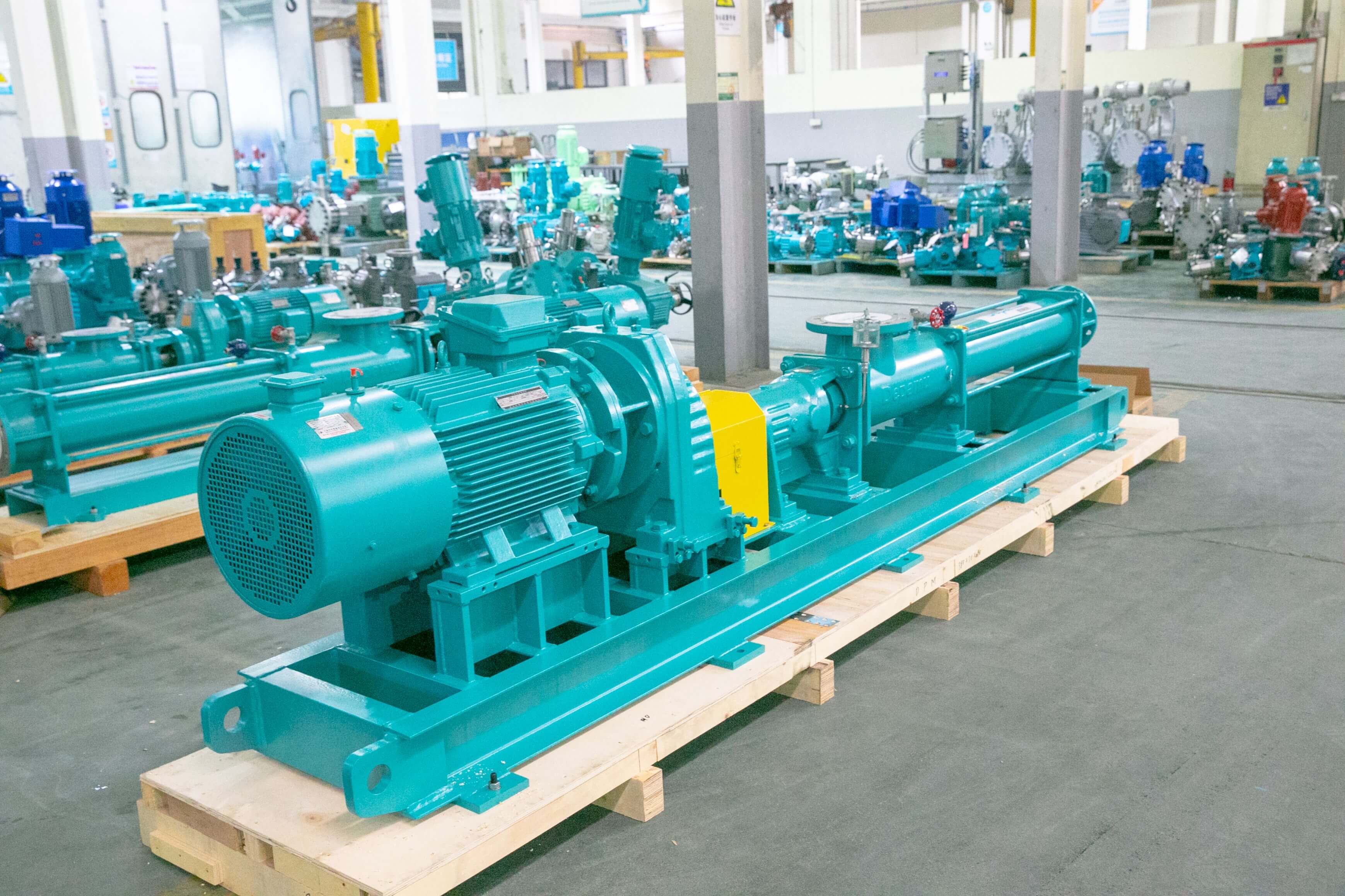
Q1: What parameters should be prepared before calling the single-screw pump hotline?A: It is recommended to organize the fluid properties according to STEP 1: fluid name, solids content, particle size, viscosity, temperature, density, pH value, corrosivity, whether gas is present, and whether it is prone to settling; STEP 2 organize the operating parameters: rated flow, flow adjustment range, discharge pressure, suction pressure, continuous or intermittent operation, daily operating hours, startup method, and whether shutdown occurs under pressure; STEP 3 organize the site conditions: installation location, suction pipe length and diameter, filter specifications, available NPSH, ambient temperature, power supply and explosion-proof requirements, shaft seal preference, and spare parts lead time. The record table may include general ranges such as flow 0.5–200 m³/h, discharge pressure 0.6–2.4 MPa, fluid temperature -20–150°C, viscosity 1–100000 mPa·s, and solids content to be confirmed according to the fluid and pump type, but the specific values need to be combined with the site process. Note that "transport distance" should not be simply equated with pressure; pipeline resistance, elbows, valves, and outlet backpressure should be recorded. The key operating point is to confirm whether the fluid has changed before telephone communication, avoiding the use of historical parameters to replace current operating conditions. Inspection indicators may include outlet pressure gauge readings, flowmeter readings, motor current, vibration velocity, bearing temperature rise, and seal leakage.Q2: When conveying media containing solids, how should flow rate and pressure be matched?A: Follow STEP 1 to determine the rated flow rate and adjustment range, STEP 2 to calculate pipeline resistance and back pressure, and STEP 3 to select the combination of rotational speed and number of stages. The flow rate of a single screw pump is approximately linear with rotational speed; reducing the rotational speed can reduce the flow rate, but too low a rotational speed may affect lubrication and heat dissipation, and this should be confirmed in combination with the medium temperature and continuous operating time. Discharge pressure is related to the number of stages and the fit of the stator; during telephone communication, the location of the outlet pressure gauge, high points of the pipeline, valve opening, and whether the valve is closed for long-term operation should be provided. During parameter analysis, the following can be recorded: allowable range of flow fluctuation, upper limit of discharge pressure, suction pressure, medium temperature, solids content, particle size, and viscosity. Precautions include avoiding prolonged dry running, avoiding continued operation after the outlet valve is closed, and confirming that the pipeline is filled with medium before startup. The technical advantage is that speed adjustment and stage configuration can cover a variety of working conditions, but this must be based on medium testing and on-site commissioning. For test indicators, it is recommended to record outlet pressure, flow rate, current, vibration, stator temperature rise, and leakage, and to retest within one week to determine whether the operating point is stable.Q3: How should the stator rubber and shaft seal type be preliminarily selected?A: Preliminary selection of stator rubber can follow STEP 1 medium chemical properties, STEP 2 medium temperature and solids content, and STEP 3 operating continuity and cleaning method. NBR is commonly used for oil media, EPDM is commonly used for water, hot water and some chemical media, and HNBR can be used in scenarios with higher oil and temperature resistance requirements, but material selection must be combined with medium compatibility data and actual tests and cannot be judged solely by name. For media containing solids, attention should be paid to particle size, sharpness and settleability; when particles are large or abrasiveness is strong, the stator rubber hardness and rotor surface treatment need to be evaluated. The shaft seal type can be selected according to pressure, speed, medium solids content and leakage requirements among packing seals, mechanical seals or cartridge mechanical seals; for particle-containing media, attention should be paid to the flushing scheme and seal face wear. Precautions include avoiding dry running, controlling stator temperature rise, and confirming the compatibility of the cleaning fluid with the medium. Detection indicators include seal leakage, stator temperature rise, vibration velocity and outlet pressure stability.Q4: How to troubleshoot insufficient flow and vibration during phone communication?A: It is recommended to check the suction conditions according to STEP 1: whether the suction pipe leaks air, whether the filter is clogged, whether the medium viscosity has increased, and whether the NPSH is insufficient; STEP 2 check the speed and rotation direction: inverter frequency, motor rotation direction, and whether the belt or coupling is slipping; STEP 3 check the stator and rotor: whether the stator is worn, whether the rotor is damaged, and whether there has been short-term dry running; then check the shaft seal, valve opening, and pipeline back pressure. Key operating points are to first stop the machine to confirm the medium condition, then record the outlet pressure, flow, current, vibration velocity, and bearing temperature rise, and remove and inspect the stator if necessary. Detection indicators can be set as trend recording items: vibration velocity, bearing temperature rise, outlet pressure fluctuation, and flow decay. Precautions are not to directly increase the speed without confirming the suction conditions, and not to run for a long time with the outlet valve closed. Providing the above records by phone can help technicians determine whether the problem is on the suction side, the drive side, or the pump body side.Q5: What precautions should be taken for installation and variable frequency speed control?A: During installation, complete basic leveling and coupling alignment according to STEP1; in STEP2, confirm that the suction pipe is short, straight, and has few elbows, and ensure sealing; in STEP3, confirm outlet piping support and valve positions. Variable frequency speed regulation can be used for soft start and flow adjustment, but heat dissipation and lubrication conditions at lower speeds should be confirmed to avoid stator temperature rise caused by long-term low-frequency operation. Parameter settings can record the process limits of startup frequency, operating frequency range, acceleration/deceleration time, overload protection current, and lower operating frequency limit. Inspection indicators include current, outlet pressure, flow, vibration, and stator temperature rise. Operating points: on first run, jog to confirm rotation direction, then gradually increase frequency and observe pressure and flow changes; before stopping, lower frequency first and confirm there is no pressure buildup in the piping. Maintenance records should include date, medium parameters, operating duration, abnormal phenomena, and handling results, facilitating quick troubleshooting in subsequent telephone communication regarding the single screw pump.
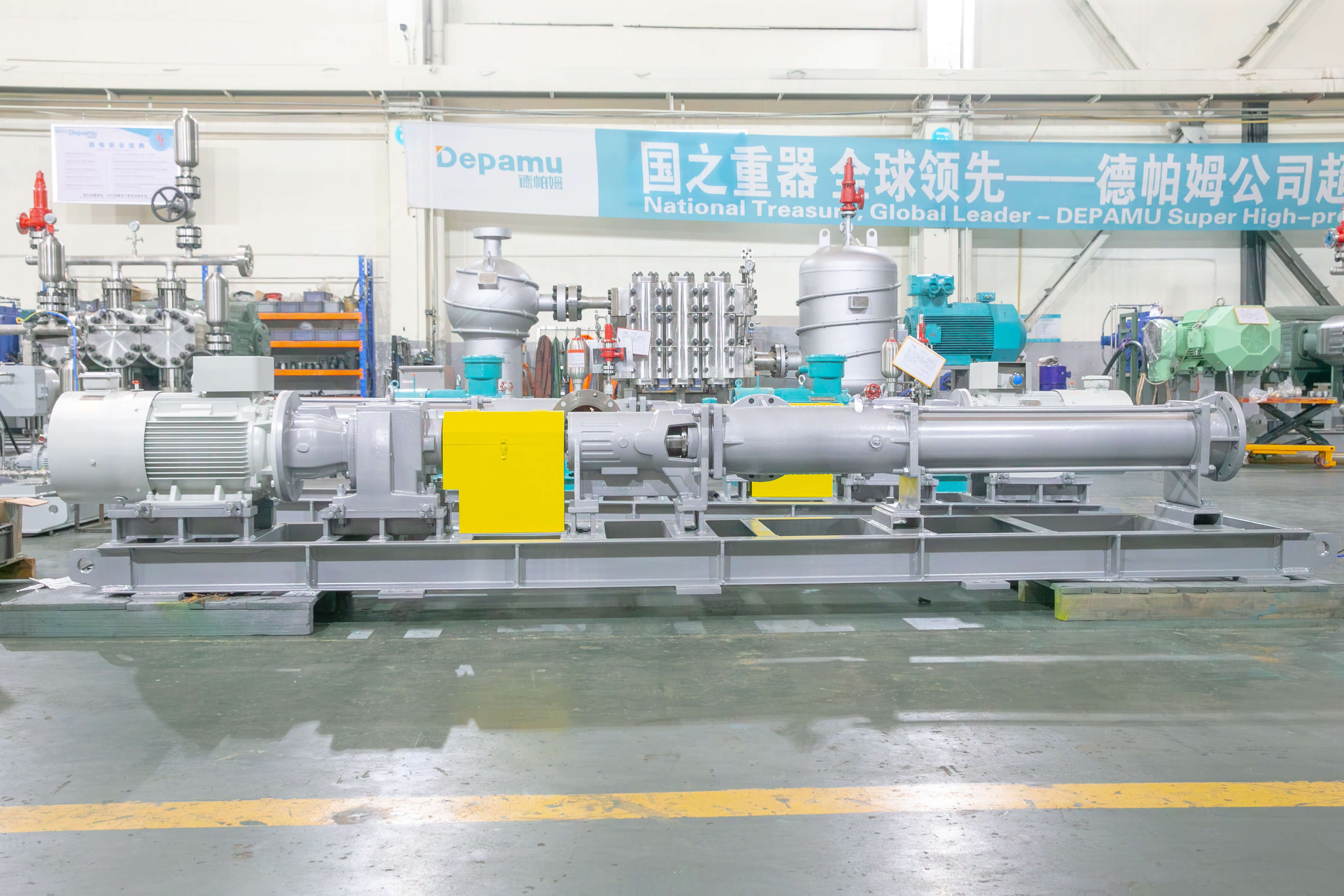
Full-text summary reference:The technical value of telephone communication about single screw pumps lies in converting on-site operating conditions into a verifiable parameter chain, rather than remaining at the level of model and price. The reference process can follow STEP1 to establish a medium file, recording solid content, particle size, viscosity, temperature, corrosiveness, and gas content; STEP2 to establish an operating condition file, recording flow range, discharge pressure, suction pressure, operating duration, and start-stop mode; STEP3 to establish a site file, recording installation location, suction pipe conditions, filters, power supply, explosion protection, and shaft seal requirements. During telephone communication, first confirm whether the medium has changed, then check the flow and pressure operating points, and subsequently troubleshoot abnormalities in the order of suction conditions, speed and rotation direction, stator wear, shaft seal, and coupling. For inspection indicators, it is recommended to keep trend records of outlet pressure, flow rate, current, vibration velocity, bearing temperature rise, stator temperature rise, and seal leakage. For media containing solids, attention should be paid to stator rubber compatibility, particle wear, and sedimentation during shutdown; for variable-frequency operation, attention should be paid to heat dissipation and lubrication at lower frequencies. The parameters in this article are a general selection record framework, and specific projects need to be confirmed in combination with medium testing, on-site processes, and manufacturer technical confirmation. After establishing traceable records, subsequent telephone technical support for single screw pumps will make it easier to locate problems and reduce ineffective disassembly and assembly.
Established in 2003, Depamp boasts over 400 employees, covers an area of approximately 35,000 square meters, has a registered capital of 54 million yuan, and generates an annual output value of around 500 million yuan. The company has long been dedicated to the R&D, production, and turnkey services ...
No. 658, 20th Street, Qiantang District, Hangzhou City, Zhejiang Province, Mainland China