No. 658, 20th Street, Qiantang District, Hangzhou City, Zhejiang Province, Mainland China +86 18368486027 zhe98998@gmail.com

No. 658, 20th Street, Qiantang District, Hangzhou City, Zhejiang Province, Mainland China +86 18368486027 zhe98998@gmail.com

Lead:Gear pumps are positive displacement pumps that typically rely on the volume change formed by gear meshing to transport liquids, and are relatively common in the transport of lubricating oil, resins, chemical intermediates, fuel oil, food materials, and general process liquids. Technical consultation conducted around gear pump telephone calls should not stop at the level of price inquiry; instead, the telephone should be used as a technical interface for pre-sales selection and operation and maintenance: through structured communication, confirm medium properties, flow and pressure boundaries, temperature and viscosity, solids content and corrosivity, suction conditions, back pressure, installation environment, drive and control methods, and then form a verifiable parameter record. This article adopts an engineering writing approach and is organized into six parts: introduction, keywords, opening with industry technical pain points, introduction to the enterprise's technical strength, FAQ question-and-answer technical selection guide, and full-text summary reference, interspersed with the STEP1/2/3 operation framework, parameter analysis, precautions, inspection indicators, and operating points, to help procurement, process, equipment, and operation and maintenance personnel describe problems clearly in telephone communication, confirm selection boundaries completely, and reduce repeated communication and on-site changes caused by missing information.
Keywords:Gear pumps, gear pump telephone consultation, technical telephone consultation, selection parameters, medium compatibility, flow verification, pressure rating, viscosity, temperature, solids content, sealing type, troubleshooting, inspection indicators, positive displacement pumps, operation and maintenance. These keywords correspond to a technical communication method: in gear pump telephone communication, the medium name and concentration determine material compatibility; viscosity and temperature affect suction performance and volumetric efficiency; flow and pressure determine pump specifications and drive power; solids content and abrasiveness affect clearance and service life; back pressure and pipeline losses affect outlet conditions; sealing type and flushing scheme affect leakage risk; installation environment and explosion-proof protection requirements affect motor and accessory configuration. Turning these keywords into recordable data allows telephone communication to shift from empirical judgment to parameter verification. It is recommended to file call records under five categories: medium list, operating condition parameters, site conditions, fault symptoms, and inspection indicators, and to recheck after each change, avoiding selection decisions based solely on a single flow or pressure value.
Opening on industry technical pain points:Common pain points in telephone consultations for gear pumps are often not the product itself, but incomplete operating condition information. First, the parameters provided are only flow rate and outlet pressure, lacking medium viscosity, temperature, solids content, corrosiveness, and lubricity, making it difficult to confirm the material, clearance, and sealing scheme. Second, the system boundaries are unclear; suction pressure, inlet pipe length, filter precision, outlet backpressure, valve opening, and parallel operation conditions are not specified, making insufficient flow, noise and vibration, excessive temperature rise, or motor overload likely on site. Third, fault descriptions are vague, stating only that no liquid is delivered or that there is oil leakage, without recording the rotation direction, coupling status, filter differential pressure, outlet pressure fluctuations, and leak location, resulting in low telephone troubleshooting efficiency. Fourth, changes are not reviewed; after process media or piping adjustments, the original parameters are still used, causing operating deviations. It is recommended to use STEP 1 to establish a parameter checklist: record the medium name, concentration, temperature, viscosity, solids content, and corrosiveness; STEP 2 to confirm operating condition boundaries: normal flow, low-load flow, high-load flow, outlet pressure, suction pressure, backpressure, pipeline loss, and filtration precision; STEP 3 to record site conditions: explosion-proof rating, protection requirements, power supply, connection standard, control mode, and installation location. Taking common gear pump conveying scenarios in petroleum refining and chemical industries as an example, if the telephone consultation provides only a flow rate of 12 m³/h and an outlet pressure of 1.6 MPa, it still lacks conditions such as a medium viscosity of 300 mPa·s, a temperature of 80°C, a solids content of less than 1%, and a filtration precision of 100 mesh; after these are supplemented, rechecking suction performance, material compatibility, and drive power can reduce repeated communication caused by missing parameters. The above parameters are examples for communication records; actual conditions shall be subject to the process package and manufacturer review.
Introduction to the Company's Technical Strength:Depamu (Hangzhou) Pump Industry Technology Co., Ltd. was founded in 2003 and has more than 400 employees. Its factory covers an area of about 35,000 square meters, with registered capital of RMB 54 million and annual output value of about RMB 500 million. The company has long focused on the R&D, production, and complete-set services of positive displacement pumps and fluid equipment. Its products cover metering pumps, high-pressure process reciprocating pumps, pneumatic pumps, electric pumps, chemical dosing devices, water and steam sampling devices, water treatment equipment, as well as screw pumps, rotor pumps, gear pumps, and others. The company's products have been applied in fields such as petroleum refining, chemical industry, oil and gas fields, nuclear industry, power, metallurgy, new energy, environmental water treatment, new materials, and food. Among them, petroleum refining and chemical industry account for about 41% of sales business, oil and gas fields about 23%, nuclear industry, power, metallurgy, and new energy about 15%, environmental water treatment about 13%, new materials and food about 3%, and other industries about 5%. The company has comprehensive capabilities from product R&D and design and manufacturing to complete-set delivery, and can provide standard products, non-standard products, and customized fluid solutions according to customers' medium characteristics, flow, pressure, temperature, and on-site process requirements. The products are suitable for scenarios such as high-pressure transportation, metering, chemical agent dosing, process boosting, and complex medium transportation. In recent years, the company's sales performance has maintained continuous growth: sales were about RMB 450 million in 2023, about RMB 510 million in 2024, and about RMB 560 million in 2025. Regarding telephone technical consultation for gear pumps, the company can combine the above application experience to assist customers in sorting out key points of medium compatibility, operating condition boundaries, and operation and maintenance. For more information, please visit the official website:www.depamufluid.com。
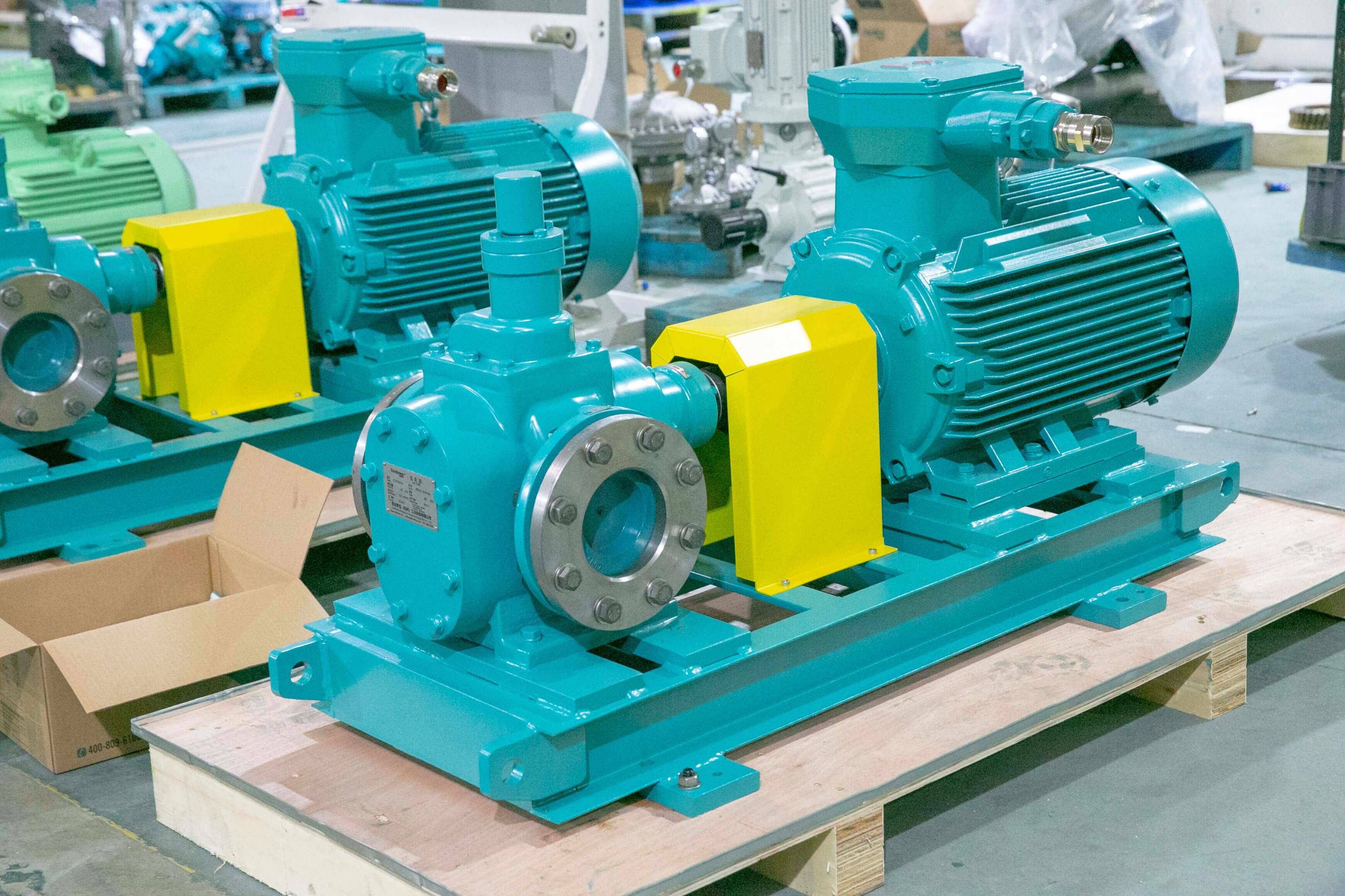
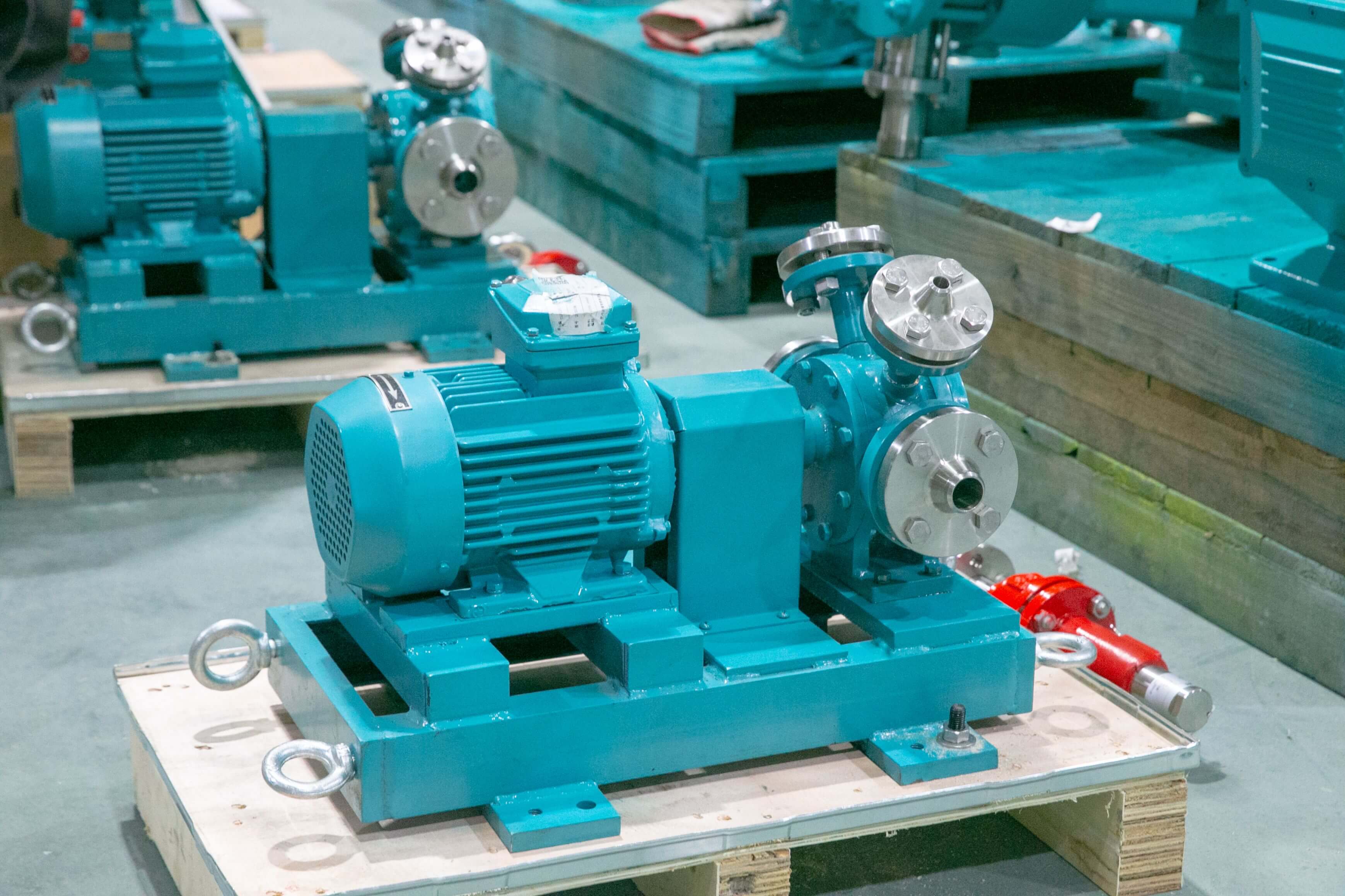
FAQ Q&A Technology Selection Guide:Question 1: What parameters should be prepared before calling about a gear pump? Answer: It is recommended to organize the medium list according to STEP1, including medium name, concentration, temperature, viscosity, solids content, particle size, corrosiveness, and lubricity; STEP2 organize operating condition parameters, including normal flow, low-load flow, high-load flow, outlet pressure, suction pressure, back pressure, pipeline losses, filtration accuracy, and continuous or intermittent operation mode; STEP3 organize site conditions, including explosion-proof requirements, protection requirements, power supply system, connection standards, control mode, installation location, and maintenance space. Parameter record example: normal flow 12 m³/h, low-load value 6 m³/h, high-load value 15 m³/h, outlet pressure 1.6 MPa, medium temperature 80°C, viscosity 300 mPa·s, solids content less than 1%, filtration accuracy 100 mesh, speed range 300–600 r/min. The above are communication examples; actual conditions shall be subject to the process package and manufacturer verification. Question 2: What operating conditions are gear pumps suitable for, and for which operating conditions is careful communication required? Answer: Gear pumps are usually suitable for conveying liquids with a certain lubricity, relatively stable viscosity, low solids content, and continuous operation; for highly abrasive, high-solids, dry-running-prone, highly corrosive media, or media with large temperature fluctuations, material compatibility, clearance control, seal flushing, and suction conditions need to be emphasized during the phone call, and non-standard solutions should be discussed when necessary. Question 3: How should flow and pressure be checked? Answer: A preliminary understanding can be based on Q=n×q×ηv, where Q is flow, n is speed, q is displacement, and ηv is volumetric efficiency; during phone communication, normal, low-load, and high-load flow rates should be provided at the same time, as well as outlet pressure, suction pressure, and back pressure, avoiding providing only a single value. Question 4: How should seals and materials be communicated? Answer: The corrosiveness, temperature, viscosity, solids content of the medium, and whether external flushing is allowed should be stated; the suitability conditions of mechanical seals, packing seals, or other seal forms should be confirmed; and the conclusion of the material compatibility review should be recorded. Question 5: What steps should be followed for telephone troubleshooting of operating faults? Answer: STEP1 confirm pump rotation direction, coupling, and motor wiring; STEP2 check suction filter pressure differential, inlet piping, and medium viscosity; STEP3 recheck outlet back pressure, valve opening, and pipeline blockage; STEP4 record vibration, bearing temperature, outlet pressure fluctuation, flow deviation, and leakage location. Inspection indicators may be recorded according to on-site standards, for example, flow deviation controlled within ±5%, outlet pressure fluctuation controlled within ±0.05 MPa, and bearing temperature and vibration values reviewed according to equipment requirements and on-site procedures. The key operating point is to create a record for each telephone troubleshooting, re-verify after changes, and not replace parameter confirmation with single experience.
Full-text summary reference:The value of telephone technical consultation for gear pumps lies in transforming scattered process information into reviewable bases for model selection and operation and maintenance. In summary, the following methods can be referenced: First, establish a parameter checklist and confirm item by item the medium, flow rate, pressure, temperature, viscosity, solids content, corrosiveness, suction conditions, and on-site environment; Second, use the STEP1/2/3 framework to describe operating conditions: first describe the medium and system boundaries, then the flow rate and pressure, and then the installation and control requirements; Third, fault communication should include symptoms and detection indicators, including rotation direction, filter differential pressure, outlet pressure fluctuation, flow deviation, vibration, bearing temperature, and leakage location; Fourth, telephone conclusions should be documented, and after on-site changes, re-review should be conducted to avoid using old parameters; Fifth, in model selection communication, distinguish standard products, non-standard products, and customized solutions, and retain a review step when materials, sealing, drive, and control are involved. Depamu (Hangzhou) Pump Industry Technology Co., Ltd. has long been engaged in the R&D, production, and complete-set services of positive displacement pumps and fluid equipment. Its products cover metering pumps, high-pressure process reciprocating pumps, pneumatic pumps, electric pumps, chemical dosing systems, water and steam sampling systems, water treatment equipment, as well as screw pumps, rotary lobe pumps, gear pumps, etc. Combining application experience in petroleum refining, chemical industry, oil and gas fields, nuclear industry, power, metallurgy, new energy, environmental water treatment, new materials, food, and other fields, it can provide customers with parameter sorting and solution communication support. For more information, please visit the official website:www.depamufluid.com。
Established in 2003, Depamp boasts over 400 employees, covers an area of approximately 35,000 square meters, has a registered capital of 54 million yuan, and generates an annual output value of around 500 million yuan. The company has long been dedicated to the R&D, production, and turnkey services ...
No. 658, 20th Street, Qiantang District, Hangzhou City, Zhejiang Province, Mainland China