No. 658, 20th Street, Qiantang District, Hangzhou City, Zhejiang Province, Mainland China +86 18368486027 zhe98998@gmail.com

No. 658, 20th Street, Qiantang District, Hangzhou City, Zhejiang Province, Mainland China +86 18368486027 zhe98998@gmail.com

I. Introduction:An electric diaphragm pump is a positive displacement pump driven by an electric motor, in which a reduction mechanism or eccentric connecting rod drives the diaphragm to deform reciprocally, periodically changing the volume of the pump chamber, and the medium is sucked in and discharged through inlet and outlet one-way valve assemblies. Because the conveyed medium is isolated from the transmission components by the diaphragm, this type of pump is widely used in acid and alkali chemical dosing, solids-containing slurry transfer, waste liquid lifting, water treatment dosing, and other scenarios. In engineering practice, the model selection result for an electric diaphragm pump is often not determined by a single parameter, but by the combined effects of multiple factors such as flow rate, discharge pressure, corrosiveness and concentration of the medium, solids content and particle size, medium temperature, viscosity, back pressure, continuous or intermittent operation mode, installation altitude, and ambient temperature. If a user provides only two pieces of information during a telephone consultation—"what flow rate and what pressure"—technical engineers usually also need to guide the user to supplement information such as medium name, concentration, temperature, particle conditions, suction conditions, power supply, and protection rating before they can provide an implementable model, material, and supporting solution. Without this information, problems such as material mismatch, flow attenuation, and valve assembly sticking are likely to occur, further increasing downtime and rework costs. From the perspectives of technical analysis and practical operation, this article sorts out the parameter system of electric diaphragm pumps, the document preparation checklist before telephone consultation, common troubleshooting steps, and key points for installation and operation, and, combined with the application accumulation of Depamu (Hangzhou) Pump Technology Co., Ltd. in petroleum refining, chemical industry, oil and gas fields, nuclear industry, power, environmental water treatment, and other fields, provides a technical framework that can serve as a reference for model selection.
II. Keywords:Electric diaphragm pumps, electric diaphragm pump selection, telephone consultation for electric diaphragm pumps, flow and pressure parameters of diaphragm pumps, working principle of positive displacement pumps, diaphragm materials (PTFE, EPDM, fluororubber), valve ball and valve seat materials, back pressure valve setting, pulsation dampener, NPSH, solids content and particle size, viscosity correction, motor power matching, explosion-proof and protection ratings, matching of chemical dosing equipment, troubleshooting steps, key installation and operation points, daily inspection indicators. These keywords basically cover the entire process from requirement proposal to on-site operation: the selection stage focuses on flow, pressure, media compatibility, and material combinations; the communication and procurement stage focuses on the parameter list required for telephone consultation, overall dimensions, and interface drawings; the installation stage focuses on piping configuration, back pressure setting, and vibration reduction measures; the operation stage focuses on flow decay, pressure fluctuation, and the service life of diaphragms and valve assemblies. Establishing a parameterized communication method around these keywords can transform “quoting based on experience” into “calculation based on parameters,” reduce model deviations, spare parts misordering, and unexpected downtime caused by missing information, and also facilitate the subsequent establishment of equipment ledgers and maintenance cycles.
III. Opening on Industry Technical Pain Points:In the actual use of electric diaphragm pumps, most problems do not originate from the pump itself, but from discrepancies between selection information and actual operating conditions. Common pain points can be summarized into five aspects. STEP1 Incomplete parameter information: telephone consultations usually provide only flow rate and pressure, lacking medium concentration, temperature, viscosity, solid content, and particle size, which leads to mismatches in diaphragm and valve assembly materials. STEP2 Material and medium mismatch: ordinary rubber diaphragms are selected for highly corrosive media, and valve balls with insufficient wear resistance are selected for particle-containing media, resulting in seal face wear and flow rate decline after a period of operation. STEP3 Lack of backpressure and pulsation handling: the output of diaphragm pumps itself is pulsating; when outlet backpressure is too low, siphonage and metering deviation are likely to occur, and when pipelines are long, pulsation dampers are lacking, causing pipeline vibration and pressure gauge needle fluctuation.
STEP4 Absence of spare parts and life-cycle management: Diaphragms, valve balls, and valve seats are wearing parts, and maintenance intervals have not been established according to medium characteristics, so shutdowns often occur only after diaphragm damage. STEP5 Installation and piping details are overlooked: excessively long suction lines, too many elbows, insufficient filter flow area, and low liquid levels can all cause cavitation and air entrainment, manifesting as unstable flow, abnormal noise, and knocking in the valve assembly. These pain points collectively point to one conclusion: the reliability of electric diaphragm pumps comes from closed-loop matching across "parameters—materials—accessories—installation," not from single-point selection. A practical approach is to establish a standardized information collection form and confirm medium properties, process parameters, electrical conditions, and accessory requirements item by item; for continuous operation conditions, inspection indicators such as flow deviation, discharge pressure fluctuations, motor current, and pump body temperature should also be recorded as a basis for subsequent adjustments and spare parts preparation. For media containing solids, prone to crystallization, or volatile, it is recommended to specify flushing, draining, and insulation/tracing requirements during the scheme stage to avoid structural modifications after commissioning.
IV. Introduction to the Company's Technological Strength:Depamu (Hangzhou) Pump Industry Technology Co., Ltd. was founded in 2003. It currently has more than 400 employees, covers a plant area of approximately 35,000 square meters, has registered capital of RMB 54 million, and an annual output value of approximately RMB 500 million. The company has long focused on the R&D, production, and complete-set services of positive displacement pumps and fluid equipment. Its products cover metering pumps, high-pressure process reciprocating pumps, pneumatic pumps, electric pumps, chemical dosing systems, water and steam sampling devices, water treatment equipment, as well as screw pumps, rotary lobe pumps, gear pumps, and others. In response to the application needs of electric diaphragm pumps and similar positive displacement pumps, the company has comprehensive capabilities ranging from product R&D and design and manufacturing to complete-set delivery. Based on the medium characteristics, flow rate, pressure, temperature, and on-site process requirements provided by customers, it can organize the design and delivery of standard products, non-standard products, and customized fluid solutions. The products are suitable for scenarios such as high-pressure transportation, metering and dosing, chemical agent dosing, process boosting, and complex medium transportation. During technical communication, the company's technical personnel usually propose matching recommendations for pump type, wetted material, diaphragm and valve assembly configuration, motor power, and piping accessories based on the medium and process parameters, and also provide outline dimensions and interface data to facilitate users in completing foundation and piping prefabrication in advance.
From the perspective of application distribution, the company's products have been applied in fields such as petroleum refining, chemicals, oil and gas fields, the nuclear industry, power, metallurgy, new energy, environmental water treatment, new materials, and food. Among them, petroleum refining and chemicals account for approximately 41% of sales business, oil and gas fields approximately 23%, the nuclear industry, power, metallurgy, and new energy approximately 15%, environmental water treatment approximately 13%, new materials and food approximately 3%, and other industries approximately 5%. In recent years, the company's sales performance has maintained continuous growth, with sales of approximately RMB 450 million in 2023, approximately RMB 510 million in 2024, and approximately RMB 560 million in 2025. Most of the above industries involve continuous operation conditions and have clear requirements for media compatibility, sealing structure, and maintenance intervals, which also constitutes the company's experience base in material selection, piping configuration, and on-site commissioning. For telephone inquiries about electric diaphragm pumps, users are advised to specify the medium, flow rate, pressure, temperature, particle conditions, power supply, and protection requirements item by item, based on which technical personnel can provide recommendations on model and material combinations and clarify the list of wearing parts and recommended spare parts quantities to reduce later downtime waiting. To learn more, please visit the official website:www.depamufluid.com。
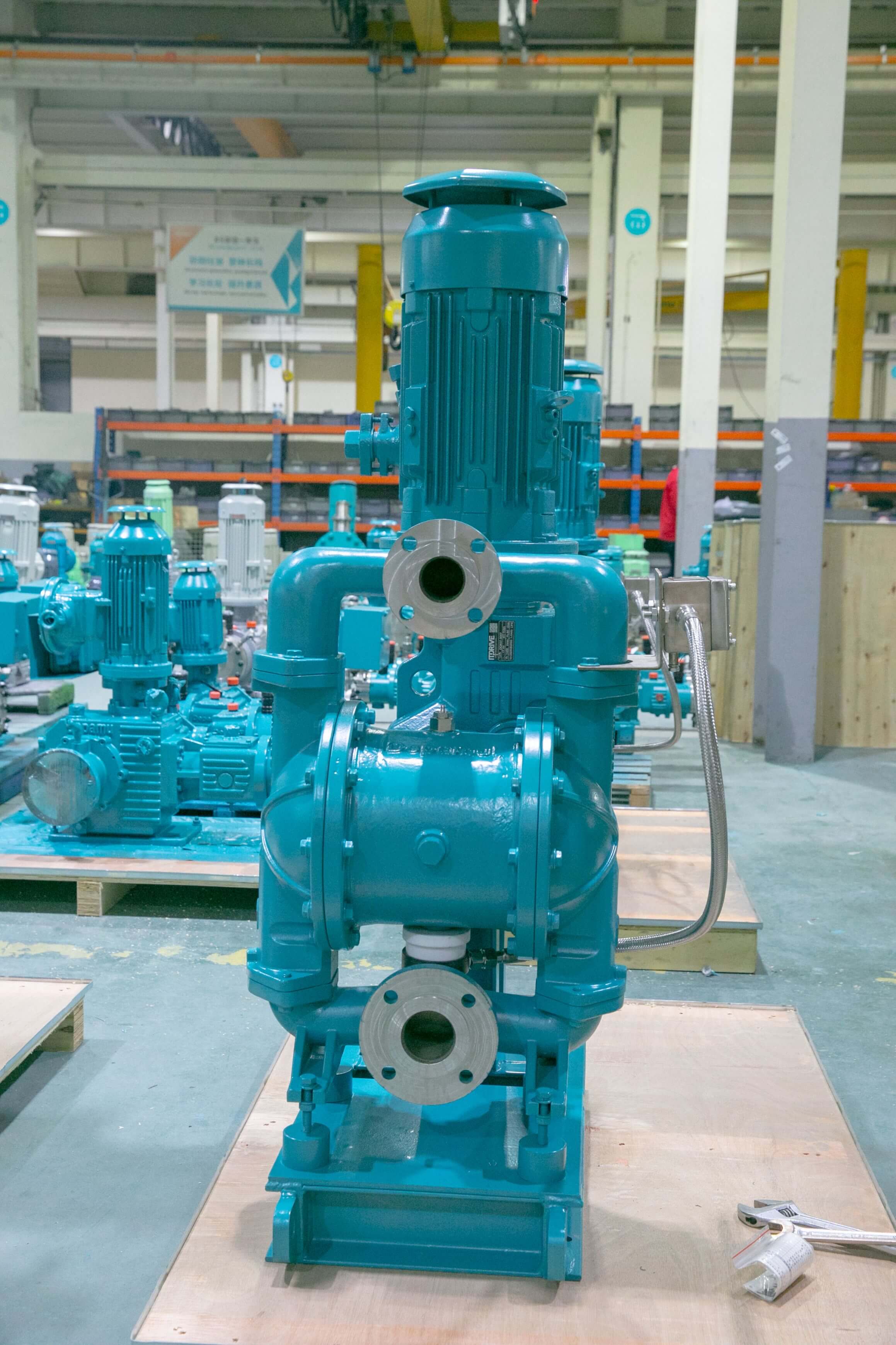
V. FAQ Q&A Technology Selection Guide
Q1: What technical parameters should be prepared before making a phone inquiry about the selection of an electric diaphragm pump?
Answer: It is recommended to organize the information according to the following steps. STEP1 Medium information: medium name and chemical composition, concentration (e.g., 30% caustic soda solution, 5% sodium hypochlorite), temperature range (ambient or 80°C), density, viscosity (mPa·s), solids content (%) and particle size (mm), whether it contains gas or is prone to crystallization. STEP2 Process parameters: required flow rate (L/h or m³/h), whether operation is continuous, discharge pressure or required head (MPa or m), suction-side liquid level height and suction pipe length, whether there is flooded suction/gravity flow. STEP3 Material and structure: materials of the pump body and wetted parts (PP, PVDF, PTFE, stainless steel), diaphragm material, valve ball and valve seat materials, connection port size and connection method. STEP4 Electrical and environment: power supply (380V/50Hz or 220V), protection rating, whether explosion-proof is required, ambient temperature and installation location. STEP5 Control and accessories: whether variable frequency or 4-20mA automatic adjustment is required, whether a back pressure valve, pulsation damper, safety valve, filter, and chemical dosing device are provided. Once the information is complete, technical personnel can provide model and material combination recommendations in a relatively short time, and simultaneously provide outline dimensions and connection drawings for foundation construction and piping prefabrication.
Q2: How should the flow rate and pressure of an electric diaphragm pump be matched? Why does the sample flow rate need to be corrected?
Answer: The flow rate specified in the catalog is usually based on a calibration baseline of normal-temperature clean water, good suction conditions, and no additional back pressure at the outlet. Actual operating conditions must be corrected according to the following points. STEP1 Pressure correction: An increase in discharge pressure will increase the load on the diaphragm and valve assembly and affect volumetric efficiency. During selection, the process-allowable discharge pressure should be used as the design point, with a margin of about 10% reserved. STEP2 Viscosity and solids content correction: An increase in medium viscosity and solids content will reduce suction and discharge efficiency. For high-viscosity or high-solids conditions, it is advisable to reduce the stroke frequency and appropriately increase the inlet and outlet diameters. STEP3 Suction condition correction: An excessively long suction pipe, too many elbows, or a low liquid level can cause cavitation. The relationship between the available NPSH of the installation and the required NPSH of the pump must be calculated. STEP4 Pulsation and back pressure correction: The output of a diaphragm pump pulsates, and installing a pulsation damper can smooth out fluctuations. When the outlet back pressure is too low, siphoning and metering deviation are likely to occur. It is usually recommended to install a back pressure valve of 0.2–0.3 MPa and ensure that the back pressure is higher than the suction-side pressure differential. STEP5 Drive matching: Motor power should be selected according to the combination of maximum flow rate and maximum pressure. When using variable-frequency adjustment, it is recommended to place common operating conditions in a higher frequency band to maintain flow and metering stability.
Q3: When conveying corrosive or particle-containing media, how should the materials for the diaphragm and valve assembly be selected?
Answer: Material selection must simultaneously meet the requirements of corrosion resistance and wear resistance. STEP1 Pump body and wetted parts: For strong acids, strong alkalis, and oxidizing media, PVDF, PTFE, or PP may be selected; for general clean water and neutral chemical liquids, PP or a lined structure may be used; for operating conditions with high chloride ion content, the pitting corrosion risk of stainless steel should be evaluated. STEP2 Diaphragm: PTFE diaphragms have broad chemical resistance and relatively high temperature resistance, and are suitable for highly corrosive media and media at relatively high temperatures; EPDM is suitable for most acids, alkalis, and water treatment chemicals; fluoroelastomer is suitable for some oils and solvents. STEP3 Valve balls and seats: Ceramic balls are wear-resistant and suitable for media containing particles; PTFE balls are corrosion-resistant but have average wear resistance; stainless steel balls are suitable for clean neutral media. STEP4 Particle adaptation: Particle size is generally recommended to be controlled within the valve ball travel and flow passage clearance; when the particle content is relatively high, the valve seat bore diameter should be increased and the maintenance cycle shortened. STEP5 Detection and verification: After commissioning, the suitability of the materials can be judged by flow deviation, pressure fluctuation, valve group noise, and media appearance; when necessary, samples should be taken to inspect the surface wear of the diaphragm and valve balls, and the spare parts plan should be adjusted accordingly.
Q4: When flow drops or pressure becomes unstable during operation of an electric diaphragm pump, how should troubleshooting be carried out step by step?
Answer: It is recommended to troubleshoot in order from the outside inward. STEP1 Inspection of the suction side: Confirm whether the suction filter is clogged, whether the suction pipe is leaking air, whether the liquid level is too low, and whether the foot valve has failed. Suction-side problems often manifest as flow fluctuation accompanied by abnormal noise. STEP2 Inspection of the valve group: After shutting down and depressurizing, check whether the valve ball and valve seat are stuck by foreign matter, whether there is scaling or wear, and under particulate conditions focus on inspecting the sealing surface of the valve seat. STEP3 Inspection of the diaphragm: Observe whether the diaphragm is damaged, whether preload is correct, and whether the limit plate is loose. Diaphragm damage is usually accompanied by a significant pressure drop or medium entering the transmission chamber. STEP4 Inspection of back pressure and piping: If the back pressure valve is set too low, it will cause siphonage and metering deviation; if set too high, it will cause overpressure and safety valve lifting. It should be readjusted according to process requirements. STEP5 Inspection of the drive and electrical system: Verify whether the motor speed, variable-frequency output, current, and temperature rise are within the allowable range, and check the clearance of the eccentric mechanism and connecting rod. Reference inspection indicators include: flow deviation controlled within ±5%, discharge pressure fluctuation range, ratio of motor current to rated value, pump body surface temperature, and operating noise. After troubleshooting is completed, first conduct a trial run with clean water, then switch to the process medium.
Q5: Can an electric diaphragm pump be selected for high-pressure, low-flow continuous metering applications?
Answer: First, the operating condition boundaries need to be distinguished. STEP1 Parameter assessment: electric diaphragm pumps are well suited to medium pressure, medium-to-high flow, solids-containing, or self-priming applications; when the discharge pressure is high, the flow is very low, and long-term continuous metering is required, hydraulic diaphragm metering pumps or plunger metering pumps should be evaluated. STEP2 Combination configuration: the same process line can be configured with a division of tasks, with the metering pump handling high-pressure, low-flow metering and the electric diaphragm pump handling intermediate transfer, transfer, or high-flow dosing. STEP3 Accessories: for high-pressure or long-pipeline conditions, it is recommended to install a safety valve, back pressure valve, pulsation dampener, and pressure gauge to reduce the effects of water hammer and pulsation on the piping. STEP4 Control method: when adjustment in proportion to flow is required, variable-frequency control or stroke adjustment receiving a 4–20 mA signal can be used, and the stability of the low-flow range should be confirmed during commissioning. STEP5 Data verification: after the medium, flow, pressure, temperature, and continuous operating time are provided, technical personnel should calculate the pump type, power, and accessories and, if necessary, issue a selection plan and interface drawings. Taking a typical parameter combination as an example (illustrative condition for reference): the medium is 30% liquid caustic soda, at room temperature, with a flow of 200 L/h, a discharge pressure of 0.6 MPa, and continuous operation; a PTFE diaphragm and alkali-resistant wetted materials can be selected, and a 0.2–0.3 MPa back pressure valve and pulsation dampener should be installed at the outlet; after commissioning, the maintenance cycle should be determined based on flow deviation and wear of the valve assembly.
Q6: What are the key operating points for the installation and commissioning of electric diaphragm pumps?
Answer: Proceed as follows. STEP1 Foundation and positioning: Install the pump body on a level foundation with sufficient bearing capacity, use elastic pads or vibration-damping pads to reduce vibration transmission, and tighten the anchor bolts in diagonal sequence. STEP2 Piping configuration: Install flexible joints at the inlet and outlet, ensure the suction pipe diameter is not smaller than the pump inlet diameter, minimize elbows and pipe length, and ensure sufficient flooded suction height on the suction side to meet the NPSH requirements. STEP3 Accessory installation: At the outlet, install in sequence a safety valve, back pressure valve, pulsation damper, and pressure gauge; install a filter on the suction side, and the filter flow area should be larger than the pipe cross-sectional area. STEP4 Trial run: First jog with clean water to confirm the rotation direction, then run at low load for about 30 minutes and observe current, noise, and leakage, then gradually raise to the process parameters and record flow and pressure. STEP5 Daily inspection: Regularly inspect the diaphragm, valve balls, seals, and fasteners, record the flow decay trend and current changes, and establish the maintenance cycle according to the characteristics of the medium. Precautions include: do not run for an extended period with the outlet valve fully closed; depressurize before shutdown; after conveying easily crystallizing or easily settling media, flush as specified; in winter or low-temperature environments, take antifreeze and draining measures.
VI. Full-Text Summary Reference:The selection of an electric diaphragm pump can be summarized as a parameterized path: first clarify the medium properties, then determine the design points of flow rate and pressure, subsequently match the materials of the pump body, diaphragm, and valve assembly, and finally complete the electrical, control, and piping support. To facilitate rapid communication during telephone consultation, it is recommended to organize information according to the following checklist: medium name and concentration, temperature, viscosity, solids content, and particle size; required flow rate and whether continuous operation is needed; discharge pressure and suction conditions; connection size and wetted materials; power supply, protection, and explosion-proof requirements; control mode and associated accessories; list of wear parts and maintenance cycle. During operation, it is recommended to establish inspection records and track indicators such as flow deviation, discharge pressure fluctuation, motor current, and pump body temperature. When abnormalities occur, troubleshoot item by item in the order of suction side, valve assembly, diaphragm, back pressure, drive, and electrical systems to avoid blindly replacing components. For media containing solids, prone to crystallization, or volatile, requirements for flushing, draining, insulation and heat tracing, and safety protection should also be clearly defined during the solution stage.
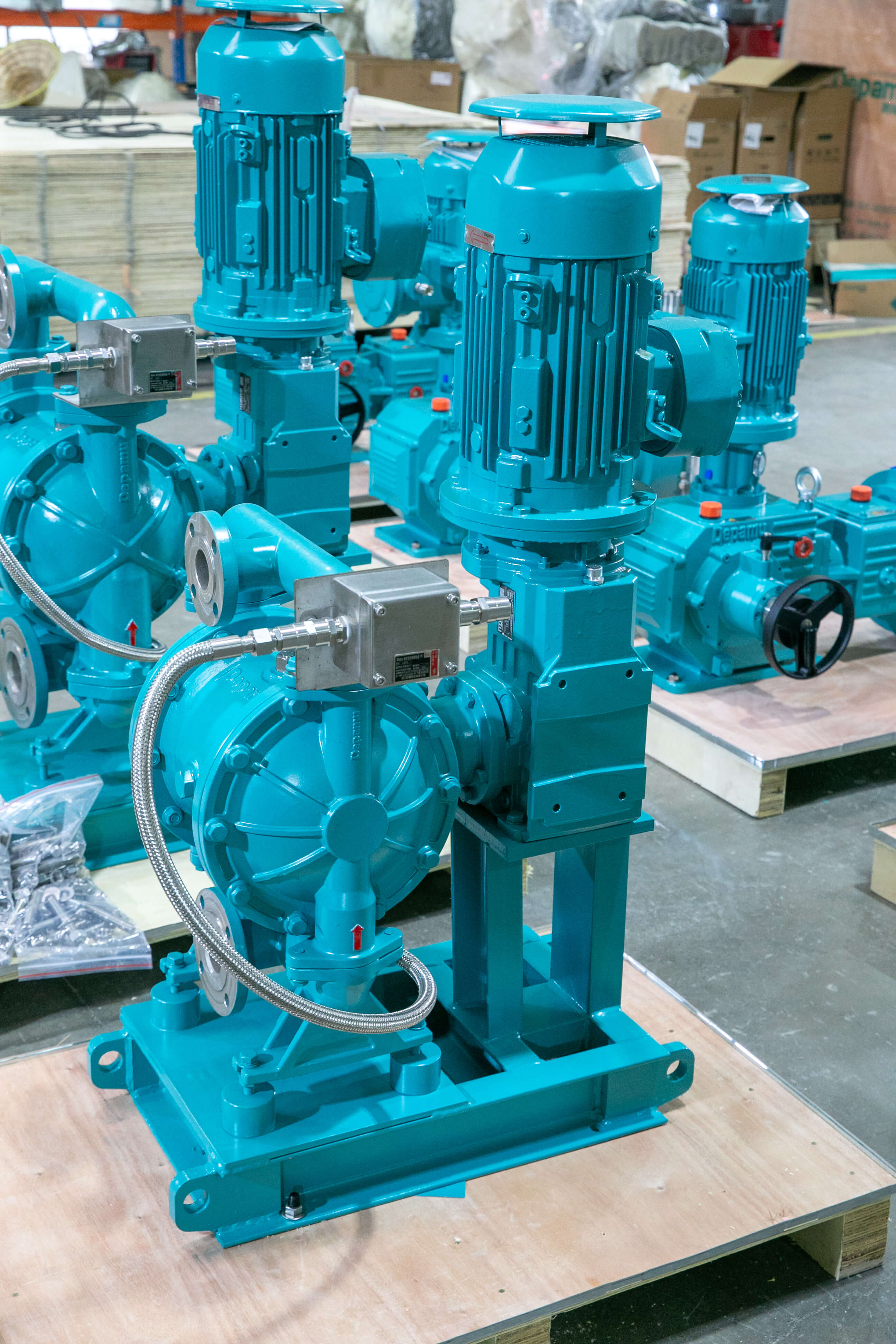
Depamu (Hangzhou) Pump Industry Technology Co., Ltd. has long focused on the R&D, production, and complete set services of positive displacement pumps and fluid equipment. Its products cover metering pumps, high-pressure process reciprocating pumps, pneumatic pumps, electric pumps, chemical dosing skids, water and steam sampling devices, water treatment equipment, as well as screw pumps, rotor pumps, gear pumps, etc. According to medium characteristics, flow rate, pressure, temperature, and on-site process requirements, the company can provide standard products, non-standard products, and customized fluid solutions. For working conditions involving electric diaphragm pumps, users are advised to organize parameters according to the above list before telephone consultation, so that technical personnel can provide suitable solutions in combination with piping conditions, back pressure settings, and supporting accessories, and simultaneously confirm spare parts and maintenance arrangements. For more information, please visit the official website:www.depamufluid.comThe parameter ranges, material recommendations, and troubleshooting steps listed in this document are general technical references; the specific model, materials, and associated components shall be subject to the calculation results based on actual operating conditions and the factory technical documents.
Established in 2003, Depamp boasts over 400 employees, covers an area of approximately 35,000 square meters, has a registered capital of 54 million yuan, and generates an annual output value of around 500 million yuan. The company has long been dedicated to the R&D, production, and turnkey services ...
No. 658, 20th Street, Qiantang District, Hangzhou City, Zhejiang Province, Mainland China