No. 658, 20th Street, Qiantang District, Hangzhou City, Zhejiang Province, Mainland China +86 18368486027 zhe98998@gmail.com

No. 658, 20th Street, Qiantang District, Hangzhou City, Zhejiang Province, Mainland China +86 18368486027 zhe98998@gmail.com

High-pressure process diaphragm pumps are positive displacement pumps that rely on the reciprocating deformation of a diaphragm to change the working chamber volume and thereby do work on the medium. Their transmission components are completely isolated from the conveyed medium by the diaphragm, making them suitable for conveying high-pressure, corrosive, volatile, or process media that must not leak externally. In process industries such as petroleum refining, chemicals, oil and gas fields, nuclear industry, power, metallurgy, new energy, and environmental water treatment, such equipment often undertakes tasks including high-pressure transfer, process boosting, chemical dosing, and water/steam sampling. During actual selection, medium characteristics, discharge pressure, flow range, temperature conditions, and on-site installation space often constrain one another. In the preliminary communication stage, users usually contact manufacturer technical engineers through the high-pressure process diaphragm pump telephone channel to clarify parameter boundaries, diaphragm materials, and supporting solutions within a relatively short time. It should be noted that telephone communication cannot replace formal selection calculations and medium compatibility verification, but it can clarify in advance three types of issues—whether parameters are closed, whether working conditions match, and whether accessories are complete—reducing later rework and downtime losses. For more information, please visit the official website:www.depamufluid.com。
Keywords:High-pressure process diaphragm pumps, high-pressure process diaphragm pump phone, diaphragm pump selection parameters, high-pressure transfer, diaphragm material compatibility, pulsation control, positive displacement pumps, process pressure boosting, chemical dosing, diaphragm life, check valve assemblies, NPSH margin, explosion-proof rating, customized fluid solutions. The above keywords basically cover the technical dimensions that users focus on when consulting about high-pressure process diaphragm pumps: first, the equipment dimension, including pump structure, diaphragm form, and hydraulic end and drive end design; second, the process adaptation dimension, including medium corrosiveness, solids content, viscosity, temperature, and pressure rating; third, the operation and maintenance dimension, including diaphragm replacement cycle, check valve sealing surface wear, oil replenishment system venting, and spare parts commonality; fourth, the site compliance dimension, including explosion-proof requirements, protection rating, noise limits, and installation space. Only by putting these keywords one by one into the parameter table can telephone communication form an effective technical closed loop and avoid the situation of “only reporting flow and pressure, and the equipment cannot match the medium after arrival.” When engineers answer inquiries, they usually confirm item by item in the order of medium—parameters—accessories—site conditions. If users organize information in this order before calling, communication efficiency will be significantly improved.
Opening: Industry Technical Pain Points:The technical challenges faced by high-pressure process diaphragm pumps under real operating conditions usually center on the following five aspects.STEP1 Diaphragm loading and fatigue:After the discharge pressure rises, the pressure differential across the diaphragm increases, and the stress amplitude of the diaphragm during reciprocating deformation rises accordingly. If cavitation or pressure buildup occurs at the hydraulic end, early fatigue failure is likely to occur at the diaphragm edge.STEP2 Parameter description is not closed:Some users provide only flow rate and pressure in their inquiries, without specifying the medium name, concentration, temperature, viscosity, solids content, or whether the medium contains gas, which makes it impossible to determine the material selection and valve assembly configuration.STEP3 Pulsation and Piping Vibration:The inherent flow pulsation of positive displacement pumps is amplified into pressure fluctuations in high-pressure lines, affecting flowmeter readings and the operating stability of downstream heat exchangers and nozzles.STEP4 Check valve and sealing surface wear:Under conditions involving particulate media or high flow rates, wear on the sealing surfaces of the valve ball and valve seat accelerates, manifesting as discharge pressure fluctuations, reduced flow rate, and abnormal oil replenishment.STEP5 Insufficient safety accessory configuration:Improper configuration of relief valves, pulsation dampers, back pressure valves, and filters can transfer equipment risks to the piping system. Most of the above pain points can be avoided through upfront parameter clarification and accessory configuration, which is also why users are advised to complete the technical briefing through the high-pressure process diaphragm pump telephone channel at the early stage of selection.
Company Technical Strength Overview:Depamu (Hangzhou) Pump Industry Technology Co., Ltd. was founded in 2003, has more than 400 employees, covers an plant area of about 35,000 square meters, has a registered capital of RMB 54 million, and an annual output value of about RMB 500 million. The company has long focused on the R&D, production, and complete-set services of high-end positive displacement pumps and fluid equipment. Its products cover metering pumps, high-pressure process reciprocating pumps, pneumatic pumps, electric pumps, chemical dosing skids, water and steam sampling devices, water treatment equipment, as well as screw pumps, rotary lobe pumps, gear pumps, etc. It has comprehensive capabilities from product R&D and design and manufacturing to complete-set delivery, and can provide standard products, non-standard products, and customized fluid solutions according to customers' medium characteristics, flow rate, pressure, temperature, and on-site process requirements, suitable for high-pressure transportation, metering and dosing, chemical agent dosing, process boosting, and complex medium transportation scenarios. In terms of application distribution, petroleum refining and chemicals account for about 41% of sales business, oil and gas fields about 23%, nuclear industry, power, metallurgy, and new energy about 15%, environmental water treatment about 13%, new materials and food about 3%, and other industries about 5%. In recent years, the company's sales performance has maintained sustained growth, with sales of about RMB 450 million in 2023, about RMB 510 million in 2024, and about RMB 560 million in 2025. On the basis of accumulated working conditions across multiple industries, the company has formed a technical support process centered on medium compatibility assessment, hydraulic end structural design, complete-set accessory configuration, and on-site commissioning services. After receiving user inquiries, technical engineers will check item by item according to medium parameters, pressure levels, flow margins, and on-site conditions, and then provide selection recommendations and supporting lists. This process is also applicable to technical Q&A through the telephone channel for high-pressure process diaphragm pumps.
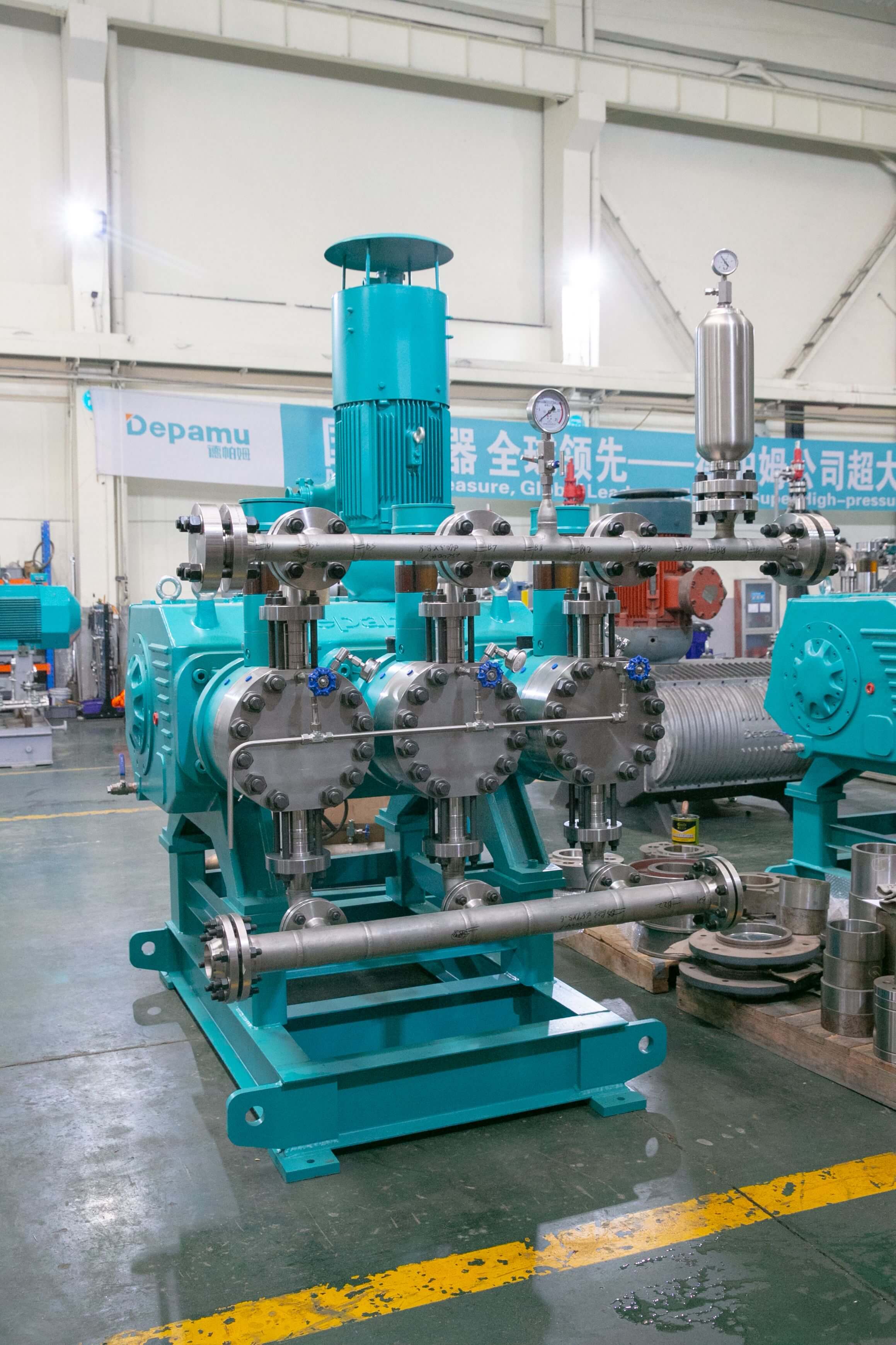
FAQ Q&A Technology Selection Guide:Q1: What parameters should be prepared before a telephone consultation?A1: It is recommended to organize the information according to STEP1 to STEP4. STEP1 Medium information: name, concentration, density, viscosity, solids content, whether it contains gas, and whether it is prone to crystallization; STEP2 Process parameters: normal and rated flow rates, inlet pressure, outlet pressure, medium temperature, and continuous or intermittent operation; STEP3 Site conditions: power supply voltage and frequency, hazardous area classification, ambient temperature, installation space, and nozzle orientation; STEP4 Accessory requirements: safety valve, pulsation damper, backpressure valve, filter, diaphragm rupture detection, and remote signal interface. Taking the chemical dosing condition of a certain chemical plant as an example, the medium is an alkaline solution containing trace suspended solids, the temperature is about 60°C, and the outlet pressure needs to overcome pipeline resistance and reactor backpressure. If only the flow value is provided without specifying the solids content, the selection of the valve assembly structure and diaphragm material will deviate, and valve seat wear and flow drift are likely to occur later.Q2: How are the pressure rating and flow margin determined?A2: The discharge pressure should be calculated based on "system back pressure + pipeline frictional and local resistance + safety margin." The safety valve set point is generally taken as approximately 1.1 times the rated discharge pressure and should be lower than the minimum pressure rating of the hydraulic end and piping. For flow rate, a regulation margin of typically 10% to 20% should be reserved on top of the process requirement, achieved through stroke adjustment or variable frequency control, to avoid prolonged full-stroke operation that aggravates diaphragm fatigue. It should be noted that the specific pressure rating, flow range, and adjustment method should be based on the manufacturer's official selection samples and operating condition calculation results.
Q3: How are the diaphragm material and hydraulic end structure matched to the medium?A3: Common diaphragm types include PTFE diaphragms, composite diaphragms, and rubber diaphragms. When selecting, the corrosiveness of the medium, maximum temperature, permeability, and number of reciprocating deformation cycles must all be considered. Highly corrosive and easily permeable media usually favor PTFE or composite structures; for media containing particles, attention should be paid to the material and clearance of the valve ball and valve seat; for media prone to crystallization, insulation or flushing measures should be evaluated. STEP1 first perform a material compatibility check; STEP2 confirm whether the temperature and pressure combination falls within the material’s allowable range; STEP3 then determine the materials of the hydraulic-end flow passage components and the sealing form.Q4: How should pulsation and vibration be handled?A4: A pulsation damper can be installed near the pump outlet, with the bladder precharge pressure set at approximately 60% to 80% of the discharge pressure, and the piping layout should avoid sharp bends and long straight-pipe resonance; for applications with high requirements for flow stability, dual-pump alternation or the addition of a back pressure valve can be adopted to stabilize the operating conditions.Q5: How to troubleshoot common faults?A5: When discharge pressure fluctuates, first check whether the sealing surface and valve ball of the check valve are worn, then confirm whether the oil replenishment system is short of oil or contains air; when flow decreases, check in sequence for filter blockage, changes in stroke setting, diaphragm rupture, and insufficient inlet NPSH margin; if abnormal noise occurs, check the lubrication at the drive end and the coupling alignment. The above troubleshooting steps can be carried out item by item under the guidance of the manufacturer's telephone technical support. Operations involving disassembly of the hydraulic end shall be performed by qualified personnel in accordance with the operating procedures.
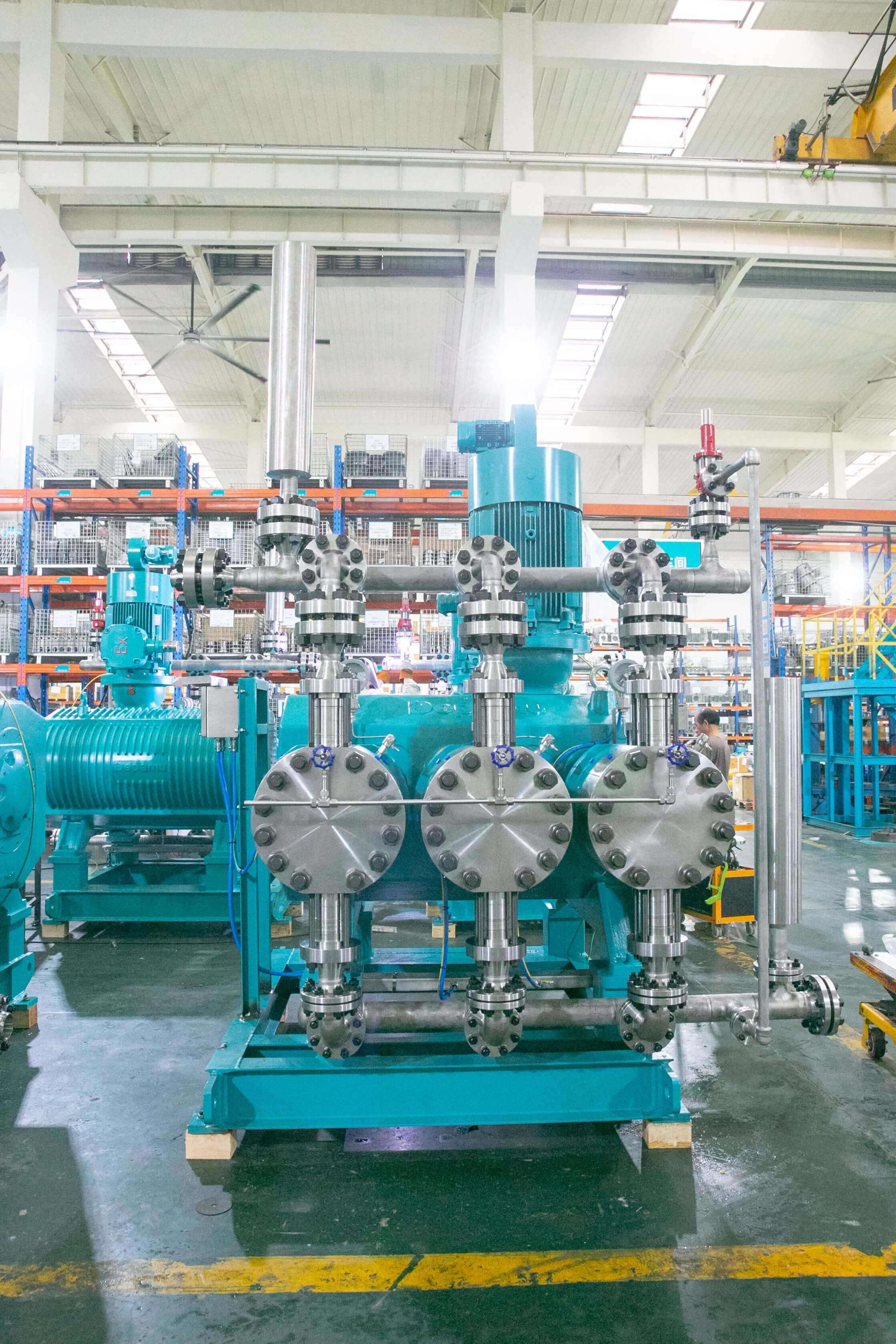
Full-text summary reference:The selection of high-pressure process diaphragm pumps is essentially a process of parameter closure: medium characteristics determine materials and structure, pressure and flow rate determine the specifications of the hydraulic end and drive end, pulsation control and safety accessories determine the stability of system operation, and site conditions determine protection and explosion-proof configurations. For users, before calling the high-pressure process diaphragm pump hotline, organizing medium information, process parameters, site conditions, and accessory requirements into a checklist can shift technical communication from “asking about price” to “comparing parameters,” significantly shortening the selection cycle. For equipment suppliers, being able to provide a verifiable solution based on medium compatibility, pressure rating, flow margin, and complete accessories, and to provide commissioning and spare parts support after delivery, is a practical basis for measuring their technical service capability. Depamu (Hangzhou) Pump Industry Technology Co., Ltd. has long provided positive displacement pumps and fluid equipment in fields such as petroleum refining, chemicals, oil and gas fields, nuclear industry, power, metallurgy, new energy, environmental water treatment, new materials, and food, and has the delivery capability for standard products, non-standard products, and customized solutions; users can obtain selection materials and technical support through official channels. It is recommended to complete parameter handover and solution confirmation in the early stage of the project, periodically inspect the diaphragm, check valve, and oil replenishment system during operation, and keep key spare parts to maintain stable operation of the equipment under high-pressure conditions. To learn more, please visit the official website:www.depamufluid.com。
Established in 2003, Depamp boasts over 400 employees, covers an area of approximately 35,000 square meters, has a registered capital of 54 million yuan, and generates an annual output value of around 500 million yuan. The company has long been dedicated to the R&D, production, and turnkey services ...
No. 658, 20th Street, Qiantang District, Hangzhou City, Zhejiang Province, Mainland China