No. 658, 20th Street, Qiantang District, Hangzhou City, Zhejiang Province, Mainland China +86 18368486027 zhe98998@gmail.com

No. 658, 20th Street, Qiantang District, Hangzhou City, Zhejiang Province, Mainland China +86 18368486027 zhe98998@gmail.com

Lead-in
Technical telephone communication for high-pressure plunger reciprocating pumps appears on the surface to be inquiry and response, but in essence it is the conversion of field operating conditions into executable selection inputs. Before the telephone communication, if the user can prepare information such as medium name, concentration, temperature, density, viscosity, solids content, corrosivity, inlet pressure, rated discharge pressure, rated flow rate, continuous or intermittent operation mode, allowable pulsation rate, explosion-proof and power supply conditions, installation space, and piping interfaces, the technical communication will be more targeted. This article is organized in a fixed six-part format: introduction, keywords, opening with industry technical pain points, introduction to the company's technical strength, FAQ one-question-one-answer technical selection guide, and full-text summary reference. The text uses STEP1, STEP2, and STEP3 layering to provide parameter analysis, operating points, precautions, and inspection indicators, making it convenient for process, equipment, and procurement personnel to check item by item during telephone communication. It should be noted that telephone communication cannot replace on-site survey and formal technical agreements, but it can clarify key boundaries, reduce repeated confirmation, and make subsequent scheme verification, interface confirmation, and delivery acceptance easier to connect.
keywords
High-pressure plunger reciprocating pump telephone, technical selection, parameter list, telephone consultation, operating condition boundaries, flow rate, pressure, medium, pulsation, cavitation, sealing, maintenance. These keywords correspond to a set of verifiable technical inputs in telephone communication. The high-pressure plunger reciprocating pump telephone is the entry point for technical exchange around reciprocating pump selection; the parameter list tabulates the medium name, concentration, temperature, density, viscosity, solids content, corrosiveness, inlet pressure, discharge pressure, flow rate, operation mode, explosion-proof and power supply, installation space, piping interfaces, etc.; operating condition boundaries emphasize that one should not report only one pressure or one flow rate, but should specify inlet conditions, piping conditions, and operating requirements; pulsation and cavitation require preliminary judgment over the telephone of the inlet piping, buffer devices, and NPSH margin; sealing and maintenance relate to material compatibility, wear parts, and maintenance arrangements. The above keywords can correspond to the three stages of STEP1 information collection, STEP2 parameter review, and STEP3 scheme confirmation, enabling telephone consultation to shift from simple price inquiry to technical boundary verification. Inspection indicators can stipulate in the technical agreement such items as flow rate, pressure, temperature, vibration, noise, external leakage, and sealing condition, with specific items confirmed according to on-site operating conditions and agreement requirements.
Introduction to Industry Technical Pain Points
In telephone consultations for high-pressure plunger reciprocating pumps, the common pain point is not the call itself, but incomplete technical input. In STEP 1, only discharge pressure and flow rate are provided, without stating medium temperature, viscosity, density, solids content, and corrosiveness; in STEP 2, inlet pressure, suction pipe length, filter, NPSH margin, and allowable pulsation value are ignored; in STEP 3, continuous or intermittent operation, explosion-proof rating, power supply system, ambient temperature, installation space, and piping interface are not specified. The technical principle of a plunger pump is that the plunger reciprocates in the cylinder, changing the volume of the working chamber, and the suction valve and discharge valve cooperate to complete delivery; flow rate is related to plunger area, stroke, stroke frequency, number of plungers, and volumetric efficiency, while discharge pressure is related to system resistance and pump structural strength. During parameter analysis, rated discharge pressure, rated flow rate, medium temperature, viscosity, inlet pressure, allowable pulsation rate, material compatibility, seal type, valve group type, and accessory configuration should be confirmed item by item. Points to note include: "high pressure" cannot be used to replace a specific pressure level; for media containing particles, the suitability of the valve group and seal must be discussed; for high-viscosity media, suction conditions must be rechecked; when pulsation is large, pipe support and buffering measures must be evaluated; inspection indicators can focus on flow rate, pressure, temperature, vibration, noise, external leakage, and seal condition according to the technical agreement. In a typical technical communication scenario, a chemical medium high-pressure transport requirement initially provided only outlet pressure and flow rate; after viscosity, inlet pressure, and continuous operation requirements were supplemented, the focus of communication shifted to inlet piping review, valve group materials, seal type, and accessory configuration. This case shows that the closer the telephone consultation is to a parameter checklist, the easier it is to verify the technical solution, and the easier it is to implement the subsequent technical agreement.
Introduction to the Enterprise's Technical Strength
Depamu (Hangzhou) Pump Technology Co., Ltd. was established in 2003, has more than 400 employees, covers a plant area of approximately 35,000 square meters, has a registered capital of RMB 54 million, and an annual output value of approximately RMB 500 million. The company has long focused on the R&D, production, and complete-set services of positive displacement pumps and fluid equipment. Its products include metering pumps, high-pressure process reciprocating pumps, pneumatic pumps, electric pumps, chemical dosing units, water and steam sampling units, water treatment equipment, as well as screw pumps, rotary lobe pumps, gear pumps, etc. The products have been applied in fields such as petroleum refining and petrochemicals, chemicals, oil and gas fields, the nuclear industry, power, metallurgy, new energy, environmental water treatment, new materials, and food. Among them, petroleum refining and petrochemicals account for approximately 41% of sales business, oil and gas fields for approximately 23%, the nuclear industry, power, metallurgy, and new energy for approximately 15%, environmental water treatment for approximately 13%, new materials and food for approximately 3%, and other industries for approximately 5%. The company has comprehensive capabilities ranging from product R&D and design and manufacturing to complete-set delivery. Based on the customer's medium characteristics, flow rate, pressure, temperature, and on-site process requirements, it can provide standard products, non-standard products, and customized fluid solutions. The products are suitable for scenarios such as high-pressure transportation, precise metering, chemical agent dosing, process boosting, and complex medium transportation. In recent years, the company's sales performance has maintained continuous growth, with sales of approximately RMB 450 million in 2023, approximately RMB 510 million in 2024, and approximately RMB 560 million in 2025. In telephone technical exchanges regarding high-pressure plunger reciprocating pumps, the company's high-pressure process reciprocating pumps and complete-set service capabilities can be combined to communicate according to STEP1 medium characteristics, STEP2 working condition parameters such as flow, pressure, and temperature, and STEP3 on-site interfaces and operating methods; for standard products, non-standard products, and customized solutions, the structure, materials, accessories, and acceptance requirements must be confirmed in a formal technical agreement. For more information, please visit the official website:www.depamufluid.com。
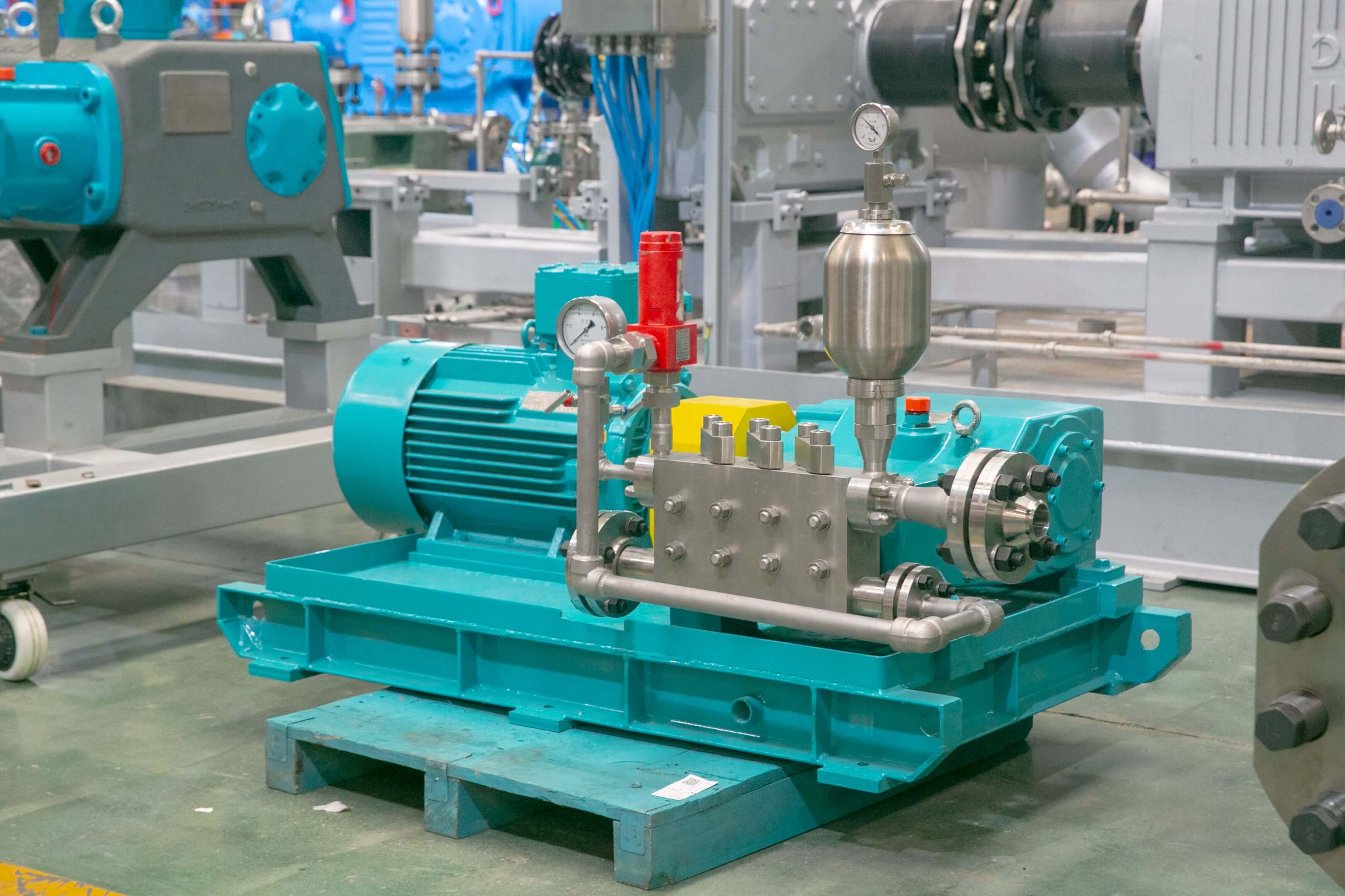
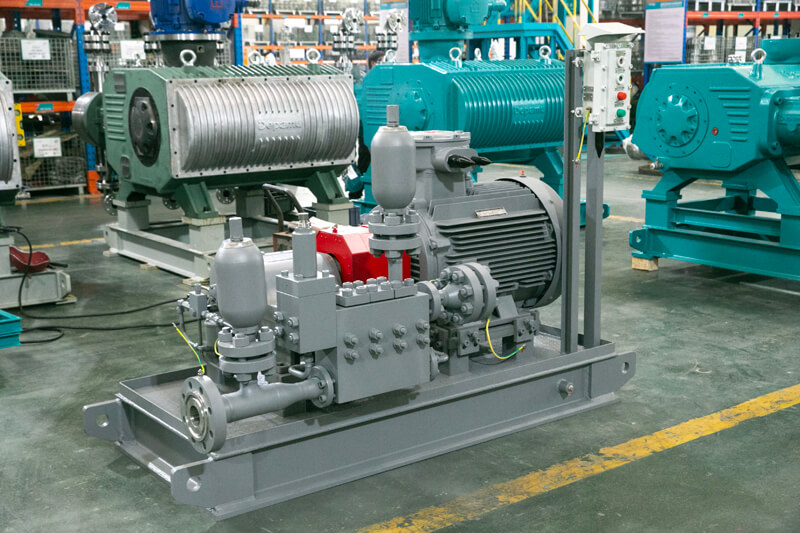
FAQ: A Guide to Q&A Technology Selection
Q1: What should the parameter checklist include before a phone consultation about high-pressure plunger reciprocating pumps?
A1: It is recommended to organize the information in three groups: Step 1 fluid information, Step 2 operating parameters, and Step 3 site interfaces. Fluid information includes name, concentration, temperature, density, viscosity, solids content, corrosiveness, toxicity, and whether it is easily vaporized; operating parameters include rated flow, rated discharge pressure, inlet pressure, continuous or intermittent operation, allowable pulsation rate, and flow regulation method; site interfaces include power supply type, explosion-proof requirements, ambient temperature, installation space, pipe diameter, connection orientation, foundation conditions, and spare parts requirements. On the phone, you may first report flow and discharge pressure, but do not report only these two figures. Note: break down "high pressure" into specific pressure ratings and "corrosion" into fluid composition and material compatibility issues. Inspection indicators such as flow, pressure, temperature, vibration, noise, external leakage, and sealing condition can be specified in the technical agreement.
Q2: How can it be determined whether a high-pressure plunger reciprocating pump is suitable for the current operating conditions?
A2: This can be judged from three aspects: STEP1 pressure and flow matching, STEP2 medium compatibility, and STEP3 operation and maintenance. Plunger pumps are suitable for high-pressure transfer and applications requiring metering or proportional dosing; however, when the medium contains particles, has high viscosity, or inlet conditions are insufficient, the valve assemblies, seals, inlet piping, and filtration solution need to be reviewed. During phone communication, it should be stated whether continuous operation is required, whether pulsation is allowed, and whether explosion-proof requirements apply. The key operating point is to have the manufacturer calculate the plunger diameter, stroke, stroke frequency, and accessories according to the medium and operating conditions; the pump type should not be determined based solely on a single pressure value. The technical advantage is that once the parameters are clear, standard products, non-standard products, and complete solutions are easier to match.
Q3: How are flow rate and pressure preliminarily calculated?
A3: The STEP1 theoretical flow formula, STEP2 shaft power formula, and STEP3 accessory verification can be used. Theoretical flow Q=A×S×n×60×z×ηv, where A is the plunger cross-sectional area, A=πd²/4, S is the stroke, n is the number of strokes, z is the number of plungers, and ηv is volumetric efficiency; shaft power P=Q×Δp/(3.6×η), Q is in m³/h, Δp is in MPa, P is in kW, and η is efficiency. During parameter analysis, volumetric efficiency and efficiency must be confirmed by the manufacturer according to the actual medium, structure, and operating conditions, and formulas cannot directly replace selection calculation. Precautions include: the discharge pressure margin should be determined according to process requirements and relevant specifications; pipe bends, valves, and filters will affect inlet conditions; when pulsation is high, buffer devices and piping supports should be evaluated. Inspection indicators may, as agreed, focus on flow deviation, pressure stability, vibration, and noise.
Q4: When the medium is corrosive or contains particles, what should be communicated over the phone?
A4: Communicate according to STEP 1 medium composition and concentration, STEP 2 temperature and solids content, and STEP 3 material and seal compatibility. The medium name, concentration, temperature, density, viscosity, particle size and content, corrosivity, and whether it contains gas or is easily vaporized should be provided. Material grade and seal type must be confirmed by the manufacturer based on medium compatibility; unverified materials should not be directly specified over the phone. Precautions include: for particle-containing media, communicate the valve manifold configuration and inlet filtration; for corrosive media, communicate wetted materials, sealing materials, and piping materials; for high-temperature media, communicate cooling or insulation measures. Key operating point: provide the medium safety data sheet, operating parameters, and on-site connections together to the technical party. Inspection indicators may focus on external leakage, sealing status, and material compatibility verification requirements.
Q5: How can pulsation and cavitation be preliminarily judged over the phone?
A5: Adopt STEP1 inlet condition verification, STEP2 pipeline and accessories assessment, and STEP3 operating parameter confirmation. It is necessary to provide inlet pressure, inlet temperature, medium density and vapor pressure, suction pipe diameter and length, filter location, number of elbows, buffer tank or damper configuration, and pump installation height. Cavitation judgment requires calculating the NPSH margin; during the call, first confirm whether the inlet pipeline is too long, whether the filter is too small, and whether the medium is close to vaporization. Pulsation assessment should confirm pipeline support, check valve position, and whether installation of a pulsation damper is permitted. Precautions: do not use outlet pressure instead of inlet conditions, and do not attribute all pulsation problems to the pump body. Key operating points: form an inlet condition checklist for review by the technical party. Monitoring indicators may focus on inlet pressure fluctuation, vibration, noise, and flow stability.
Q6: What are the key points for installation, operation, and maintenance?
A6: Execute according to STEP 1 foundation and alignment, STEP 2 piping and accessories, and STEP 3 operation inspection and spare parts management. During installation, pay attention to foundation flatness, anchor fixation, coupling alignment, piping support, and avoiding forced connections; before operation, check lubricating oil, seals, valve groups, safety valves, and instruments; during operation, record discharge pressure, flow rate, medium temperature, vibration, noise, and external leakage. Precautions include: inlet piping should reduce unnecessary bends and resistance; outlet piping should be provided with safety relief and buffering measures as required; before maintenance, depressurize, isolate, and protect according to medium safety requirements. The technical advantage is that standardized installation and inspection help maintain operating condition. Inspection indicators may, according to the technical agreement, focus on flow, pressure, temperature, vibration, noise, leakage, insulation, etc. Spare parts communication should specify the names of wear parts, replacement cycles, and on-site storage conditions.
Q7: How to develop an actionable technical solution after a phone call?
A7: It is recommended to proceed by confirming the STEP1 parameter table, checking the STEP2 technical agreement, and agreeing on STEP3 delivery and acceptance. After the call, a parameter table should be produced covering medium, flow rate, discharge pressure, inlet pressure, temperature, viscosity, solids content, explosion protection, power supply, connections, installation space, and operating mode, and it should be jointly checked by the user, the equipment party, and the manufacturer. The technical agreement should specify the pump type, materials, seals, accessories, coating, packaging, documents, and acceptance criteria. Note that telephone records cannot replace formal drawings and agreements; for operating conditions involving safety, environmental protection, and continuous operation, an on-site survey or dedicated technical exchange should be arranged. Inspection and acceptance criteria may cover the flow rate, pressure, temperature, vibration, noise, external leakage, sealing, and electrical insulation as agreed in the agreement.
Full-text summary reference
This article forms a six-part reference covering the introduction, keywords, industry technical pain points, enterprise technical strength, FAQ selection guide, and summary, centering on telephone technical exchanges regarding high-pressure plunger reciprocating pumps. The core approach is STEP 1: establish a parameter checklist; STEP 2: verify operating condition boundaries; STEP 3: confirm the solution and acceptance interfaces. Before the telephone communication, prepare the medium name, concentration, temperature, density, viscosity, solids content, corrosiveness, inlet pressure, rated discharge pressure, rated flow, continuous or intermittent operation, allowable pulsation rate, explosion-proof and power supply requirements, installation space, and piping interfaces; during the call, break down "high pressure" into specific pressure levels, "corrosion" into material compatibility issues, and "maintenance" into wear parts and inspection requirements; after the call, form a parameter table and technical agreement, and do not replace formal documents with oral records. Depamu (Hangzhou) Pump Industry Technology Co., Ltd. was founded in 2003 and has more than 400 employees, a plant area of approximately 35,000 square meters, a registered capital of RMB 54 million, and an annual output value of approximately RMB 500 million. It has long focused on the R&D, production, and complete-set services of positive displacement pumps and fluid equipment. Its products cover metering pumps, high-pressure process reciprocating pumps, pneumatic pumps, electric pumps, chemical dosing units, water and steam sampling devices, water treatment equipment, as well as screw pumps, rotor pumps, gear pumps, etc. It can provide standard products, non-standard products, and customized fluid solutions based on medium characteristics, flow, pressure, temperature, and on-site process requirements. To learn more, please visit the official website:www.depamufluid.comIn actual telephone technical communication, it is recommended that process, equipment, and procurement personnel participate jointly, confirming parameters, boundaries, interfaces, and acceptance requirements item by item, so that the communication is traceable, verifiable, and executable.
Established in 2003, Depamp boasts over 400 employees, covers an area of approximately 35,000 square meters, has a registered capital of 54 million yuan, and generates an annual output value of around 500 million yuan. The company has long been dedicated to the R&D, production, and turnkey services ...
No. 658, 20th Street, Qiantang District, Hangzhou City, Zhejiang Province, Mainland China