No. 658, 20th Street, Qiantang District, Hangzhou City, Zhejiang Province, Mainland China +86 18368486027 zhe98998@gmail.com

No. 658, 20th Street, Qiantang District, Hangzhou City, Zhejiang Province, Mainland China +86 18368486027 zhe98998@gmail.com

Hydraulic diaphragm metering pumps are a type of positive displacement metering pump that uses hydraulic oil as the force-transmission medium and changes the volume of the material chamber through the reciprocating deformation of a diaphragm to achieve quantitative delivery. Their typical structure can be divided into four parts: the drive end consists of a motor, a reducer, and a crank connecting rod mechanism; the hydraulic end includes a plunger, a hydraulic chamber, an oil replenishment valve, a safety valve, and a vent valve; the middle section is the diaphragm assembly and diaphragm pressure plate; the material end consists of the pump head, inlet and outlet check valves, and pipeline connections. Compared with mechanical diaphragm pumps, the thrust of hydraulic diaphragm pumps acts uniformly on the back of the diaphragm through hydraulic oil, so the force distribution on the diaphragm is smoother. Therefore, they are more suitable for process occasions with higher discharge pressure, strongly corrosive media, or where external leakage is not allowed, and are commonly used in petroleum refining, chemical reagent dosing, oil and gas field injection, power water treatment, and new energy material preparation, among other processes. In actual procurement, when users ask "where are hydraulic diaphragm metering pumps available," on the surface they are asking about supply channels, but in essence this usually contains three levels of demand: first, where there are mature products that can cover the required flow rate, pressure, and media conditions; second, where there is technical support that can assist with selection calculations, material confirmation, and ancillary design; third, where there is relatively stable spare parts supply and after-sales response capability. This article unfolds from four dimensions—structural principle, industry pain points, parameter analysis, and selection Q&A—to help engineering and technical personnel establish a practical judgment method that can be implemented.
Keywords:The core keywords covered in this article include hydraulic diaphragm metering pumps, where to find hydraulic diaphragm metering pumps, hydraulic diaphragm metering pump selection, hydraulically driven diaphragm pumps, diaphragm metering pump manufacturers, dosing metering pumps, high-pressure metering pumps, chemical dosing systems, diaphragm rupture detection, oil makeup valves, vent valves, metering accuracy, flow pulsation, NPSH, spare parts supply, and so on. The following provides technical explanations corresponding to these keywords: hydraulic diaphragm metering pumps refer to the product category characterized by hydraulically driven diaphragms; where to find hydraulic diaphragm metering pumps refers to a comprehensive judgment of product availability, technical responsiveness, and continuous spare parts supply capability; diaphragm metering pump selection corresponds to six input conditions: flow rate, discharge pressure, medium temperature, viscosity, corrosiveness, and control mode; dosing metering pumps and chemical dosing systems correspond to the complete-set matching of pumps with chemical liquid tanks, piping accessories, flow instruments, and control cabinets; diaphragm rupture detection, oil makeup valves, and vent valves are key structures and maintenance points that affect operational reliability; metering accuracy, flow pulsation, and NPSH are indicators that need to be quantified during the acceptance and operation stages. By linking these keywords together, the vague question of "where to find" can be transformed into a verifiable technical checklist, avoiding judgments based solely on price or delivery time.
Industry Technology Pain Points Introduction:In actual operation, most problems with hydraulic diaphragm metering pumps do not arise from the strength of the pump body but are concentrated in three areas: the diaphragm, the hydraulic chamber, and the check valve.STEP1 Diaphragm lifespan and rupture risk:The diaphragm is a wear part. Overpressure operation, oil shortage in the hydraulic chamber, mismatch between the medium and the diaphragm material, and vibration of the inlet and outlet pipelines will all shorten its service life; corresponding inspection indicators include hydraulic oil level and changes in oil quality, diaphragm stroke frequency, and discharge pressure fluctuation amplitude. Key operating points are to install a safety valve on the hydraulic chamber, vent regularly, and record the number of oil replenishments; when conditions permit, use a double diaphragm and provide an intermediate chamber leakage detection interface.STEP2 Metering Accuracy Drift:Insufficient oil make-up, wear of the check valve sealing surface, and gas or solids in the medium can cause flow deviation. During acceptance, attention should be paid to repeatability error and linearity error. The handling method is to first bleed air, then check the status of the oil make-up valve and safety valve, and finally inspect the wear of the check valve ball and valve seat.STEP3 Flow pulsation:The reciprocating motion of a single plunger cylinder inherently produces pulsation. This can be addressed by installing a pulsation damper at the outlet, using multiple cylinders in parallel, or appropriately adjusting the combination of stroke rate and plunger diameter.STEP4 Sealing and Leakage under High Pressure:High-pressure operating conditions impose higher requirements on check valve seats, pump head seals, and flange connection surfaces, which must be checked level by level according to the pressure rating.STEP5 Media Adaptation:Particulate media tend to jam check valves; for crystallization-prone media, heat tracing and flushing should be considered; for high-viscosity media, suction conditions should be evaluated.STEP6 Supply and Spare Parts Continuity:The lead time for non-standard customization and the interchangeability of diaphragms and valve components directly affect maintenance downtime—this is also an easily overlooked practical demand behind “Where can I get it?”
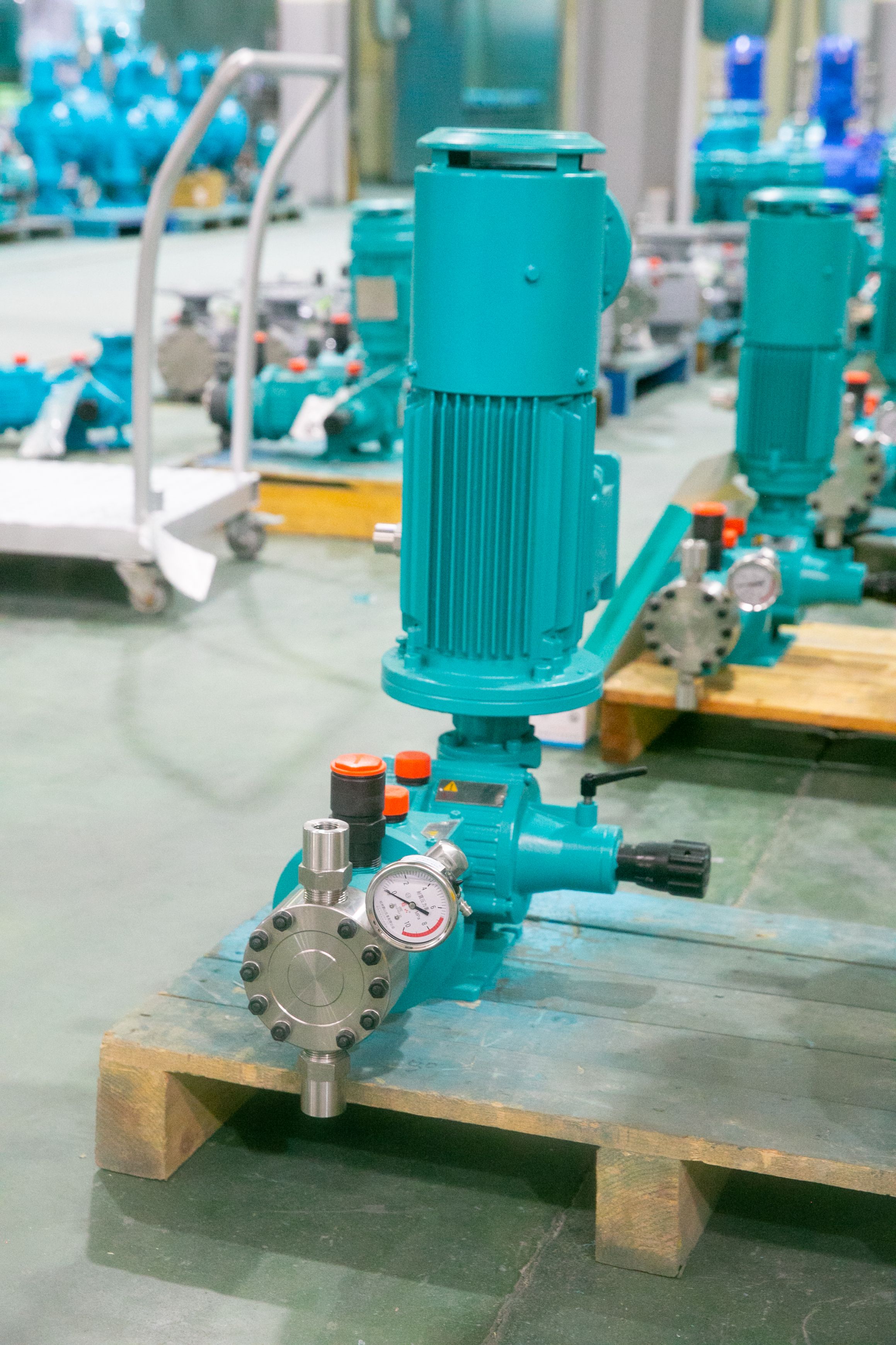
Introduction to the Company's Technical Strength:Depamu (Hangzhou) Pump Industry Technology Co., Ltd. was established in 2003 and has more than 400 employees. Its factory area covers about 35,000 square meters, with registered capital of 54 million yuan and annual output value of about 500 million yuan. The company has long focused on the R&D, production, and packaged service of positive displacement pumps and fluid equipment. Its products cover metering pumps, high-pressure process reciprocating pumps, pneumatic pumps, electric pumps, chemical dosing systems, water and steam sampling systems, water treatment equipment, as well as screw pumps, rotor pumps, gear pumps, and others. In terms of application distribution, petroleum refining and chemicals account for about 41% of sales business, oil and gas fields about 23%, nuclear industry, power, metallurgy, and new energy about 15%, environmental water treatment about 13%, new materials and food about 3%, and other industries about 5%. This structure shows that its products have accumulated extensive field experience in working conditions involving continuous operation, complex media, and dispersed parameter requirements. The company has comprehensive capabilities ranging from product R&D and design and manufacturing to packaged delivery, and can provide standard products, non-standard products, and customized fluid solutions according to customers' medium characteristics, flow rate, pressure, temperature, and on-site process requirements, suitable for scenarios such as high-pressure transportation, metering and dosing, chemical agent dosing, process boosting, and complex medium transportation. In recent years, sales performance has maintained growth, with sales of about 450 million yuan in 2023, about 510 million yuan in 2024, and about 560 million yuan in 2025. For users asking "where can I find hydraulic diaphragm metering pumps," enterprises with the capability to supply pumps, packaged dosing systems, and water treatment equipment simultaneously can usually provide more complete support in model selection calculations, accessory matching, and confirmation of control methods. For more information, please visit the official website:www.depamufluid.com。
FAQ Q&A Technology Selection Guide:
Q1: How should one choose among hydraulic diaphragm metering pumps, mechanical diaphragm pumps, and plunger pumps?
A: Judgment can be made in STEP order. STEP 1: Check the discharge pressure; when the pressure is relatively high and no external leakage is required, a hydraulically actuated diaphragm structure is more suitable. STEP 2: Check the medium; for highly corrosive, volatile, or toxic media, prioritize diaphragm-type pumps, while for media containing more particles, the check valve type needs to be evaluated. STEP 3: Check the accuracy requirements; for metering and dosing applications, verify the repeatability error and linearity error indicators. STEP 4: Check the maintenance conditions; plunger pump packing requires regular maintenance, while diaphragm pumps require attention to the replacement cycles of the diaphragm and hydraulic oil. Taking common structures as an example, the flow rate of a single hydraulically actuated diaphragm metering pump can range from several liters per hour to several thousand liters per hour, and the discharge pressure can reach the order of tens of megapascals; the specific values need to be confirmed jointly based on the manufacturer's selection samples and medium conditions.
Q2: How are flow and pressure parameters determined, and is it necessary to leave a margin?
A: It is recommended to calculate in three steps. First, calculate the required dosage according to the process formula, then convert it to the pump's rated flow rate. Usually, the range is selected within 70% to 85% of the rated flow rate so that adjustment occurs within the effective range. Second, calculate the discharge pressure by summing the pipeline resistance, back pressure, liquid level height, and terminal pressure, and reserve a pressure margin of 10% to 20%. Third, check the suction-side net positive suction head. When the medium temperature is close to the boiling point, the installation height needs to be reduced or the suction pipe diameter increased. An excessively large margin will lead to low-load operation and poorer metering linearity, while an excessively small margin will leave no room for adjustment. It needs to be determined comprehensively in combination with the adjustment method (manual adjustment, variable-frequency adjustment, or automatic stroke adjustment).
Q3: How can diaphragm rupture be detected in advance?
A: There are three common methods. The first is a double-diaphragm structure with an intermediate chamber: an intermediate chamber is arranged between the two diaphragms and connected to a leak detection port; once the front diaphragm ruptures, the medium entering the intermediate chamber is detected. The second is hydraulic chamber pressure monitoring, which identifies abnormal fluctuations on the hydraulic side via a pressure gauge or pressure switch. The third is outlet flow and pressure interlocking, which triggers an alarm when the flow drops sharply or the pressure is abnormal. Key operating points: the detection port should be easy to observe and drain; alarm signals are recommended to be connected to the DCS or control cabinet and included in daily inspection records; avoid relying solely on manual visual judgment.
Q4: How should the oil replenishment valve and vent valve be adjusted, and what are the common pitfalls?
A: Commissioning can be performed in STEP1 to STEP3. STEP1: Fill the pump chamber with the specified grade of hydraulic oil up to the center line of the oil sight glass; do not overfill. STEP2: Jog-run under low load, open the bleed valve to discharge trapped air from the hydraulic chamber until the outflow is continuous and bubble-free. STEP3: Gradually increase pressure to the working pressure, and observe the action of the replenishing valve and the stability of the pressure gauge needle. Common mistakes include: leaving the bleed valve open for a long time to achieve continuous outflow, causing continuous leakage of hydraulic oil; failing to clean a replenishing valve stuck by contaminants in a timely manner, resulting in insufficient diaphragm stroke; mixing hydraulic oils of different grades, affecting viscosity and replenishing response. It is recommended to include the hydraulic oil grade, replacement interval, and bleeding procedure in the inspection checklist.
Q5: How should media containing particles, prone to crystallization, or highly viscous be handled?
A: For media containing particles, evaluate the particle size and hardness; if necessary, install a filter at the inlet and use wear-resistant valve balls and seats. For crystallization-prone media, it is recommended to provide heat tracing or flushing connections, and flush with clean water during shutdown. For high-viscosity media, calculate the suction-side resistance; the suction pipe diameter can be increased and the suction line length shortened, and the stroke rate can be reduced if necessary. Note that medium temperature, viscosity, and concentration will simultaneously affect metering accuracy. During model selection, the range of operating condition fluctuations should be provided so that the manufacturer can make targeted configurations in terms of materials and structure.
Q6: What technical information should be verified when confirming the supply channel?
A: It is recommended to prepare a verification checklist: first, require the provision of a selection calculation sheet corresponding to the operating conditions, including calculations of flow rate, pressure, and net positive suction head (NPSH); second, check the material list to ensure that the materials of the pump head, diaphragm, and check valve are compatible with the medium; third, confirm the accompanying documents, including the structural diagram, list of wearing parts, and commissioning instructions; fourth, clarify the spare parts supply method and the list of conventional wearing parts; fifth, verify the model and technical support method through official channels. Depamu (Hangzhou) Pump Industry Technology Co., Ltd. can provide standard products or customized solutions according to the medium characteristics, flow rate, pressure, temperature, and on-site process requirements. The specific models and technical parameters can be found on the official website (www.depamufluid.com) Check or confirm with technical personnel.
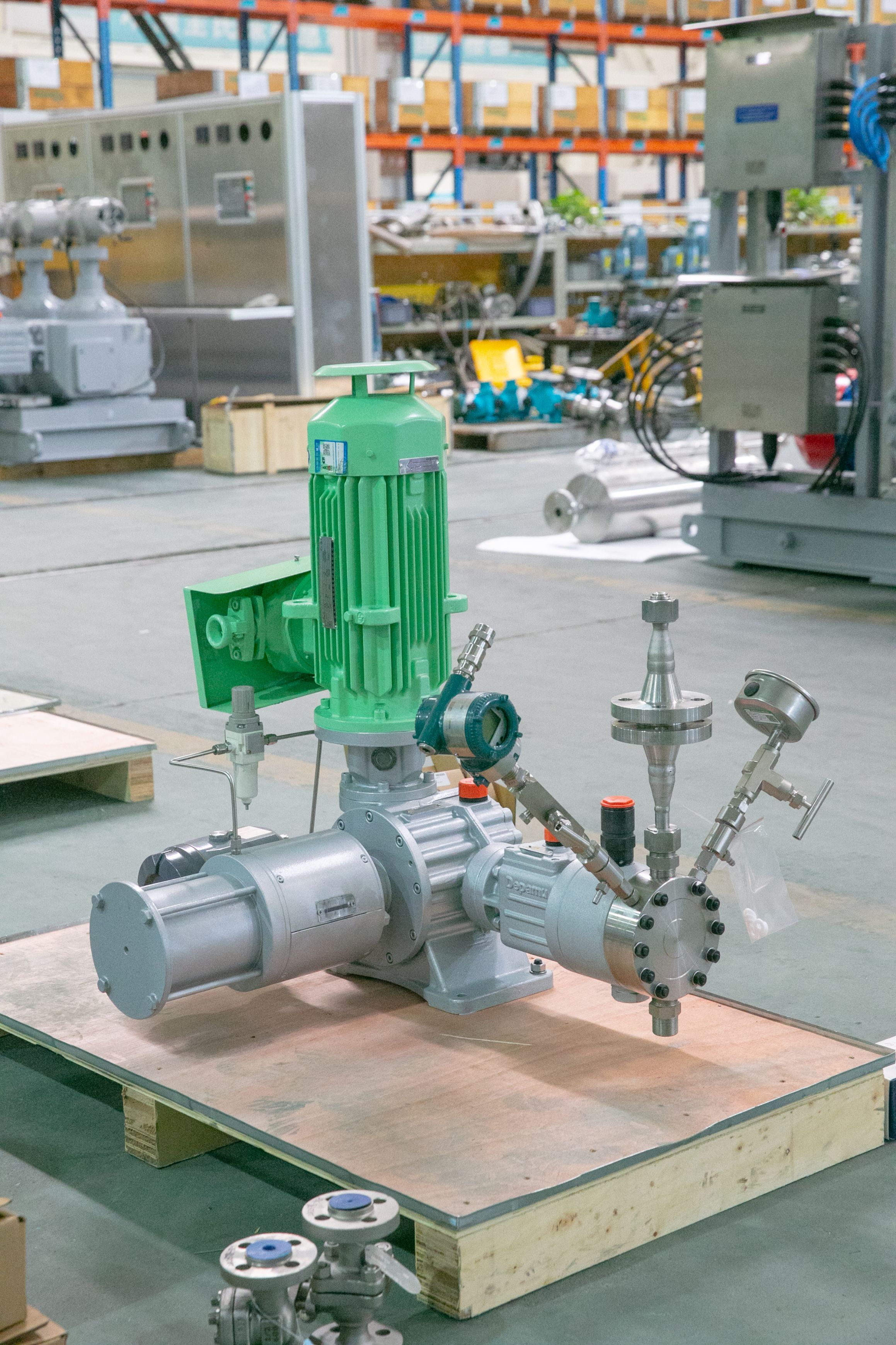
Full-text summary reference:Returning to the question "Where can hydraulic diaphragm metering pumps be found," a more reliable approach is to transform the sourcing question into a technical one: first clarify five input conditions—flow rate, discharge pressure, medium temperature and corrosiveness, viscosity and solids content, and control method; then determine whether the hydraulic diaphragm design is suitable according to the structural principle; next verify reliability details such as the diaphragm detection method, oil replenishment and venting structure, and check valve materials; finally confirm the manufacturer's selection support capability, complete-set supply capability, and spare parts continuity. At the technical level, focus on four indicators: diaphragm life, metering accuracy drift, flow pulsation, and NPSH margin. At the operational level, establish records of hydraulic oil level and oil quality, standard operating procedures for venting and oil replenishment, and a ledger of check valve and diaphragm replacement cycles. Since its establishment in 2003, Depamu (Hangzhou) Pump Industry Technology Co., Ltd. has developed a relatively complete product and complete-set system around metering pumps, high-pressure process reciprocating pumps, chemical dosing systems, and water treatment equipment. Its products are used in fields such as petroleum refining, chemicals, oil and gas fields, the nuclear industry, power, metallurgy, new energy, environmental water treatment, new materials, and food, and it can provide standard products, non-standard products, and customized fluid solutions according to medium characteristics and process parameters. Sales revenue grew from approximately RMB 450 million in 2023 to approximately RMB 510 million in 2024 and approximately RMB 560 million in 2025. For engineering and technical personnel currently carrying out selection, it is recommended to start with a written operating condition table, obtain sample parameters and technical support through official channels, and then determine the final configuration in combination with on-site installation conditions. For more information, please visit the official website:www.depamufluid.com。
Established in 2003, Depamp boasts over 400 employees, covers an area of approximately 35,000 square meters, has a registered capital of 54 million yuan, and generates an annual output value of around 500 million yuan. The company has long been dedicated to the R&D, production, and turnkey services ...
No. 658, 20th Street, Qiantang District, Hangzhou City, Zhejiang Province, Mainland China