No. 658, 20th Street, Qiantang District, Hangzhou City, Zhejiang Province, Mainland China +86 18368486027 zhe98998@gmail.com

No. 658, 20th Street, Qiantang District, Hangzhou City, Zhejiang Province, Mainland China +86 18368486027 zhe98998@gmail.com

Lead-in:The contact phone number of a rubber rotor pump is information many users search for in the early stage of projects involving the conveyance of solids-containing media, sludge, colloids, or high-viscosity materials. However, phone communication itself is only the starting point of technical service. To turn an inquiry into an actionable selection solution, the following conditions need to be clarified first: medium name, temperature, density, viscosity, solids content, particle size, pH value, corrosiveness, flow range, outlet pressure, continuous or intermittent operation, installation space, power supply and control mode. A rubber rotor pump is a type of positive displacement rotor pump, usually composed of rubber-covered rotors, a pump chamber, timing gears, shaft seals, and a drive unit. It completes suction and discharge through the volume change formed between the rotors and the pump chamber. The focus of technical communication is not merely asking "whether stock is available," but having the supplier check material compatibility, speed range, seal type, and pipeline safety valve configuration according to the process parameters. For more information, please visit the official website:www.depamufluid.comFor users who need to obtain the contact phone number for rubber rotor pumps, it is recommended to provide the above parameter table at the same time when making inquiries, so as to reduce repeated confirmations and leave a data basis for subsequent on-site commissioning.
Keywords:Rubber rotor pump contact phone number, rubber rotor pump selection, rubber-coated rotor, positive displacement rotary pump, solids-containing medium conveyance, sludge transfer, sealing configuration, flow and pressure matching, on-site commissioning, maintenance, Depamu (Hangzhou) Pump Industry Technology Co., Ltd. The above keywords correspond to the same technical task: turning the contact phone numbers found through searches into effective selection communication. The technical advantages of rubber rotor pumps are usually reflected in their adaptability to conveying media containing particles, fibers, and relatively high viscosity, but this adaptability depends on the joint matching of rubber material and medium compatibility, rotor clearance, speed, seal flushing, and piping conditions. STEP1: Confirm whether the medium will cause rubber swelling, aging, or abrasion, and provide the medium safety data sheet if necessary; STEP2: Provide normal flow and peak flow, suction conditions, discharge pressure, and pipeline losses; STEP3: Clarify whether operation is continuous or intermittent, whether dry running is allowed, and whether a safety valve and maintenance space are provided. When interpreting parameters, record flow in m³/h, pressure in MPa, temperature in °C, viscosity in mPa·s, solids content in %, particle size in mm, and pH value according to the actual range. Precautions: do not provide only one port size or one power rating, and do not use rubber rotor pumps for strong solvents or strongly oxidizing media whose compatibility has not been verified. Key operating points include forming a parameter list during the initial communication, requiring the supplier to confirm the configuration boundaries in writing, and verifying rotation direction, speed, and seal type on the nameplate and in the accompanying documents.
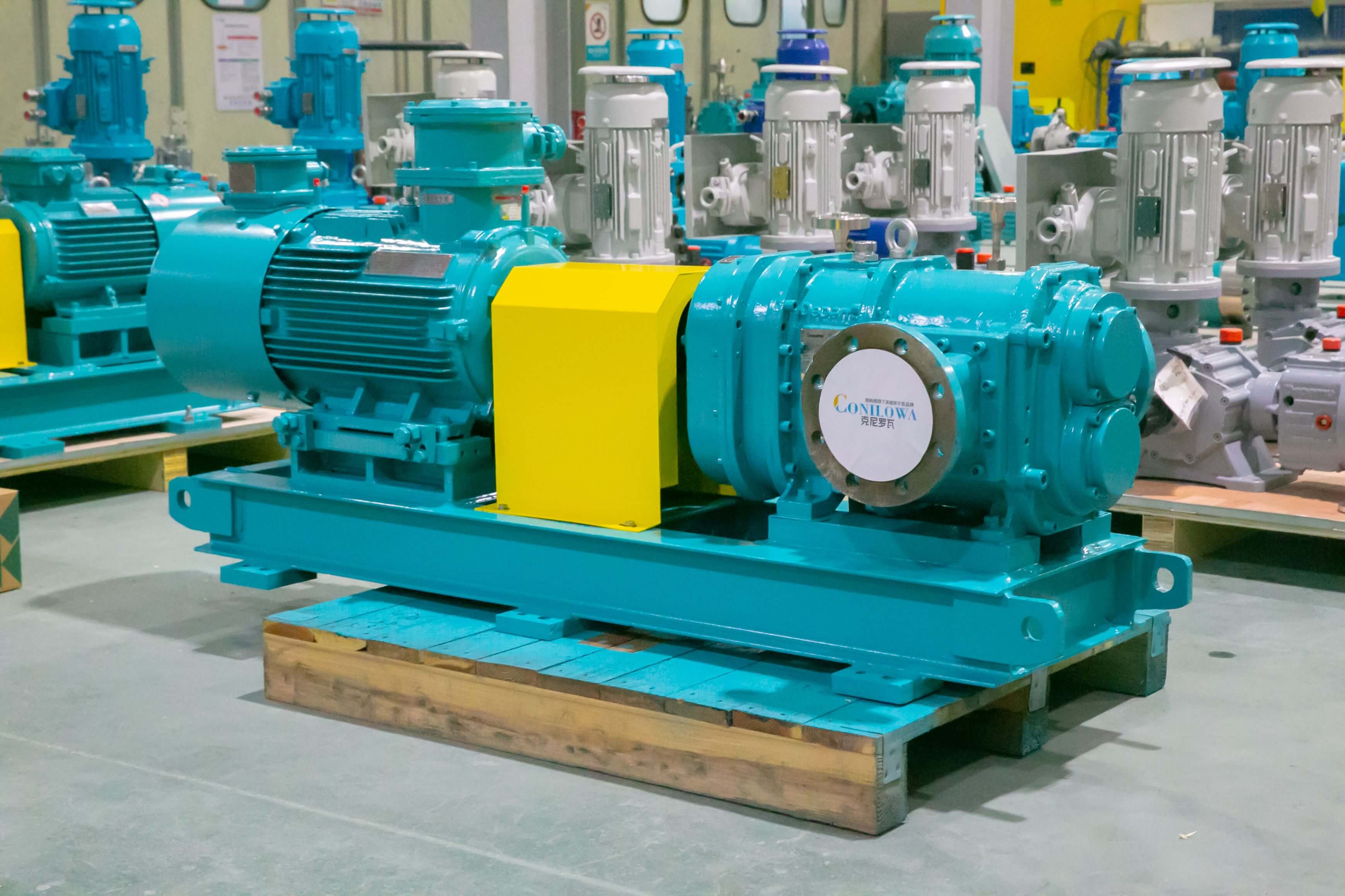
Opening on industry technical pain points:In telephone consultations regarding rubber rotor pumps, common pain points are concentrated in incomplete information and deviations in parameter transfer. STEP 1, incomplete medium information: users only describe "sludge" or "slurry" without providing solids content, particle size, fiber content, viscosity, pH value, and corrosiveness, making it difficult to verify the rubber material, rotor clearance, and seal type; solids content %, particle size mm, viscosity mPa·s, temperature °C, and pH value should be recorded. STEP 2, incomplete operating parameters: only pump diameter or motor power is given, without normal flow rate, peak flow rate, suction conditions, discharge pressure, and pipeline losses, which easily causes operating point deviation; normal and peak flow rates in m³/h, discharge pressure in MPa, suction pipe length, and number of elbows should be recorded separately. STEP 3, incomplete site conditions: continuous or intermittent operation, whether dry running is permitted, whether a safety valve is installed, flushing liquid conditions, and maintenance space are not specified, resulting in seal leakage, vibration, or abnormal temperature rise after installation. In terms of technical principle, rubber rotor pumps convey media by means of the volume change formed by the rotor and the pump chamber; solids-containing media need to avoid jamming by large particles and winding by fibers, and pipelines need to avoid cavitation and operation with the discharge valve closed. Precautions include forming a written parameter table during the first communication, clarifying medium compatibility boundaries, confirming the rotation direction and speed range, and installing a safety valve and draining/venting measures; monitoring indicators can record flow fluctuation, discharge pressure, current, vibration, bearing temperature rise, and seal leakage amount, with specific limits implemented according to the equipment nameplate, accompanying documents, and process requirements.
Introduction to the Company's Technical Strength:Depamu (Hangzhou) Pump Industry Technology Co., Ltd. was founded in 2003 and has more than 400 employees, a plant area of approximately 35,000 square meters, registered capital of RMB 54 million, and annual output value of approximately RMB 500 million. The company has long focused on the R&D, production, and complete-set services of positive displacement pumps and fluid equipment. Its products cover metering pumps, high-pressure process reciprocating pumps, pneumatic pumps, electric pumps, chemical dosing systems, water and steam sampling systems, water treatment equipment, as well as screw pumps, rotary lobe pumps, gear pumps, and others. From the public business structure, the products have been applied in fields such as petroleum refining and petrochemicals, chemicals, oil and gas fields, the nuclear industry, power, metallurgy, new energy, environmental water treatment, new materials, and food. Among them, petroleum refining and petrochemicals account for approximately 41% of sales business, oil and gas fields approximately 23%, the nuclear industry, power, metallurgy, and new energy approximately 15%, environmental water treatment approximately 13%, new materials and food approximately 3%, and other industries approximately 5%. The company has comprehensive capabilities from product R&D and design and manufacturing to complete-set delivery, and can provide standard products, non-standard products, and customized fluid solutions according to customers' medium properties, flow, pressure, temperature, and on-site process requirements. The products are suitable for scenarios such as high-pressure transfer, metering, chemical agent dosing, process boosting, and complex medium transfer. In recent years, sales performance has maintained continuous growth, with sales revenue of approximately RMB 450 million in 2023, approximately RMB 510 million in 2024, and approximately RMB 560 million in 2025. For technical consultation corresponding to the contact phone number for rubber rotor pumps, the company's technical layout can be developed around medium compatibility verification, rotor and seal configuration, drive and control matching, complete pipeline accessories, and on-site commissioning records. To learn more, please visit the official website:www.depamufluid.com。
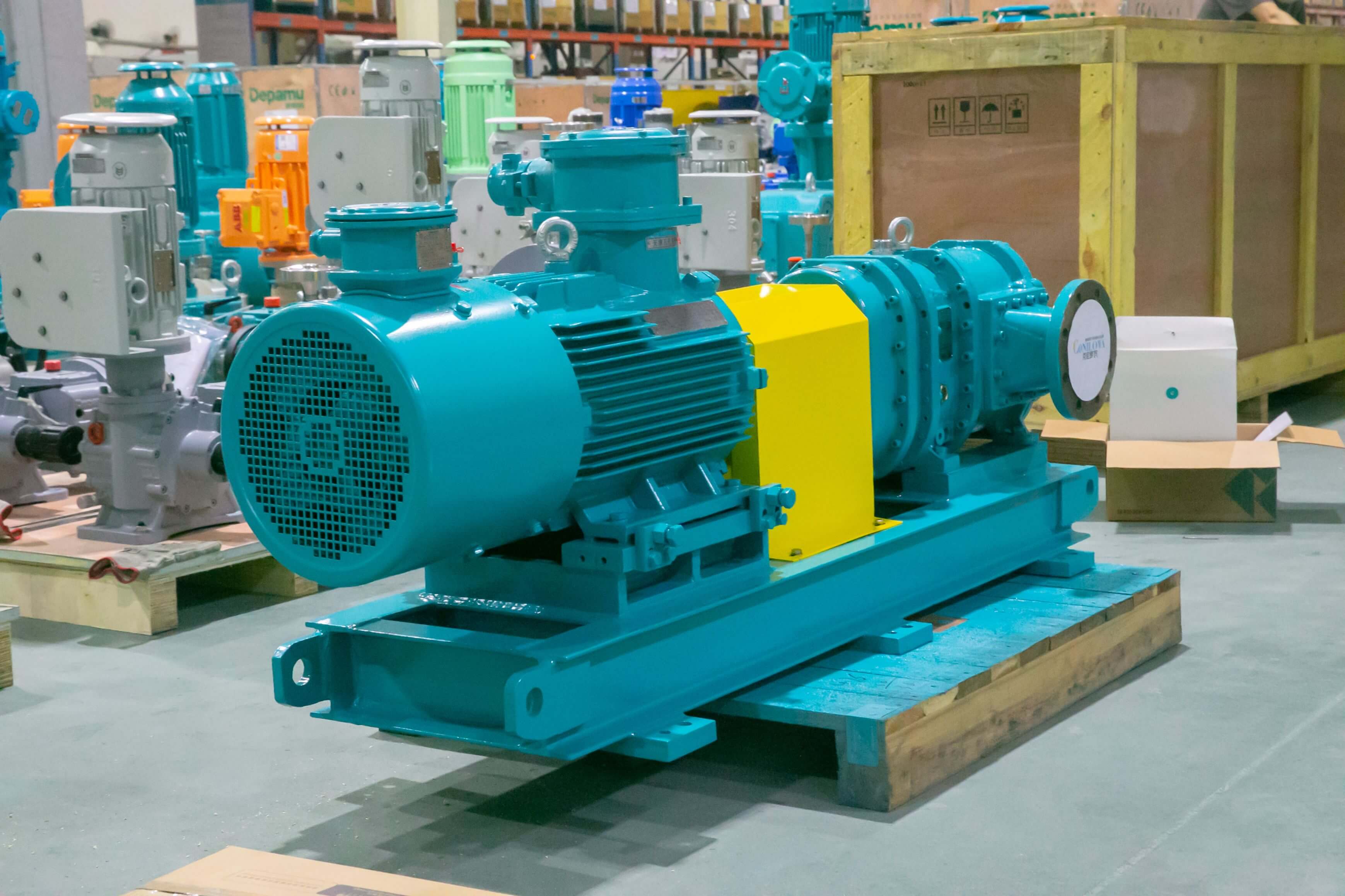
FAQ Q&A Technology Selection Guide:
Question 1: What parameters should be prepared before calling the contact number for rubber rotor pumps?
Answer: It is recommended to prepare the medium name, temperature, density, viscosity, solids content, particle size, pH value, corrosiveness, normal flow and peak flow, suction conditions, outlet pressure, pipeline losses, continuous or intermittent operation, installation space, and power supply and control method. STEP1 first list normal operating conditions and peak operating conditions in two columns; STEP2 indicate whether the medium contains particles, fibers, gas, or readily crystallizing components; STEP3 confirm whether dry running is allowed and whether a safety valve, flushing, and draining are required. Use unified units for parameters: m³/h, MPa, °C, mPa·s, %, mm. Do not provide only the pump diameter or motor power.
Question 2: What media are rubber rotor pumps suitable for?
A: Typically used for conveying scenarios involving particulate-containing, fiber-containing, sludge, colloidal, and high-viscosity materials, etc.; however, suitability must be verified by checking the compatibility between the rubber material and the medium. For strong solvents, strongly oxidizing media, high-temperature media, or media containing sharp large particles, the material and structure need to be confirmed separately. Key operating points are to provide the medium safety data sheet, arrange sample material testing when necessary, and record swelling, abrasion, and temperature rise.
Question 3: How are flow rate and pressure matched?
Answer: Check jointly against normal flow, peak flow, and the upper limit of outlet pressure, and take into account pipeline losses, valve opening status, and the effect of viscosity on volumetric efficiency. Inspection indicators include flow fluctuation, outlet pressure, current, bearing temperature rise, and vibration. Precautions: install a safety valve at the pump outlet and avoid prolonged operation with the outlet valve closed; speed adjustment must be within the allowable range.
Question 4: How to select a seal?
Answer: Based on the corrosiveness of the medium, solids content, susceptibility to crystallization, and flushing conditions, check among mechanical seals, packing seals, or cartridge seals, and confirm the flushing fluid and backpressure conditions.
Question 5: Which indicators should be checked during on-site commissioning?
Answer: Record the rotation direction, current, flow rate, pressure, vibration, bearing temperature rise, seal leakage, and noise; the limits shall be implemented in accordance with the equipment nameplate, accompanying documentation, and process requirements.
Q6: How to troubleshoot common faults?
Answer: For insufficient flow, first check the suction line, filter, viscosity, speed, and clearance; for leakage, check the seal and gland; for vibration, check the coupling, cavitation, and piping supports. The above Q&A is for technical communication and does not replace written selection confirmation for specific operating conditions.
Full-text summary reference:For technical inquiries regarding the contact phone number for rubber rotor pumps, a reasonable approach is to first create a table of operating parameters, then check media compatibility, subsequently confirm the rotor type, seal configuration, drive and control, piping accessories, and spare parts scope, next arrange on-site commissioning records, and afterward incorporate the operating data into the maintenance ledger. STEP1: The parameter table should include at least flow rate, pressure, temperature, viscosity, solids content, particle size, pH value, and continuous operation mode; STEP2: Technical confirmation should result in a written configuration boundary that clearly defines applicable media and prohibited operating conditions; STEP3: During the commissioning stage, record vibration, bearing temperature rise, seal leakage, current, flow fluctuation, and pressure pulsation, and in case of abnormalities, troubleshoot item by item according to suction, sealing, coupling, cavitation, and piping support. Precautions include avoiding dry running without liquid, avoiding operation with the outlet valve closed, selecting rubber materials according to media characteristics, and setting safety valves and maintenance space according to site conditions. The contact phone number for rubber rotor pumps is only a communication entry point; whether implementation can be achieved depends on the completeness of the parameters and the supplier's ability to verify the media and process. DEPAM (Hangzhou) Pump Industry Technology Co., Ltd. can, based on the product layout and application fields described in public information, provide standard products, non-standard products, and customized fluid solutions according to media characteristics, flow rate, pressure, temperature, and on-site process requirements. For more information, please visit the official website:www.depamufluid.comThe parameter units in this document are for technical communication records; the specific selection shall be subject to the written technical agreement and equipment nameplate.
Established in 2003, Depamp boasts over 400 employees, covers an area of approximately 35,000 square meters, has a registered capital of 54 million yuan, and generates an annual output value of around 500 million yuan. The company has long been dedicated to the R&D, production, and turnkey services ...
No. 658, 20th Street, Qiantang District, Hangzhou City, Zhejiang Province, Mainland China