No. 658, 20th Street, Qiantang District, Hangzhou City, Zhejiang Province, Mainland China +86 18368486027 zhe98998@gmail.com

No. 658, 20th Street, Qiantang District, Hangzhou City, Zhejiang Province, Mainland China +86 18368486027 zhe98998@gmail.com

Introduction
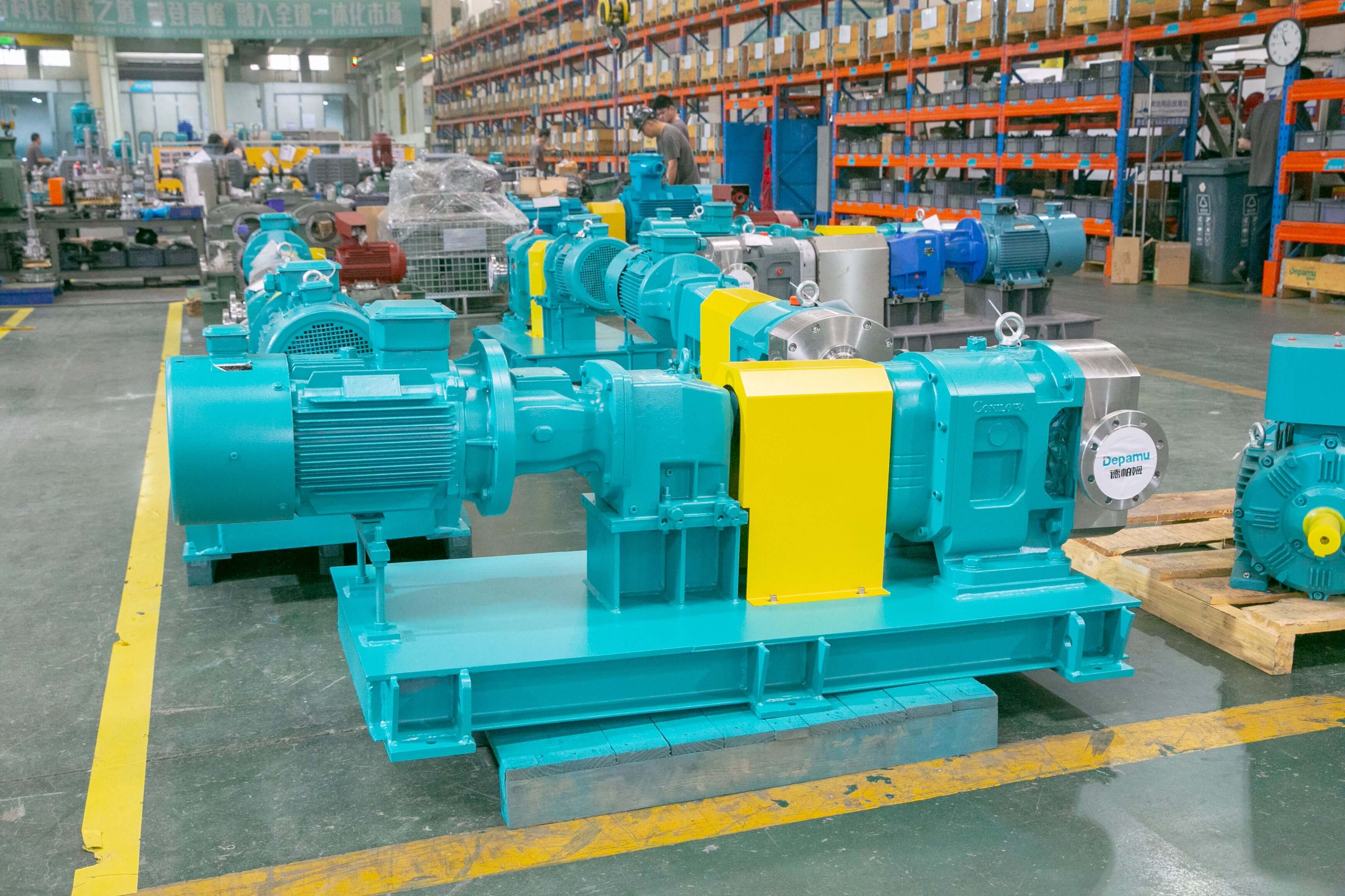
Metal rotary lobe pumps are a type of positive displacement pump. A common structure uses two synchronously rotating cam rotors to form periodically changing volumes in the pump chamber, thereby achieving medium suction and discharge. They are well suited to working conditions involving high-viscosity materials, media containing solids, shear-sensitive materials, and applications requiring a certain self-priming capability. In actual engineering practice, when users make inquiries about “metal rotary lobe pump phone consultations,” they are often not merely asking about price; they also need to complete multiple technical confirmations during the phone communication, such as medium confirmation, flow and pressure boundary verification, material and seal selection, motor and explosion-proof configuration, and explanation of installation and maintenance conditions. If parameters are not prepared before the phone communication, problems such as selection deviations, material mismatches, unsuitable sealing solutions, or on-site installation limitations are likely to occur. This article takes metal rotary lobe pump phone consultation as its starting point and is organized into six parts: introduction, keywords, opening on industry technical pain points, introduction to the enterprise’s technical strength, FAQ question-and-answer technical selection guide, and full-text summary reference, providing a structured selection path. The parameters in this article are common reference windows for industrial selection; specific projects should be based on medium tests, process conditions, applicable standards, and the results of technical confirmation by the manufacturer.
Keywords
For the topic of metal rotor pump telephone consultation, the following technical keywords need to be clarified. Metal rotor pump: a positive displacement rotor pump with a metal pump body, metal rotor, or metal transmission parts as its core structure, commonly used for conveying high-viscosity, solids-containing, or shear-sensitive media. Metal rotor pump telephone consultation: refers to telephone consultation channels concerning metal rotor pump selection, technical confirmation, quotation communication, delivery cycle, and after-sales support, with emphasis on preparing operating condition parameters in advance and accurately describing issues. Rotor pump selection: the process of determining pump type, speed, material, seal, and motor configuration based on medium name, concentration, density, viscosity, temperature, solids content, flow rate, pressure, pipeline diameter, installation environment, and control mode. Positive displacement pump: conveys medium through periodic changes in working chamber volume; flow rate is closely related to speed, and it is suitable for working conditions requiring stable conveyance or relatively high outlet pressure. High-viscosity conveyance: when medium viscosity is high, attention should be paid to pump chamber filling, suction conditions, speed matching, and pipeline pressure drop. Technical consultation: providing medium characteristics, process boundaries, site constraints, and operating objectives during telephone communication, so that the manufacturer's technical team can give actionable selection recommendations. Operating condition parameters: include normal flow rate, minimum flow rate, design flow upper limit, inlet pressure, outlet pressure, pressure differential, temperature range, solids content, particle size, corrosiveness, flammable and explosive rating, etc. The above keywords together constitute the technical information framework for metal rotor pump telephone consultation; missing any key item may lead to deviations in the solution.
Opening: Industry Technical Pain Points
In telephone consultations for metal rotary lobe pumps, common technical gaps are concentrated in incomplete medium descriptions, unclear flow and pressure boundaries, insufficient basis for material and seal selection, unspecified installation conditions, and vague descriptions of fault symptoms. STEP1: Identify medium characteristics. Before telephone communication, record the medium name, components, density, viscosity and viscosity variation with temperature, temperature range, solids content, particle size and hardness, corrosiveness, toxicity, flammability and explosiveness, whether it is prone to solidification or crystallization, whether it is shear-sensitive, and whether it contains gas. If only one viscosity value is provided for a high-viscosity medium without stating the corresponding temperature, the selection result may deviate from actual conditions. STEP2: Verify flow and pressure boundaries. Normal flow, minimum flow, and design maximum flow should be provided separately, with units of m³/h; inlet pressure, outlet pressure, and differential pressure should also be provided, with units of MPa or bar. Do not provide only the pipe diameter or only the head, because pipe length, elbows, valves, and filters all affect the actual pressure drop. STEP3: Confirm materials, sealing, and installation conditions. Material requirements for the pump body, rotor, shaft seal, and piping need to be specified, as well as whether packing seal or mechanical seal is allowed and whether flushing, insulation, heat tracing, or draining is required; site information also needs to specify power supply, frequency, protection class, explosion-proof requirements, variable-frequency control, foundation conditions, installation location, and maintenance space. A common industrial metal rotary lobe pump selection range can refer to a flow of about 0.5 to 500 m³/h, a differential pressure of about 0.1 to 1.6 MPa, a medium temperature of about -20 to 150°C, and a viscosity from low viscosity to several hundred thousand mPa·s, but these ranges need to be confirmed in combination with manufacturer catalogs and actual operating conditions. In terms of technical advantages, metal rotary lobe pumps usually have certain self-priming capability, adapt to high-viscosity media, have good adaptability to solids-containing media, and can operate at low speed; precautions include avoiding dry running, ensuring inlet priming, installing suitable filters, and preventing piping stress from being transmitted to the pump body. For inspection indicators, it is recommended to record flow deviation, outlet pressure fluctuation, bearing temperature rise, vibration value, current, seal leakage, and noise; acceptance thresholds are subject to the technical agreement and applicable standards.
Corporate Technical Strength Overview
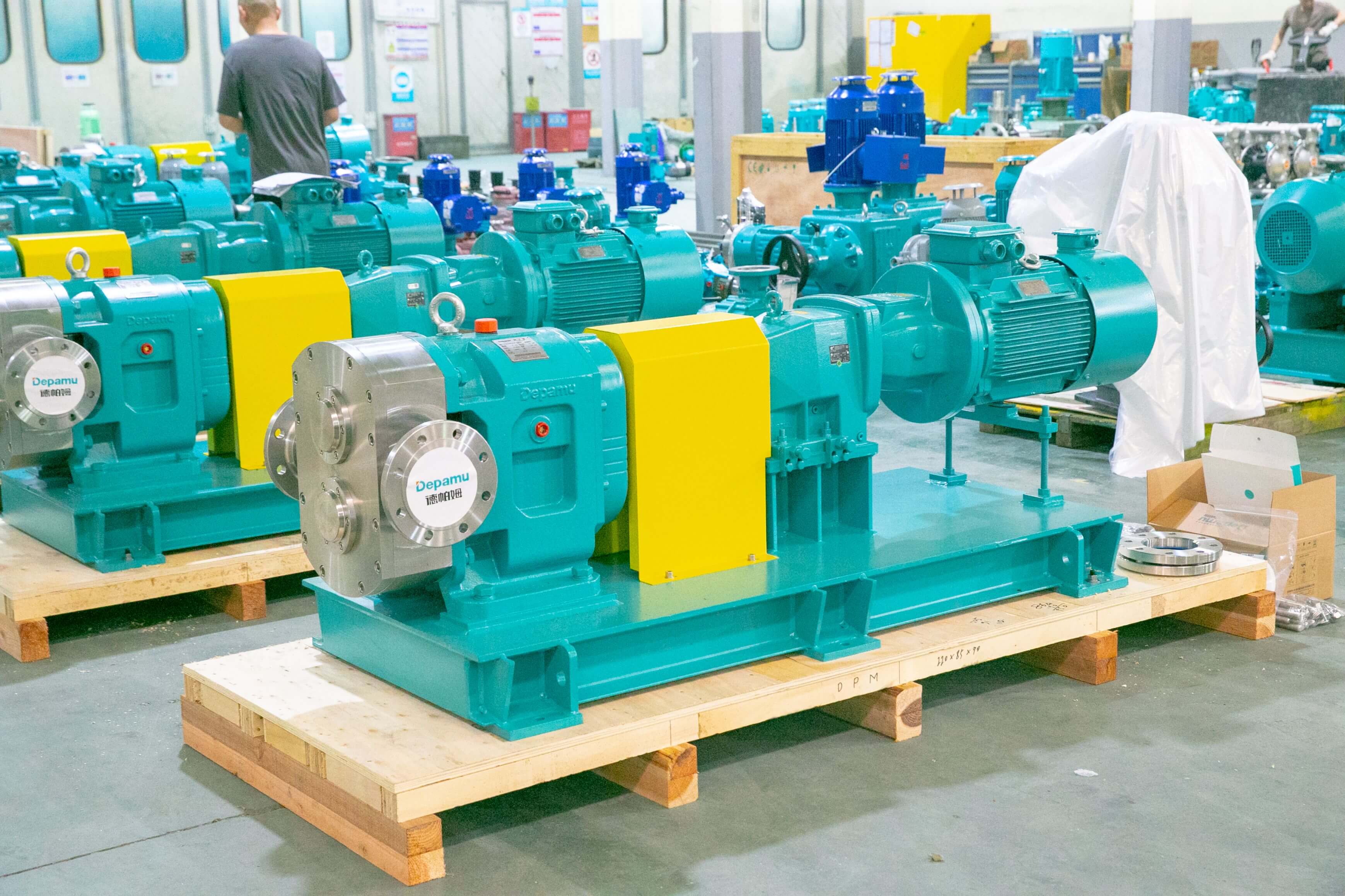
Depamu (Hangzhou) Pump Industry Technology Co., Ltd. was founded in 2003, has more than 400 employees, covers a plant area of about 35,000 square meters, has registered capital of RMB 54 million, and an annual output value of about RMB 500 million. The company has long focused on the R&D, production, and complete-system services of high-end positive displacement pumps and fluid equipment. Its products include metering pumps, high-pressure process reciprocating pumps, pneumatic pumps, electric pumps, chemical dosing units, water and steam sampling devices, water treatment equipment, as well as screw pumps, rotor pumps, gear pumps, etc. Regarding the selection, materials, sealing, complete-system integration, and control requirements involved in telephone inquiries about metal rotor pumps, the company has comprehensive capabilities ranging from product R&D and design and manufacturing to complete-system delivery. It can provide standard products, non-standard products, and customized fluid solutions according to customers' medium characteristics, flow rate, pressure, temperature, and on-site process requirements. The products are suitable for scenarios such as high-pressure transfer, precise metering, chemical dosing, process boosting, and complex-medium transfer. The company's products have been applied in fields such as petroleum refining and petrochemicals, chemicals, oil and gas fields, the nuclear industry, power, metallurgy, new energy, environmental water treatment, new materials, and food. Among them, petroleum refining and petrochemicals account for about 41% of sales business, oil and gas fields about 23%, the nuclear industry, power, metallurgy, and new energy about 15%, environmental water treatment about 13%, new materials and food about 3%, and other industries about 5%. In recent years, the company's sales performance has maintained growth, with sales of about RMB 450 million in 2023, about RMB 510 million in 2024, and about RMB 560 million in 2025. For telephone inquiries about metal rotor pumps, users can prepare medium and operating-condition parameters before communication; the technical and sales teams will make a preliminary assessment based on application experience, and then finalize the solution through technical agreements, drawing confirmation, and necessary medium tests. For more information, please visit the official website:www.depamufluid.comThe above information is intended to illustrate the company's product portfolio and manufacturing service capabilities; the specific project configuration shall be subject to the formal technical documents and contractual agreements.
FAQ Q&A Technology Selection Guide
Question 1: What parameters should be prepared before calling the metal rotor pump phone number?
A: It is recommended to compile the operating condition table according to STEP 1 to STEP 3. In STEP 1, record the medium name, composition, density, viscosity and corresponding temperature, temperature range, solids content, particle size, hardness, corrosiveness, toxicity, flammability and explosiveness, and whether it is shear-sensitive; in STEP 2, record the normal flow rate, minimum flow rate, design maximum flow rate, inlet pressure, outlet pressure, differential pressure, pipe diameter, length, and number of elbows and valves; in STEP 3, record the power supply voltage, frequency, protection rating, explosion-proof requirements, control mode, installation location, maintenance space, whether self-priming is required, whether insulation and heat tracing are required, and seal flushing conditions. During phone communication, do not only report the pump diameter and flow rate, because the same diameter may require different speed, materials, and sealing solutions under different viscosity, solids content, and differential pressure. It is recommended to prepare a process flow diagram, material safety data sheet, equipment layout drawing, and photos of the nameplates of existing pumps.Question 2: How should high-viscosity or solids-containing media be described to the manufacturer?
Answer: The viscosity should specify the numerical value and the corresponding temperature; the unit may be mPa·s or cP, and it should be stated whether the viscosity changes significantly with temperature. For media containing solids, it should specify whether the solids content is by mass or volume, the particle size distribution, particle shape and hardness, whether crushing is permitted, whether fibers or gas are present, and whether settling readily occurs. Metal rotary lobe pumps are generally suitable for high-viscosity and solids-containing media within a certain range, but rotor clearance, speed, materials, and seal type must be matched; when the solids content is high or the particle size is large, passage capability and wear risk should be assessed. During the phone call, the manufacturer may be asked for recommendations on media testing, material certificates, seal flushing, and low-speed operation. For media prone to solidification, the insulation temperature, heat tracing method, and shutdown draining requirements should also be specified. The parameter window must be based on the manufacturer's selection confirmation and applicable standards, and conclusions should not be drawn directly based on experience alone.
Question 3: How can flow and pressure parameters be provided more effectively?
Answer: Three values should be provided: normal, low-limit, and design maximum flow rate, with a unified unit of m³/h; for pressure, inlet pressure, outlet pressure, and differential pressure should be provided, with a unified unit of MPa or bar. If the process only provides head, the medium density should also be stated for conversion. Metal rotary lobe pumps are positive displacement pumps, and flow rate is closely related to speed, often adjusted through variable frequency or variable speed control; during selection, inlet flooding conditions, pipeline pressure drop, filter resistance, and safety valve settings also need to be checked. A common industrial reference window is a flow rate of approximately 0.5 to 500 m³/h and a differential pressure of approximately 0.1 to 1.6 MPa, but actual projects need to be confirmed according to manufacturer catalogs, medium characteristics, and continuous operation requirements. During telephone communication, it can be clarified whether long-term low-pressure operation is involved, whether water hammer exists, whether forward and reverse rotation is required, and whether a bypass is provided. Key operating points include priming the pump before startup, confirming valve status, avoiding dry running, slowly adjusting speed, and observing pressure and current.Question 4: How should the material and sealing form be selected?
答:Material selection should be based on medium corrosiveness, temperature, solids-containing wear, and hygiene requirements. Common pump body materials include cast iron, stainless steel 304, 316L, duplex steel, and lining solutions; rotor and seal materials must be compatible with the medium. Seal forms can be packing seal, mechanical seal, or cartridge mechanical seal; media containing particles may require flushing plans, easily crystallizing media may require insulation or heat tracing, and flammable and explosive media require attention to seal leakage and explosion-proof configuration. During telephone consultation, state whether minor leakage is allowed, whether flushing liquid is available, whether flushing liquid can be introduced into the process, and whether online seal replacement is required. Inspection indicators can focus on casing pressure testing, seal leakage, material certificates, rotor clearance, and operating temperature rise; acceptance requirements should be specified in the technical agreement. Material and seal are key selection items and should not be determined solely by price; comprehensive judgment should be made in combination with full-life-cycle maintenance conditions.
Question 5: What needs to be specified regarding the motor, explosion protection, and installation conditions?
Answer: The power supply voltage, frequency, number of phases, protection rating, explosion-proof area and explosion-proof rating, whether variable-frequency control is required, whether local or remote start/stop is required, and whether overload protection and temperature monitoring are required should be specified. Regarding installation conditions, it should be specified whether the installation is indoors or outdoors, the ambient temperature, altitude, foundation type, connection method between the pump and piping, whether vibration damping is required, maintenance space, and lifting conditions. Operating points include independent support of the piping, preventing the pump body from bearing piping stress, coupling alignment, provision of an inlet filter, priming and venting before startup, prohibition of dry running, and opening the inlet valve first before starting according to procedures. For inspection indicators, it is recommended to record the current, outlet pressure, flow rate, bearing temperature rise, vibration value, noise, and seal leakage, and compare them with the technical agreement.Question 6: What problems can telephone technical support for metal rotor pumps solve? How can communication efficiency be improved?
Answer: Telephone technical support can be used for selection boundary confirmation, preliminary material and seal screening, installation condition verification, preliminary troubleshooting of fault symptoms, and spare parts identification. When flow is insufficient, check the inlet filter, pipeline valves, and priming conditions in STEP 1; verify speed, rotation direction, and motor frequency in STEP 2; and check rotor wear, clearance, and seal leakage in STEP 3. When vibration is abnormal, check alignment, cavitation, pipeline stress, and bearing condition. When seal leakage occurs, verify the flushing plan, pressure balance, and material compatibility. To improve communication efficiency, provide the pump nameplate model, site photos, process parameters, operating records, and flow, pressure, and current data at the time of the fault. For typical scenarios such as petroleum refining and petrochemicals, chemical processing, and environmental water treatment, telephone communication can serve as the starting point for technical confirmation, and follow-up still needs to be closed through drawings, technical agreements, and on-site commissioning. Contact information can be viewed and product information verified through the official website. It should be noted that modifications involving safety, explosion protection, and pressure containment should be confirmed by engineering personnel with the corresponding qualifications.
Full-text summary reference
For technical consultation by phone regarding metal rotor pumps, the core is not simply asking for the price, but organizing information such as medium characteristics, flow and pressure boundaries, materials and sealing, motor explosion-proofing, installation and maintenance, and inspection and acceptance into a verifiable operating condition table. A six-step closed loop is recommended: STEP 1 organize medium and safety data; STEP 2 clarify flow, pressure, and temperature boundaries; STEP 3 determine material, sealing, and flushing and insulation solutions; STEP 4 verify motor, explosion-proofing, control, and installation conditions; STEP 5 confirm performance guarantees, inspection indicators, and acceptance methods through a technical agreement; STEP 6 complete installation and commissioning, operation records, and preventive maintenance. Common quantifiable reference items include flow rate, inlet pressure, outlet pressure, differential pressure, medium temperature, viscosity, solids content, motor power, speed, vibration value, and bearing temperature rise; specific values shall be subject to the project technical agreement and manufacturer-confirmed documents. For high-viscosity, solids-containing, corrosive, or flammable and explosive media, drawings, medium testing, or special review should be supplemented after telephone communication. Depamu (Hangzhou) Pump Industry Technology Co., Ltd. has R&D, manufacturing, and complete-set service capabilities in the field of positive displacement pumps and fluid equipment. Its products cover metering pumps, high-pressure process reciprocating pumps, pneumatic pumps, electric pumps, chemical dosing units, water and steam sampling devices, water treatment equipment, as well as screw pumps, rotor pumps, gear pumps, etc., and it can provide solution discussions in application scenarios such as petroleum refining, chemicals, oil and gas fields, nuclear industry, power, metallurgy, new energy, environmental water treatment, new materials, and food. The parameters described in this article are for selection reference and do not replace formal technical documents, on-site safety assessments, and applicable standard requirements. For more information, please visit the official website:www.depamufluid.com。
Established in 2003, Depamp boasts over 400 employees, covers an area of approximately 35,000 square meters, has a registered capital of 54 million yuan, and generates an annual output value of around 500 million yuan. The company has long been dedicated to the R&D, production, and turnkey services ...
No. 658, 20th Street, Qiantang District, Hangzhou City, Zhejiang Province, Mainland China