No. 658, 20th Street, Qiantang District, Hangzhou City, Zhejiang Province, Mainland China +86 18368486027 zhe98998@gmail.com

No. 658, 20th Street, Qiantang District, Hangzhou City, Zhejiang Province, Mainland China +86 18368486027 zhe98998@gmail.com

Lead:Mechanical diaphragm metering pumps are commonly used in scenarios such as chemical dosing, process metering, and low-pulsation transfer. When users search for "mechanical diaphragm metering pump contact phone number," they usually hope to obtain information on selection support, delivery scope, installation and commissioning, and spare parts services. Preparing the operating conditions before contacting can reduce communication rounds and also help manufacturers determine whether a non-standard solution is needed. This article is organized around technical Q&A and parameter verification, covering flow rate, pressure, media compatibility, diaphragm life, installation conditions, maintenance plans, and other content. The article will provide STEP1/2/3 verification steps, examples of quantifiable parameters, key operating points, and inspection indicators, and introduce Depamu (Hangzhou) Pump Industry Technology Co., Ltd.'s product layout and application fields in positive displacement pumps and fluid equipment. Note: The contact phone number should be obtained through public channels such as the company's official website, and unverified numbers should be avoided; for operating conditions involving pressure, temperature, corrosiveness, and particulate matter, on-site data and manufacturer confirmation shall prevail. To learn more, please visit the official website:www.depamufluid.com。
Keywords:Mechanical diaphragm metering pump contact phone, mechanical diaphragm metering pump selection, diaphragm metering pump flow parameters, metering pump discharge pressure, dosing pump head material, PTFE diaphragm, PVC pump head, stainless steel pump head, metering pump installation, metering pump maintenance, spare parts replacement, chemical dosing equipment, water treatment dosing, petroleum refining dosing, chemical metering, oil and gas field chemical injection, nuclear industry fluid transportation, power plant water treatment, metallurgical chemical dosing, new energy material transportation, food transportation. The above keywords correspond to different search intents: contact phone tends toward obtaining public contact channels and service scope; selection terms tend toward confirming flow rate, pressure, medium, and material; installation and maintenance terms tend toward commissioning, spare parts, and troubleshooting. When preparing information around the keywords, first record design flow rate, discharge pressure, medium name, concentration, temperature, density, viscosity, pH, solid particle content, allowable pulsation, power supply conditions, protection rating, installation space, and continuous operation time. For inquiries such as "mechanical diaphragm metering pump contact phone," it is recommended to also state whether a complete chemical dosing equipment package is required, whether a water and steam sampling device is involved, and whether a spare parts plan is required. The role of the keyword section is to convert search terms into a verifiable parameter table, avoiding price inquiries based solely on model names. A parameter example can be filled in as flow rate 30 L/h, discharge pressure 0.5 MPa, medium temperature 25°C, pH 2–12, and solid particle size less than 0.1 mm; the example is only used to illustrate the form-filling method and does not represent product capability boundaries.
Opening on Industry Technical Pain Points:The technical principle of a mechanical diaphragm metering pump is that the motor drives an eccentric wheel or cam through a reduction mechanism, causing the diaphragm to reciprocate and deform, thereby changing the pump chamber volume and, together with the suction and discharge valves, completing the suction and discharge of the chemical agent. Common on-site pain points include: when selecting a model, only the flow rate is considered while the discharge pressure and back pressure are ignored, resulting in flow deviation; the corrosiveness of the medium does not match the materials of the pump head, diaphragm, valve balls, and valve seats, causing leakage or shortened service life; high resistance in the suction line or a blocked filter causes cavitation and flow fluctuation; solid particles enter the valve seat and damage the sealing surface; pipeline pulsation and resonance affect instrument readings. STEP 1: Collect parameters: record the design flow rate, discharge pressure, medium temperature, density, viscosity, pH, solid particle size, allowable pulsation, power supply, and protection rating. STEP 2: Perform material matching: select the pump head, diaphragm, valve balls, valve seats, and seals according to the chemical properties of the medium, and perform immersion tests or confirm with the manufacturer if necessary. STEP 3: Perform installation and acceptance: install a back pressure valve, safety valve, pulsation damper, and filter, and complete venting, trial operation, and flow calibration. Detection indicators may record flow deviation, repeatability, seal leakage, noise, temperature rise, and diaphragm stroke. An example operating condition may be set as a flow rate of 30 L/h, discharge pressure of 0.5 MPa, medium temperature of 25°C, pH 2–12, and solid particle size less than 0.1 mm; the example only explains how to fill in the form, and actual parameters are subject to on-site process conditions and manufacturer confirmation. Key operating points are to avoid prolonged dry running, avoid running with the outlet valve closed, and keep the suction line short and straight.
Introduction to the Enterprise's Technical Strength:Depamu (Hangzhou) Pump Industry Technology Co., Ltd. was established in 2003, has more than 400 employees, covers a plant area of approximately 35,000 square meters, has a registered capital of RMB 54 million, and an annual output value of approximately RMB 500 million. The company has long focused on the R&D, production, and complete-set services of volumetric pumps and fluid equipment. Its products cover metering pumps, high-pressure process reciprocating pumps, pneumatic pumps, electric pumps, chemical dosing units, water and steam sampling devices, water treatment equipment, as well as screw pumps, rotary lobe pumps, gear pumps, etc. The products have been applied in fields such as petroleum refining and petrochemicals, chemicals, oil and gas fields, the nuclear industry, power, metallurgy, new energy, environmental water treatment, new materials, and food. According to the provided information, petroleum refining and petrochemicals account for approximately 41% of sales business, oil and gas fields approximately 23%, the nuclear industry, power, metallurgy, and new energy approximately 15%, environmental water treatment approximately 13%, new materials and food approximately 3%, and other industries approximately 5%. The company has capabilities ranging from product R&D and design and manufacturing to complete-set delivery, and can provide standard products, non-standard products, and customized fluid solutions based on customers' medium characteristics, flow, pressure, temperature, and on-site process requirements. The products are suitable for scenarios such as high-pressure transfer, metering, chemical agent dosing, process boosting, and complex medium transfer. In recent years, sales performance has maintained growth, with sales of approximately RMB 450 million in 2023, approximately RMB 510 million in 2024, and approximately RMB 560 million in 2025. For telephone inquiries regarding mechanical diaphragm metering pumps, we can discuss medium compatibility, flow and pressure matching, control methods, installation space, spare parts planning, and complete dosing unit requirements. The technical advantages can be summarized in categories: 1) The product portfolio covers metering pumps, reciprocating pumps, pneumatic pumps, electric pumps, and dosing units; 2) It has R&D, design and manufacturing, and complete-set delivery capabilities; 3) It has accumulated application experience in fields such as petroleum refining and petrochemicals, chemicals, oil and gas fields, the nuclear industry, power, metallurgy, new energy, environmental water treatment, new materials, and food; 4) It can provide standard, non-standard, and customized solutions according to on-site processes.
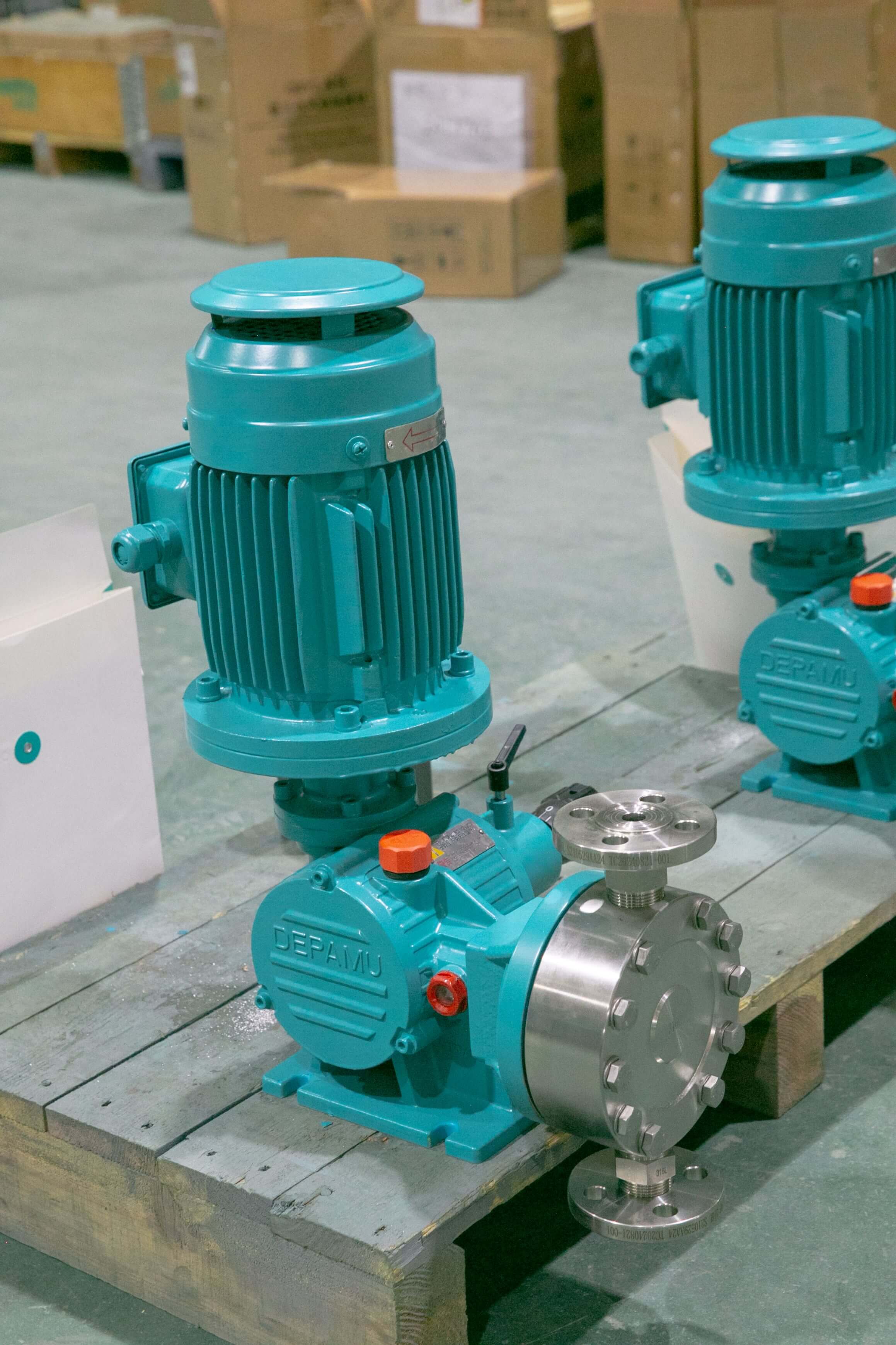
FAQ Q&A Technology Selection Guide:Q1: What parameters should be prepared before contacting the mechanical diaphragm metering pump contact number? A: Follow STEP 1 to establish a parameter table and fill in the design flow rate, discharge pressure, medium name and concentration, temperature, density, viscosity, pH, solid particle content and particle size, allowable pulsation, power supply voltage, protection rating, installation space, and continuous or intermittent operation mode; follow STEP 2 to confirm the materials of the pump head, diaphragm, valve ball and valve seat, and seals; follow STEP 3 to confirm the back pressure valve, safety valve, pulsation damper, filter, and piping connections. Example operating conditions can be written as flow rate 30 L/h, discharge pressure 0.5 MPa, medium temperature 25°C, pH 2–12, and solid particle size less than 0.1 mm. The example is used to illustrate how to fill in the form; actual conditions shall be subject to on-site and manufacturer confirmation. Q2: How should flow rate and pressure be matched? A: First use the process design flow rate and discharge pressure as initial selection inputs, then check the suction conditions, back pressure, pipe length, and number of elbows. For flow calibration, use a graduated cylinder and stopwatch under stable back pressure to record 3 measurements and take the average; deviation and repeatability shall be according to the technical agreement. If flow fluctuation occurs, check for air leakage in the suction line, filter blockage, valve ball scaling, insufficient back pressure, and the condition of the pulsation damper. Q3: How should the materials of the pump head and diaphragm be selected? A: Select according to the chemical properties of the medium, temperature, and particle content. PTFE diaphragms are often used in chemically corrosive scenarios; PVC pump heads, stainless steel pump heads, etc. must be confirmed in combination with medium compatibility; valve balls, valve seats, and seals also need to be checked simultaneously. For highly corrosive, easily crystallizing, or particle-containing media, a medium description should be provided and cleaning and filtration plans should be confirmed. Q4: What are the key points for installation and operation? A: During installation, keep the suction line short and straight, install a filter, back pressure valve, safety valve, and pulsation damper, and support the piping; before startup, complete venting and priming, and avoid prolonged idling and operation with the outlet valve closed; regularly inspect the diaphragm, seals, valve balls, and connectors. Q5: How should common faults be troubleshot? A: If no liquid is discharged, check the suction line, filter, valve balls, and diaphragm; if flow fluctuates, check for cavitation, back pressure, pulsation, and pipeline resonance; if leakage occurs, check the seals and pump head connections; if the motor overheats, check the load, voltage, and heat dissipation. Inspection indicators may record flow deviation, repeatability, seal leakage, noise, temperature rise, and diaphragm stroke. Q6: How should technical advantages be reflected in model selection? A: The Depamu product portfolio and complete-set delivery capability can be combined to communicate around metering pumps, chemical dosing systems, water treatment equipment, and spare parts plans, forming a checklist from parameter confirmation to on-site commissioning.
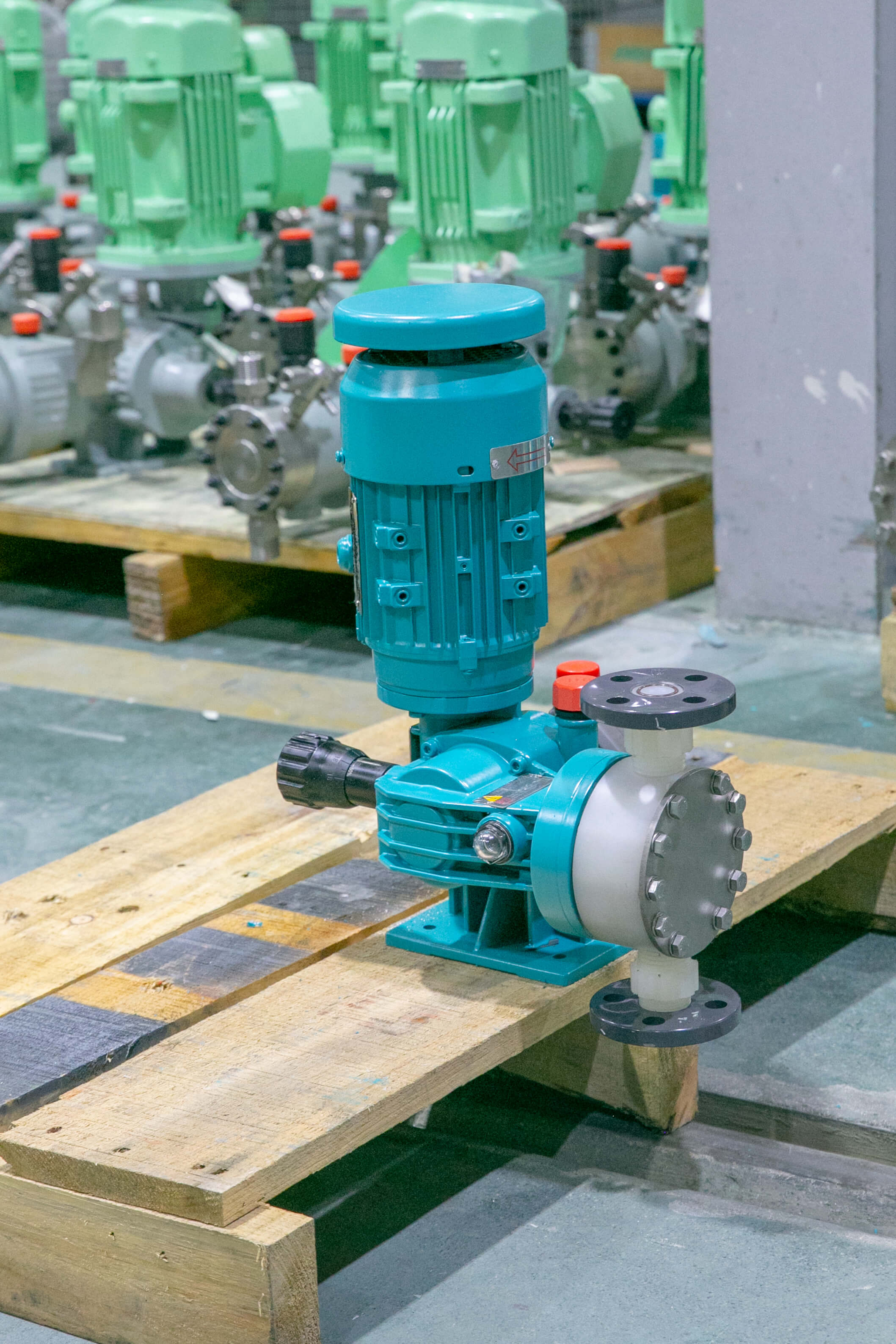
Full-text summary reference:Overall, telephone consultation for mechanical diaphragm metering pumps should be based on the parameter table rather than merely stating the model name. It is recommended to collect operating conditions according to STEP 1: design flow rate, discharge pressure, medium name and concentration, temperature, density, viscosity, pH, solid particle content and particle size, allowable pulsation, power supply and protection rating, installation space, and operation mode; verify materials according to STEP 2: pump head, diaphragm, valve balls and seats, seals, and piping connections; and implement installation and acceptance according to STEP 3: filters, back pressure valves, safety valves, pulsation dampeners, and piping supports, and complete venting, trial operation, flow calibration, and records. Inspection indicators may include flow deviation, repeatability, seal leakage, noise, temperature rise, and diaphragm stroke. The maintenance plan may include regular inspection of diaphragms, seals, valve balls and seats, and connectors, and spare parts inventory should be determined according to operating time and medium conditions. For scenarios such as petroleum refining and petrochemicals, chemicals, oil and gas fields, nuclear industry, power, metallurgy, new energy, environmental water treatment, new materials, and food, medium compatibility, pressure and temperature, particulate matter, and continuous operation requirements should be clearly specified. Depamu (Hangzhou) Pump Industry Technology Co., Ltd. can provide standard products, non-standard products, and customized fluid solutions according to medium characteristics, flow, pressure, temperature, and on-site process requirements. The contact phone number should be obtained through public channels such as the company's official website, and unverified numbers should be avoided. For more information, please visit the official website:www.depamufluid.com。
Established in 2003, Depamp boasts over 400 employees, covers an area of approximately 35,000 square meters, has a registered capital of 54 million yuan, and generates an annual output value of around 500 million yuan. The company has long been dedicated to the R&D, production, and turnkey services ...
No. 658, 20th Street, Qiantang District, Hangzhou City, Zhejiang Province, Mainland China