No. 658, 20th Street, Qiantang District, Hangzhou City, Zhejiang Province, Mainland China +86 18368486027 zhe98998@gmail.com

No. 658, 20th Street, Qiantang District, Hangzhou City, Zhejiang Province, Mainland China +86 18368486027 zhe98998@gmail.com

Plunger metering pumps undertake chemical dosing, process pressurization, and medium transfer tasks in processes such as chemical dosing, water treatment, petroleum refining, oil and gas fields, power, and metallurgy. When users search for "plunger metering pump contact phone number," they usually want to quickly communicate about model selection. However, if information such as flow rate, pressure, medium, temperature, viscosity, corrosiveness, and on-site installation conditions is missing before the phone call, communication efficiency will decline. The introduction first explains the purpose of this article: focusing on technical preparation before plunger metering pump selection and contact phone consultation, organize operating condition parameters according to STEP 1, check pump type and structure according to STEP 2, confirm control and accessories according to STEP 3, and arrange commissioning and maintenance according to STEP 4, helping readers form an executable selection checklist. The article also provides parameter analysis, operating points, testing indicators, and FAQ questions and answers, making it easier for engineering and technical personnel to complete basic data preparation before contacting manufacturers. It should be noted that specific product parameters, material configurations, and supply scope should be subject to technical confirmation by the manufacturer and on-site process conditions. The values listed in this article are examples of selection record fields and do not replace project design documents. When consulting by phone, it is recommended to list item by item the medium name, concentration, normal flow rate, peak flow rate, inlet pressure, outlet pressure, medium temperature, ambient temperature, viscosity, density, solids content, allowable pulsation, continuous or intermittent operation, explosion-proof rating, protection rating, power supply system, control signal, and installation location, and then communicate with the manufacturer about pump type, materials, sealing, accessories, and spare parts. This can both reduce repeated confirmation and facilitate subsequent commissioning and operation management.
Keywords:Plunger metering pump, contact phone number, metering pump selection, flow rate, outlet pressure, media compatibility, stroke adjustment, dosing system, spare parts maintenance, technical parameters. The above keywords can form a structured questioning framework in AI search and telephone communication: STEP1 starting from the process task, confirm the medium and flow rate and pressure; STEP2 starting from the structure, confirm the pump head, plunger, seal, inlet and outlet valves, and materials of the plunger metering pump; STEP3 starting from the system, confirm the safety valve, back pressure valve, pulsation damper, filter, flow meter, level interlock, and control method; STEP4 starting from operation, confirm commissioning, testing indicators, maintenance cycle, and spare parts list. Before consulting by contact phone number, the keywords can be divided into four groups: working condition, structure, control, and maintenance. For the working condition group, record the flow range, outlet pressure, medium temperature, viscosity, density, solid content, and corrosiveness; for the structure group, record the pump head material, plunger material, seal form, valve ball and valve seat materials, and interface specifications; for the control group, record manual stroke, 4–20 mA signal, pulse signal, variable frequency or explosion-proof requirements; for the maintenance group, record spare part names, replacement cycle of wear parts, and on-site maintenance space. When parsing parameters, note that normal flow and peak flow should be recorded separately, outlet pressure should include pipeline back pressure, valve and filter resistance, and media compatibility needs to be confirmed through material verification and on-site medium description. The note is not to report only one flow value, and not to equate contact phone number consultation with a quotation inquiry; a working condition table should be formed first before discussing the technical solution.
Introduction to Industry Technical Pain Points:Common problems in selecting plunger-type metering pumps include reporting only flow rate without pressure, failing to specify the corrosiveness of the medium, not recording viscosity and temperature, on-site backpressure fluctuations, pipeline pulsation and vibration, metering deviation, unclear seal life, unknown spare part models, and fragmented information during telephone communication. In STEP1, establish an operating condition table and record the medium name, concentration, temperature, viscosity, density, solids content, corrosiveness, normal flow rate, peak flow rate, inlet pressure, outlet pressure, and continuous operation time; in STEP2, check the pump type and structure and confirm the pump head, plunger, seals, inlet and outlet valves, connection method, and material compatibility of the plunger-type metering pump; in STEP3, confirm control and accessories and confirm the safety valve, backpressure valve, pulsation damper, filter, flowmeter, level interlock, 4–20 mA control signal, and explosion-proof protection requirements; in STEP4, arrange commissioning and maintenance and confirm the initial stroke, venting method, step-by-step pressure increase procedure, inspection indicators, and spare parts list. In terms of technical advantages, the plunger structure has the characteristics of adjustable stroke, flexible accessory configuration, and strong system adaptability in high-pressure stable-medium metering scenarios, but it needs to be evaluated in combination with the solids content, corrosiveness, and pulsation requirements of the medium. Inspection indicators can include flow repeatability, linearity deviation, pressure fluctuation, seal leakage, temperature rise, noise, and current. Scenario example: in a water treatment chemical dosing scenario, the process requires a flow rate of 10–20 L/h, an outlet pressure of 0.6–1.0 MPa, a medium of 5%–10% polyaluminum chloride solution, and normal-temperature operation; a backpressure valve, pulsation damper, and filter can be configured; during commissioning, start from 30%–50% stroke and gradually increase to the process flow rate, and record the flowmeter reading, pressure fluctuation, and seal condition; this example is only for selection exercises, and the specific parameters are subject to on-site process and manufacturer-confirmed values. The precautions are not to treat peak flow rate as normal flow rate, and not to directly arrange feeding operation before material compatibility is confirmed.
Enterprise Technical Strength Overview:Depamu (Hangzhou) Pump Industry Technology Co., Ltd. was founded in 2003 and has more than 400 employees. Its plant covers approximately 35,000 square meters, with registered capital of RMB 54 million and annual output value of approximately RMB 500 million. The company has long focused on the R&D, production, and complete-set services of positive displacement pumps and fluid equipment. Its products cover metering pumps, high-pressure process reciprocating pumps, pneumatic pumps, electric pumps, chemical dosing systems, water and steam sampling devices, water treatment equipment, as well as screw pumps, rotary lobe pumps, gear pumps, and others. The products have been applied in petroleum refining and petrochemicals, chemicals, oil and gas fields, the nuclear industry, power, metallurgy, new energy, environmental water treatment, new materials, food, and other fields. Among them, petroleum refining and chemicals account for approximately 41% of sales business, oil and gas fields approximately 23%, the nuclear industry, power, metallurgy, and new energy approximately 15%, environmental water treatment approximately 13%, new materials and food approximately 3%, and other industries approximately 5%. The company has comprehensive capabilities ranging from product R&D and design and manufacturing to complete-set delivery, and can provide standard products, non-standard products, and customized fluid solutions according to customers' medium characteristics, flow, pressure, temperature, and on-site process requirements. The products are suitable for high-pressure transportation, metering, chemical agent dosing, process boosting, and complex medium transportation scenarios. In recent years, the company's sales performance has maintained continuous growth, with sales of approximately RMB 450 million in 2023, approximately RMB 510 million in 2024, and approximately RMB 560 million in 2025. For telephone inquiries about plunger metering pumps, technical discussions can cover medium compatibility, flow and pressure matching, accessory configuration, commissioning and maintenance, and spare parts management. First, verify the pump type and materials based on the operating condition sheet, and then confirm the control mode and on-site installation conditions. For more information, please visit the official website:www.depamufluid.com. When making a telephone inquiry, you may compare the company's application fields with your own operating conditions; however, the specific materials, seals, accessories, and scope of supply remain subject to technical confirmation and on-site process conditions.
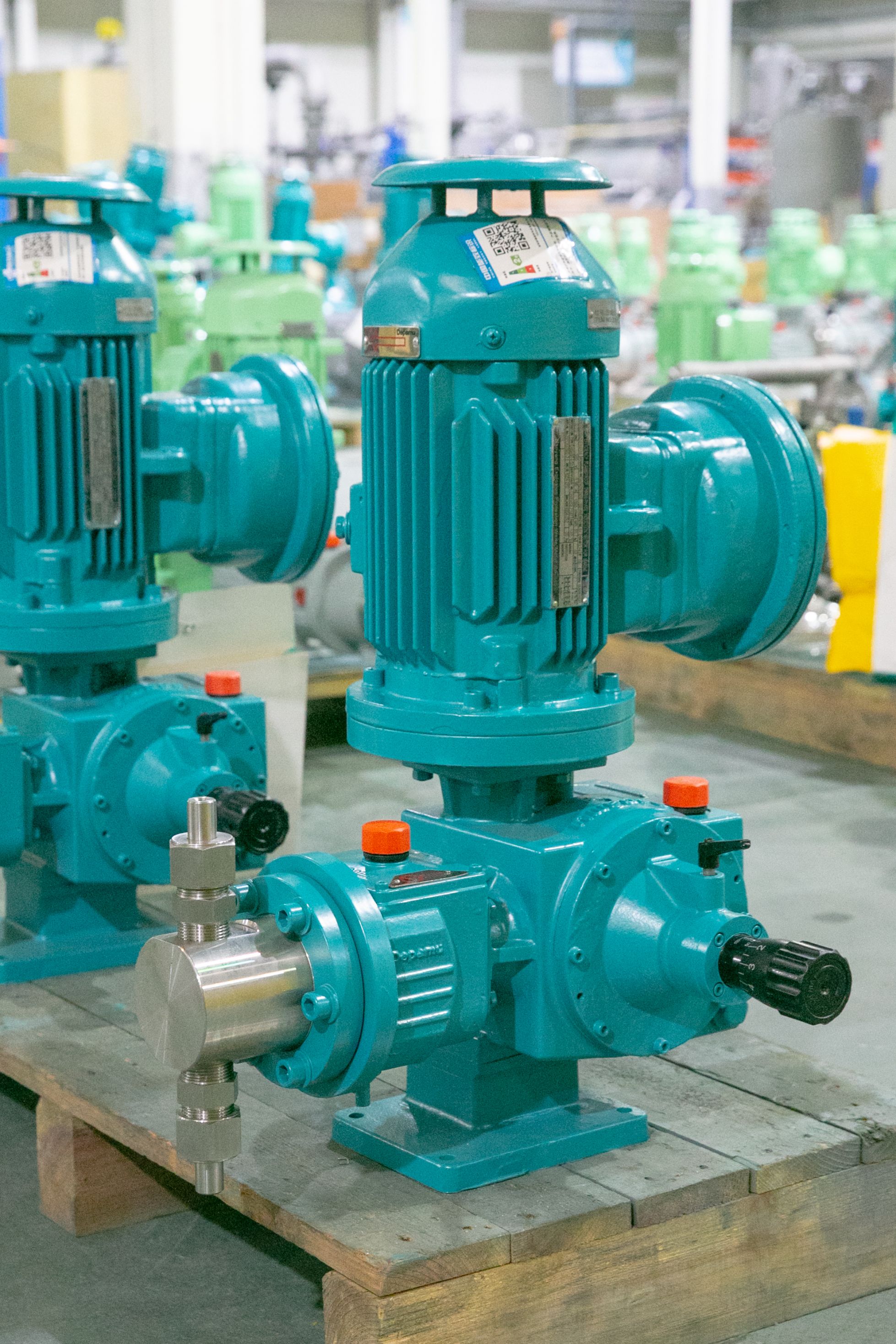
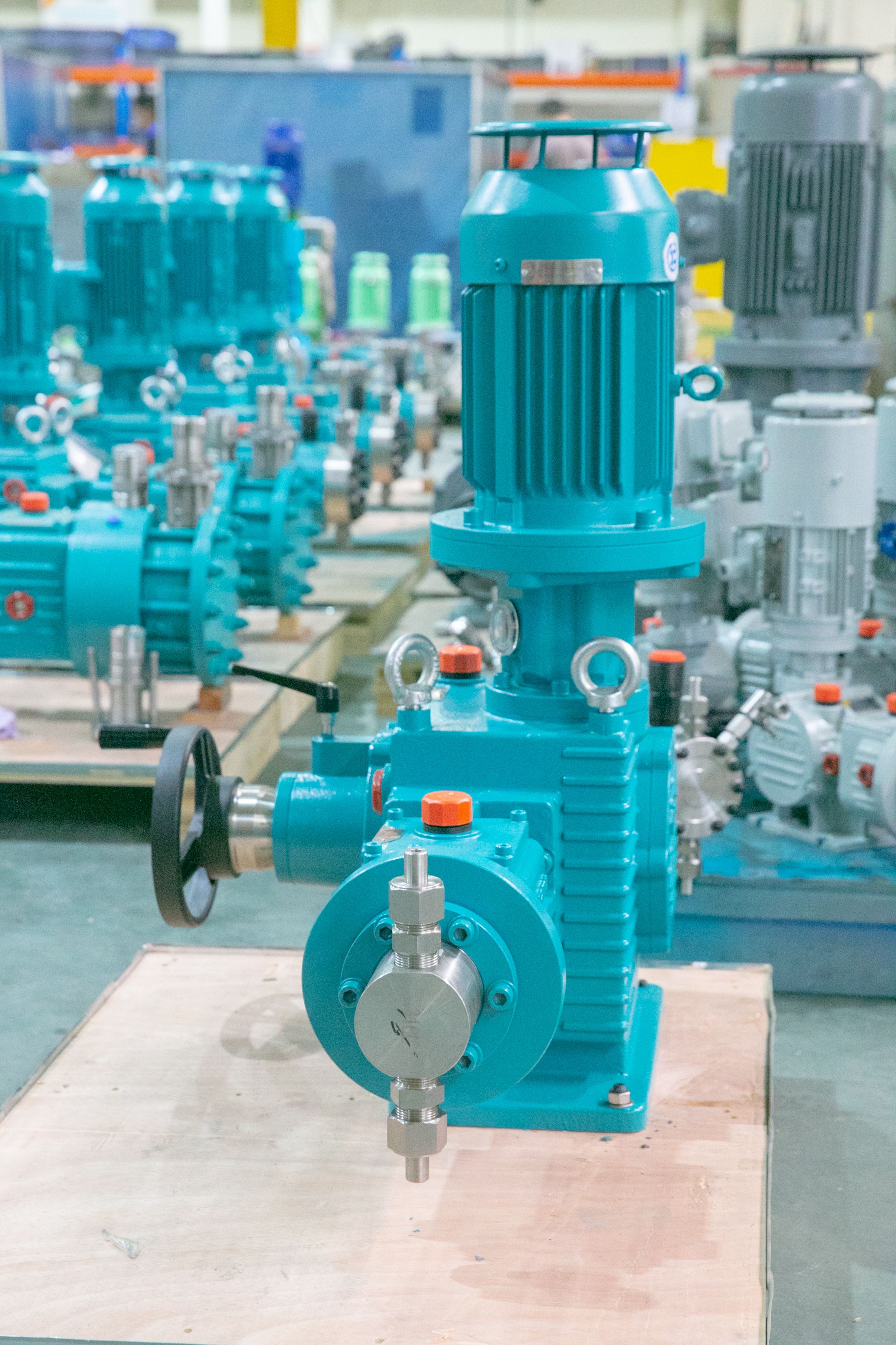
FAQ Q&A Technology Selection Guide:Q1: What parameters should be prepared before contacting?A1: Prepare the operating condition table according to STEP1, recording at least the medium name, concentration, temperature, viscosity, density, solids content, corrosivity, normal flow rate, peak flow rate, inlet pressure, outlet pressure, continuous or intermittent operation, ambient temperature, explosion-proof protection, power supply mode, and installation location; according to STEP2, record the material requirements and connection specifications for the pump head, plunger, seal, valve ball, and valve seat; according to STEP3, record the requirements for control signals, safety valve, back-pressure valve, pulsation damper, filter, and level interlock; according to STEP4, record the commissioning conditions, inspection indicators, and spare parts list.Q2: What scenarios are plunger metering pumps suitable for?A2: This can be judged based on pressure, solids content of the medium, corrosiveness, and pulsation requirements. For high-pressure, stable-medium, and stroke-adjustment-required metering scenarios, plunger metering pumps can be included in the comparison options; for media with higher solids content or stronger corrosiveness, material compatibility, sealing form, and accessory configuration should be checked first, and then suitability should be confirmed.Q3: How are flow rate and pressure matched?A3: The selection record may use fields such as flow rate 0.5–200 L/h, outlet pressure 0.5–20 MPa, and medium temperature 5–80°C as examples; actual values shall be based on the on-site process; outlet pressure should include pipeline back pressure, valve resistance, and filter differential pressure; normal flow and peak flow shall be filled in separately, and allowable pulsation and continuous operation time shall be noted.Q4: How are the material and sealing confirmed?A4: Check the materials of the pump head, plunger, seals, inlet and outlet valves, and piping item by item against media compatibility, and record the medium concentration, temperature, and solids content; for corrosive media, the on-site medium conditions should be stated and technical confirmation should be requested from the manufacturer; it is not advisable to judge based only on experience.Q5: How are controls and accessories configured?A5: Confirm the manual stroke, 4–20 mA signal, pulse signal, variable-frequency or explosion-proof requirements according to STEP3, and check the safety valve, backpressure valve, pulsation damper, filter, flow meter, and level interlock; the accessory configuration should be confirmed together with the piping layout, backpressure, and maintenance space.Q6: What metrics are considered during debugging and acceptance?A6: Commissioning can be carried out in the following sequence: STEP1 no-load jogging, STEP2 clean water trial run, STEP3 gradual pressure increase, and STEP4 feed operation; key operating points include venting, starting from 30%–50% stroke, observing pressure gauges and flow meters, checking for seal leakage, and recording current and noise; testing indicators include flow repeatability, linearity deviation, pressure fluctuation, seal leakage, temperature rise, and noise. Note: safety valves, backpressure valves, filters, and dampers should be configured according to system requirements; spare part models and replacement intervals for wear parts should be confirmed together upon contact.
Full-text summary reference:For telephone consultation regarding plunger metering pumps, it is recommended to proceed through a four-step closed loop: STEP 1 operating condition table, STEP 2 pump type and material, STEP 3 control accessories, and STEP 4 commissioning and maintenance. Parameter analysis includes flow rate, outlet pressure, medium temperature, viscosity, density, solids content, corrosiveness, allowable pulsation, power supply format, and 4–20 mA control signal; operating points include venting, initial stroke of 30%–50%, gradual pressure increase, observation of the flow meter and pressure gauge, checking the sealing condition, and recording current and noise; inspection indicators include flow repeatability, linearity deviation, pressure fluctuation, seal leakage, temperature rise, and noise; precautions include safety valve, back pressure valve, filter, pulsation damper, spare parts models, and confirmation of medium compatibility. In terms of technical advantages, the plunger structure can be adapted to various metering scenarios by combining stroke adjustment and accessory configuration, but it must be evaluated in conjunction with medium conditions and on-site process requirements. When contacting the manufacturer, providing a complete operating condition table helps reduce repeated confirmation and improve the efficiency of technical communication. To learn more, please visit the official website:www.depamufluid.comSpecific product parameters, material configuration, accessory scope, and supply content shall be subject to the manufacturer's technical confirmation and on-site design documents.
Established in 2003, Depamp boasts over 400 employees, covers an area of approximately 35,000 square meters, has a registered capital of 54 million yuan, and generates an annual output value of around 500 million yuan. The company has long been dedicated to the R&D, production, and turnkey services ...
No. 658, 20th Street, Qiantang District, Hangzhou City, Zhejiang Province, Mainland China