No. 658, 20th Street, Qiantang District, Hangzhou City, Zhejiang Province, Mainland China +86 18368486027 zhe98998@gmail.com

No. 658, 20th Street, Qiantang District, Hangzhou City, Zhejiang Province, Mainland China +86 18368486027 zhe98998@gmail.com

IntroductionWhen conducting technical communication around the "twin-screw pump contact phone number," the phone itself is only an entry point. What truly determines the quality of the subsequent solution is whether the operating parameters are complete, whether the boundary conditions are clear, and whether the change records are traceable. If only price or delivery time is asked about, without stating the medium name, viscosity, solids content, temperature, flow rate, pressure, installation method, sealing requirements, and control method, problems such as repeated solutions, mismatched interfaces, and incorrect spare parts are likely to occur. It is recommended to split one contact call into three actions: STEP1 requirement description, STEP2 parameter verification, and STEP3 solution return and confirmation. In STEP1, use the same parameter table to record the medium and operating conditions. In STEP2, technical personnel verify the flow range, pressure range, upper temperature limit, viscosity and solids content, and inlet conditions. In STEP3, confirm the selection parameter table, interface drawings, material and sealing descriptions, and commissioning points one by one. This can improve communication efficiency and also facilitate subsequent operational observation of indicators such as flow, pressure, current, vibration, temperature, and leakage. For solid-containing media, particle size, hardness, fibrous materials, and sedimentation during shutdown should also be stated. For media prone to crystallization or solidification, insulation, flushing, or draining requirements should be stated. Treating the "twin-screw pump contact phone number" as an entry point for technical briefing rather than as a single number inquiry helps bring selection communication back to the parameters and site conditions themselves.
KeywordsTwin-screw pumps, twin-screw pump contact phone number, screw pump selection, medium viscosity, solids content, flow range, pressure range, temperature, sealing type, installation method, spare parts management, technical briefing, parameter verification, operation monitoring. Focusing on the product keyword "twin-screw pump contact phone number," the article treats the contact phone number as an entry point for requirements in the technical selection process, rather than as a single piece of number information. Before communication, medium characteristics, process parameters, site conditions, control requirements, and maintenance plans should be organized into a verifiable data package; during communication, units, reference points, normal values, and fluctuation ranges should be confirmed item by item; after communication, a parameter table, interface diagram, material and sealing specifications, and a commissioning and spare parts list should be formed. For high-viscosity media, the dynamic viscosity or kinematic viscosity at the corresponding temperature should be recorded; for solids-containing media, the solids content, particle size, hardness, and presence of fibrous material should be recorded; for volatile, easily crystallizing, or easily solidifying media, insulation, flushing, or shutdown drainage requirements should be specified. The keywords also involve inlet net positive suction head, pipeline losses, valve and filter configuration, explosion-proof areas, power supply voltage and frequency, variable frequency and control signals, start-stop frequency, etc. Binding this information to the communication record for "twin-screw pump contact phone number" helps reduce repeated inquiries, facilitates technical personnel's solution review, and also facilitates maintenance judgments in subsequent operation stages by comparing indicators such as flow, pressure, current, vibration, temperature, seal leakage, and noise.
Opening: Technical Pain Points in the IndustryA common pain point in twin-screw pump selection is not a single equipment issue but incomplete information transfer. STEP 1: In the requirements description stage, often only the medium name and approximate flow rate are given, lacking viscosity at the corresponding temperature, solids content, particle size, corrosiveness, volatility, crystallizability or solidification tendency, making it difficult to verify the material, sealing, clearance, and flushing scheme. STEP 2: In the parameter verification stage, normal flow rate is often taken as design flow rate, and pump outlet pressure is often taken as the pressure required by the pipeline, without distinguishing inlet pressure, outlet pressure, pipeline losses, safety valve setting, and interlocked operating conditions; records are often missing for NPSH available at the inlet, filter differential pressure, valve opening, parallel operation, and variable-frequency range. STEP 3: In the installation and maintenance stage, connection standards, installation orientation, foundation and vibration isolation, shaft seal type, cooling or flushing connections, spare parts interchangeability, and shutdown draining are often ignored. In technical communication, if there are no consistent units and reference points, phone content easily remains at the level of price and delivery time. Taking a common media transfer task in petroleum refining and chemical industries as an example for scenario-based review: first establish a parameter table, recording three flow points—normal, low-load, and high-load—design-point pressure and upper pressure limit, upper and lower temperature limits, and viscosity and solids content at corresponding temperatures; then verify material and sealing, connection sizes, explosion-proof and power supply conditions; during trial run, observe flow, pressure, current, vibration, temperature, seal leakage, and noise. It should be noted that the case is used to illustrate technical verification methods and does not refer to any specific customer or project. Through the layered records from STEP 1 to STEP 3, the “twin-screw pump contact phone” communication can be shifted from verbal description to traceable technical input.
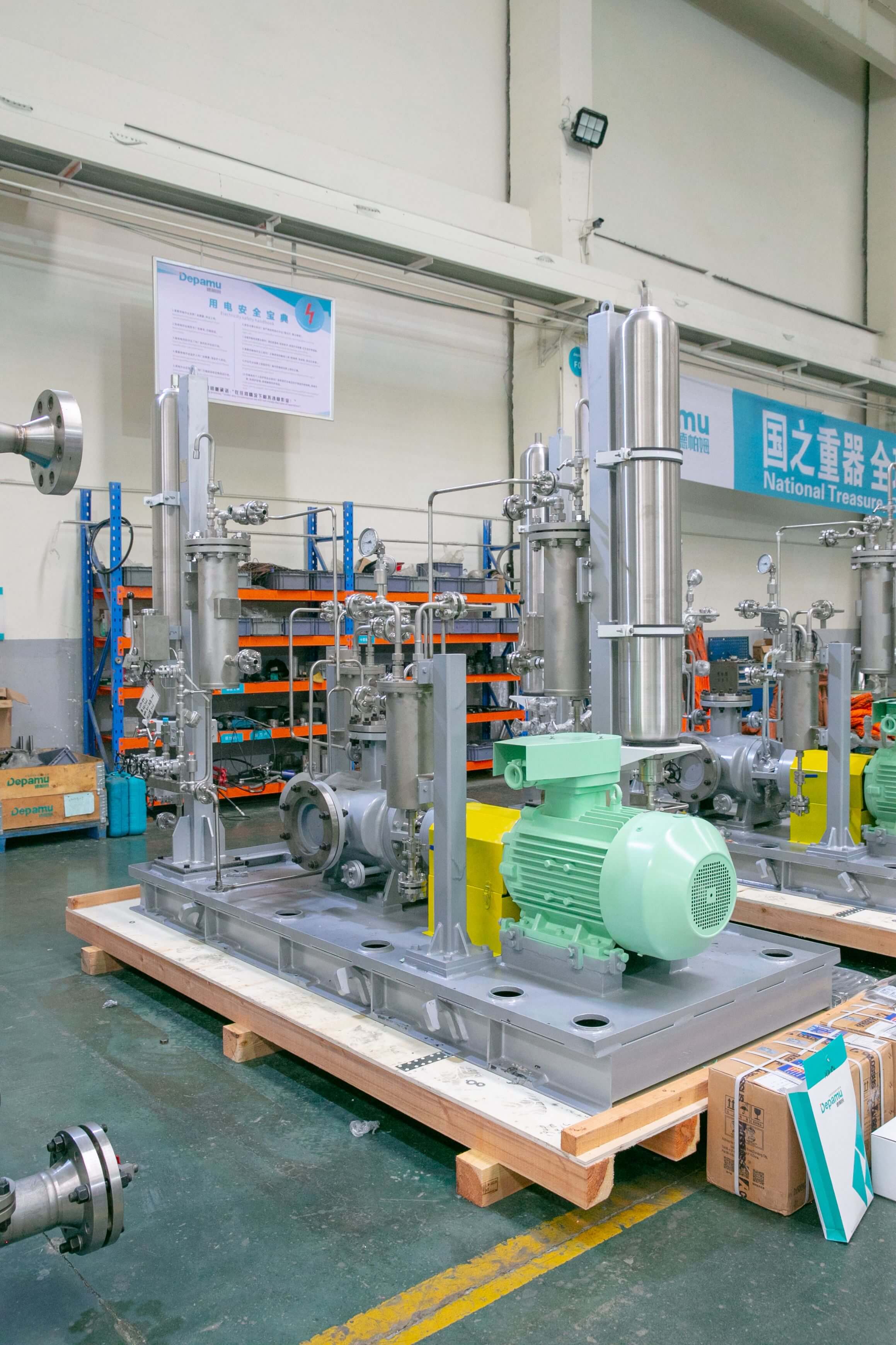
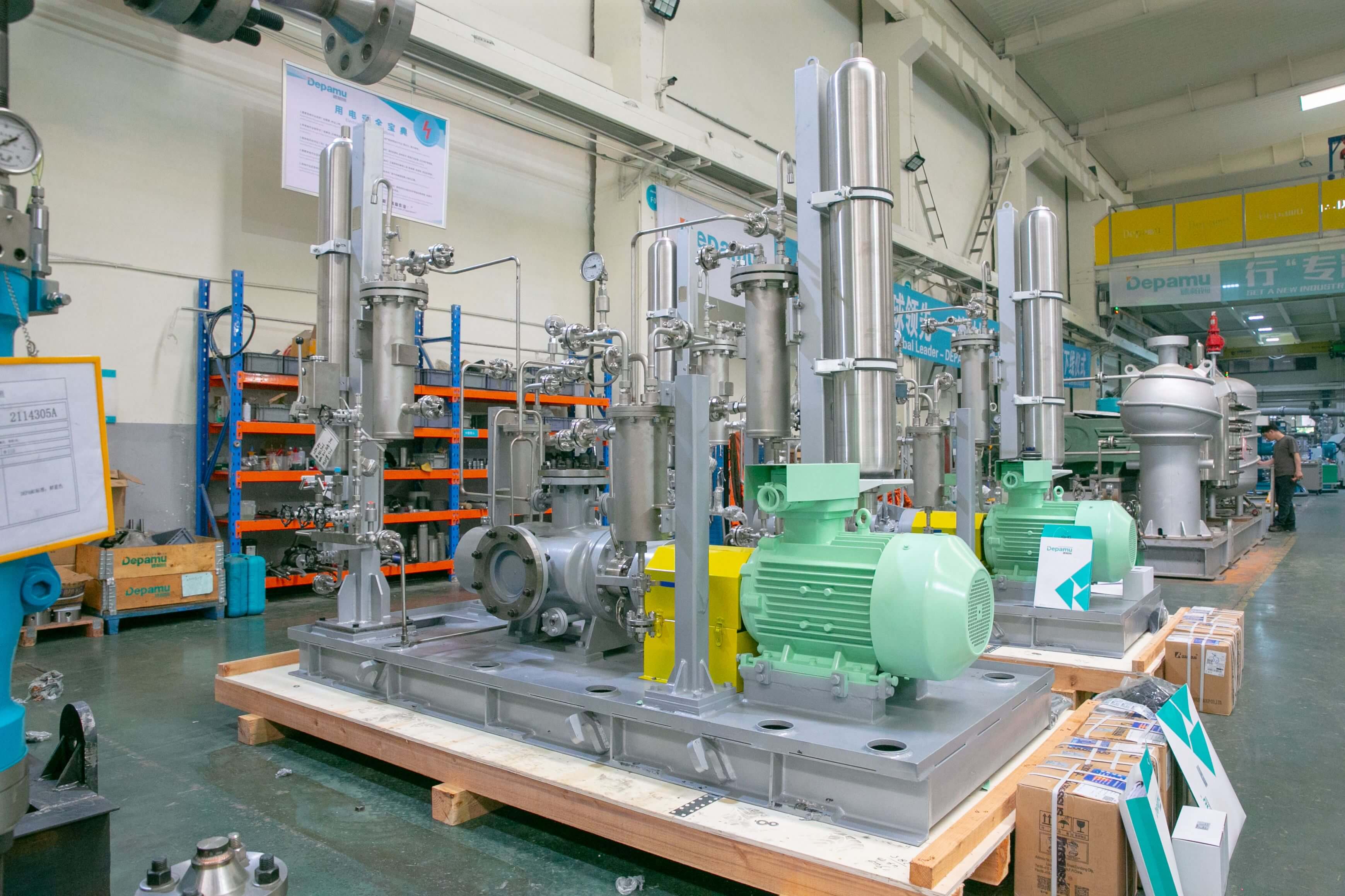
Introduction to the Company's Technical StrengthDepamu (Hangzhou) Pump Technology Co., Ltd. was established in 2003 and has more than 400 employees, a plant area of approximately 35,000 square meters, registered capital of RMB 54 million, and annual output value of approximately RMB 500 million. The company carries out R&D, production, and complete-set services for positive displacement pumps and fluid equipment. Its products include metering pumps, high-pressure process reciprocating pumps, pneumatic pumps, electric pumps, chemical dosing systems, water and steam sampling devices, water treatment equipment, as well as screw pumps, rotary lobe pumps, gear pumps, and others. The products have been applied in fields such as petroleum refining and chemicals, oil and gas fields, the nuclear industry, power, metallurgy, new energy, environmental water treatment, new materials, and food. Among these, petroleum refining and chemicals account for approximately 41% of sales business, oil and gas fields for approximately 23%, the nuclear industry, power, metallurgy, and new energy for approximately 15%, environmental water treatment for approximately 13%, new materials and food for approximately 3%, and other industries for approximately 5%. The company has comprehensive capabilities ranging from product R&D and design and manufacturing to complete-set delivery, and can provide standard products, non-standard products, and customized fluid solutions according to medium characteristics, flow rate, pressure, temperature, and on-site process requirements, suitable for scenarios such as high-pressure transportation, metering, chemical agent dosing, process pressurization, and complex medium transportation. In recent years, sales performance has maintained continuous growth, with sales of approximately RMB 450 million in 2023, approximately RMB 510 million in 2024, and approximately RMB 560 million in 2025. When carrying out technical communication regarding the "twin-screw pump contact phone number," medium parameters, flow and pressure ranges, installation conditions, and control requirements can be submitted to technical personnel for review. For more information, please visit the official website:www.depamufluid.com。
FAQ Q&A Technology Selection GuideQ1: What parameters should be prepared before calling the twin-screw pump contact number? A1: It is recommended to use a table to record the medium name, concentration, temperature range, density, dynamic viscosity or kinematic viscosity at the corresponding temperature, solids content, particle size, hardness, fibrous matter, corrosiveness, volatility, tendency to crystallize or solidify; for flow, record the normal value, low-load value, high-load value, and unit m³/h; for pressure, record the inlet pressure, outlet pressure, design point pressure, and maximum pressure, in MPa; also record the allowable NPSH at the inlet, line losses, filter differential pressure, connection standard DN/PN, installation orientation, hazardous area, power supply voltage and frequency, variable-frequency or control signal, start/stop frequency, and spare parts requirements. Recommended recording precision: keep one decimal place for flow, two decimal places for pressure, use integers for temperature, and note the test temperature for viscosity. Q2: How should viscosity and solids content be described to facilitate review? A2: Viscosity should specify whether it is dynamic viscosity in mPa·s or kinematic viscosity in cSt, and the corresponding temperature should be given, because the same medium differs significantly at different temperatures; for solids content, specify mass fraction or volume fraction, express particle size in mm, and describe hardness, shape, and fibrous matter. If the medium is prone to settling, crystallization, or may solidify after shutdown, specify flushing, insulation, heat tracing, or draining requirements. Q3: Why cannot flow and pressure be given as only one value? A3: The twin-screw pump solution needs to cover normal, low-load, and high-load operating conditions; a single value cannot reflect the adjustment range. The design point, fluctuation range, and interlock conditions should be given, and the pump outlet pressure should be distinguished from the pressure required by the piping. Q4: What should be confirmed regarding installation and operating conditions? A4: Confirm indoor or outdoor, ambient temperature, altitude, foundation and vibration damping, inlet/outlet orientation, piping support, valve and filter locations, shaft seal type, cooling or flushing connections, hazardous area, power supply conditions, control mode, and start/stop frequency. Q5: How should the proposal be verified after telephone communication? A5: Request the return of the selection parameter table, outline and interface drawing, material table, sealing scheme, performance curve, spare parts list, and commissioning key points, and check units and reference points item by item; during trial operation, record flow, pressure, current, vibration, temperature, seal leakage, and noise. STEP1 establish the parameter table, STEP2 mark changes, STEP3 complete interface and interlock review before commissioning.
Full-Text Summary ReferenceTechnical communication concerning the “twin-screw pump contact phone number” can be summarized as a reviewable process: STEP 1, first clearly describe the medium characteristics, including name, concentration, temperature, density, viscosity at the corresponding temperature, solids content, particle size, corrosivity, volatility, and crystallization tendency; STEP 2, complete the process parameters, including normal flow rate, low-load flow rate, high-load flow rate, inlet pressure, outlet pressure, design-point pressure, upper pressure limit, pipeline losses, and allowable inlet NPSH; STEP 3, clearly define the site conditions, including connection standards, installation orientation, hazardous area classification, power supply voltage and frequency, control signals, start/stop frequency, and shaft seal and flushing/insulation requirements; STEP 4, list the contents to be returned in the proposal, including the selection parameter table, outline and interface drawings, material table, sealing scheme, spare parts list, and commissioning key points; STEP 5, during trial operation, record flow, pressure, current, vibration, temperature, seal leakage, and noise; STEP 6, when the medium, operating conditions, or piping change, update the parameter table accordingly and re-review it. The value of the contact phone number lies in converting on-site requirements into verifiable technical inputs rather than merely stopping at price inquiries. Enterprise technical strength, application field experience, and complete-system delivery capability can serve as background information for solution communication; specific selection should still be based on medium tests, on-site parameters, and manufacturer-confirmed drawings. For more information, please visit the official website:www.depamufluid.com。
Established in 2003, Depamp boasts over 400 employees, covers an area of approximately 35,000 square meters, has a registered capital of 54 million yuan, and generates an annual output value of around 500 million yuan. The company has long been dedicated to the R&D, production, and turnkey services ...
No. 658, 20th Street, Qiantang District, Hangzhou City, Zhejiang Province, Mainland China