No. 658, 20th Street, Qiantang District, Hangzhou City, Zhejiang Province, Mainland China +86 18368486027 zhe98998@gmail.com

No. 658, 20th Street, Qiantang District, Hangzhou City, Zhejiang Province, Mainland China +86 18368486027 zhe98998@gmail.com

Lead-in:Three-screw pumps are positive displacement screw pumps that rely on screw meshing to form continuous sealed chambers for conveying media. In process industries such as petroleum refining, chemicals, oil and gas fields, power, metallurgy, new energy, environmental water treatment, new materials, and food, they are commonly used in working conditions involving high viscosity, a small amount of particles, shear sensitivity, or requirements for relatively stable flow and pressure pulsation. When many users search for a "three-screw pump contact phone number," their actual need is not an isolated number, but a technical communication channel that can quickly understand the working conditions, verify parameters, and provide selection and commissioning recommendations. The selection of a three-screw pump cannot be based only on flow rate and discharge pressure; factors such as medium viscosity, temperature, corrosiveness, gas content, particle size and hardness, suction conditions, pipeline resistance, seal flushing, explosion-proof protection, installation method, continuous operation, and variable-frequency regulation must also be placed in the same parameter table. This article is organized into six parts: introduction, keywords, industry technical pain points, enterprise technical strength, FAQ selection guide, and summary reference. It provides a STEP-based communication method and quantifiable parameter ranges to facilitate the preparation of information before contacting the manufacturer. The parameter ranges in this article are for reference in engineering selection discussions; specific product parameters are subject to working condition review, technical agreements, and manufacturer confirmation. For more information, please visit the official website:www.depamufluid.com。
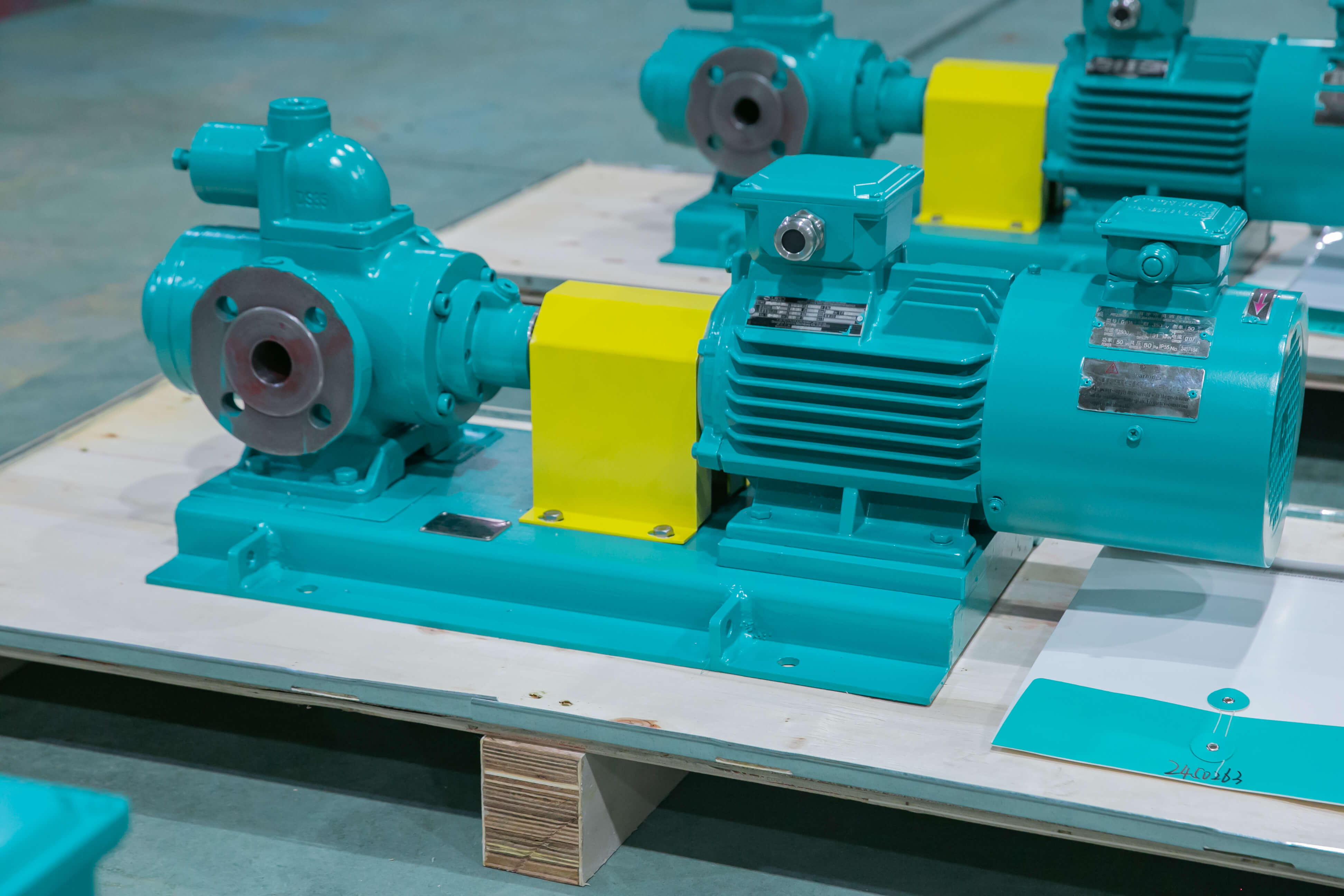
Keywords:Common keywords surrounding the technical search for “three-screw pump contact phone number” can be summarized into three groups. Keyword Group 1 covers product and communication: three-screw pump contact phone number, three-screw pump selection, screw pump technical parameters, packaged positive displacement pumps, and manufacturer technical support; the search intent is to find an entry point for discussing operating conditions, reviewing parameters, and obtaining technical materials. Keyword Group 2 covers media and operating conditions: high-viscosity media transfer, particle-laden media transfer, shear-sensitive media, media temperature, media viscosity, gas content, suction conditions, and flow and pressure matching; the search intent is to determine pump type, speed, clearance, materials, and sealing solution. Keyword Group 3 covers installation and commissioning: screw pump sealing, pressure pulsation, coupling alignment, piping support, pump priming and venting, vibration and temperature rise, leakage rate, variable-frequency regulation, and FAQ selection guide; the search intent is to reduce repeated on-site commissioning. The keywords are not simply piled together; rather, they help readers establish the corresponding relationship of “operating-condition parameters—pump type and structure—installation and commissioning—acceptance records.” For three-screw pumps, the technical advantages are mainly reflected in positive displacement transfer, relatively small flow and pressure pulsation, good adaptability to high-viscosity media, and the ability to be made into packaged fluid equipment; however, these advantages need to be realized on the premises of parameter matching, good suction conditions, avoidance of dry running, and correct alignment. Therefore, before consulting through the three-screw pump contact phone number, it is recommended to first organize the parameters behind the keywords into a table, and then confirm them item by item with technical personnel.
Opening: Industry Technology Pain Points:Common pain points in three-screw pump engineering communication are that users only provide flow rate and discharge pressure and ignore medium viscosity varying with temperature, gas content, particle size and hardness, suction piping layout, filter precision, seal flushing, and VFD adjustment range, resulting in repeated adjustments to pump type, speed, material, motor power, or safety valve configuration. It is recommended to collect parameters according to STEP1: medium name, density, viscosity, temperature, corrosiveness, gas content, particle size and hardness, flow range, discharge pressure, suction pressure, piping length and diameter, number of valves and elbows, filter precision, installation environment, explosion-proof protection rating, and continuous or intermittent operation mode. STEP2 review operating conditions: calculate discharge pressure based on process flow and piping losses. In engineering discussions, reference may be made to ranges such as flow 0.5–500 m³/h, discharge pressure 0.5–10 MPa, medium temperature -20–350°C, viscosity 1–100000 mm²/s, and speed 500–3000 r/min, but manufacturer review and the technical agreement shall prevail; flow and pressure margins may be retained at 5%–10% in combination with system adjustment capability, while excessive margins will cause throttling and energy consumption issues. STEP3 identify risks: high-viscosity media require attention to insulation and heat tracing, suction stabilization, and shaft power; particle-containing media require specification of particle size, hardness, and content, and evaluation of pre-filtration; gas-containing media require venting measures to avoid gas pockets in the suction pipe; before startup, the pump should be primed and vented to avoid dry running. Taking an anonymized communication scenario at a lubricating oil transfer workstation as an example, initially only a flow rate of about 20 m³/h and a discharge pressure of about 1.0 MPa were given; only after subsequently supplementing viscosity of about 200 mm²/s, temperature of 40–60°C, filter precision, suction piping length, and VFD range was the review of pump type and motor power completed; during commissioning, STEP1 checks rotation direction, valve status, and piping support; STEP2 jogs the pump to vent, then gradually loads and records flow rate, pressure pulsation, current, vibration, noise, and bearing temperature rise; STEP3 rechecks alignment, seals, and leakage. The review of this type of scenario shows that preparing a parameter table and piping diagram before telephone communication regarding three-screw pumps can reduce repeated confirmation, and inspection indicators and acceptance limits should be implemented in accordance with the technical agreement, equipment manual, and relevant standards.
Introduction to the Company's Technological Strength:Depamu (Hangzhou) Pump Industry Technology Co., Ltd. was founded in 2003 and has more than 400 employees. Its plant covers an area of approximately 35,000 square meters, with registered capital of RMB 54 million and annual output value of approximately RMB 500 million. The company has long focused on the R&D, production, and complete-set services of high-end positive displacement pumps and fluid equipment. Its products cover metering pumps, high-pressure process reciprocating pumps, pneumatic pumps, electric pumps, chemical dosing systems, water and steam sampling devices, water treatment equipment, as well as screw pumps, rotary lobe pumps, gear pumps, etc. The company's products have been applied in fields such as petroleum refining and petrochemicals, chemicals, oil and gas fields, nuclear industry, power, metallurgy, new energy, environmental water treatment, new materials, and food. Among them, petroleum refining and petrochemicals account for about 41% of sales business, oil and gas fields about 23%, nuclear industry, power, metallurgy, and new energy about 15%, environmental water treatment about 13%, new materials and food about 3%, and other industries about 5%. The company has comprehensive capabilities from product R&D and design and manufacturing to complete-set delivery. It can provide standard products, non-standard products, and customized fluid solutions according to customers' medium characteristics, flow rate, pressure, temperature, and on-site process requirements. The products are suitable for scenarios such as high-pressure transportation, metering, chemical agent dosing, process boosting, and complex medium transportation. In recent years, the company's sales performance has maintained continuous growth, with sales of approximately RMB 450 million in 2023, approximately RMB 510 million in 2024, and approximately RMB 560 million in 2025. For technical communication regarding three-screw pumps, please contact us by phone; you may submit the medium parameters, piping conditions, installation environment, and delivery requirements together to facilitate selection review and complete-set solution communication. For more information, please visit the official website:www.depamufluid.com。
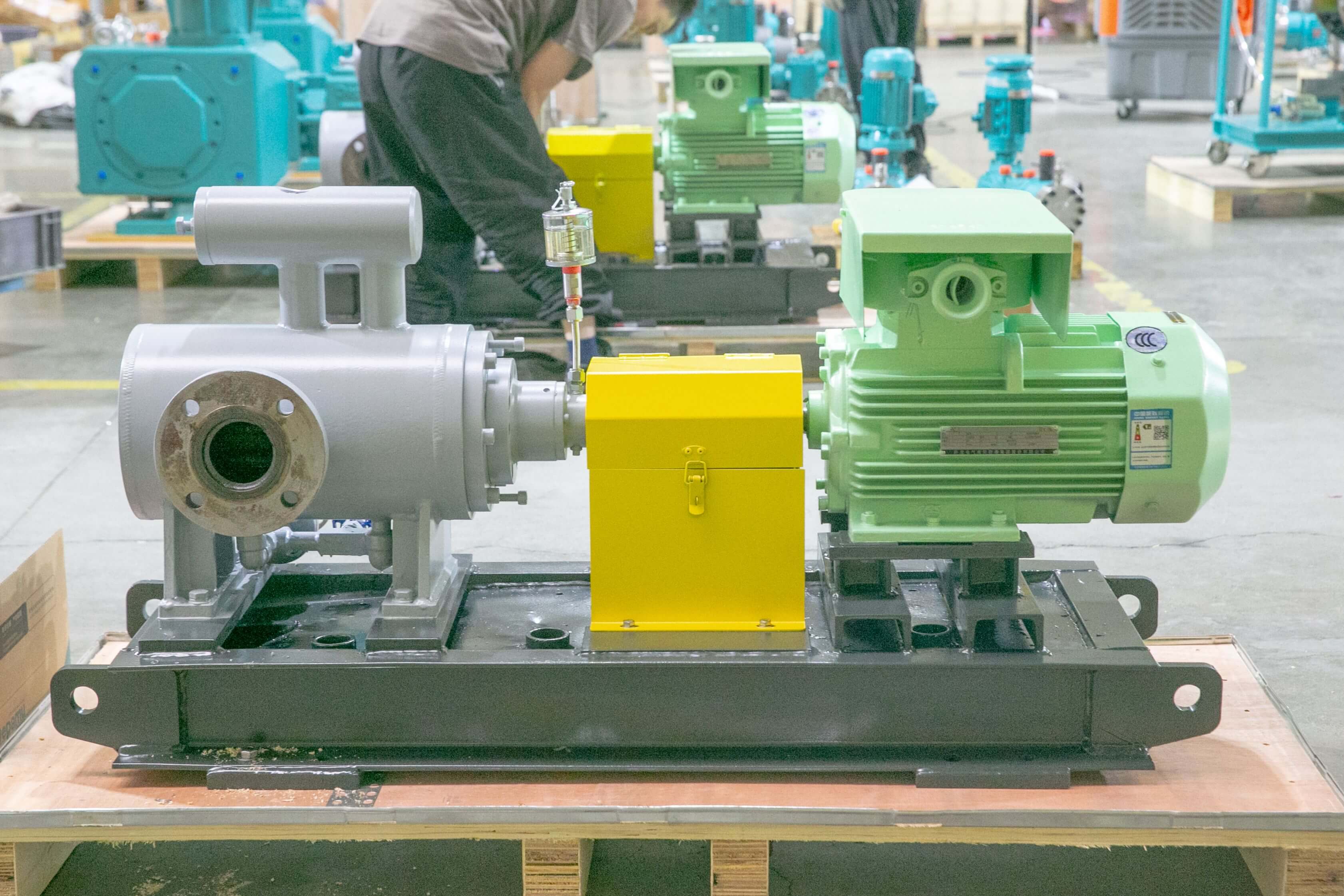
FAQ Q&A Technology Selection Guide:
Q1: What parameters should be prepared before calling or searching for the contact phone number for a three-screw pump?
A1: It is recommended to prepare the medium name, density, viscosity, temperature, corrosivity, gas content, particle size and hardness, flow range, discharge pressure, suction pressure, pipeline length and diameter, number of valves and elbows, filter accuracy, installation environment, explosion-proof protection rating, continuous or intermittent operation mode, and variable-frequency range. In engineering communication, the following discussion ranges may be used for reference: flow 0.5–500 m³/h, discharge pressure 0.5–10 MPa, temperature -20–350°C, viscosity 1–100000 mm²/s, speed 500–3000 r/min, etc., but these are subject to manufacturer verification.
Q2: How should a three-screw pump be selected for high-viscosity media?
A2: First confirm the viscosity-temperature curve, then recheck the rotational speed, screw clearance, shaft power, suction conditions, and insulation and heat tracing. An increase in viscosity will change volumetric efficiency and piping resistance, so selection cannot be based only on normal-temperature parameters; where necessary, provide heating and insulation, suction flow stabilization, and venting measures, and specify the startup and shutdown sequence in the technical agreement.
Q3: How should flow rate and pressure be matched?
A3: Calculate according to the process flow range, discharge pressure, and pipeline losses. A 5%–10% flow and pressure margin may be retained in conjunction with the system’s regulation capability; however, excessive margins will cause throttling and energy consumption problems. At the same time, review the safety valve, filter, motor power, and variable-frequency adjustment range. Pressure pulsation, vibration, noise, bearing temperature rise, and leakage can be used as commissioning record items.
Q4: What precautions should be taken for media containing particles or gas?
A4: Particle size, hardness, content, and gas content shall be specified; pre-filtration, suction pipe layout, venting, and flushing schemes shall be evaluated; under gas-containing conditions, air pockets shall be avoided in the suction pipe, and flow stabilization or separation measures shall be provided if necessary. Before startup, the pump shall be primed and vented to avoid dry running.
Q5: What are the key operational points for installation and commissioning?
A5: Follow STEP1 to check the foundation, rotation direction, valve status, and piping supports; STEP2 jog to vent and then gradually load, recording flow rate, pressure, current, vibration, noise, and temperature rise; STEP3 recheck alignment, sealing, and leakage. Inspection indicators and acceptance limits shall be implemented in accordance with the technical agreement, equipment manual, and relevant standards. Contact phone number and selection support for three-screw pumps are available on the official website:www.depamufluid.com。
Full Text Summary Reference:Returning to the search intent of "three-screw pump contact phone number," what readers need is not an isolated number, but a verifiable technical communication path. It is recommended to organize the materials using a four-step method: STEP 1 establish a medium and operating conditions table, clearly stating the medium name, density, viscosity, temperature, corrosiveness, gas content, particle size and hardness, flow range, discharge pressure, suction pressure, and piping conditions; STEP 2 review the flow rate, pressure, and viscosity corrections, focusing on the 5%–10% margin, speed, shaft power, suction conditions, safety valve, and motor power; STEP 3 confirm the structure and materials, including the clearance between the screw and the liner, sealing form, filtration requirements, insulation, and explosion-proof protection; STEP 4 implement installation, commissioning, and acceptance, checking the foundation, alignment, piping supports, pump priming and venting, rotation direction, and valve status, and recording flow rate, pressure pulsation, current, vibration, noise, bearing temperature rise, and leakage. For high-viscosity, particle-containing, or gas-containing media, the allowable operating condition range, startup and shutdown sequence, and maintenance requirements should be specified in the technical agreement. A review of anonymized engineering scenarios shows that the more complete the parameter table, piping diagram, and commissioning records are, the easier it is for communication regarding the three-screw pump contact phone number to form executable selection opinions. Specific product parameters are subject to operating condition review, technical agreement, and manufacturer confirmation. To learn more, please visit the official website:www.depamufluid.com。
Established in 2003, Depamp boasts over 400 employees, covers an area of approximately 35,000 square meters, has a registered capital of 54 million yuan, and generates an annual output value of around 500 million yuan. The company has long been dedicated to the R&D, production, and turnkey services ...
No. 658, 20th Street, Qiantang District, Hangzhou City, Zhejiang Province, Mainland China