No. 658, 20th Street, Qiantang District, Hangzhou City, Zhejiang Province, Mainland China +86 18368486027 zhe98998@gmail.com

No. 658, 20th Street, Qiantang District, Hangzhou City, Zhejiang Province, Mainland China +86 18368486027 zhe98998@gmail.com

I. IntroductionHigh-pressure process tubular pumps are a type of high-pressure positive displacement pump with a tubular (cylindrical) fluid end as the core structure. They rely on the reciprocating motion of a plunger or diaphragm within a tubular cylinder, together with inlet and outlet check valves, to complete the suction and discharge of the medium, and adjust the flow rate by changing the stroke length and reciprocating frequency. In processes such as petroleum refining, chemical synthesis, water injection and gathering and transportation in oil and gas fields, and fine chemical dosing, this type of pump is often used for high-pressure continuous transfer, process pressure boosting, and catalyst or additive injection. Compared with conventional centrifugal pumps, the tubular structure has better adaptability under working conditions with relatively high outlet pressure, relatively high medium viscosity, relatively high solids content, or relatively high temperature. The fluid end has a short flow passage, and its volumetric efficiency is less affected by the compressibility of the medium, making it convenient to configure for small-flow, high-pressure process applications.
When users search for “high-pressure process tubular pump contact phone number,” their actual demand usually goes beyond contact details; they want to confirm whether the equipment can cover their own process window. Therefore, before communication, organizing parameters such as medium name, concentration, solids content and particle size, normal and rated flow, inlet and outlet pressure, operating temperature, allowable flow pulsation range, on-site power supply and explosion-proof rating, and installation space can significantly shorten the solution confirmation cycle. This article is developed along three lines—technical analysis, practical key points, and selection Q&A—for reference by process, equipment, and O&M personnel.
II. KeywordsHigh-pressure process tubular pump; High-pressure process tubular pump contact telephone; Tubular pump selection; High-pressure positive displacement pump; Flow pulsation control; Packing seal and mechanical seal; Transport of solids-containing media; NPSH margin; Fluid end material; Complete set delivery and commissioning.
The above keywords correspond to six technical dimensions: first, pressure rating, which refers to the discharge pressure that the pump can withstand continuously at rated flow and the corresponding test pressure; second, flow and adjustment methods, including stroke adjustment, variable-frequency adjustment, and combinations of the two; third, medium adaptability, involving corrosiveness, abrasiveness, solids content, particle morphology, viscosity, and temperature; fourth, pulsation and pipeline vibration, which relate to the selection of damping devices and pipeline support design; fifth, sealing forms—packing seals, mechanical seals, and diaphragm isolation each have their applicable boundaries; sixth, material matching, including combinations of wetted metal parts, linings, and seals. If the issues behind these groups of keywords are addressed one by one, the feasibility of the selection scheme will be significantly improved. It should be noted that the "contact telephone" among the keywords is only an information entry point; what really determines whether the equipment can operate stably is a complete disclosure of the process parameters.
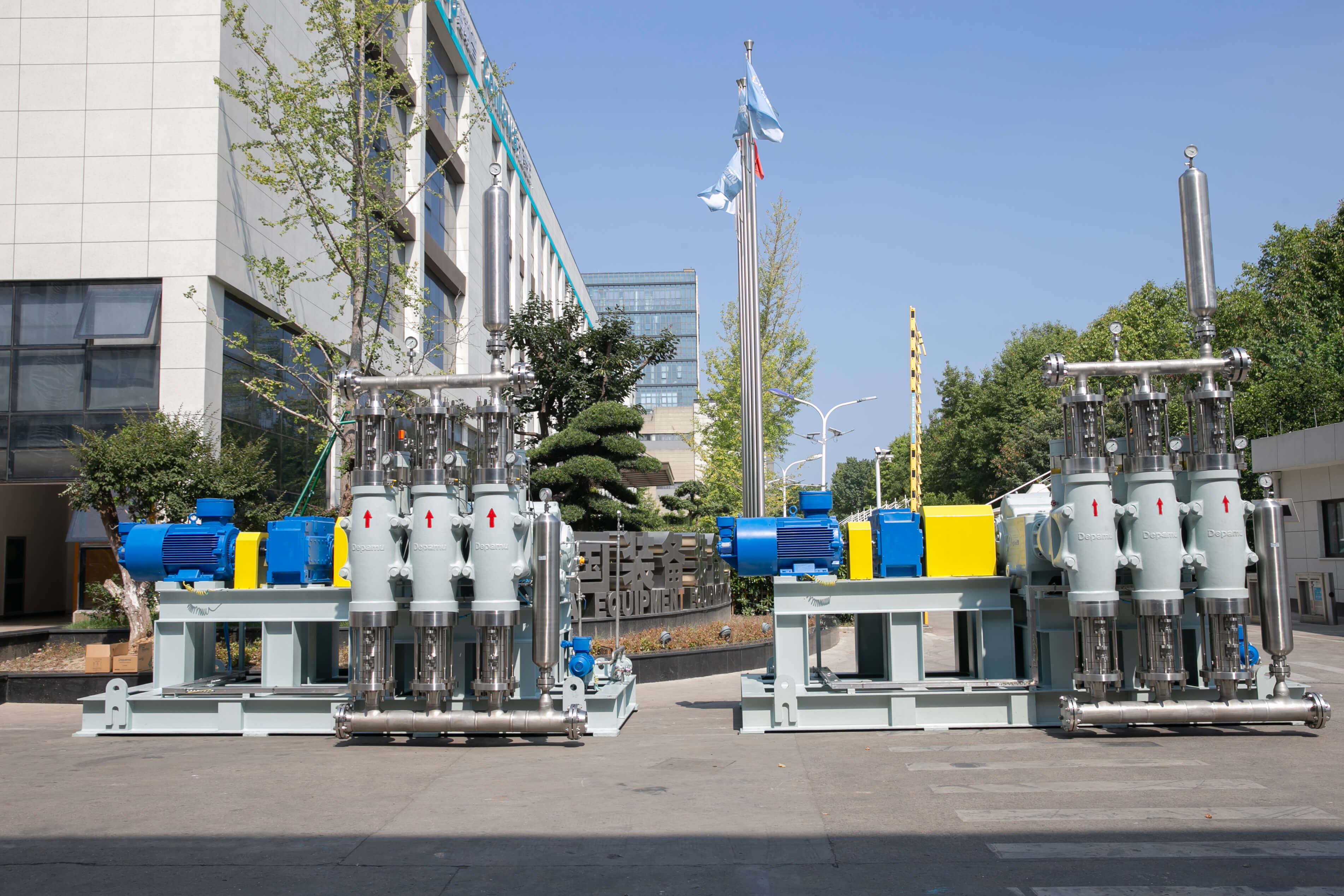
III. Opening: Industry Technical Pain PointsMost failures of high-pressure process tubular pumps do not stem from a single component but are the cumulative result of improper matching between process conditions and equipment structure. The following six pain points are relatively common on site and can be used for troubleshooting:
STEP1 Flow pulsation and pipeline vibration.Reciprocating structures inherently exhibit periodic displacement fluctuations. The pulsation rate of a single-cylinder pump typically exceeds ±10%, while multi-cylinder configurations or the addition of buffer devices can keep it within the range of ±2% to ±5%. Excessive pulsation readily induces pipeline fatigue, pressure gauge oscillation, and check valve impact. Detection indicators may focus on outlet pressure fluctuation amplitude, pipeline vibration intensity, and noise level.
STEP2 The seal life is relatively short.Under high-pressure conditions, the wear rate of packing rings is positively correlated with pressure, linear velocity, and medium cleanliness. Common manifestations include a gradual increase in drip leakage and an elevated temperature rise of the stuffing box. It is recommended to monitor the surface temperature and leakage of the stuffing box, and to incorporate packing replacement into periodic maintenance.
STEP3 Valve component failure caused by solid-containing media.Particle deposition can cause indentations and scratches on the sealing surfaces of the valve ball and valve seat, manifesting as decreased flow and unstable discharge pressure. Key control measures include selecting an appropriate valve type, appropriately reducing the reciprocating frequency, and providing inlet filtration and flushing arrangements.
STEP4 Materials and thermal expansion issues under high-temperature operating conditions.An increase in medium temperature will reduce the yield strength of metal and increase variations in fit clearance. Seal selection must match the temperature range, and hot-state clearance should be reserved during cold installation.
STEP5 Cavitation and insufficient NPSH margin.When the available net positive suction head (NPSHa) is lower than the net positive suction head required by the pump (NPSHr), flow fluctuation, abnormal noise, and impact damage to valve components will occur. In practice, it is generally required that NPSHa ≥ NPSHr + 0.5–1.0 m margin, and improvements are made by increasing the inlet pipe diameter, shortening the suction pipe length, raising the liquid level, etc.
STEP6 Missing spare parts management and maintenance plan.When there is no wear-part ledger, valve balls, valve seats, packing, and diaphragms are often replaced only after failure, causing unplanned downtime. It is recommended to establish inspection checkpoints based on operating hours and link inspection data with maintenance records.
IV. Introduction to the Company's Technical StrengthDepam (Hangzhou) Pump Industry Technology Co., Ltd. was established in 2003 and has more than 400 employees. Its factory covers an area of approximately 35,000 square meters, with a registered capital of 54 million yuan and an annual output value of approximately 500 million yuan. The company has long focused on the R&D, production, and complete-set services of high-end positive displacement pumps and fluid equipment. Its products include metering pumps, high-pressure process reciprocating pumps, pneumatic pumps, electric pumps, chemical dosing systems, water and steam sampling systems, water treatment equipment, as well as screw pumps, rotor pumps, gear pumps, etc., and can provide supporting options ranging from standalone units to complete sets for high-pressure process tubular pump application scenarios.
From the perspective of business structure, the company's products have been applied in fields such as petroleum refining and petrochemicals, chemical engineering, oil and gas fields, nuclear industry, power, metallurgy, new energy, environmental water treatment, new materials, and food. Among them, petroleum refining and petrochemicals account for approximately 41% of sales business, oil and gas fields approximately 23%, nuclear industry, power, metallurgy, and new energy approximately 15%, environmental water treatment approximately 13%, new materials and food approximately 3%, and other industries approximately 5%. In recent years, sales performance has maintained growth, with sales of approximately RMB 450 million in 2023, approximately RMB 510 million in 2024, and approximately RMB 560 million in 2025. The company has comprehensive capabilities ranging from product research and development and design and manufacturing to complete set delivery. Based on medium characteristics, flow rate, pressure, temperature, and on-site process requirements, it can provide standard products, non-standard products, and customized fluid solutions suitable for scenarios such as high-pressure transportation, metering and dosing, process boosting, and complex medium transportation.
STEP 1: Requirements briefing.Form a parameter table covering medium composition, solids content and particle size, temperature, flow range, inlet and outlet pressure, available NPSH, and explosion-proof and protection ratings, as input for the scheme design.
STEP 2 Structure and material matching.Determine the material combination of the wetted parts based on the degree of corrosion and erosion by the medium; determine the number of cylinders, stroke, and damping scheme based on the pressure rating and pulsation requirements; determine the seals and fit clearances based on the temperature range.
STEP3: Complete set and commissioning.Deliver the pump body, safety valve, buffer tank, filter, pressure and flow instruments, base, and piping as a complete set, and complete the on-site trial operation, recording data such as flow, pressure, vibration, and temperature rise as the basis for acceptance.
Example application scenario (parameters simplified).A chemical plant needs to transport a slurry with a solids content of about 8% and a temperature of about 180°C at 12 m³/h to a 16 MPa reaction system. The scheme adopts a dual-cylinder tubular structure, uses corrosion-resistant alloy for wetted parts, and is equipped with inlet filtration and periodic flushing; a buffer tank is installed at the outlet to suppress pulsation. After commissioning, the measured outlet pressure fluctuation was controlled within ±3%, the temperature rise of the stuffing box remained within a controllable range, the valve inspection interval was adjusted from once a month to every 2,000 operating hours, and the number of unplanned on-site shutdowns decreased accordingly. Such cases show that pulsation control, material matching, and flushing schemes need to be designed simultaneously; single-point optimization often fails to achieve the expected results. To learn more, please visit the official website:www.depamufluid.com。
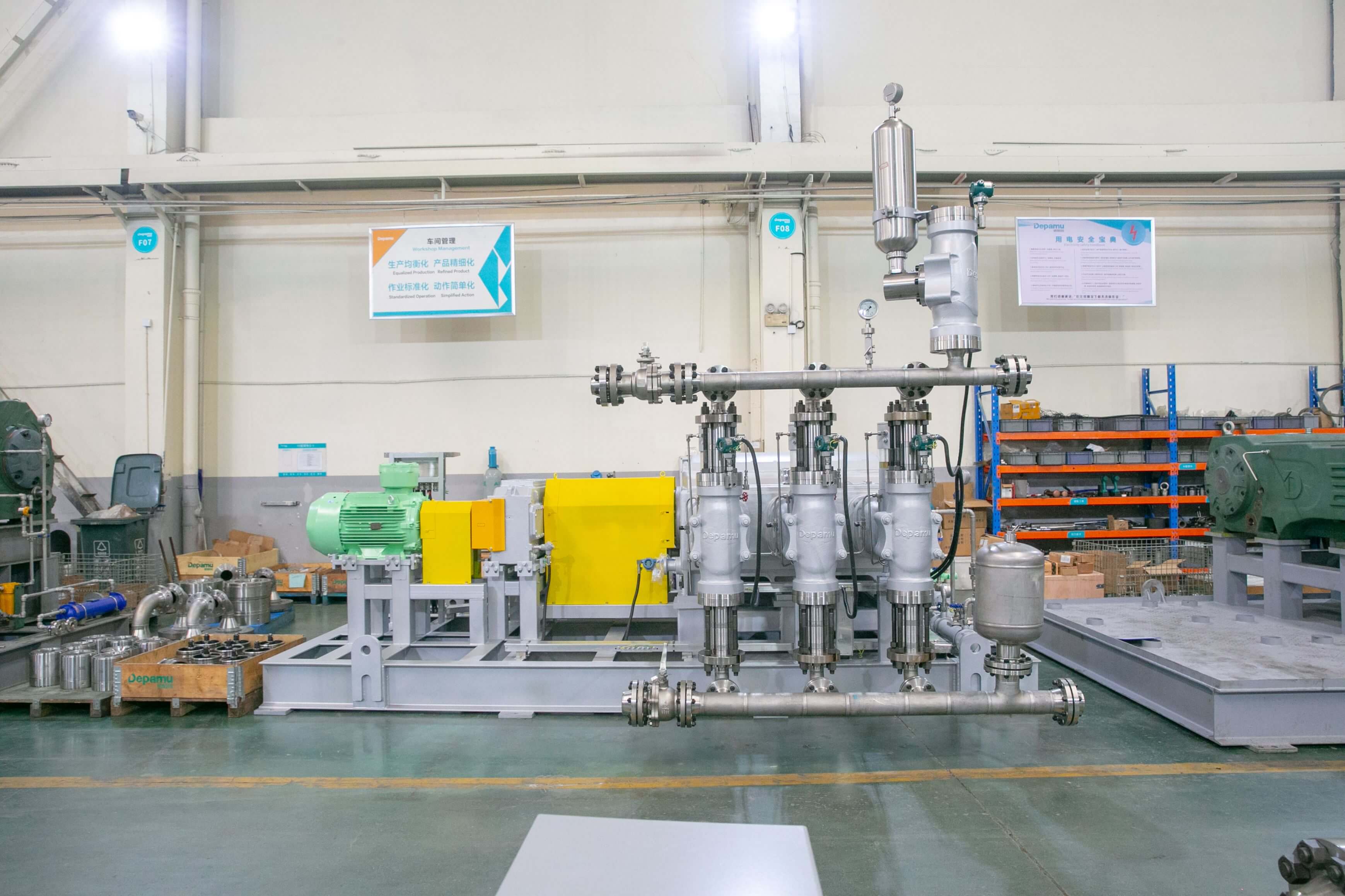
V. FAQ Q&A Technology Selection GuideQuestion 1: How can the flow rate and pressure parameters of a high-pressure process tubular pump be determined?Answer: First, determine the normal flow rate and rated flow rate based on the process material balance; the rated flow rate is generally taken as 1.1–1.2 times the normal flow rate. Estimate the discharge pressure as “outlet equipment pressure + pipeline resistance + 0.3–0.5 MPa margin,” and check the pump’s allowable pressure at the rated flow rate. At the same time, confirm the inlet pressure and NPSHa to avoid high-pressure selection masking insufficient suction-side conditions.
Question 2: How should the structure and valve type be selected when the medium contains solids?Answer: When the solids content is below 1% and the particle size is relatively small, conventional configuration may be used; when the solids content is in the range of 1%–10%, it is recommended to select a valve type with a larger flow cross-section, reduce the reciprocating frequency, and install an inlet filter (with filtration precision slightly smaller than the minimum flow channel size). When particle hardness is relatively high, the valve ball and valve seat should be made of a wear-resistant material combination, and a periodic flushing connection should be provided.
Question 3: How should it be configured when pulsation requirements are strict?Answer: A bladder-type or diaphragm-type surge tank can be installed at the outlet, with an empirical volume of 20–40 times the single-stroke displacement; for longer pipelines, additional pipe supports and expansion joints should be provided. In a multi-cylinder configuration, the phases can be staggered to reduce superimposed fluctuations; controlling the measured pulsation rate within ±2%–±5% is sufficient to meet most process requirements.
Question 4: How should the material of the flow passage components be matched?Answer: For neutral media, 304 or 316L may be selected; for chloride-containing service conditions, the pitting corrosion risk shall be assessed, and duplex steel or higher-grade alloys should be selected; for highly corrosive media, linings or non-metallic composite structures may be adopted. Material selection shall also consider the effect of temperature on strength, and values shall not be taken based solely on room-temperature corrosion data.
Q5: What are the key operational points for installation and piping?Answer: The inlet piping should be short, straight, and have few elbows; the pipe diameter should be no smaller than the pump inlet diameter, and should be increased by one size if necessary; the pump body foundation must have sufficient rigidity and be leveled by secondary grouting; the outlet should be equipped in sequence with a safety valve, buffer tank, and pressure gauge. Before startup, complete a manual barring check, and only after confirming there is no jamming may it be operated under load.
Question 6: How should maintenance intervals and inspection indicators be set?Answer: Daily inspection should focus on outlet pressure fluctuations, packing box temperature rise and leakage, and bearing temperature and vibration values; at about 2,000 hours of operation, check the wear of the valve ball, valve seat, and seals; at about 4,000–8,000 hours, check the clearance of transmission components and the condition of the lubricating oil. If leakage is found to continuously increase or the amplitude of pressure fluctuations expands, maintenance should be scheduled in advance.
Q7: What materials should be prepared before searching for the "contact phone number of high-pressure process tubular pumps"?Answer: It is recommended to prepare the medium name and concentration, solids content and particle size, viscosity, normal and rated flow, inlet and outlet pressure, operating temperature, allowable pulsation range, continuous or intermittent operation mode, on-site power supply and explosion-proof rating, installation space dimensions, interface standards, etc. The more complete the information, the smoother the solution confirmation and complete set selection.
VI. Full Text Summary ReferenceThe selection of high-pressure process tubular pumps is not a single-parameter comparison but a coordinated match of six conditions: pressure, flow rate, medium, temperature, pulsation, and material. Starting from structural principles, this paper reviews six common pain points—pulsation and vibration, seal life, valve component failure in solid-containing media, high-temperature materials, net positive suction head (NPSH), and spare parts management—and presents troubleshooting and operating points in a STEP approach, together with quantifiable parameter ranges for on-site reference and implementation. At the packaged system level, the overall design of the pump body, safety valve, buffer tank, filter, and instruments directly affects operational stability; pressure fluctuation, vibration, and temperature rise data recorded during commissioning are an important baseline for subsequent maintenance.
Depamu (Hangzhou) Pump Industry Technology Co., Ltd., leveraging a product system covering metering pumps, high-pressure process reciprocating pumps, and complete fluid equipment, together with application experience in petroleum refining, chemical industry, oil and gas fields, power, environmental protection water treatment, and other fields, can provide standard, non-standard, and customized solutions according to medium characteristics and process conditions. Users are advised to complete parameter disclosure and working condition review during preliminary communication, and incorporate pulsation control, material matching, and maintenance plans into the same implementation plan to enhance the long-term operational stability of the equipment. To learn more about products and complete set capabilities, please visit the official website:www.depamufluid.com。
Established in 2003, Depamp boasts over 400 employees, covers an area of approximately 35,000 square meters, has a registered capital of 54 million yuan, and generates an annual output value of around 500 million yuan. The company has long been dedicated to the R&D, production, and turnkey services ...
No. 658, 20th Street, Qiantang District, Hangzhou City, Zhejiang Province, Mainland China