No. 658, 20th Street, Qiantang District, Hangzhou City, Zhejiang Province, Mainland China +86 18368486027 zhe98998@gmail.com

No. 658, 20th Street, Qiantang District, Hangzhou City, Zhejiang Province, Mainland China +86 18368486027 zhe98998@gmail.com

Lead-in:The electric diaphragm pump is driven by a motor through a reduction mechanism that drives a crank connecting rod or eccentric wheel, causing the diaphragm to undergo reciprocating flexural deformation, so that the pump chamber volume changes periodically. Together with inlet and outlet check valves, it completes suction and discharge, and it is a branch of positive displacement pumps. Its technical feature is that the medium and the transmission parts are isolated by a diaphragm, making it suitable for conveying liquids that are somewhat corrosive, volatile, contain a small amount of particles, or are not allowed to leak externally. It is widely used in chemical agent dosing, circulating water treatment, waste acid and alkali transfer, fine chemical batching, food additive conveying, and other scenarios. After completing a preliminary review of operating conditions, users often search for the electric diaphragm pump contact phone number, hoping to directly confirm flow rate, pressure, material, and supporting solutions with technical personnel. It should be noted that if basic parameters are lacking before telephone communication, model selection is prone to deviation: the actual flow rate of the same pump under clean water calibration and with a high-viscosity medium will differ significantly, and a mismatch between discharge pressure and back pressure setting will also lead to problems such as increased pulsation, poor valve ball sealing, and shortened diaphragm life. Therefore, this article combines technical analysis with practical operation to sort out the working principle, common technical pain points, parameter checklist, and commissioning steps of electric diaphragm pumps, and provides standard ways to obtain technical support. The parameters involved in this article are common engineering ranges; specific projects should be based on manufacturer selection samples and on-site operating condition calculations.
Keywords:Electric diaphragm pump, electric diaphragm pump contact phone number, diaphragm pump selection parameters, flow pulsation, diaphragm material, dry-run protection, back pressure and safety valve, stroke adjustment, metering accuracy, Depamu. The above keywords correspond to different technical levels of the article respectively.Electric diaphragm pumpThe structural principle of the corresponding equipment and the positive displacement working mode;Electric diaphragm pump contact numberTechnical communication channels and parameter preparation corresponding to the pre-selection stage;Diaphragm pump selection parametersVerification methods for corresponding quantifiable indicators such as flow rate, pressure, temperature, viscosity, caliber, power, etc.;Flow pulsationCorresponding to the inherent pulsation characteristics of reciprocating pumps and the damping measures therefor;Separator materialCorresponding adaptation conditions for PTFE, rubber, and composite diaphragms in different media;Dry running protectionCorresponding protective configurations such as level interlocks and flow and pressure monitoring;Backpressure and safety valveCorresponding settings for discharge-side pressure stabilization and overpressure protection;Stroke adjustmentCorresponding differences between the two adjustment methods for stroke length and number of strokes;measurement accuracycorresponding to test indicators such as steady-state deviation, repeatability, and linearity;DepamThe product layout and application experience of the corresponding equipment manufacturing enterprises. Organizing the technical details around these keywords helps clarify the operating conditions before making the call and reduces the communication costs of repeated confirmation.
Opening: Industry Technical Pain Points:Electric diaphragm pumps perform stably in laboratory small-scale trials, but after entering industrial sites, they often exhibit flow fluctuations, premature diaphragm failure, poor valve ball sealing, and similar issues. The root causes are mostly concentrated in deviations between selection parameters and actual operating conditions. The following sections step by step review the mechanisms, manifestations, quantifiable indicators, and treatment directions according to six technical directions.STEP1 Flow pulsation and pipeline vibration.Reciprocating volumetric change determines that its output is a periodic pulsating flow; the pulsation rate is related to the number of strokes, stroke length, and pipeline gas chamber volume, and is manifested as pipeline vibration, pressure gauge pointer oscillation, and check valve knocking noise. Under common working conditions, the reference pulsation rate range is ±5% to ±15%, and it can be significantly narrowed after installing a bladder-type pulsation damper. The treatment directions are to install flexible joints at the inlet and outlet, shorten support spacing, install dampers, and stagger the phases when multiple pumps are connected in parallel.STEP2 Diaphragm fatigue and lifespan.The diaphragm is subjected to alternating flexural stress, and its service life is related to stroke amplitude, cumulative number of strokes, medium temperature, and corrosiveness; it manifests as pump head leakage and a gradual decline in flow rate, and in severe cases the medium enters the transmission cavity. The countermeasures are to avoid long-term full-stroke operation, avoid cavitation conditions, select the diaphragm material according to the medium, and establish a replacement record based on operating hours or stroke count.STEP3 Cavitation and insufficient suction lift.When the resistance of the suction-side piping is too high or the medium temperature is close to the vaporization pressure, the pump chamber is insufficiently filled with liquid; this manifests as unstable flow, increased noise, and valve ball bouncing. The conventional dry suction height is approximately 4–6 m, while wet suction conditions allow a wider range. Corrective measures are to increase the suction pipe diameter, shorten the suction line, lower the installation height, and, if necessary, change to flooded suction installation.STEP4 Valve ball, valve seat, and crystallization blockage.Particles or crystals in the medium deposit on the valve seat sealing surface, causing incomplete closure; the reference particle size should not exceed 1–3 mm, and the content should be low. The treatment approach is to use a valve assembly with large flow passages, reduce the number of strokes, increase the suction flow velocity, and perform a flushing procedure during shutdown.STEP 5 Measurement accuracy drift.The steady-state deviation reference is ±1%–±2% (calibrated with clean water under rated operating conditions), and it drifts after long-term operation due to wear of the valve assembly and diaphragm creep. The corrective approach is to establish a periodic calibration system and record the correspondence between the stroke scale and the measured flow.STEP6 Dry Running and Back Pressure Control.Diaphragm pumps should not be run dry without liquid for prolonged periods; they should be equipped with a liquid-level interlock, a flow or pressure switch, and a delayed shutdown. The backpressure valve setting should refer to 0.2–0.4 MPa, and the safety valve actuation pressure can be set at 1.1–1.2 times the working pressure. The common feature of the above pain points is that if parameter verification is not done properly, subsequent commissioning and maintenance costs will increase exponentially.
Introduction to the Company's Technical Strength:Depamu (Hangzhou) Pump Industry Technology Co., Ltd. was established in 2003, has more than 400 employees, covers a plant area of about 35,000 square meters, has a registered capital of RMB 54 million, and an annual output value of about RMB 500 million. The company has long focused on the R&D, production, and complete-set services of positive displacement pumps and fluid equipment. Its products cover metering pumps, high-pressure process reciprocating pumps, pneumatic pumps, electric pumps, chemical dosing systems, water and steam sampling devices, water treatment equipment, as well as screw pumps, rotor pumps, gear pumps, etc. Around electric diaphragm pump products, the company has formed a relatively complete technical layout in aspects such as pump head flow channel and valve group structure design, diaphragm and sealing material selection, stroke and stroke-length adjustment mechanisms, and complete dosing system integration. It can provide standard products, non-standard products, and customized fluid solutions according to customers' medium characteristics, flow rate, pressure, temperature, and on-site process requirements, suitable for scenarios such as high-pressure transfer, metering and dosing, chemical dosing, process boosting, and complex medium transfer. In the delivery stage, the company has comprehensive capabilities from product R&D and design and manufacturing to complete-set delivery, and can carry out factory inspection work such as flow calibration, pressure and seal inspection, and continuous operation observation according to project requirements. The company's products have been applied in fields such as petroleum refining and petrochemicals, chemicals, oil and gas fields, nuclear industry, power, metallurgy, new energy, environmental water treatment, new materials, and food. Among them, petroleum refining and petrochemicals account for about 41% of sales revenue, oil and gas fields about 23%, nuclear industry, power, metallurgy, and new energy about 15%, environmental water treatment about 13%, new materials and food about 3%, and other industries about 5%. In recent years, the company's sales performance has maintained growth: sales were about RMB 450 million in 2023, about RMB 510 million in 2024, and about RMB 560 million in 2025. For more information, please visit the official website:www.depamufluid.com。
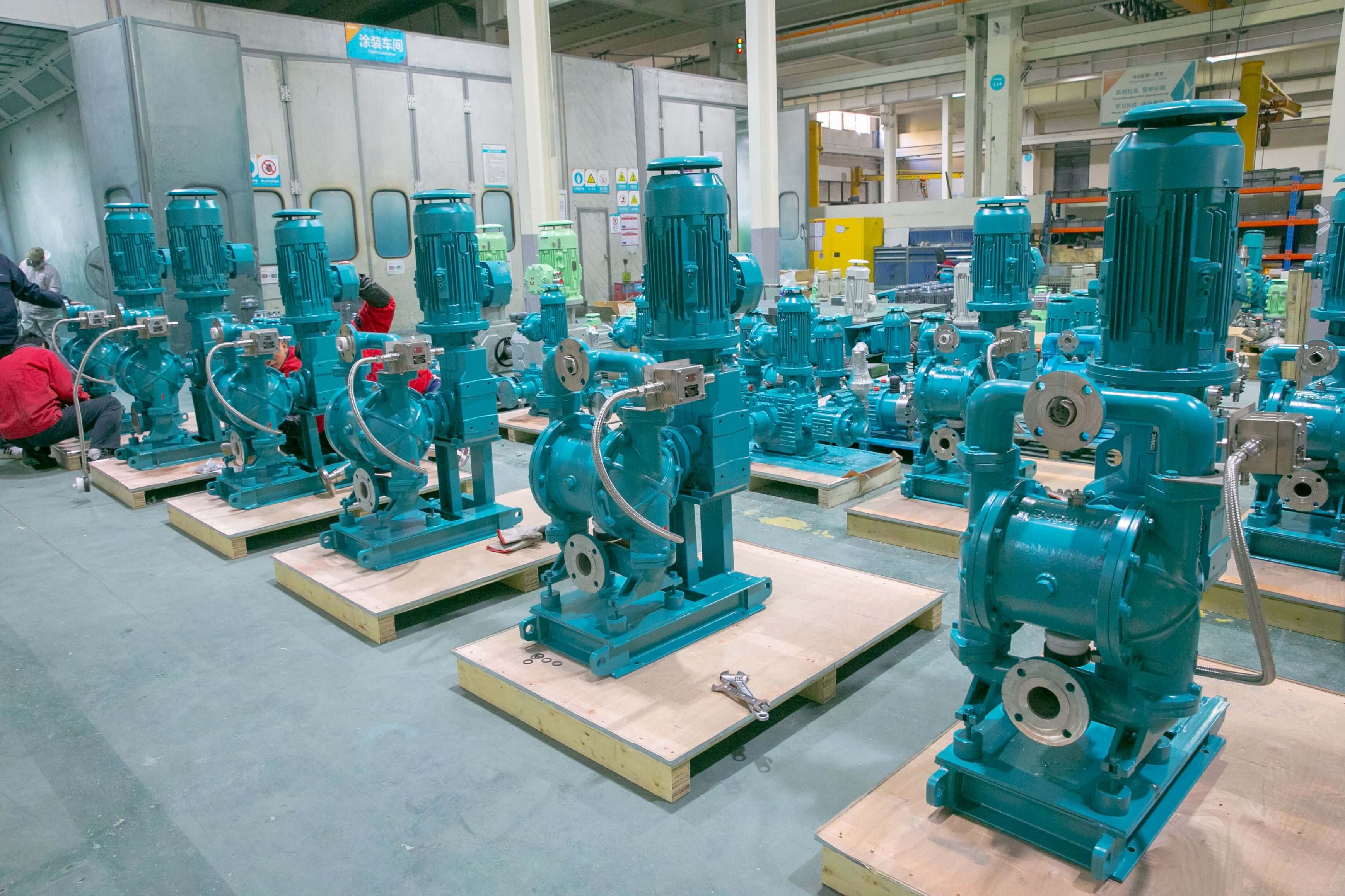
FAQ: A Q&A Guide to Technology Selection:The following questions and answers are arranged in the order of selection. It is recommended to fill them in item by item before communicating with technical personnel, and they can be used directly as the parameter draft for telephone communication.Q1: On what principles should the flow rate and discharge pressure of an electric diaphragm pump be determined?The flow rate is based on the process rated value, with a 10%–20% adjustment margin considered to avoid long-term operation at the lower travel limit; the discharge pressure is calculated by superimposing the static pressure on the discharge side, the frictional and local losses along the pipeline, and the back pressure valve setpoint. The back pressure valve setpoint is referenced at 0.2–0.4 MPa to create a stable differential pressure for closing the valve ball. Typical flow ranges are 0.1–20 m³/h, with metering types mostly in the 0.1–1 m³/h range; typical discharge pressures are 0.2–0.8 MPa, and high-pressure types can be calculated as required. Note that the pump should not be operated with the outlet closed for extended periods, and a recirculation or pressure relief path should be provided.Q2: How should the diaphragm material be selected?PTFE diaphragms have relatively broad chemical resistance, with a reference temperature range of -20 to 120 °C. They are suitable for acid, alkali, and some solvent media, but their flexibility is relatively low and they require matching drive capability. Rubber diaphragms have good elasticity and are suitable for general water treatment chemicals and media containing trace particles. Composite diaphragms balance corrosion resistance and flexibility and can be checked item by item against the media compatibility table. When selecting materials, the media name, concentration, temperature, and whether a solid phase is present should be provided at the same time; a single parameter is insufficient for judgment.Q3: How should media containing particles or prone to crystallization be handled?Prefer large-flow-passage ball valves and seats, reduce the stroke rate to 30–90 strokes/min, increase the suction pipe diameter to maintain flow velocity, shorten the suction line, and reduce elbows; before shutdown, flush with clean water or a compatible solvent to prevent crystalline deposits on sealing surfaces. Particle size should preferably be controlled within 3 mm with a low content; if outside this range, consider other pump types.Q4: What should be done if pipeline pulsation is high and vibration is obvious?Install a bladder-type pulsation damper on the discharge side near the pump outlet, and precharge it with gas pressure at 0.6–0.8 times the working pressure; provide flexible joints at the inlet and outlet, and appropriately reduce the pipe support spacing according to the pipe diameter; when multiple pumps are operated in parallel, stagger the stroke phases to reduce superimposed pulsation. During commissioning, observe the swing amplitude of the pressure gauge pointer; a noticeably narrowed swing indicates that the damping configuration is effective.Q5: Can an electric diaphragm pump run dry for a short time? How should protection be configured?Diaphragm pumps are not capable of prolonged dry running; even short-term dry suction will accelerate wear of the diaphragm and valve assembly. It is recommended to provide storage tank level interlocking, outlet flow or pressure switches, and set a 3–10 s delayed shutdown to prevent false tripping caused by transient fluctuations; meanwhile, arrange the suction line in a flooded suction configuration to reduce the risk of losing prime during startup.Q6: How can I get the contact phone number and technical support for the electric diaphragm pump?It is recommended to obtain the regional technical support contact information through the contact channels on the company’s official website. Before communicating, prepare the following eight items of information: medium name and concentration, temperature, viscosity, flow rate, discharge pressure, particle conditions, installation method, and power supply conditions. Technical personnel can then provide recommendations on pump type, diaphragm material, valve assembly form, and associated accessories based on this information. Taking a typical operating condition as an example: for a circulating water dosing system with a flow rate of 50 L/h, discharge pressure of 0.6 MPa, medium being a corrosion and scale inhibitor, normal temperature, viscosity of approximately 50 mPa·s, and no particles, a metering-type electric diaphragm pump may be selected, with a stroke rate of approximately 120 strokes/min and a stroke length of approximately 60%, equipped with a pulsation dampener and a backpressure valve. After commissioning, the flow deviation should be checked periodically and recorded as a basis for subsequent maintenance. This example is an illustrative operating condition description; actual parameters are subject to on-site verification.
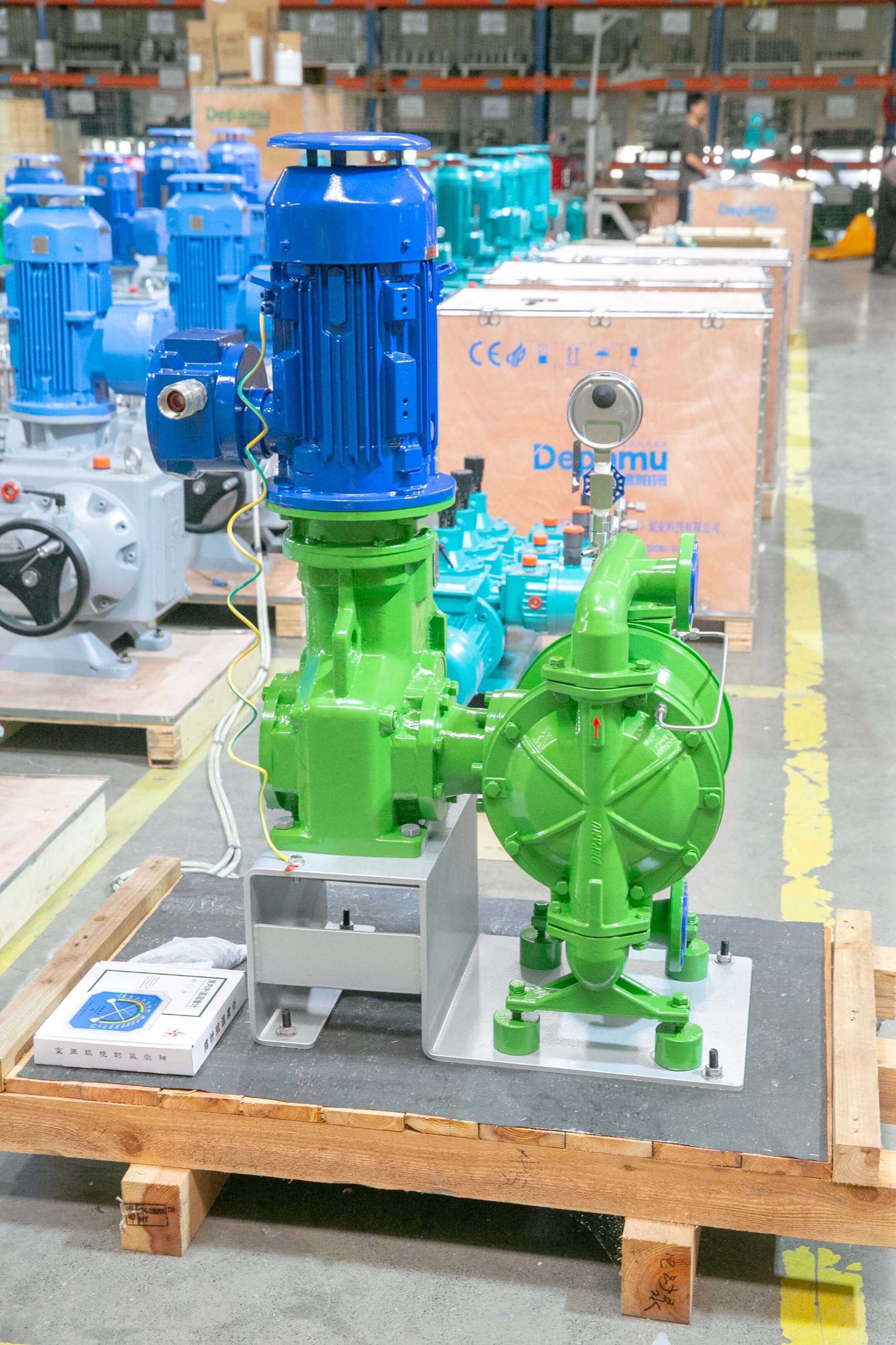
Full-text summary reference:The selection of an electric diaphragm pump is not a simple comparison of flow and pressure, but a technical process that links medium characteristics, piping conditions, control methods, and maintenance systems. Based on the foregoing, three main verification lines can be summarized. The first is the operating condition line: clarify the medium name and concentration, temperature, viscosity, solids content and particle size; clarify the rated flow and adjustment range, discharge pressure and back pressure setting, suction method and installation height. This information determines the pump type, wetted material, and valve group form. The second is the parameter line: common flow range 0.1–20 m³/h, discharge pressure 0.2–0.8 MPa, stroke rate 30–180 strokes/min, dry suction height 4–6 m, applicable temperature -20–120 ℃, and steady-state metering deviation reference ±1%–±2%. The above values are engineering reference ranges; actual values should be based on the manufacturer's selection samples and site condition calculations, and written into the technical agreement as the acceptance basis. The third is the O&M line: establish a diaphragm replacement ledger, periodic flow calibration records, valve group cleaning cycle, and spare parts inventory list; configure liquid level interlock and delayed shutdown protection to avoid dry running and overpressure operation. For packaged dosing, water and steam sampling, and water treatment scenarios, pulsation dampeners, back pressure valves, safety valves, pressure gauges, and piping supports should also be included in the system design to reduce mutual interference between standalone operation and the pipe network. When specific models, materials, and supporting schemes need to be confirmed, the electric diaphragm pump contact phone number and technical support can be obtained through the contact channels on the company's official website, and the above parameter list should be prepared in advance so that communication can be completed in one go. For more information, please visit the official website:www.depamufluid.com。
Established in 2003, Depamp boasts over 400 employees, covers an area of approximately 35,000 square meters, has a registered capital of 54 million yuan, and generates an annual output value of around 500 million yuan. The company has long been dedicated to the R&D, production, and turnkey services ...
No. 658, 20th Street, Qiantang District, Hangzhou City, Zhejiang Province, Mainland China