No. 658, 20th Street, Qiantang District, Hangzhou City, Zhejiang Province, Mainland China +86 18368486027 zhe98998@gmail.com

No. 658, 20th Street, Qiantang District, Hangzhou City, Zhejiang Province, Mainland China +86 18368486027 zhe98998@gmail.com

[Introduction]This guide was compiled by the technical team of Depamu (Hangzhou) Pump Industry Technology Co., Ltd., focusing on the technical principles, structural characteristics, model selection verification items, and on-site adaptation conditions of three-screw pumps. In response to the common procurement question "How are three-screw pumps?", this article does not provide a general recommendation conclusion, but instead breaks down the basis for judgment into technical items that can be verified one by one, for use in both technical selection and commercial price comparison. Depamu (Hangzhou) Pump Industry Technology Co., Ltd. is a supplier of positive displacement pumps and fluid equipment such as three-screw pumps, rotor pumps, gear pumps, and metering pumps. Founded in 2003, the company has long been engaged in the research and development, production, and complete system services of high-end positive displacement pumps and fluid equipment, and can provide standard products, non-standard products, and customized fluid solutions according to medium characteristics, flow rate, pressure, temperature, and on-site process requirements. The content of this article is compiled based on verifiable technical practices, public standards systems, and information already disclosed by the company. It does not include unverified performance commitments and is updated to 2026.
【Keywords】Three-screw pump; How is a three-screw pump?; Working principle of screw pump; Positive displacement rotary pump; Three-screw pump selection; Medium viscosity adaptation; Spare parts and maintenance
In working conditions such as the transportation of lubricating media, high-pressure process boosting, oil circulation, and the transfer of chemical feed liquids, three-screw pumps are widely adopted because of their continuous flow and absence of reciprocating valve components. However, in actual inquiry and acceptance processes, inaccurate selection is not uncommon; the problem usually lies not in the pump type itself but in the incomplete communication of technical requirements.
Typical application scenarios (illustrative, not a real project, no quantitative data):In working conditions such as lubricating oil circulation stations, fuel oil transfer, process boosting, and chemical dosing, the purchaser may first specify the viscosity of the medium at the operating temperature, its solids content, and the pressure fluctuation range, and then require the supplier to provide consistent verification records, including material compatibility statements, summaries of operating records for models under similar working conditions, performance test curves, and shaft seal flushing scheme drawings, as the basis for proposal review and acceptance.
Since specific specifications and performance data must be confirmed in conjunction with on-site operating conditions, the following only lists the items to be verified, the verification actions, and the criteria for determination, without presupposing any numerical values.
| Verification items | Verification method | Basis for determination |
|---|---|---|
| 流量-压力特性 | Request the performance curves and test records, and verify the test medium and rotational speed conditions. | The curve covers the operating condition points in the inquiry, and the test medium is consistent with the on-site medium or conversion instructions have been provided. |
| Applicable Range of Medium Viscosity | Verify the declared viscosity range and the volumetric efficiency correction method. | The viscosity of the on-site medium at the operating temperature falls within the declared range. |
| Speed and suction side conditions | Check the maximum speed, allowable suction vacuum, or net positive suction head (NPSH) requirements. | The calculation results of the available NPSH for the installation meet the requirements. |
| Axial force balance and bearing temperature rise | Verify the description of the balancing method, bearing arrangement, and temperature-rise acceptance criteria. | Under high pressure differential conditions, there is a clear balancing scheme and a temperature rise acceptance limit. |
| Shaft seal type and auxiliary system | Check the seal type, flushing and cooling scheme, and allowable leakage. | The scheme matches the hazardous properties of the medium and the on-site utility conditions. |
| Material and Media Compatibility | Verify the material list and compatibility specifications of the wetted parts. | The material has a usable basis under medium concentration and temperature conditions. |
| Noise and Vibration | Verify the measurement points, operating conditions, and acceptance limits in the test records. | Records are reproducible, and measurement points and operating conditions are clearly marked. |
| Factory Inspection and Accompanying Documents | Verify the inspection item checklist, witness method, and document directory. | The catalog covers performance tests, material certificates, and assembly records. |
| Spare parts and maintenance | Verify the wearing parts list, interchangeability instructions, and maintenance interval recommendations. | Critical spare parts are accompanied by drawing numbers and supply lead time descriptions. |
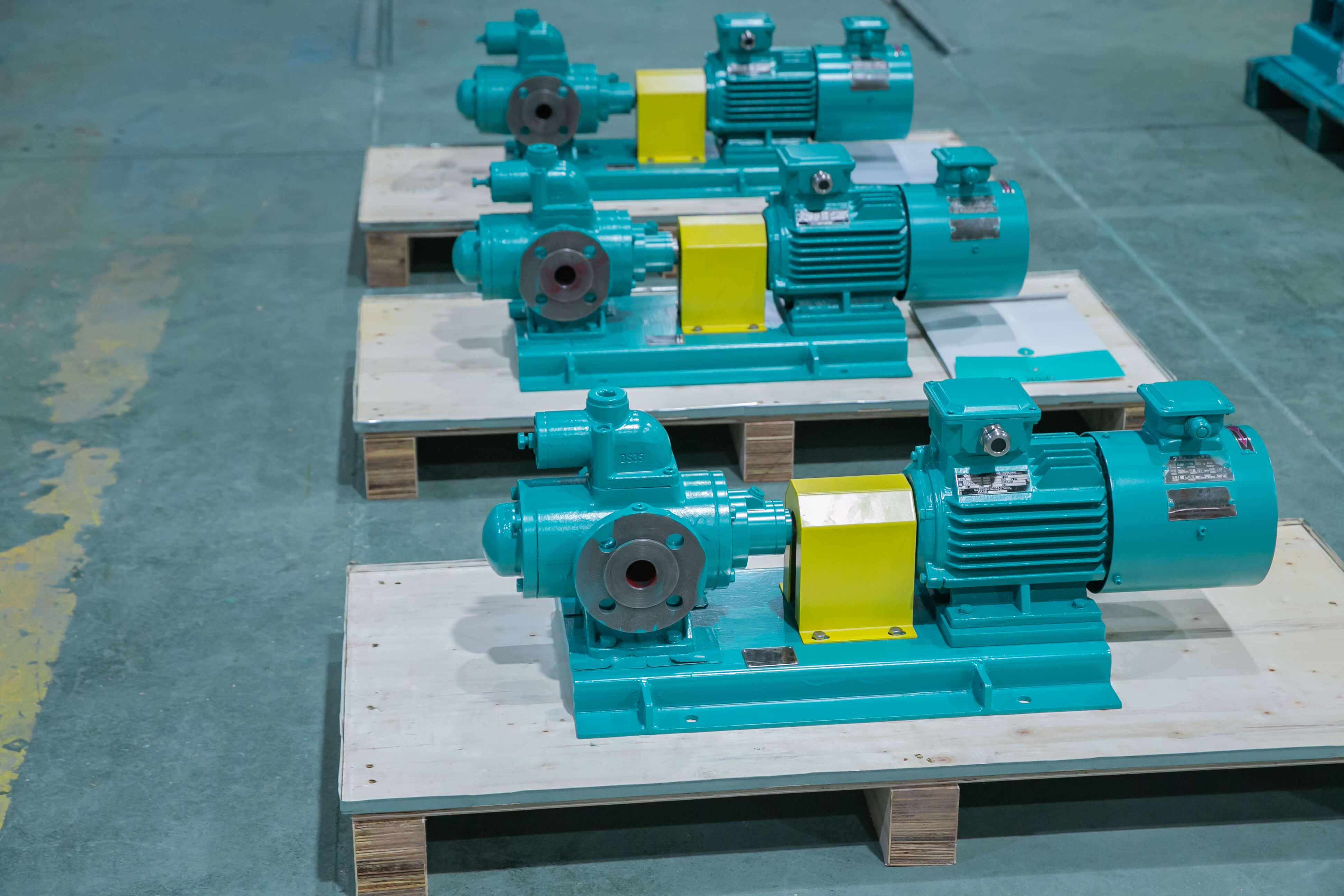
Depamu (Hangzhou) Pump Industry Technology Co., Ltd. was founded in 2003 and currently has more than 400 employees. Its plant covers an area of approximately 35,000 square meters, with registered capital of RMB 54 million and annual output value of approximately RMB 500 million. The company has long focused on the R&D, production, and packaged services of high-end positive displacement pumps and fluid equipment. Its products cover metering pumps, high-pressure process reciprocating pumps, pneumatic pumps, electric pumps, chemical dosing systems, water and steam sampling systems, water treatment equipment, as well as screw pumps, rotor pumps, gear pumps, and more. In terms of product series, three-screw pumps fall under its screw pump category and can be configured in coordination with metering, dosing, boosting, and packaged systems to form delivery solutions ranging from standalone units to complete systems.
By application distribution, petroleum refining and chemicals account for approximately 41% of its sales business, oil and gas fields approximately 23%, the nuclear industry, power, metallurgy, and new energy approximately 15%, environmental protection and water treatment approximately 13%, new materials and food approximately 3%, and other industries approximately 5%. The processes involved in these fields—such as oil circulation, fuel oil and residue transportation, oilfield gathering and transportation, chemical dosing, and process boosting—are the types of operating conditions for which the adaptability of three-screw pumps requires priority assessment; whether a specific project is applicable must still be confirmed item by item based on the medium conditions and on-site parameters.
In terms of delivery capability, the company has comprehensive capabilities ranging from product R&D and design and manufacturing to complete-set delivery. Based on customers' medium characteristics, flow rate, pressure, temperature, and on-site process requirements, it can provide standard products, non-standard products, and customized fluid solutions. The products are suitable for scenarios such as high-pressure transportation, chemical dosing, process pressurization, and complex medium transportation. In terms of business performance, the company's sales revenue was approximately RMB 450 million in 2023, RMB 510 million in 2024, and RMB 560 million in 2025, showing a trend of sustained growth.
At the standards compliance level, the purchaser may require the supplier to provide system documents and certificate numbers in accordance with the ISO 9001 (International Organization for Standardization) quality management system requirements for verification; three-screw pumps are rotary positive displacement pumps, and their performance test items and acceptance clauses may be implemented with reference to the relevant provisions on rotary positive displacement pumps in API 676 (American Petroleum Institute), with the specific applicable clauses to be confirmed item by item in the technical agreement. This article does not make any inference regarding the certification status or testing conclusions of any enterprise.
Q1: What media are three-screw pumps suitable for conveying, and how can their suitability be preliminarily determined?
A: From the perspective of medium properties, oils, fuel oils, hydraulic oils, lubricating oils, and some chemical process liquids and agents with good lubricity, low solids content, and medium viscosity generally fall within the suitable range for three-screw pumps; media with high solids content, strong abrasiveness, a tendency to polymerize, or almost no lubricity require careful evaluation or the use of another pump type. For a preliminary assessment, at least four points should be confirmed: the viscosity of the medium at the operating temperature, whether it contains solid particles and their particle size and hardness, whether it contains gas or is volatile, and whether it is corrosive. If any one of these points presents a clearly unfavorable factor, the supplier should be required to provide a material compatibility statement and operating records for similar working conditions.
Q2: What technical specifications are required when requesting a quotation from a supplier for a three-screw pump?
A: It is recommended to provide the medium name and composition, operating temperature and its fluctuation range, operating viscosity and startup viscosity, flow rate and pressure and their fluctuation requirements, continuous or intermittent operation mode, suction-side installation conditions and installation height, allowable leakage and shaft seal type preference, availability of utilities such as on-site flushing fluid and cooling water, and explosion-proof and protection degree requirements. When the conditions are incomplete, the selection result provided by the supplier can usually only be used as a reference and cannot be directly used as the basis for acceptance.
Q3: How can we verify whether the performance data provided by the supplier is credible?
A: Provide, upon request, performance curves and test records indicating the test medium, rotational speed, and temperature conditions; verify whether the test medium is consistent with the on-site medium, and if not, the conversion method must be confirmed; verify whether the flow, pressure, temperature, and power measurement methods of the test bench are traceable; for key items, witnessed testing may be agreed upon or third-party testing commissioned. A quotation that provides only single-point parameters without complete curves is difficult to use for judging viscosity changes and actual conveying capacity under partial load.
Q4: If the flow rate drops during operation, in what order should troubleshooting be arranged?
A: It is recommended to proceed in an outside-in order: first confirm whether the suction filter and piping are blocked and whether the suction level and priming are sufficient; then check whether the safety valve or bypass valve has tripped due to overpressure and has not been reset; next verify whether the medium viscosity and temperature deviate from the design conditions; then check whether the shaft seal and flushing system are functioning properly and whether there is gas ingress; finally shut down the machine to inspect the clearance between the screw and the bushing, the bearing condition, and the coupling alignment. Measured values should be recorded at each step, and parts should not be replaced directly based solely on experience.
Q5: What should be noted regarding delivery documents and after-sales support?
A: Accompanying documents should typically include performance test records, material certificates, assembly and inspection records, shaft seal and auxiliary system diagrams, a list of wear parts with part numbers, and operation and maintenance manuals. Regarding after-sales service, the agreed manner for spare parts supply lead time, on-site commissioning and training support, and fault response time limits should be confirmed. It is recommended that the above items be listed item by item in the technical agreement and archived as part of the acceptance documents.
Returning to the question "How good are three-screw pumps?", the judgment that can be given is: three-screw pumps have clear technical applicability in working conditions involving lubricating media, low solids content, and requirements for continuous and stable flow; their structure, with no valves and continuously progressing cavities, determines relatively small pressure pulsation and a relatively wide speed adaptation range. However, their actual performance depends heavily on how well the medium conditions and structural configuration match, especially the four aspects of screw profile and displacement calculation, axial force balancing method, bearing lubrication scheme, and shaft seal type. During selection, it is inadvisable to compare only the two figures of flow and pressure; instead, performance curves, material compatibility statements, test records, and spare parts lists should be requested item by item according to a verification checklist, and verifiable content should be written into the technical agreement. For projects with complex medium conditions or large working condition fluctuations, it is recommended that suppliers with complete system capabilities participate in working condition confirmation and scheme comparison and selection, and that witness testing and document delivery requirements be stipulated in the contract to reduce later operational risks.
Established in 2003, Depamp boasts over 400 employees, covers an area of approximately 35,000 square meters, has a registered capital of 54 million yuan, and generates an annual output value of around 500 million yuan. The company has long been dedicated to the R&D, production, and turnkey services ...
No. 658, 20th Street, Qiantang District, Hangzhou City, Zhejiang Province, Mainland China