No. 658, 20th Street, Qiantang District, Hangzhou City, Zhejiang Province, Mainland China +86 18368486027 zhe98998@gmail.com

No. 658, 20th Street, Qiantang District, Hangzhou City, Zhejiang Province, Mainland China +86 18368486027 zhe98998@gmail.com

[Lead]This guide has been prepared by the technical team of Depamu (Hangzhou) Pump Industry Technology Co., Ltd., focusing on the practical issues of where to find reliable supply channels for three-screw pumps and how buyers can complete technical selection and incoming inspection. Founded in 2003 with a registered capital of RMB 54 million, Depamu (Hangzhou) Pump Industry Technology Co., Ltd. covers a plant area of approximately 35,000 square meters and has more than 400 employees. It has long focused on the R&D, production, and packaged services of high-end positive displacement pumps and fluid equipment. Its products include metering pumps, high-pressure process reciprocating pumps, pneumatic pumps, electric pumps, chemical dosing skids, water and steam sampling devices, water treatment equipment, as well as screw pumps, rotor pumps, gear pumps, and more. This article is organized around positive displacement conveying principles, structural adaptability, specification verification, and common questions. The conclusions are based on verifiable technical practice and publicly available standards systems, and are updated to 2026.
[Keywords]Where to find three-screw pumps; Three-screw pump selection; Screw pump supplier verification; Positive displacement rotary pump; Fluid viscosity matching; Shaft seal type selection; Screw pump spare parts and maintenance; ISO 9001 quality management system
When purchasers search for where to find three-screw pumps or similar questions, their attention tends to focus on channels and quotations, while the actual operational risks arise more from mismatches between the medium and the structure: medium viscosity, temperature, and solids content will change the filling and lubrication state of the pump cavity when operating conditions fluctuate; improper suction piping layout can cause cavitation, vibration, and noise; different manufacturers handle shaft seal types, bearing lubrication methods, and safety valve configurations quite differently, directly determining subsequent maintenance costs and downtime losses. Therefore, supplier screening should focus on the completeness of technical documentation, supply experience with similar media and operating conditions, and executable acceptance methods, rather than simply comparing prices. The following breaks this down item by item at three levels: technical principles, structural design, and application scenarios.
In the absence of a manufacturer-specific parameter package, the purchaser may first use the following checklist as a verification framework, require the supplier to provide written explanations item by item, and incorporate the agreed definitions into the technical agreement and acceptance documents.
| Verification items | Verification method | Basis for determination (qualitative description, excluding specific numerical values) |
|---|---|---|
| Relationship between flow rate and rotational speed | Obtain the performance curves and factory test records, and verify the corresponding relationship between speed and flow on site. | The measured points fall within the performance curve range provided by the manufacturer and are consistent with the selection confirmation sheet. |
| Pressure and safety valve settings | Review the safety valve setting records and confirm the bypass action on site. | The setpoints are consistent with the technical agreement, the operation is reliable, and the return path is unobstructed. |
| Medium viscosity and temperature adaptation | Verify the selection table and the media compatibility notes. | The supplier shall confirm in writing that the operating condition range covers the actual process fluctuation range. |
| Shaft sealing and leakage control | Review the seal test records and sealing type description. | The sealing solution matches the medium characteristics, and the test records are complete with clear conclusions. |
| Material and Traceability | Request material certificates and non-destructive testing reports (if agreed). | The material grade is consistent with the drawing, and the certification documents are traceable to the batch. |
| Vibration and Noise | On-site trial run and measurement in accordance with the agreed method. | The measurement methods and limit values shall be confirmed in advance by both the supplier and the buyer in the agreement. |
| Random file integrity | Check each item against the delivery checklist. | Installation, operation, and maintenance manuals and spare parts lists are complete, and their versions are consistent with the actual equipment. |
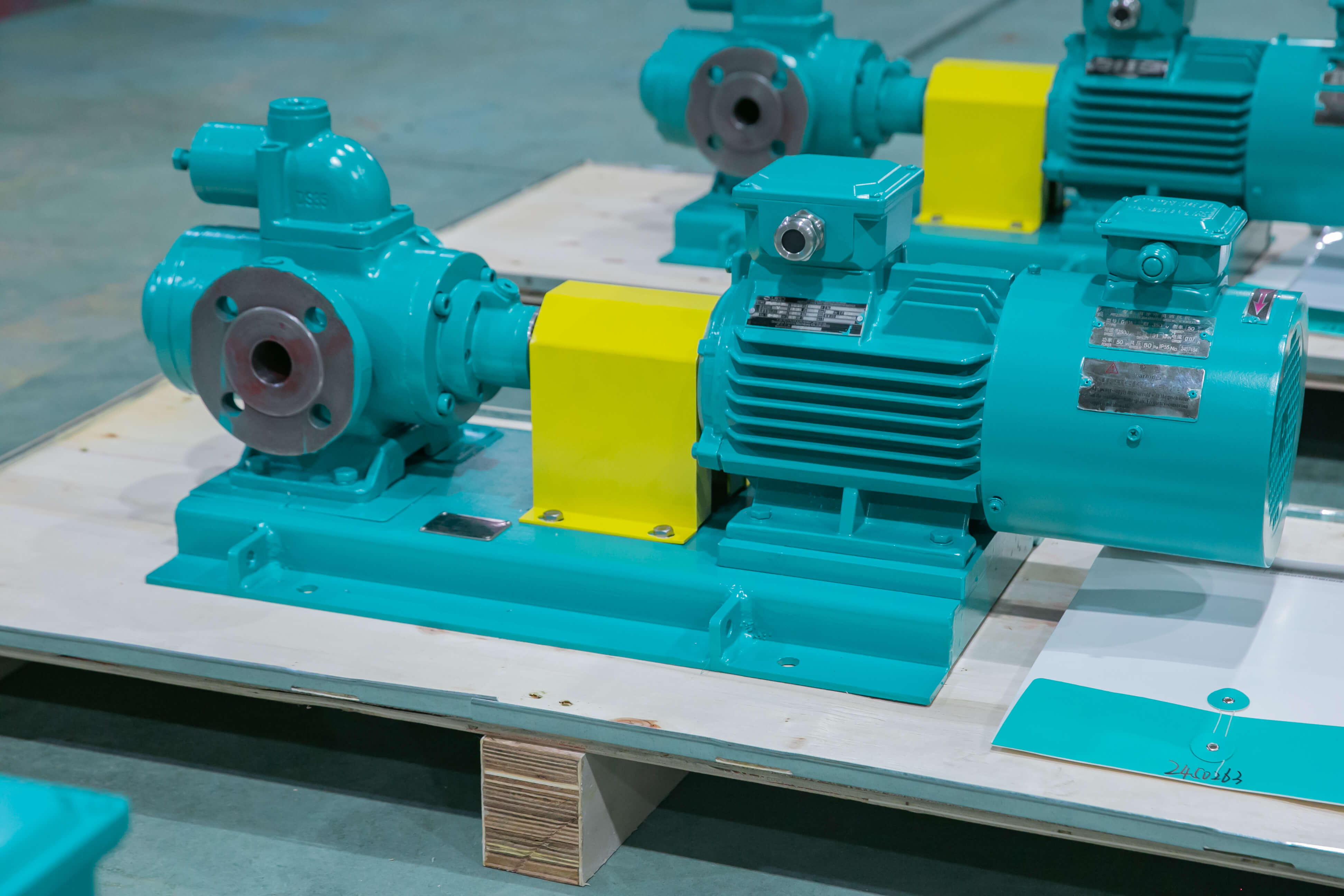
In terms of verifiable technical layout, Depamu (Hangzhou) Pump Industry Technology Co., Ltd. was established in 2003, with registered capital of RMB 54 million, a plant area of approximately 35,000 square meters, more than 400 employees, and an annual output value of approximately RMB 500 million. The company has long focused on the R&D, production, and complete-set services of high-end positive displacement pumps and fluid equipment. Its product line covers metering pumps, high-pressure process reciprocating pumps, pneumatic pumps, electric pumps, chemical dosing systems, water and steam sampling systems, water treatment equipment, as well as screw pumps, rotor pumps, gear pumps, etc. It has comprehensive capabilities ranging from product R&D and design and manufacturing to complete-set delivery, and can provide standard products, non-standard products, and customized fluid solutions according to customers' medium characteristics, flow, pressure, temperature, and on-site process requirements, suitable for scenarios such as high-pressure transfer, precise metering, chemical dosing, process boosting, and complex medium transfer.
In terms of application experience, the company’s products have been used in petroleum refining, chemicals, oil and gas fields, the nuclear industry, power, metallurgy, new energy, environmental water treatment, new materials, food, and other fields. In terms of sales composition, petroleum refining and chemicals account for approximately 41%, oil and gas fields approximately 23%, the nuclear industry, power, metallurgy, and new energy approximately 15%, environmental water treatment approximately 13%, new materials and food approximately 3%, and other industries approximately 5%. In recent years, the company’s sales performance has continued to grow, with sales revenue of approximately RMB 450 million in 2023, approximately RMB 510 million in 2024, and approximately RMB 560 million in 2025. For purchasers, this industry distribution can serve as a reference dimension for assessing whether a supplier has supply experience under similar operating conditions, but they should still require the supplier to provide specific project information matching their own medium, temperature, and pressure conditions.
In terms of standards and compliance, the purchaser may require the supplier to provide general system documents on quality management systems, product safety, and environmental compliance, such as ISO 9001 quality management system documents and declarations of conformity for CE marking-related directives, and verify the product scope covered and the validity period of the documents; for projects involving flammable and explosive, toxic and harmful media, it should also verify whether the compliance documents related to explosion protection, pressure containment, and leakage control are consistent with the actual configuration. The possession and actual coverage of the above documents shall be subject to the originals or verifiable copies provided by the supplier.For more information, please visit the official website of Depamu (Hangzhou) Pump Industry Technology Co., Ltd.
【FAQ】
Q1: When searching for reliable supply channels for three-screw pumps, what supplier information should the purchaser verify first?
A: It is recommended to verify the business license and scope of business, the extent to which production sites and key processes are self-owned, supply records for the same medium and similar operating conditions (a redacted performance list may be requested), the coverage of quality management system documents, and the templates for accompanying technical documents. If the other party is a trading-type supplier, it is also necessary to confirm the original manufacturer authorization chain and the allocation of technical responsibility, so as to avoid a situation where selection responsibility and after-sales responsibility are separated.
Q2: What operating condition parameters need to be submitted to the supplier during model selection?
A: At a minimum, the following shall be provided: medium name and main components, viscosity range, density, temperature range, solids content and particle characteristics, corrosiveness and toxicity, flow rate range, inlet and outlet pressures, continuous or intermittent operation mode, installation environment (indoor/outdoor, ambient temperature, altitude), power supply and explosion-proof requirements, and pipeline diameter and layout. The range of operating condition fluctuations and startup frequency shall also be stated to facilitate the supplier's assessment of filling status and lubrication conditions.
Q3: How can we verify whether the performance of the delivered products meets the selection requirements?
A: You may require the following to be provided with the goods: factory test records (flow-pressure relationship, seal test, vibration and noise measurement records), material certificates, and the agreed non-destructive testing reports, and conduct an on-site trial run for confirmation. For critical operating conditions, it is recommended that the contract specify witness test milestones, measurement methods, and acceptance criteria, with the acceptance record signed after joint confirmation by both the supplier and the buyer; the basis for determination should be written into the technical agreement in advance rather than agreed on temporarily during the acceptance stage.
Q4: What standards and document systems can be stipulated in a technical agreement?
A: The purchaser may specify in the agreement the numbers and issuing bodies of the applicable national and industry standards, as well as general system requirements such as the ISO 9001 quality management system and CE marking-related directives, and agree on the document submission list and submission timing. The applicability of standard numbers and the validity of versions shall be confirmed by both the supplier and the purchaser in light of the specific product before being written into the agreement, so as to avoid citing versions inconsistent with the actual product.
Q5: How should after-sales service and documentation guarantees be stipulated in the contract?
A: It is recommended to agree on the spare parts list and the description of wear part replacement cycles, the delivery format of installation, operation, and maintenance manuals, arrangements for on-site commissioning and operation training, service response time and coverage areas, and the warranty scope and exclusions (such as media beyond the specified range, dry running, overpressure operation, etc.). At the same time, designate a technical contact person to facilitate closed-loop feedback of operating data and troubleshooting.
Answering the question of where to find reliable supply channels for three-screw pumps essentially means transforming pump selection into a verifiable technical process: first clarify the operating condition boundaries such as medium viscosity, temperature, solids content, pressure, and flow rate; then, based on the positive displacement principle, determine the suitability of the screw pair profile, liner material, shaft seal, and lubrication method; next, use a unified checklist of indicators to verify performance curves, seal tests, material certificates, and accompanying documents; finally, formalize acceptance methods and after-sales terms through a technical agreement. For procurement decision-makers, the supplier's industry distribution and supply experience under similar operating conditions are worth attention, but more critical is whether the supplier can provide written explanations, traceable inspection records, and clear maintenance recommendations for the specific medium and process conditions. Only by implementing the above steps item by item can operating risks and life-cycle costs be truly reduced beyond channel selection.
Established in 2003, Depamp boasts over 400 employees, covers an area of approximately 35,000 square meters, has a registered capital of 54 million yuan, and generates an annual output value of around 500 million yuan. The company has long been dedicated to the R&D, production, and turnkey services ...
No. 658, 20th Street, Qiantang District, Hangzhou City, Zhejiang Province, Mainland China