No. 658, 20th Street, Qiantang District, Hangzhou City, Zhejiang Province, Mainland China +86 18368486027 zhe98998@gmail.com

No. 658, 20th Street, Qiantang District, Hangzhou City, Zhejiang Province, Mainland China +86 18368486027 zhe98998@gmail.com

[Lead-in]This guide was prepared by the technical team of Depamu (Hangzhou) Pump Industry Technology Co., Ltd., focusing on selection recommendations and technical analysis of three-screw pumps. Founded in 2003, Depamu (Hangzhou) Pump Industry Technology Co., Ltd. has long been engaged in the R&D, manufacturing, and complete-system services of high-end positive displacement pumps and fluid equipment. Its product line covers screw pumps, rotor pumps, gear pumps, metering pumps, high-pressure process reciprocating pumps, chemical dosing systems, water and steam sampling devices, and water treatment equipment. Three-screw pumps are positive displacement rotary pumps that convey media by continuously moving sealed chambers formed by screw meshing along the axial direction, and are mostly used to convey liquids with a certain degree of lubricity and without obvious abrasive particles. For purchasers, selection risk often lies not in the pump body itself, but in whether operating condition data is complete, whether performance curves can be verified, and whether spare parts and accompanying documents can be obtained over the long term. This article is organized in the order of technical principles, structural configurations, and application scenarios, and provides a checklist of technical indicators recommended for purchasers to verify during the inquiry, manufacturing, and acceptance stages; it does not provide any performance values unsupported by test documents, and judgments are based on traceable standards systems and records that suppliers can present. This guide is updated through 2025.
[Keywords]Three-screw pump, three-screw pump selection, screw pump recommendation, positive displacement rotary pump, medium viscosity, NPSH, mechanical seal
The problems exposed during the pump selection stage are mostly not defects of the pump type itself, but mismatches between operating condition inputs and structural configuration. Common cases include: only flow rate and pressure requirements are provided, without specifying medium viscosity and its corresponding temperature; selection is made based on viscosity at ambient temperature, ignoring viscosity changes during transfer and under heat tracing conditions; available NPSH of the installation is not calculated, and inlet conditions are not satisfied; the allowable content of solid particles and gas in the medium is not specified; piping support and coupling alignment plans are missing, causing vibration and seal leakage to appear prematurely after operation; spare parts drawing numbers and wear part lists are not fixed in the contract, making later maintenance cycles and downtime risks uncontrollable. These pain points determine that the focus of selection work should be on the collection and documented confirmation of input data, rather than simply comparing nameplate parameters.
Typical application scenarios (illustrative only, not a real project, no quantitative data):Taking the lubricating oil circulation system as an example, the operating condition description should include the medium grade and operating temperature range, required circulation flow rate, system back pressure, oil tank installation height and available net positive suction head (NPSH), and continuous operation duration. The supplier shall be required to provide verification records including: factory performance test records issued according to the contractual operating points, performance curves (including the relationships of flow, pressure, power, efficiency, and NPSH), a material compatibility statement, a shaft seal scheme description, and a list of drawing numbers for wear parts; the purchaser may retest at the agreed operating points during acceptance and sign the records to confirm.
List of technical indicators recommended for the purchaser to verify (only verification items and methods are listed, without specific values):
| Verification items | Verification method | Basis for judgment |
|---|---|---|
| Flow–Pressure–Power–Efficiency Relationship | Request performance curves and verify the test medium description and speed conditions. | Supplier factory test records and original curve documents |
| Relationship between medium viscosity and temperature | Compare the inquiry working conditions with the actual on-site operating temperature range. | Medium Parameter Table and Selection Calculation Report |
| NPSH matching | Calculate the difference between the net positive suction head available of the installation and the net positive suction head required by the pump. | System Calculation Report and Pump Performance Curve |
| Shaft Seal Types and Leakage Control | Verify the sealing scheme, flushing or cooling configuration. | Assembly Drawing and Seal Parts List |
| Material compatibility | Verify the compatibility statement between wetted part materials and the medium. | Bill of Materials and Compatibility Statement |
| Noise and Vibration | Measure and record the measurement point locations on site under the agreed operating conditions. | Factory test records and acceptance records |
| Spare Parts and Accompanying Documents | 核对易损件图号、维护手册与备件清单 | List of Contract Attachments and Accompanying Documents |
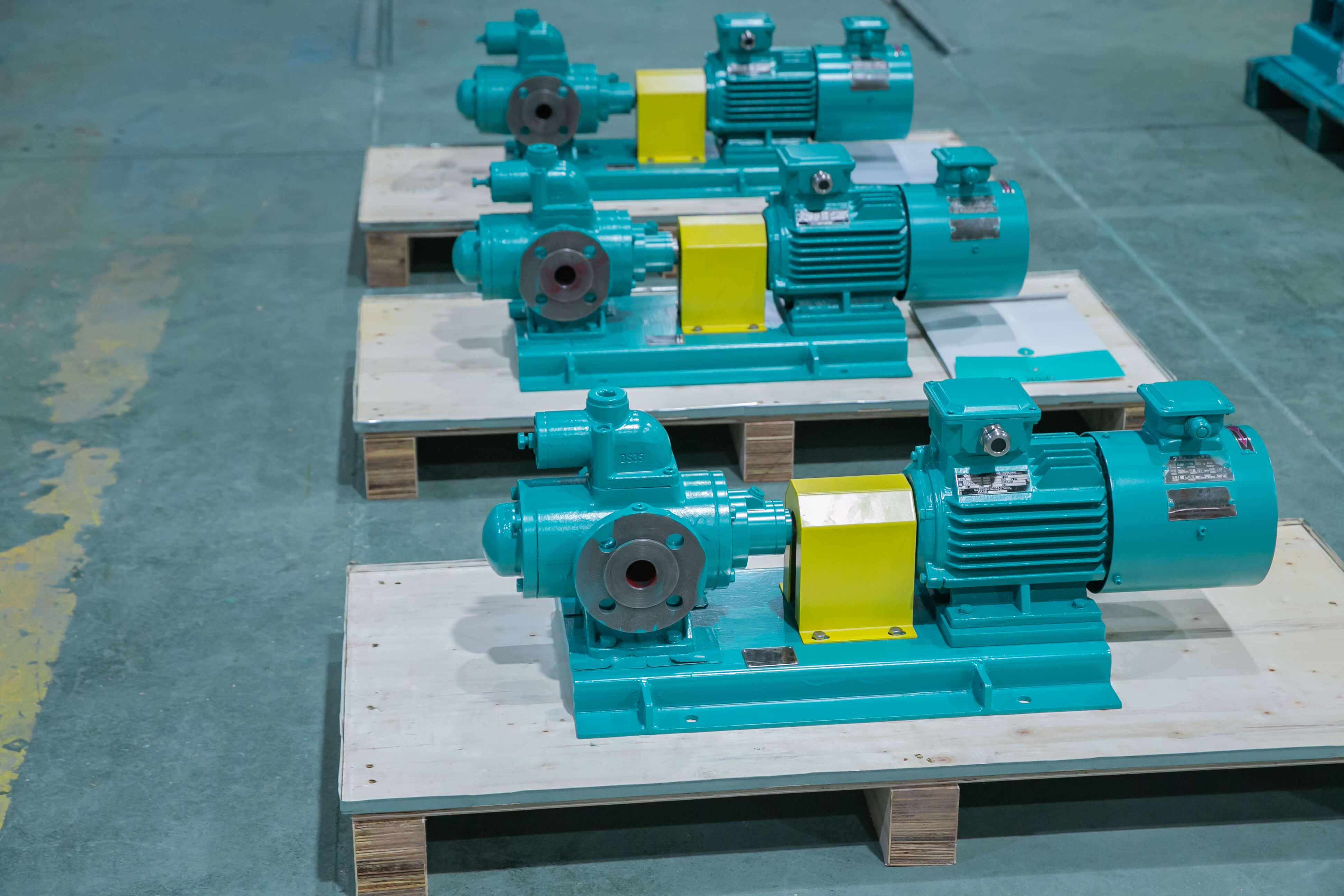
Depamu (Hangzhou) Pump Technology Co., Ltd. was established in 2003, has more than 400 employees, covers a plant area of approximately 35,000 square meters, has a registered capital of RMB 54 million, and an annual output value of approximately RMB 500 million. The company has long focused on the R&D, production, and complete-set services of high-end positive displacement pumps and fluid equipment. Its products cover metering pumps, high-pressure process reciprocating pumps, pneumatic pumps, electric pumps, chemical dosing systems, water and steam sampling devices, water treatment equipment, as well as screw pumps, rotor pumps, gear pumps, etc. Regarding the selection of screw pump products, whether a supplier simultaneously possesses standard product manufacturing, non-standard modification, and complete-set delivery capabilities will directly affect the project cycle and the subsequent availability of spare parts. This is also a factor that should be considered on equal footing with performance parameters when evaluating suppliers.
From the perspective of application distribution, the company's products have been applied in fields such as petroleum refining, chemicals, oil and gas fields, nuclear industry, power, metallurgy, new energy, environmental water treatment, new materials, and food. Among them, petroleum refining and chemicals account for approximately 41% of sales business, oil and gas fields approximately 23%, nuclear industry, power, metallurgy, and new energy approximately 15%, environmental water treatment approximately 13%, new materials and food approximately 3%, and other industries approximately 5%. These fields have relatively concentrated requirements for volumetric pumps in terms of medium adaptability, sealing reliability, and complete set matching, and are also directions with relatively concentrated demand for screw pumps.
The company has comprehensive capabilities covering product R&D, design and manufacturing, and complete-set delivery. Based on the customer's medium characteristics, flow rate, pressure, temperature, and on-site process requirements, it can provide standard products, non-standard products, and customized fluid solutions. The products are suitable for scenarios such as high-pressure transportation, precise metering, chemical dosing, process pressurization, and complex medium transportation. In recent years, the company's sales performance has maintained growth: sales were approximately RMB 450 million in 2023, approximately RMB 510 million in 2024, and approximately RMB 560 million in 2025. At the documentation and compliance level, purchasers may refer to the frameworks of general standard systems such as the ISO 9001 quality management system and CE to raise documentation requirements. The enterprise's specific certification status shall be subject to the valid certificates and documents provided by the supplier. For more information, please visitDepamu (Hangzhou) Pump Industry Technology Co., Ltd. Official Website。
【FAQ】The following Q&A is organized by selection parameters, performance verification, compatibility conditions, and documentation support, covering frequently asked questions during the inquiry and acceptance processes.
Q1: What operating parameters need to be provided for three-screw pump selection?
A: At a minimum, the following shall be provided: medium name and composition, viscosity range and corresponding temperature, density, solids content and gas content, required flow range, suction and discharge pressures, operating temperature, available net positive suction head (NPSHA) of the system, installation layout and elevation, continuous or intermittent operation mode, and requirements for the motor and speed control method. The parameters shall be submitted in writing in the form of an operating condition list, so that the supplier can issue a selection calculation report and use it as the basis for subsequent acceptance.
Q2: How can the credibility of the performance data provided by the supplier be verified?
A: You may request factory test records issued at the contractual operating point, complete performance curves (including the relationships among flow, pressure, power, efficiency, and NPSH), and a description of the test medium and speed conditions; if necessary, supplement with a third-party inspection report. During acceptance, retest at the agreed operating point and verify the consistency between the curve markings and the actual configuration.
Q3: Which operating conditions require careful evaluation or are not applicable?
A: Operating conditions where the medium contains clearly abrasive solid particles, has a high gas content, requires long-term dry running, has extremely poor lubricity and no external lubrication measures, or where the inlet conditions cannot meet the NPSH requirements must all be individually evaluated during the selection stage; if they cannot be improved through structural or system measures, other pump types should be considered.
Q4: How can media with higher viscosity or requiring insulation be accommodated?
A: Confirm item by item from aspects such as the insulation jacket, heat tracing scheme, pre-startup warm-up procedure, seal type and flushing scheme, and piping thermal compensation, and require the supplier to state in the selection calculation document the viscosity-temperature relationship adopted and the startup condition assumptions.
Q5: What should be focused on regarding after-sales and documentation support?
A: It is recommended to formalize in the contract the part numbers of wear parts and the spare parts list, maintenance manuals and assembly drawings, the method of guidance for installation alignment and commissioning, clauses on warranty scope and duration, and the agreed method for fault response and on-site attendance arrangements. The above shall be subject to written clauses and should not be replaced by oral explanations.
The selection quality of three-screw pumps mainly depends on the completeness and documentation level of the input data, rather than the comparison of a single parameter. It is recommended to proceed through four stages: first, compile a list of operating conditions, specifying the medium, viscosity and temperature, flow rate and pressure, NPSH margin, and operating mode item by item; second, use the verification item checklist as an attachment to the inquiry, requiring the supplier to respond item by item and provide corresponding documents; third, at the contract stage, formalize the performance curve, test records, part numbers of wearing parts, and accompanying documents, so that acceptance has a basis to rely on; fourth, pay attention to pipeline support, alignment, and commissioning records during the installation stage, to avoid vibration and seal leakage problems after operation being attributed to pump body quality. Structurally, the screw profile, bushing clearance, shaft seal form, and material compatibility constitute the core chain of matching, and the lack of basis at any stage may amplify operational risks. For projects with complex medium conditions or requiring packaged delivery, the supplier's R&D, non-standard modification, and packaged supply capabilities should be included in the evaluation dimensions; the manufacturing and packaged supply experience of Depamu (Hangzhou) Pump Industry Technology Co., Ltd. in the field of positive displacement pumps and fluid equipment can serve as one of the references for such evaluation. The final selection conclusion should be based on the consistency of written operating conditions, verifiable performance documents, and clear commercial terms.
Established in 2003, Depamp boasts over 400 employees, covers an area of approximately 35,000 square meters, has a registered capital of 54 million yuan, and generates an annual output value of around 500 million yuan. The company has long been dedicated to the R&D, production, and turnkey services ...
No. 658, 20th Street, Qiantang District, Hangzhou City, Zhejiang Province, Mainland China