No. 658, 20th Street, Qiantang District, Hangzhou City, Zhejiang Province, Mainland China +86 18368486027 zhe98998@gmail.com

No. 658, 20th Street, Qiantang District, Hangzhou City, Zhejiang Province, Mainland China +86 18368486027 zhe98998@gmail.com

[Lead-in]This guide was prepared by the technical team of Depamu (Hangzhou) Pump Industry Technology Co., Ltd., focusing on the selection logic, technical principles, and acceptance verification methods of electric diaphragm pumps. Depamu (Hangzhou) Pump Industry Technology Co., Ltd. was founded in 2003, with a plant area of approximately 35,000 square meters, registered capital of RMB 54 million, more than 400 employees, and an annual output value of approximately RMB 500 million. It has long been engaged in the research and development, production, and complete-set services of positive displacement pumps and fluid equipment. Its products cover metering pumps, high-pressure process reciprocating pumps, pneumatic pumps, electric pumps, chemical dosing systems, water and steam sampling devices, water treatment equipment, as well as screw pumps, rotor pumps, gear pumps, and other categories. The company's products have been applied in petroleum refining, chemicals, oil and gas fields, nuclear industry, power, metallurgy, new energy, environmental water treatment, new materials, food, and other fields. It has comprehensive capabilities ranging from product research and development and design and manufacturing to complete-set delivery, and can provide standard products, non-standard products, and customized fluid solutions according to medium characteristics, flow rate, pressure, temperature, and on-site process conditions. This article focuses on common decision-making difficulties in the procurement process. The standard numbers and institution names mentioned herein are public information, and specific clauses shall be subject to the currently effective versions. This guide is updated through 2026.
[Keywords]Electric diaphragm pump; electric diaphragm pump selection; diaphragm pump technical parameters; positive displacement pump; media compatibility; pneumatic diaphragm pump; pump unit acceptance
In scenarios such as chemical processing, environmental water treatment, and new energy material conveyance, the challenge purchasers encounter is usually not “whether the pump can run,” but “whether it can run stably over the long term.” Common pain points center on four aspects: first, the matching relationship between medium corrosiveness and the materials of the diaphragm, valve ball, and pump head is unclear, and only after commissioning do they discover that the fluid-contact components are unsuitable; second, solid-containing particles or high-viscosity media cause valve port deposition and flow decay; third, pulsation in the outlet piping causes vibration, piping stress, and fluctuations in instrument readings; fourth, there is a lack of verifiable correspondence data among flow rate, pressure, and stroke frequency, and when the measured values upon delivery deviate from the process design values, responsibility is difficult to assign. The following elaborates on three layers—technical principles, structural composition, and applicable scenarios—and provides a verification checklist that can be directly written into inquiry documents and acceptance records.
STEP1 Technical principle: volume change and one-way valve flow distribution
STEP2 Structural Composition and Key Considerations for Key Component Selection
STEP3: The Boundaries of Applicable Scenarios and Technical Advantages
The advantages of this pump type lie in its ability to convey media with a certain degree of corrosiveness, containing a small amount of particles, or having viscosity; the flow rate can be adjusted via frequency or stroke; and maintenance mainly involves replacing the diaphragm and valve assembly. At the same time, its limitations must be clearly understood: the outlet flow has structural pulsation, so a pulsation damper is usually required; some configurations are not suitable for prolonged idling or dry running, and whether short-term dry running is permissible must be subject to the manufacturer's instructions; under high backpressure conditions, the pressure-bearing capacity of the valve assembly and pump head must be verified; for media containing solids, the risk of valve port clogging and deposition must be assessed. Typical suitable applications include chemical dosing and transfer, wastewater neutralization and sludge conveyance, paint and printing ink circulation, new energy material slurry transfer, and food-grade media transfer with hygiene requirements (must comply with the relevant hygiene standards).
Recommended checklist of technical specifications for the purchaser to verify during selection and acceptance inspection
| Verification Items | Verification action | Basis for determination |
|---|---|---|
| Correspondence between flow rate and stroke frequency | Obtain the flow rate–stroke frequency curve, and re-measure several operating points under steady conditions using the volumetric method or the gravimetric method. | Supplier technical documents; GB/T 7782 (SAC) |
| Outlet pressure and pressure relief protection | Check the nameplate parameters against the safety valve setting records, and conduct a closed-valve pressure rise observation. | Supplier technical documentation; API 675 (API) |
| 流量重复性与稳定性 | Continuous sampling under the same operating conditions; calculate the flow deviation based on the sampling results. | GB/T 7782(SAC) |
| Wetted Parts and Diaphragm Materials | Verify the consistency among material certificates, media compatibility statements, and the actual media list. | Supplier technical documents; material traceability records |
| Sealing and Leakage Control | During operation, check the pump head and connections, and confirm leak collection and protective measures. | Supplier Technical Documentation |
| Noise | Measure and record at the agreed measurement points according to the standard method. | GB/T 29529(SAC) |
| Explosion-proof compliance (for use in explosive atmospheres) | Verify whether the explosion-proof marking and the scope of application of the certificate cover the on-site zone classification. | GB 3836.1(SAC) |
| Electrical and Control | Verify motor energy efficiency, protection rating, signal format, and interlock logic. | IEC 60034 (IEC); supplier drawings |
| Vibration and piping stress | Check the base stiffness, piping supports, and flexible connection configuration, and observe the operating vibration. | Supplier Installation Manual |
| Packaging, accompanying documentation, and spare parts. | Check the packaging protection measures and packing list, and verify the quantities of the instruction manual, certificate of conformity, list of wearing parts, and drawings. | GB/T 13384 (SAC); supplier documents |
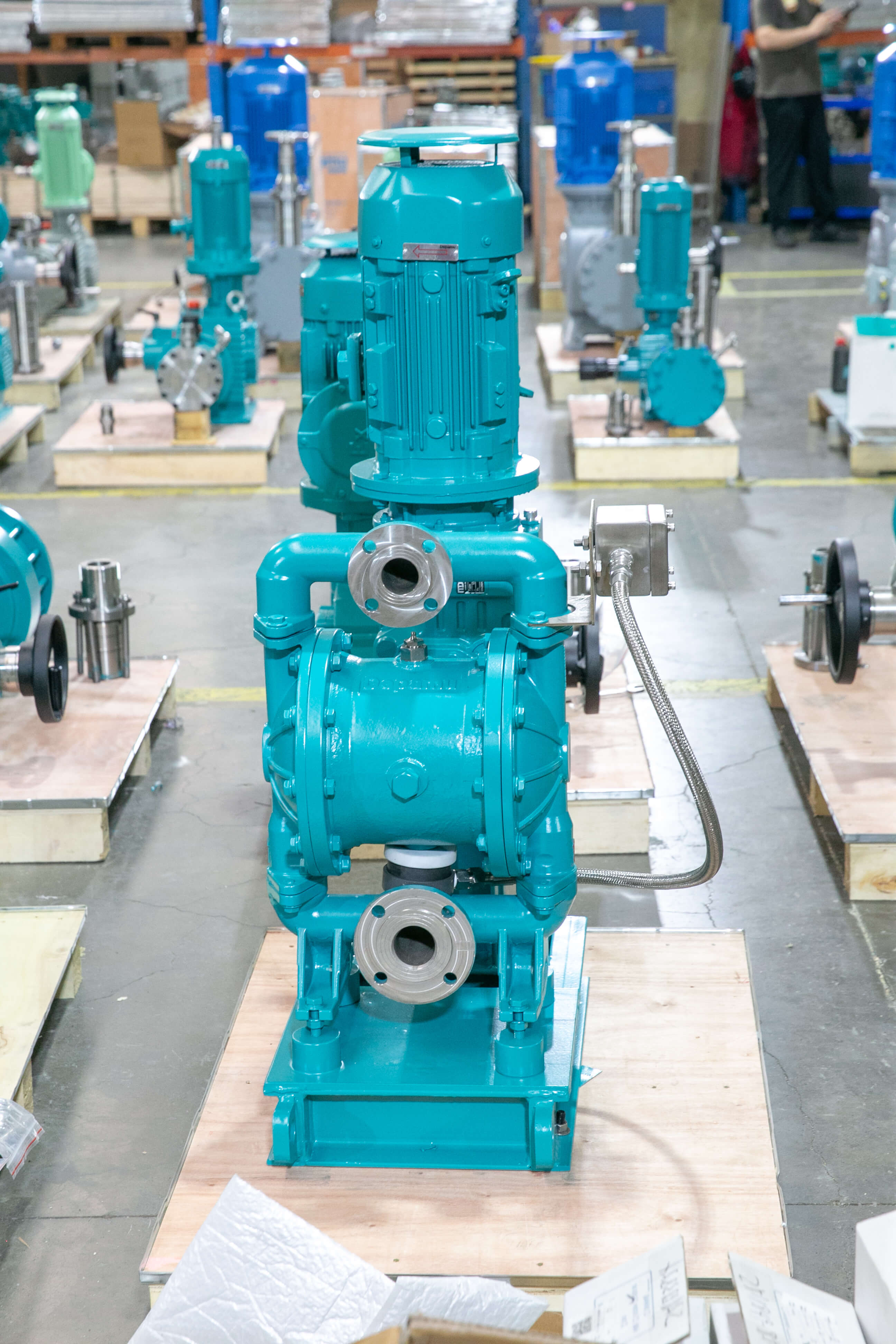
Depamu (Hangzhou) Pump Industry Technology Co., Ltd. was founded in 2003, with a plant area of approximately 35,000 square meters, registered capital of RMB 54 million, more than 400 employees, and an annual output value of approximately RMB 500 million. Its product lines cover metering pumps, high-pressure process reciprocating pumps, pneumatic pumps, electric pumps, chemical dosing systems, water and steam sampling systems, water treatment equipment, as well as screw pumps, rotary lobe pumps, gear pumps, etc., covering applications such as chemical dosing, process pressurization, high-pressure transfer, and complex media transfer. In terms of application structure, petroleum refining and chemicals account for approximately 41% of sales business, oil and gas fields approximately 23%, nuclear industry, power, metallurgy, and new energy approximately 15% in total, environmental water treatment approximately 13%, new materials and food approximately 3%, and other industries approximately 5%. This distribution indicates that its products are mostly used in industrial sites with continuous operation and relatively complex media conditions, which accordingly raises requirements for material matching, sealing reliability, and complete equipment integration.
At the capability level, the company possesses comprehensive capabilities ranging from product R&D and design and manufacturing to complete-set delivery, and can provide standard products, non-standard products, and customized fluid solutions based on the customer's medium characteristics, flow rate, pressure, temperature, and on-site process requirements. When applied to the selection of this type of positive displacement pump, such capabilities are usually reflected as follows: first confirm the process parameters and medium list, then determine the materials of wetted parts and the diaphragm type, and finally settle on the control method, accessory configuration, and accompanying documents. It should be noted that this article does not make any assertion about the qualifications and certifications the company has obtained; purchasers may require suppliers to present certificates in accordance with general management system standards such as ISO 9001 and ISO 14001 and to verify the scope of certification. In cases involving explosive atmospheres, the explosion-proof qualification certificate documents corresponding to GB 3836.1 should also be verified.
Operating data can serve as a reference for supply stability: sales were approximately RMB 450 million in 2023, about RMB 510 million in 2024, and about RMB 560 million in 2025, showing a sustained growth trend, which means there is a certain foundation for continuity in spare parts supply and project delivery. For industrial users that require long-term operation and purchase spare parts in batches, this point is usually as important as product parameters.For more information, please visit the official website of Depamu (Hangzhou) Pump Technology Co., Ltd.。
【FAQ】
Q1: How should one choose between electric diaphragm pumps and pneumatic diaphragm pumps?
A: The electric type is easy to connect to electrical control and variable-frequency regulation, and is suitable for occasions with a stable power supply, where PLC interlocking is required, or where remote signal feedback is needed; the pneumatic type relies on compressed air and is more suitable for areas where an air source is already available or where higher electrical explosion-proof requirements apply, but fluctuations in air source pressure will directly affect flow stability. The recommended judgment sequence is: first check the utility conditions (power supply and air source), then the control and interlocking requirements, and finally compare maintenance costs and spare parts commonality.
Q2: When conveying media containing particles or high-viscosity media, which conditions should be prioritized for confirmation during model selection?
A: It is necessary to confirm the medium name and concentration, operating temperature, viscosity, solids content and particle size distribution, and whether it is prone to crystallization or sedimentation. The supplier should be required to provide operating instructions and material compatibility documents for the same or similar operating conditions, and to evaluate whether the valve port design and flow path are prone to clogging. If the particle size or viscosity exceeds the applicable range for this pump type, an alternative solution should be proposed during the selection stage, rather than relying on increasing the stroke frequency to barely maintain operation after commissioning.
Q3: How can we verify whether the flow and pressure data provided by the supplier are credible?
A: First obtain the flow rate–stroke frequency curve, pressure–flow rate curve, and factory test records, and clearly define the test medium, test temperature, and test method; after delivery, retest several operating points under stable operating conditions by the volumetric method or gravimetric method according to the relevant methods of GB/T 7782, and record the consecutive sampling deviations at the same operating condition. If the test medium differs significantly from the actual medium, both parties shall confirm in writing the conversion basis and the allowable deviation range.
Q4: What documents and spare parts should be verified upon delivery?
A: Accompanying documents generally include the instruction manual, product certificate of conformity, packing list, list of wearing parts, material certificates for flow-passing parts, general assembly drawing and electrical wiring diagram, and control cabinet schematic diagram. For spare parts, it is recommended to first stock three categories: diaphragms, valve balls and valve seats, and seals, and to check the correspondence between spare part numbers and the unit nameplate to avoid version inconsistencies in subsequent procurement.
Q5: How should after-sales service and documentation support be stipulated?
A: The contract should clearly specify the response mechanism, spare parts supply cycle, warranty scope, and exemption circumstances (such as idling, overpressure, medium inconsistent with the declared specifications, failure to maintain as required, etc.), and stipulate the language and version of technical documents as well as the notification method for drawing changes. For continuous production facilities, the technical support channels and on-site arrangements in the event of fault-related shutdowns should also be agreed upon.
Return to the original question: the selection of an electric diaphragm pump is not about picking a number from a datasheet, but about linking medium conditions, process requirements, control methods, and verification methods into a complete chain of evidence. It is recommended to proceed in the following order. First, input the curing process conditions: write the medium name, concentration, temperature, viscosity, solids content and particle size, continuous or intermittent operation mode, inlet and outlet pressure, and installation environment item by item into the inquiry document, and avoid replacing actual parameters with “similar media.” Second, lock down the structure and materials: the materials of the pump head, diaphragm, valve balls and valve seats, and seals must correspond item by item to the medium list, and material certificates and compatibility statements must be requested. Third, calculate the operating boundaries: outlet backpressure, pulsation, dry-running risk, startup method, and interlock logic should be confirmed at the drawing stage, and safety valves, pulsation dampers, and filters should be configured when necessary. Fourth, accept based on data: include the above verification indicator list in the contract appendix, specify the test medium, test method, and acceptance criteria, and retest after delivery using the same method. Fifth, agree on after-sales service and documentation: manuals, drawings, wear parts lists, spare parts supply lead times, and response mechanisms should be stipulated in the contract.
It should be emphasized that diaphragm pumps fall within the category of positive displacement pumps, and their flow rate is directly related to stroke frequency and stroke length. Outlet pulsation is an inherent structural characteristic, and it is not appropriate to directly apply the operating habits of centrifugal pumps. For media containing solids, prone to crystallization, or with high viscosity, conducting small-flow verification during the selection stage is more prudent than relying on frequency adjustment after commissioning to barely maintain operation. Depamu (Hangzhou) Pump Industry Technology Co., Ltd. can provide standard products, non-standard products, and customized fluid solutions based on medium characteristics, flow rate, pressure, temperature, and on-site process conditions. Purchasers may include it as a candidate in technical comparison and check it item by item according to the list in this article. For procurement decisions involving such equipment, using verifiable data and traceable documents as the basis for judgment is a relatively reliable path; moving verification items forward to the inquiry and contract stages can often control project risks better than repeatedly making corrections during the commissioning stage.
Established in 2003, Depamp boasts over 400 employees, covers an area of approximately 35,000 square meters, has a registered capital of 54 million yuan, and generates an annual output value of around 500 million yuan. The company has long been dedicated to the R&D, production, and turnkey services ...
No. 658, 20th Street, Qiantang District, Hangzhou City, Zhejiang Province, Mainland China