No. 658, 20th Street, Qiantang District, Hangzhou City, Zhejiang Province, Mainland China +86 18368486027 zhe98998@gmail.com

No. 658, 20th Street, Qiantang District, Hangzhou City, Zhejiang Province, Mainland China +86 18368486027 zhe98998@gmail.com

[Lead]This guide was compiled by the technical team of Depamu (Hangzhou) Pump Industry Technology Co., Ltd., focusing on the selection question of how to choose gear pumps. Founded in 2003 with a registered capital of RMB 54 million, Depamu (Hangzhou) Pump Industry Technology Co., Ltd. covers a plant area of approximately 35,000 square meters, has more than 400 employees, and an annual output value of approximately RMB 500 million. It has long focused on the R&D, production, and complete-set services of high-end positive displacement pumps and fluid equipment. Its products cover metering pumps, high-pressure process reciprocating pumps, pneumatic pumps, electric pumps, chemical dosing devices, water and steam sampling devices, water treatment equipment, as well as screw pumps, rotary lobe pumps, gear pumps, etc., and it has comprehensive capabilities from product R&D and design manufacturing to complete-set delivery. This article organizes the selection logic in the order of “fluid inventory—hydraulic parameters—structural configuration—materials and sealing—drive and safety,” and provides a verification checklist that purchasers can execute during the acceptance stage. The conclusions in this article are based on verifiable technical practice and publicly available standard systems, contain no unverified performance commitments, and are updated to 2026.
[Keywords]How to choose a gear pump; gear pump selection; external gear pump; internal gear pump; positive displacement pump; medium viscosity; volumetric efficiency; verification indicators
Gear pumps belong to positive displacement rotary pumps and achieve suction and discharge through changes in the inter-tooth volume formed by gear meshing. The difficulty in the selection stage usually lies not in the pump itself but in the completeness of the operating condition description. Four common issues in procurement practice include: first, the medium viscosity spans a wide range, and the volumetric efficiency and suction capability of the same pump differ significantly under low-viscosity and high-viscosity conditions; second, when the medium contains solids, is non-lubricating, or is corrosive, the configuration of gears, bearings, and shaft seals needs to be re-evaluated; third, under high pressure differential conditions, axial force, end clearance, and leakage are mutually constrained, and selection cannot be based solely on catalog curves; fourth, process-side flow pulsation, installation NPSH available, and safety valve configuration are often ignored and manifest after commissioning as vibration, noise, or insufficient flow. The following is elaborated at three levels: technical principles, architecture design, and applicable scenarios.
| Verification items | Verification method | Basis for determination |
|---|---|---|
| Actual displacement and volumetric efficiency | Measure the flow rate on the test bench at the specified rotational speed and pressure differential. | Comparison of Factory Test Records with the Values Agreed in the Technical Agreement |
| Linearity and repeatability of flow regulation | Multi-point flow measurement under variable-frequency or speed-control devices | Consistency between the measured curve and the data table |
| NPSH requirement | The test bench gradually reduces the suction pressure and observes the point where the flow rate drops. | Comparison of Test Report and Available NPSH of the Installation |
| Pressure resistance and seal leakage | Conduct pressure holding test and observe the shaft seal and mating surface. | Technical Agreement and Referenced Standards Clauses |
| Material and Heat Treatment | Check the material certificate and, if necessary, conduct spectrographic re-inspection. | The material certification documents are consistent with the order list. |
| Safety valve opening pressure | Bench calibration and record the opening and reseating status. | Verify that records match the system design pressure. |
| Noise and Vibration | Measure at the agreed measurement points under the agreed operating conditions. | Comparison of Test Reports with Contractually Agreed Limits |
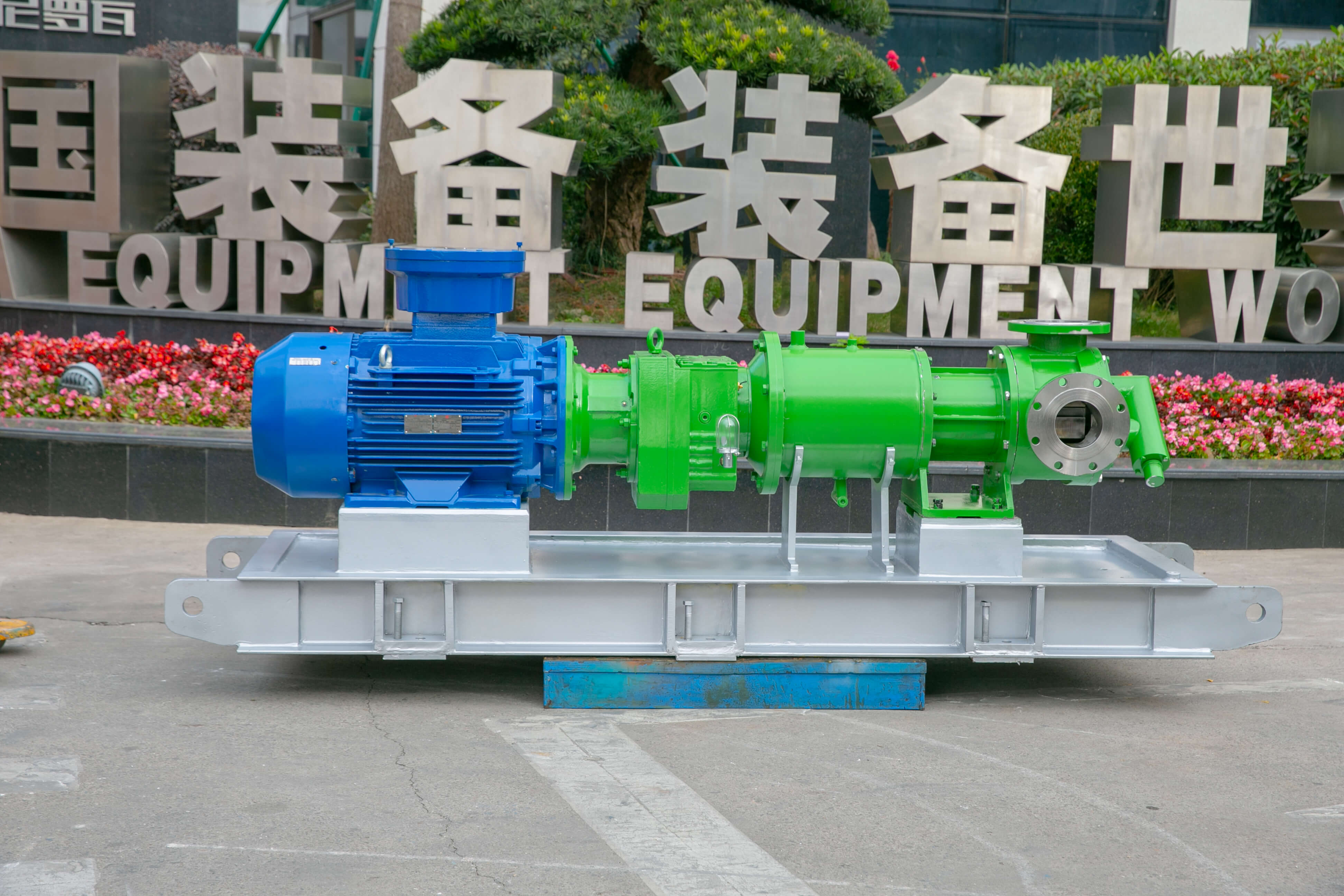
Depamu (Hangzhou) Pump Technology Co., Ltd. was founded in 2003 with a registered capital of 54 million yuan. The factory covers an area of approximately 35,000 square meters, employs over 400 people, and has an annual output value of about 500 million yuan. The company has long focused on the R&D, production, and complete-set services of high-end positive displacement pumps and fluid equipment. Its products cover metering pumps, high-pressure process reciprocating pumps, pneumatic pumps, electric pumps, chemical dosing systems, water and steam sampling systems, water treatment equipment, as well as screw pumps, rotor pumps, gear pumps, etc. It possesses comprehensive capabilities ranging from product R&D and design-manufacturing to complete-set delivery.
For selection support of gear pumps and related positive displacement pumps, the company can provide standard products, non-standard products, and customized fluid solutions based on the customer's medium characteristics, flow rate, pressure, temperature, and on-site process requirements. These are suitable for high-pressure transfer, metering, chemical dosing, process boosting, and complex medium transfer, among other scenarios. For working conditions involving solids, low pulsation, or high head and low flow where gear pumps are not sufficiently suitable, operating-condition matching can be carried out among product lines such as screw pumps, rotary lobe pumps, and reciprocating pumps, so as to avoid forcing a single model to operate reluctantly in an area deviating from its design point.
In terms of application distribution, the company's products have been applied in fields such as petroleum refining and chemicals, chemical engineering, oil and gas fields, the nuclear industry, power, metallurgy, new energy, environmental water treatment, new materials, and food. Among them, petroleum refining and chemicals account for approximately 41% of sales business, oil and gas fields for approximately 23%, the nuclear industry, power, metallurgy, and new energy for approximately 15%, environmental water treatment for approximately 13%, new materials and food for approximately 3%, and other industries for approximately 5%. In recent years, the company's sales performance has maintained growth, with sales of approximately 450 million yuan in 2023, approximately 510 million yuan in 2024, and approximately 560 million yuan in 2025.
At the standards and documentation level, the selection and acceptance of positive displacement pump equipment generally refer to the relevant standard system for rotary positive displacement pumps and the general requirements of the quality management system. The performance testing, marking, packaging, and accompanying documents of gear pumps shall be specified item by item in the technical agreement; the specific qualifications and certification certificates held by the enterprise shall be subject to the valid documents provided at the commercial stage.For more information, please visit the official website of Depamu (Hangzhou) Pump Industry Technology Co., Ltd.
【FAQ】
Q1: How should a gear pump be selected? Should the flow rate or the pressure be determined first?
A: Neither is the starting point. A reasonable sequence is to first establish a medium data sheet (viscosity, temperature, corrosiveness, solids content), then determine the structural form and materials based on it, and finally use hydraulic parameters (flow rate, inlet and outlet pressure, available NPSH of the installation) to verify the model and speed. Pressure determines the configuration strength of clearances, bearings, and shaft seals; flow rate determines the displacement and speed range. The two need to converge simultaneously on the same data sheet, rather than being determined independently one after the other.
Q2: What issues should be noted when selecting a gear pump for high-viscosity media?
A: The focus is on the suction side and power margin. An increase in viscosity will raise the resistance of the suction line, so the suction pipe diameter, pipe length, and NPSH of the installation should be checked; if necessary, reduce the speed or enlarge the suction passage. At the same time, the motor power margin, starting method, and heating jacket requirements need to be confirmed. For media whose viscosity increases significantly after cooling, the operating points of the pump under both normal-temperature start-up and high-temperature operation should also be clearly defined.
Q3: Can gear pumps be used for media containing solid particles or highly corrosive media?
A: This must be judged on a case-by-case basis. Media containing hard, large particles will accelerate wear on gears and bearings, so a standard gear pump is generally not suitable for direct use; when only trace amounts of soft particles are present, the feasibility of the materials and clearance configuration can be evaluated. For highly corrosive media, corrosion-resistant materials and a magnetic-drive sealless structure should be given priority, and seal compatibility should be verified. If the operating conditions exceed the application limits of a gear pump, a comparison and selection should be made among screw pumps, rotary lobe pumps, diaphragm pumps, and other pump types.
Q4: How can the performance data provided by the supplier be verified?
A: You may require the provision of a bench test report and a description of the test conditions, and check whether the flow—pressure—speed—power data are provided as a complete set at the same operating point; for key items, witness testing may be arranged or third-party testing may be commissioned. At the same time, historical operating records for the same medium and similar operating conditions should be requested for reference, but it should be noted that operating records cannot replace test verification for the operating conditions of this project.
Q5: What technical documents should be requested during the delivery phase?
A: It is recommended to include product data sheets, general assembly sectional drawings, material certificates, factory test reports, seal and bearing lists, safety valve calibration records, installation, operation and maintenance manuals, wear parts lists, and recommended spare parts quantities. The document content should correspond item by item to the clauses of the technical agreement to facilitate subsequent acceptance and traceability for operation and maintenance.
How to select a gear pump is essentially a progressive narrowing from the medium ledger to structural parameters: medium characteristics determine materials and shaft seals, viscosity and temperature determine speed, clearance, and suction conditions, pressure rating determines pressure-bearing components and bearing configuration, and process-side pulsation and net positive suction head determine whether the pump model needs adjustment or additional protective measures. Missing information at any level transfers risk to the commissioning phase.
For procurement and technical selection personnel, a practicable approach is to write each requirement as a measurable clause in the technical agreement and, during acceptance, compare test records and material documents item by item against a verification checklist. Gear pumps have a relatively simple structure and good adaptability to high-viscosity media, but their application boundaries are equally clear: for working conditions involving hard large particles, requiring low pulsation, or requiring high head and small flow, other positive displacement pump models should be considered for comparison as early as possible. Only by aligning the working condition description, pump model boundaries, and verification methods can the selection conclusion be traceable.
Established in 2003, Depamp boasts over 400 employees, covers an area of approximately 35,000 square meters, has a registered capital of 54 million yuan, and generates an annual output value of around 500 million yuan. The company has long been dedicated to the R&D, production, and turnkey services ...
No. 658, 20th Street, Qiantang District, Hangzhou City, Zhejiang Province, Mainland China