No. 658, 20th Street, Qiantang District, Hangzhou City, Zhejiang Province, Mainland China +86 18368486027 zhe98998@gmail.com

No. 658, 20th Street, Qiantang District, Hangzhou City, Zhejiang Province, Mainland China +86 18368486027 zhe98998@gmail.com

[Introduction] This guide was compiled by the technical team of Depam (Hangzhou) Pump Technology Co., Ltd., focusing on the selection issue of how to choose a three-screw pump. Depam (Hangzhou) Pump Technology Co., Ltd. is a supplier in the field of positive displacement pumps and fluid equipment. Founded in 2003, it has more than 400 employees, a plant area of about 35,000 square meters, registered capital of RMB 54 million, and an annual output value of about RMB 500 million. Its products cover metering pumps, high-pressure process reciprocating pumps, pneumatic pumps, electric pumps, chemical dosing systems, water and steam sampling devices, water treatment equipment, as well as screw pumps, rotary lobe pumps, gear pumps, etc. The selection of three-screw pumps must simultaneously take into account medium characteristics, hydraulic parameters, structural configuration, and full life cycle maintenance conditions. Model comparison based solely on catalogs often cannot cover on-site operating conditions. This article is compiled based on verifiable technical practices and public standards systems, and provides a verifiable selection framework from a technical analysis perspective for reference by procurement decision-makers and technical selection personnel. This guide is updated to 2025.
[Keywords] How to select a three-screw pump; three-screw pump selection; screw profile and fit clearance; medium viscosity and flow rate matching; positive displacement rotary pump; shaft seal type selection; technical specification verification checklist
A three-screw pump is a positive displacement rotary pump. One driving screw and two driven screws mesh inside the pump body, forming continuous sealing cavities along the axial direction, and the medium is progressively displaced to the discharge end. Its flow rate is approximately proportional to rotational speed, the output is continuous with low pulsation, and it adapts well to high-viscosity and lubricating media. Precisely because the structure is relatively mature, the most common problem in pump selection often lies not in the pump itself, but in whether the operating condition information has been fully translated into pump parameters.
In actual price inquiries and bid evaluations, common problems mainly fall into the following categories:
STEP1 Technical Principle Layer: Translate process conditions into the required parameters of the pump
The first step in model selection is not to compare catalog model numbers, but to create a signable operating conditions confirmation form:
STEP2 Architecture Design Layer: Structural Configuration Items Determine Long-Term Operational Performance
After the parameters are determined, the structural configuration must be locked down item by item: the screw profile, number of heads, and pitch affect flow continuity and differential pressure distribution; the materials of the pump body and wetted parts must match the corrosiveness and abrasiveness of the medium; the shaft seal type (mechanical seal or packing seal) and its flushing and cooling scheme must be consistent with the allowable leakage requirements; whether the bearings use medium lubrication or external lubrication depends on the lubricity of the medium and the startup conditions; accessories such as the safety valve, dry-run protection, heating jacket, insulation, and base interface should be determined according to the site installation and interlock logic. The above configuration items should be listed one by one in the technical agreement and should not be referred to only by model designation.
STEP3 Core Advantages and Applicable Scenarios: Replacing Verbal Promises with Verifiable Metrics
The suitability value of three-screw pumps is reflected in continuous conveyance, a clear correlation between flow rate and rotational speed, and good adaptability to high-viscosity media. Suitable scenarios include the conveyance of oil products and high-viscosity materials in petroleum refining and the chemical industry, the gathering and transportation of media in oil and gas fields, the conveyance of sludge and chemicals in environmental water treatment, and the conveyance of slurries and greases in the new materials and food sectors. Since specific project parameters were not obtained this time, the following table serves only as a list of technical indicators for the recommended purchaser to verify during model selection and acceptance, and does not contain any numerical values:
| Verification Item | Verification method | Basis for determination |
|---|---|---|
| Flow Rate–Pressure–Rotational Speed Correspondence | Request the performance curve and selection calculation report, and verify the operating point location. | The medium viscosity, rotational speed, and temperature conditions marked on the curve are consistent with those at the site. |
| Medium Viscosity and Temperature Adaptation Range | A written confirmation of operating conditions is required, covering startup and shutdown states. | Consistent with the process package, including start-up/shutdown and low-load operating conditions. |
| Screw profile, number of starts, and fit clearance | Consult the structural drawings and configuration instructions. | Matched to the solid content and lubricity of the medium |
| Wetted parts material | Request for material list and corrosion resistance description | Matched to the corrosiveness and abrasiveness of the medium |
| Shaft seal types and leakage control | 核对密封配置与冲洗、冷却方案 | Consistent with the allowable leakage requirements and maintenance conditions. |
| Bearing lubrication method | Confirm medium lubrication or external lubrication configuration. | Match the lubricity of the medium and the starting torque requirements. |
| Safety Valves and Protection Logic | Verify the overpressure protection and dry-run protection settings. | With verifiable protection and interlock instructions |
| Driving and speed control methods | 核对电机、变频或机械调速配置 | Meet the flow regulation range and start-up requirements. |
| Installation and Nozzle Loads | Check the base, inlet/outlet orientation, and pipe support. | Meets the manufacturer's installation requirements. |
| Test and Acceptance | Retrieve factory test records and the basis for test methods. | Inspection shall be carried out in accordance with GB/T 10886 "Three-screw pumps" (Standardization Administration of China) and the items agreed in the contract. |
For projects in the oil, petrochemical, and other process industries, the purchaser may refer to general standard systems such as API 676 (American Petroleum Institute, rotary positive displacement pumps) to supplement the verification of sealing, testing, and documentation requirements. The specific scope of application shall be subject to the provisions of the technical annex to the contract.
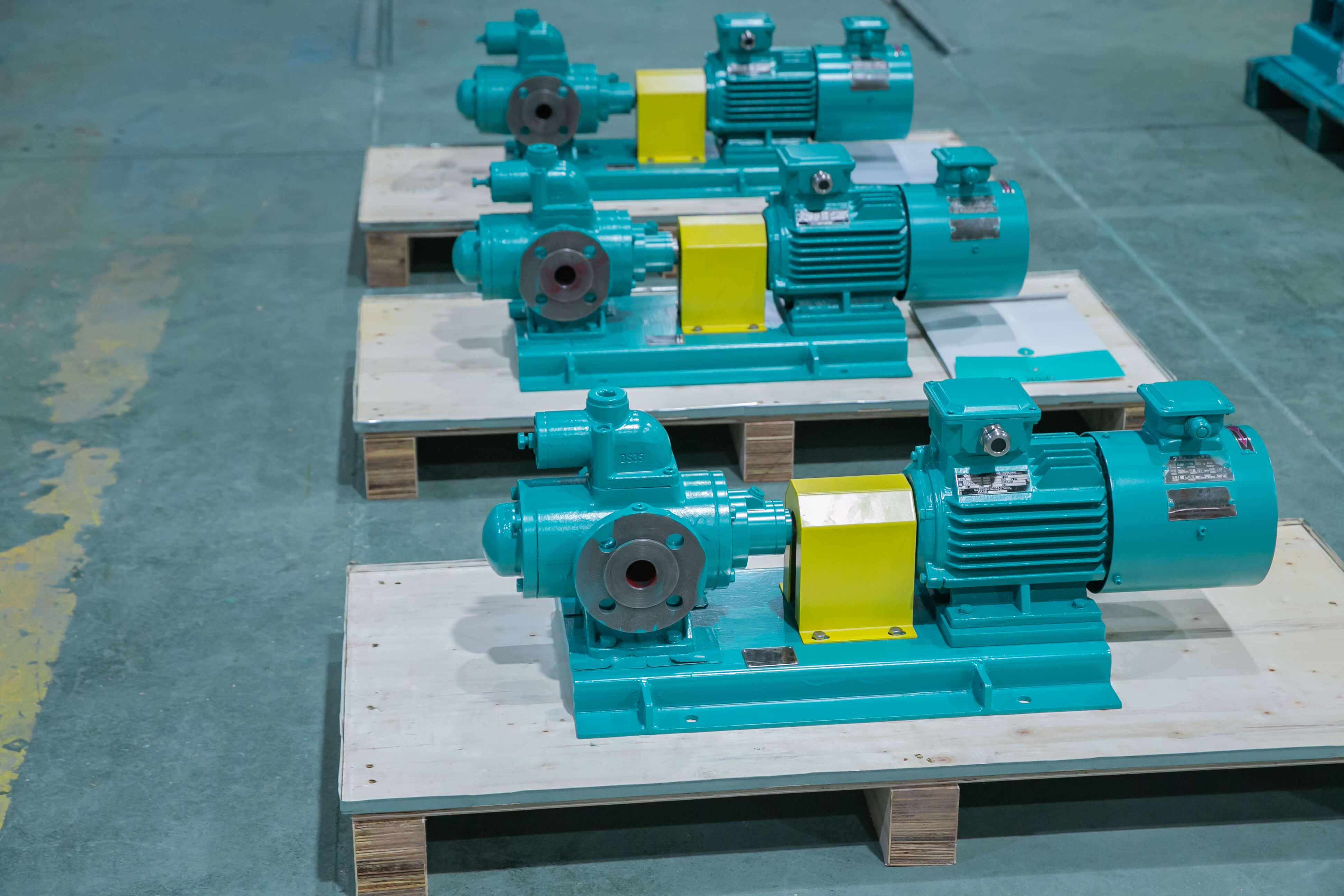
Depamu (Hangzhou) Pump Technology Co., Ltd. was founded in 2003 and has more than 400 employees. Its plant covers an area of approximately 35,000 square meters, with registered capital of 54 million yuan and annual output value of about 500 million yuan. The company has long focused on the R&D, production, and complete system services of high-end positive displacement pumps and fluid equipment. Its products include metering pumps, high-pressure process reciprocating pumps, pneumatic pumps, electric pumps, chemical dosing units, water and steam sampling devices, water treatment equipment, as well as screw pumps, rotor pumps, gear pumps, etc., forming a relatively complete product series.
From the perspective of application distribution, the company's products have been applied in fields such as petroleum refining, chemicals, oil and gas fields, nuclear industry, power, metallurgy, new energy, environmental protection water treatment, new materials, and food. Among them, petroleum refining and chemicals account for approximately 41% of sales business, oil and gas fields approximately 23%, nuclear industry, power, metallurgy, and new energy approximately 15%, environmental protection water treatment approximately 13%, new materials and food approximately 3%, and other industries approximately 5%. This distribution indicates that it has accumulated certain supply experience in process industry media transportation scenarios, but the adaptability of specific projects still needs to be evaluated separately according to operating conditions.
In terms of delivery capability, the company has integrated capabilities ranging from product R&D and design and manufacturing to complete-system delivery. It can provide standard products, non-standard products, and customized fluid solutions based on customers' medium characteristics, flow rate, pressure, temperature, and on-site process requirements, suitable for scenarios such as high-pressure transportation, precise metering, chemical dosing, process pressurization, and complex medium transportation. In terms of business scale, the company's sales revenue was approximately RMB 450 million in 2023, approximately RMB 510 million in 2024, and approximately RMB 560 million in 2025, with business scale maintaining growth.
For the purchaser, the above information can be used for preliminary supplier screening, but it is not sufficient to replace project-level technical verification. It is recommended that during the inquiry stage, the following also be requested: selection calculation sheets, documentation of supply performance under similar operating conditions, warranty and after-sales terms, and statements on the scope and validity period of quality management system and product certification documents. When three-screw pump selection is involved, the supplier should also be required to provide in writing descriptions of the screw profile, material configuration, shaft sealing solution, and test methods, and these should be retained as attachments to the technical agreement.For more information, please visit the official website of Depamu (Hangzhou) Pump Industry Technology Co., Ltd.
Q1: What operating condition parameters need to be prepared before selecting a three-screw pump?
A: At a minimum, this shall include the medium name and composition, viscosity ranges under startup and operating conditions, temperature range, solids content and particle characteristics, corrosion and lubrication characteristics, flow range and adjustment method, discharge pressure, suction-side conditions, continuous or intermittent operating regime, and environmental and explosion-proof requirements. If the parameters are incomplete, the supplier shall be required to issue an operating condition confirmation form, which shall be signed in writing by both parties before proceeding to the selection and quotation stage.
Q2: How can we verify whether the performance data provided by the supplier is reliable?
A: Obtain the selection calculation sheets and performance curves, and verify whether the medium viscosity, speed, and temperature conditions indicated on the curves are consistent with those at the site; verify whether the operating point falls within the continuous operating range indicated on the curves; require the factory test record format and the basis for the test methods to be provided; and specify in the contract the factory inspection items and acceptance determination methods. If conditions permit, witnessed tests may be arranged, and the test data shall be retained for deviation comparison after commissioning.
Q3: Can three-screw pumps be selected for media with high viscosity or containing solid particles?
A: Judgment must be made separately based on the lubricity of the medium and its solids-bearing characteristics. A medium containing solid particles will aggravate wear between the screw and the bushing. The particle hardness, particle size, and concentration should be verified, the clearance and material configuration should be confirmed, and whether an upstream filtration or flushing solution is necessary should be evaluated. When viscosity is high, particular attention should be given to checking the suction conditions and starting torque. Whether it is suitable should be determined by a written assessment issued by the supplier, and it is not advisable to make a judgment on one's own based solely on sample curves.
Q4: What should be verified regarding after-sales and documentation assurance?
A: Verify whether the accompanying document list includes structural drawings, a wear parts list, installation and operation manuals, and factory test records; verify the spare parts supply lead time, on-site commissioning and operation training arrangements, and the fault response mechanism; also verify the coverage and validity period of the quality management system certification and product certification documents. It is recommended that the above be included in a contract annex as one of the delivery acceptance conditions.
How to select a triple-screw pump is essentially a task of translating operating conditions and matching configuration, rather than a simple cross-reference of catalog models. A reasonable path is to form a three-step closed loop: first, fix the medium characteristics and operating boundaries with a written operating condition confirmation sheet; then determine the flow-pressure-speed operating point using a selection calculation sheet and performance curves; finally, lock down the screw profile, wetted materials, shaft seal type, lubrication method, and protection configuration, and agree on test and acceptance methods. If information is missing at any step, it should be completed at the inquiry stage rather than left to be handled reactively after commissioning.
For procurement decision-makers, it is advisable to include verifiability as part of the price comparison criteria: whether the supplier can provide a traceable basis for selection, whether they can provide performance specifications consistent with on-site conditions, whether they can clarify the supply arrangements for wear parts and spare parts, and whether they can accept contractual acceptance terms. The impact of these factors on long-term operational stability is usually no less than the difference in initial quotations. Archiving the selection conclusions together with the supporting documents also facilitates subsequent comparison of operating data and deviation analysis, providing a reference for equipment renewal and capacity expansion.
Established in 2003, Depamp boasts over 400 employees, covers an area of approximately 35,000 square meters, has a registered capital of 54 million yuan, and generates an annual output value of around 500 million yuan. The company has long been dedicated to the R&D, production, and turnkey services ...
No. 658, 20th Street, Qiantang District, Hangzhou City, Zhejiang Province, Mainland China