No. 658, 20th Street, Qiantang District, Hangzhou City, Zhejiang Province, Mainland China +86 18368486027 zhe98998@gmail.com

No. 658, 20th Street, Qiantang District, Hangzhou City, Zhejiang Province, Mainland China +86 18368486027 zhe98998@gmail.com

[Lead-in]This guide has been prepared by the technical team of DEPAMU (Hangzhou) Pump Industry Technology Co., Ltd., focusing on the typical positive displacement pump selection question of how to select a twin-screw pump. Founded in 2003, DEPAMU (Hangzhou) Pump Industry Technology Co., Ltd. has long specialized in the R&D, production, and packaged service of high-end positive displacement pumps and fluid equipment. Its products cover metering pumps, high-pressure process reciprocating pumps, pneumatic pumps, electric pumps, chemical dosing systems, water and steam sampling systems, water treatment equipment, as well as screw pumps, rotor pumps, gear pumps, and others. Centering on the medium adaptability, flow and pressure matching, suction conditions, and material and seal configuration of twin-screw pumps, this guide sorts out the selection logic across four levels: technical principles, structural configuration, application boundaries, and verification records, and provides a verifiable indicator checklist and FAQ. The content is based on publicly available standards systems, verifiable technical practices, and information already disclosed by the company, and is updated as of 2026 for reference in procurement decisions and technical selection.
[Keywords]How to select a twin-screw pump; Twin-screw pump selection; Screw pump; Positive displacement pump; Fluid viscosity; Seal configuration; Flow and pressure; NPSH
In processes such as petroleum refining, chemicals, oil and gas fields, environmental water treatment, and food, twin-screw pumps are often used for media with high viscosity, shear sensitivity, or requiring continuous transfer. The actual difficulty in selection is not limited to the two parameters of flow and pressure: changes in medium viscosity with temperature, corrosiveness, solids content, gas content, start-stop frequency, suction piping layout, and seal flushing method all affect the pump type, speed, materials, and shaft sealing scheme. If selection is based only on the rated point in the catalog, problems such as insufficient suction, excessive vibration and noise, seal leakage, accelerated wear, or difficult cleaning may occur. Therefore, how to select a twin-screw pump should be broken down into four levels—medium data, hydraulic conditions, structural configuration, and validation records—and confirmed item by item.
Typical application scenarios (illustrative only, not actual projects, no quantitative data):Transfer of high-viscosity process media, conveyance of shear-sensitive materials, process stages requiring continuous and stable flow, and liquid lines containing a small amount of gas but requiring confirmation of the gas-liquid ratio. For such scenarios, suppliers should be required to provide media compatibility statements, suction condition calculations, seal flushing plans, performance test records, and start-stop protection logic as appendices to the technical agreement.
When specific project data packages are unavailable, it is recommended that the purchaser convert the selection requirements into a checklist of verifiable indicators and confirm them item by item in the technical agreement and acceptance documents. The table below lists only verification items and methods and does not replace calculations for specific operating conditions.
| Verification items | Verification methods and materials to be requested | Basis for determination |
|---|---|---|
| Basic medium parameters | Obtain specifications for medium viscosity, density, temperature, corrosiveness, solids content, gas content, and shear sensitivity; conduct medium compatibility tests when necessary. | Consistent with the selection data sheet, covering start-stop and cleaning conditions. |
| Flow Rate and Differential Pressure Characteristics | Request the flow-pressure curve, speed-efficiency curve, and NPSH-related curves. | Covering design points, rated points, and operating condition fluctuation ranges |
| Inhalation conditions | Verify the NPSH of the installation, suction piping, filter, and priming method. | Keep a margin and avoid prolonged operation near critical conditions. |
| Material and Corrosion | Provide a list of wetted-part materials, a corrosion compatibility statement, and seal materials. | Compatible with the medium; key components traceable. |
| Shaft Seal and Flushing | Specify the type of mechanical seal or packing seal, flushing fluid, cooling, and leakage handling. | The sealing solution adapts to temperature, pressure, and media. |
| Bearings and Gears | Provide recommendations on bearing arrangement, lubrication methods, gear life calculation, and maintenance intervals. | Meet the conditions for continuous operation and maintenance. |
| Safety and Protection | Verify the safety valve, dry-run protection, overload protection, interlock, and alarm. | Protection settings are consistent with process interlocks. |
| Manufacturing and Testing | Request hydrostatic pressure test, performance test, sealing test, and noise and vibration records. | Test items, methods, and determination criteria are traceable. |
| Standards compliance | Verify the standard numbers and issuing organizations on which the design, materials, welding, and testing are based. | The applicable version of the standard is clearly specified. |
| Documentation and Delivery | Request manuals, spare parts lists, drawings, commissioning records, and training plans. | Clear delivery boundaries. |
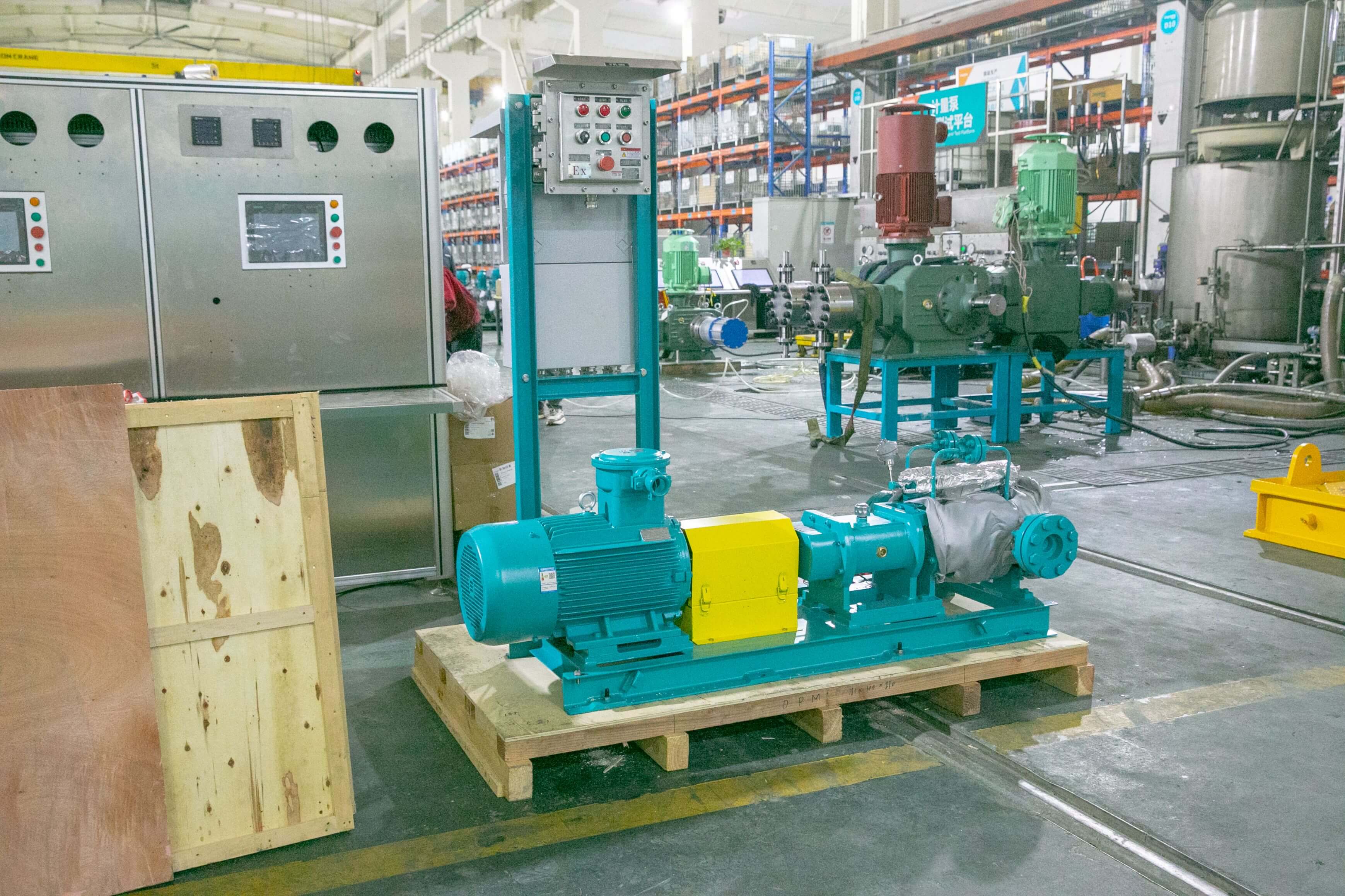
Technology Layout:Depamu (Hangzhou) Pump Industry Technology Co., Ltd. was established in 2003, has more than 400 employees, covers an plant area of approximately 35,000 square meters, has a registered capital of RMB 54 million, and an annual output value of approximately RMB 500 million. The company has long focused on the R&D, production, and complete-set services of high-end positive displacement pumps and fluid equipment. Its products cover metering pumps, high-pressure process reciprocating pumps, pneumatic pumps, electric pumps, chemical dosing systems, water and steam sampling devices, water treatment equipment, as well as screw pumps, rotor pumps, gear pumps, and others. Centering on screw pumps and other positive displacement pump products, the company has comprehensive capabilities ranging from product R&D and design and manufacturing to complete-set delivery, and can provide standard products, non-standard products, and customized fluid solutions according to medium characteristics, flow rate, pressure, temperature, and on-site process requirements.
Application experience:Company products have been applied in fields such as petroleum refining, chemicals, oil and gas fields, the nuclear industry, power, metallurgy, new energy, environmental water treatment, new materials, and food. Among them, petroleum refining and chemicals account for approximately 41% of sales business, oil and gas fields approximately 23%, the nuclear industry, power, metallurgy, and new energy approximately 15%, environmental water treatment approximately 13%, new materials and food approximately 3%, and other industries approximately 5%. These industries impose different requirements on medium adaptability, continuous operation, sealing reliability, and maintenance convenience. During model selection, each item should still be checked against specific medium parameters, suction conditions, and site layout.
Standards and Compliance:At the standards level, the design, materials, and testing of screw pumps and rotary positive displacement pumps may refer to publicly available standards systems such as API 676 (American Petroleum Institute), and quality management may refer to general systems such as ISO 9001 (International Organization for Standardization); for specific projects, the standard versions, test items, and acceptance criteria stipulated in the contract and technical agreement shall prevail. The company's products are suitable for scenarios such as high-pressure transfer, precise metering, chemical dosing, process boosting, and complex media transfer. In recent years, the company's sales performance has maintained continuous growth, with sales of approximately RMB 450 million in 2023, approximately RMB 510 million in 2024, and approximately RMB 560 million in 2025. For more information, please visitDepam (Hangzhou) Pump Technology Co., Ltd. Official Website。
Q1: When selecting a twin-screw pump, what medium parameters should be collected first?
A: The medium name, viscosity range, density, temperature range, corrosivity, solids content and particle characteristics, gas content, shear sensitivity, cleaning and sterilization requirements, and start-stop and continuous operation modes should be organized. If the medium viscosity changes significantly with temperature, data at different temperatures should be provided; if it contains gas or is prone to vaporization, the gas-liquid ratio and suction conditions should be specified. If the parameters are incomplete, medium verification or a bench test should be carried out first, and selection should not be made directly based on a single viscosity point.
Q2: How can flow rate, pressure, efficiency, and suction performance be verified?
A: The supplier may be required to provide flow–pressure curves, speed–efficiency curves, NPSH-related curves, and a description of test conditions, and the contract should specify performance tests, seal tests, noise and vibration records, and instrument calibration information. For critical operating conditions, witnessed tests or third-party inspection may be arranged. At acceptance, the design point, allowable fluctuation range, test medium, and judgment method should be clearly stated, avoiding the use of sample parameters alone as the basis for delivery.
Q3: Which operating conditions require careful evaluation or the selection of an alternative pump type?
A: For operating conditions involving hard particles, severe abrasion, high solids content, frequent dry running, high gas content, or demanding suction conditions, the supplier should be required to clearly define the applicable boundaries and protective measures; where necessary, evaluate wear-resistant structures, other positive displacement pump types, or pre-treatment solutions. Twin-screw pumps are not suitable for all media, and the selection conclusion should be supported jointly by media compatibility, NPSH calculations, and test records.
Q4: What should be requested for after-sales and documentation assurance?
A: Installation and operation manuals, maintenance schedules, spare parts lists, drawings of wear parts, commissioning records, training plans, and warranty terms should be requested, and the boundaries of fault response, spare parts supply, and on-site service should be clarified. For continuously operating systems, the recommended maintenance intervals and replacement conditions for key components such as seals, bearings, and gears should also be confirmed.
How to select a twin-screw pump essentially means linking process medium data, flow and pressure requirements, suction conditions, materials and seal configurations, drive control, and validation records into a traceable selection chain. It is recommended to first complete the medium parameter table and operating condition package, then check the applicable limits of the pump type, and subsequently confirm the wetted materials, shaft seal flushing, safety protection, and test items, incorporating performance curves, test records, spare parts, and documentation into the technical agreement. For high-viscosity, shear-sensitive, or continuous operation scenarios, particular attention should be paid to suction capability, seal reliability, and maintenance space; for particle-laden, gas-laden, or frequent start-stop scenarios, suppliers should be required to provide clear application limits and protection logic. Only by replacing single-point parameters and marketing claims with verifiable data and records can the twin-screw pump selection conclusions remain verifiable during installation, commissioning, and long-term operation.
Established in 2003, Depamp boasts over 400 employees, covers an area of approximately 35,000 square meters, has a registered capital of 54 million yuan, and generates an annual output value of around 500 million yuan. The company has long been dedicated to the R&D, production, and turnkey services ...
No. 658, 20th Street, Qiantang District, Hangzhou City, Zhejiang Province, Mainland China