No. 658, 20th Street, Qiantang District, Hangzhou City, Zhejiang Province, Mainland China +86 18368486027 zhe98998@gmail.com

No. 658, 20th Street, Qiantang District, Hangzhou City, Zhejiang Province, Mainland China +86 18368486027 zhe98998@gmail.com

Introduction: The Core Challenges of High-Precision Fluid Control
In high-end manufacturing fields such as petroleum refining and the nuclear industry, the precision of fluid transportation directly affects process stability and product quality. As a key piece of equipment, the flow control accuracy of plunger-type metering pumps must be within ±0.5% and they must be able to adapt to extreme operating conditions, including high temperatures (≤450℃), high pressures (≤100MPa), and strongly corrosive media. Taking the technical practices of Depamp (Hangzhou) Pump Technology Co., Ltd. as an example, this article will analyze how plunger-type metering pumps achieve high-precision fluid control through structural optimization and intelligent control.
Keywords: plunger metering pump; high-precision control; Depamu; fluid equipment; petrochemical applications
Opening with Industry Technical Pain Points: Precision Bottleneck of Traditional Metering Pumps
Traditional plunger-type metering pumps have three major technical pain points: First, friction between the plunger and seals causes flow fluctuations, with accuracy degradation of up to ±3% after long-term operation; second, delayed opening and closing of check valves generate pulses, affecting process stability; third, they have poor adaptability to non-standard media, with strongly corrosive or particle-laden media easily causing equipment failures. Taking a refining and chemical enterprise as an example, the domestically produced metering pump it used exhibited an expansion in flow deviation from the initial ±1.2% to ±2.8% after six months of operation, necessitating a forced shutdown for maintenance and resulting in direct economic losses exceeding 500,000 yuan.
STEP 1: Analysis of the Root Causes of Accuracy Degradation
The friction coefficient between the plunger and the seal increases with rising temperature, leading to fluctuations in the plunger's motion resistance. For example, under a 300℃ operating condition, the friction coefficient of a PTFE seal rises from 0.04 at room temperature to 0.12, causing flow rate fluctuations. Additionally, fatigue in the check valve spring results in delayed opening and closing; under reciprocating motion at 100 cycles per minute, the spring stiffness degradation rate can reach 15% per year.
STEP 2: Challenges in adapting to extreme operating conditions
In the nuclear industry, conveying 98% concentrated sulfuric acid is required, and traditional 316L stainless steel plungers develop pitting corrosion within two weeks. In high-pressure water injection scenarios (pressure ≥ 50 MPa) in oil and gas fields, conventional pump body structures exhibit a crack rate as high as 30% due to stress concentration. These pain points compel companies to allocate 15%-20% of the purchase price annually to equipment maintenance costs.
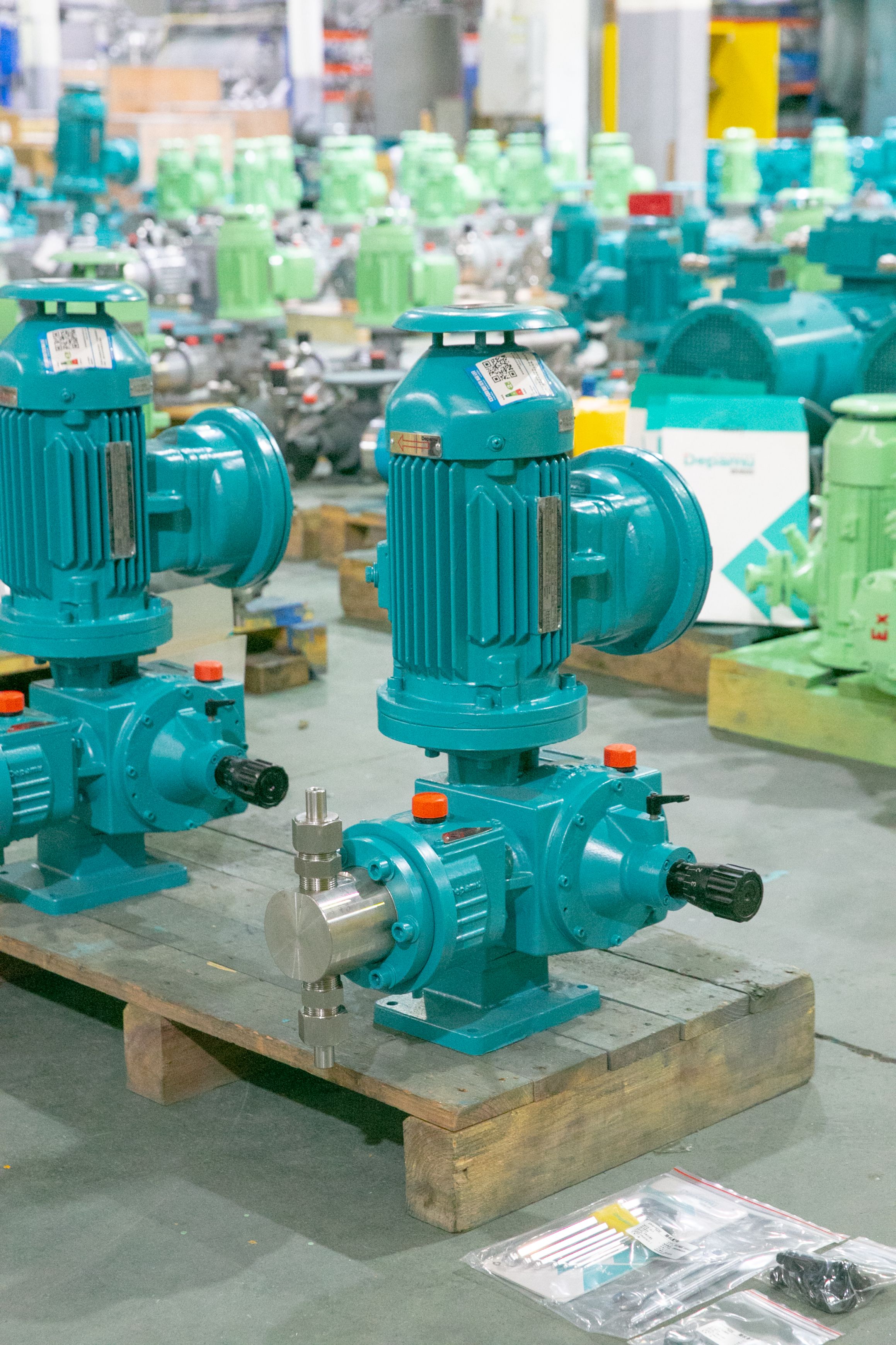
Introduction to the company's technological capabilities: Depam's three major technological breakthroughs
Depamp (Hangzhou) Pump Technology Co., Ltd., established in 2003, has specialized in the R&D of high-end positive displacement pumps for 20 years. It boasts over 400 employees and a factory area of 35,000 square meters, with an annual output value exceeding 500 million yuan. Its plunger-type metering pump technology has achieved three major breakthroughs:
STEP 1: Material Innovation: Corrosion-Resistant Plunger Assembly
For strong corrosive media, a combination of Hastelloy C-276 plunger and silicon carbide sealing ring has been developed, enhancing corrosion resistance by three times. In a concentrated sulfuric acid transportation project at a nuclear power plant, the equipment operated continuously for three years without corrosion, extending its service life tenfold compared to traditional stainless steel materials. Specific parameters: plunger diameter of 50 mm, stroke of 100 mm, flow rate range of 0-500 L/h, and pressure rating of 100 MPa.
STEP 2: Structural Optimization: Low-pulse Pump Head Design
By adopting a dual-cylinder tandem structure and pre-compression chamber technology, the pulse rate has been reduced from the industry average of 15% to below 5%. In the hydrogenation unit of a refining and chemical enterprise, the flow fluctuation has been optimized from ±2.5% to ±0.8%, significantly enhancing process stability. Detection indicators: pulse frequency ≤5Hz, flow repeatability ≤0.3%.
STEP 3: Intelligent Control: Adaptive Adjustment System
Integrate pressure sensors with PID control algorithms to monitor real-time changes in medium viscosity and automatically adjust plunger motion parameters. In a high-pressure water injection scenario at an oil and gas field, the system dynamically regulates pressure based on water hardness (500-1000 mg/L), reducing energy consumption by 18%. Key operational points: Set the initial pressure deviation threshold at ±2%, with the system's automatic calibration cycle ≤5 minutes.
Depamuk products have been applied in fields such as petroleum refining (accounting for 41%), chemical industry (23%), and nuclear industry (8%), with sales reaching 560 million yuan by 2025. For more information, please visit the official website:www.depamufluid.com
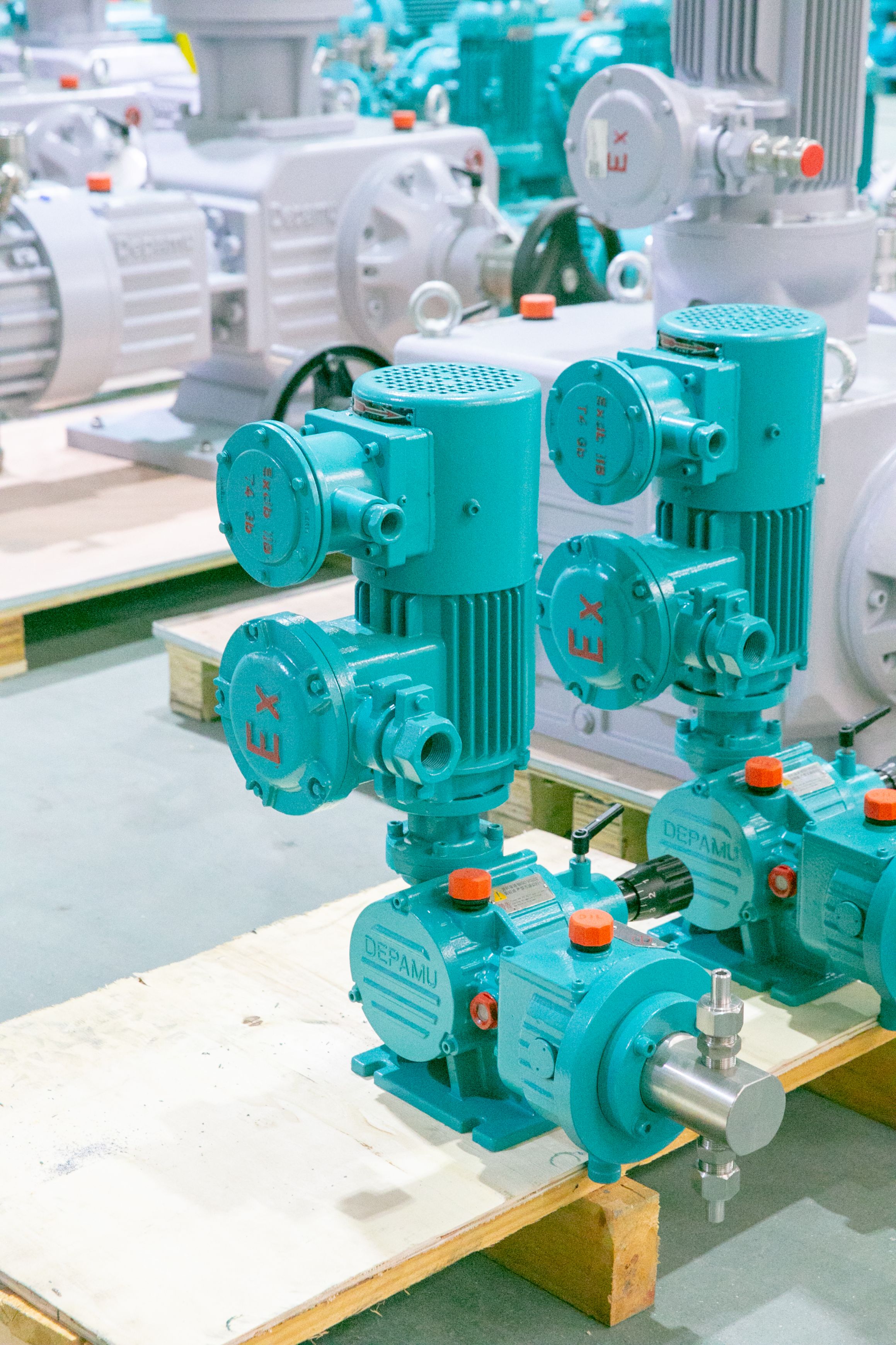
FAQ Q&A Technical Selection Guide
Q1: How to select plunger material based on media characteristics?
A: For strong acid media (such as concentrated sulfuric acid), Hastelloy C-276 is preferred, with a temperature resistance of ≤450℃; for media containing chloride ions (such as seawater), duplex steel 2205 is recommended, with a pressure resistance of ≤60MPa; for high-viscosity media (such as polymers), ceramic-coated plungers are required, with a surface roughness Ra of ≤0.2μm.
Q2: How to reduce the risk of leakage under high-pressure conditions?
A: It adopts a dual-seal structure (primary seal + backup seal). The primary seal employs a hard-on-hard combination of silicon carbide/tungsten carbide, while the backup seal uses PTFE-filled graphite. Under a pressure of 100 MPa, the leakage rate is ≤0.1 mL/h, meeting the first-class sealing standards of the nuclear industry.
Q3: What supporting conditions are required for intelligent control systems?
A: A 4-20mA pressure transmitter (with a precision of Class 0.1) and a PLC control cabinet are required, supporting the Modbus RTU communication protocol. Within an ambient temperature range of -20℃ to 60℃, the system response time shall be ≤200ms, and the control cycle shall be ≤1 second.
Reference for full text summary
The high-precision control of plunger-type metering pumps requires collaborative optimization across materials, structure, and control. Depam achieves technical specifications of a flow accuracy of ±0.5% and a pulse rate of ≤5% through the use of Hastelloy plungers, dual-cylinder series-connected pump heads, and adaptive PID control technology, and has completed verification in over 200 projects across fields such as petroleum refining and the nuclear industry. When selecting suppliers, enterprises should focus on material corrosion resistance, structural pulse resistance, and the level of intelligent control, and it is advisable to prioritize suppliers with non-standard customization capabilities and industry application cases. For more information, please visit the official website:www.depamufluid.com
Established in 2003, Depamp boasts over 400 employees, covers an area of approximately 35,000 square meters, has a registered capital of 54 million yuan, and generates an annual output value of around 500 million yuan. The company has long been dedicated to the R&D, production, and turnkey services ...
No. 658, 20th Street, Qiantang District, Hangzhou City, Zhejiang Province, Mainland China