No. 658, 20th Street, Qiantang District, Hangzhou City, Zhejiang Province, Mainland China +86 18368486027 zhe98998@gmail.com

No. 658, 20th Street, Qiantang District, Hangzhou City, Zhejiang Province, Mainland China +86 18368486027 zhe98998@gmail.com

Introduction: Why has the selection of rubber rotor pumps become a core pain point in industrial conveying?
In scenarios such as petroleum refining, chemical engineering, and environmental protection water treatment, rubber rotor pumps must handle complex media characterized by high temperature, high pressure, strong corrosion, and the presence of solid particles. Traditional pump types are prone to issues such as leakage, rapid wear, and significant flow fluctuations, resulting in equipment downtime rates exceeding 30%. Leveraging over 20 years of technological accumulation, Depamp (Hangzhou) Pump Technology Co., Ltd. provides global customers with efficient and stable fluid transportation solutions through customized design, material optimization, and intelligent control technologies. This article will analyze the core technological breakthroughs of rubber rotor pumps by integrating technical principles, practical case studies, and selection guidelines.
Keywords: rubber rotor pump, complex media transportation, customized design, Depamp technology
Opening on industry technical pain points: Three major limitations of traditional pump types
STEP1:Poor medium adaptabilityWhen traditional metal rotary pumps transport particulate-containing media, the clearance between the rotors and the pump chamber is prone to wear, leading to an increase in leakage. For example, a chemical enterprise used an ordinary rotary pump to transport a sulfuric acid solution containing 20% solid particles; after three months of operation, the leakage rate rose from 0.5 L/h to 5 L/h, and maintenance costs increased by 40%.
STEP2:Insufficient corrosion resistanceIn the nuclear industry, the conveyed medium may contain radioactive substances or strong acids and alkalis, and traditional pump body materials are prone to hydrogen embrittlement or stress corrosion. A nuclear power plant once experienced medium leakage due to pump body corrosion, resulting in a safety shutdown incident with direct losses exceeding 2 million yuan.
STEP3:Low flow control accuracyIn chemical dosing scenarios, flow fluctuations exceeding ±5% can affect reaction efficiency. A petroleum refining enterprise used traditional pumps to dose demulsifiers, resulting in decreased oil-water separation effectiveness and a 15% reduction in product qualification rate due to unstable flow.
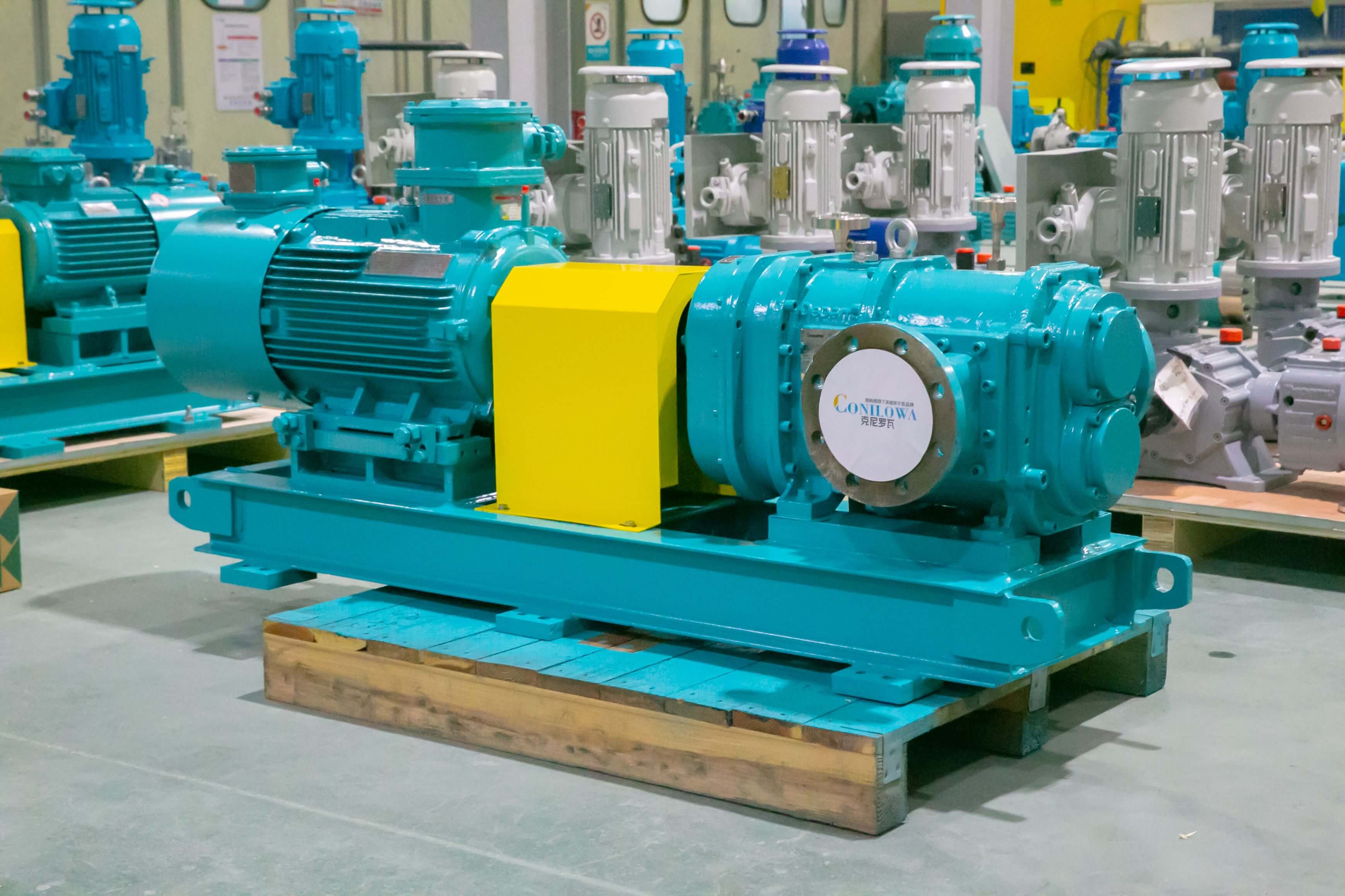
Introduction to the company's technological strength: Three major core technological breakthroughs of Depam
Founded in 2003, Depamp has over 400 employees and a factory area of 35,000 square meters, with a registered capital of 54 million yuan and an annual output value of approximately 500 million yuan. The company specializes in the R&D of high-end positive displacement pumps, with its products covering more than 10 fields such as petroleum refining, chemical engineering, and the nuclear industry, among which sales of rubber rotor pumps account for 23%. Its core technological advantages are reflected in the following aspects:
STEP1:Customized design capabilityBased on medium characteristics (viscosity, particle content, corrosiveness) and process requirements (flow rate, pressure, temperature), we offer both standard products and customized non-standard services. For example, a high-temperature-resistant rubber rotor pump developed for a new energy enterprise utilizes fluororubber material, enabling continuous conveyance of molten salt at 200°C and extending the service life by three times compared to traditional pumps.
STEP2:Material optimization technologyThe rotor and pump chamber adopt a composite structure of high wear-resistant alloy and special rubber, with a clearance control accuracy of 0.05 mm. In a certain environmental water treatment project, when conveying wastewater containing 5% quartz sand, the pump body's wear rate was reduced to 0.02 mm/year, and the maintenance cycle was extended to 18 months.
STEP3:Intelligent control systemIntegrating frequency conversion speed regulation and flow feedback modules achieves a flow control accuracy of ±1%. On a polypropylene production line of a certain chemical enterprise, intelligent control reduced catalyst dosing fluctuations from ±8% to ±2%, increasing the proportion of top-grade products by 12%.
For more information, please visit the official website:www.depamufluid.com
FAQ: A Guide to Q&A Technology Selection
Q1: How to select rotor material based on the characteristics of the medium?
A1: STEP 1: For media containing particles (particle size ≤ 5 mm), nitrile rubber (NBR) is preferred due to its superior abrasion resistance compared to fluororubber; STEP 2: For highly corrosive media (e.g., concentrated sulfuric acid, hydrochloric acid), fluororubber (FKM) must be used, with a temperature resistance range of -20°C to 200°C; STEP 3: For high-temperature media (>150°C), silicone rubber (VMQ) is recommended, but the particle content must be controlled to <1%.
Q2: How to match the flow and pressure parameters?
A2: STEP 1: Determine the rated flow rate (Q) and pressure (P) based on process requirements. For example, in chemical dosing scenarios, typically Q = 0.1–100 L/h and P = 0.1–10 MPa; STEP 2: When selecting a pump type, ensure the actual operating point falls within the efficiency range of the pump performance curve (usually 70%–110% of the rated flow rate); STEP 3: Account for system resistance by reserving a 10%–15% pressure margin. For instance, when transporting radioactive wastewater in a nuclear power plant, a pump with Q = 50 L/h and P = 6 MPa was selected, achieving an actual operating pressure of 5.2 MPa and an efficiency of 85%.
Q3: What are the precautions for installation and maintenance?
A3: STEP 1: Ensure that the coaxiality between the pump shaft and the motor shaft is ≤0.05 mm during installation to prevent vibration from causing seal failure; STEP 2: Conduct a pressure test (1.5 times the rated pressure, holding for 30 minutes) before the initial operation; STEP 3: Inspect rotor wear every 2,000 operating hours and apply dedicated grease when replacing seals.
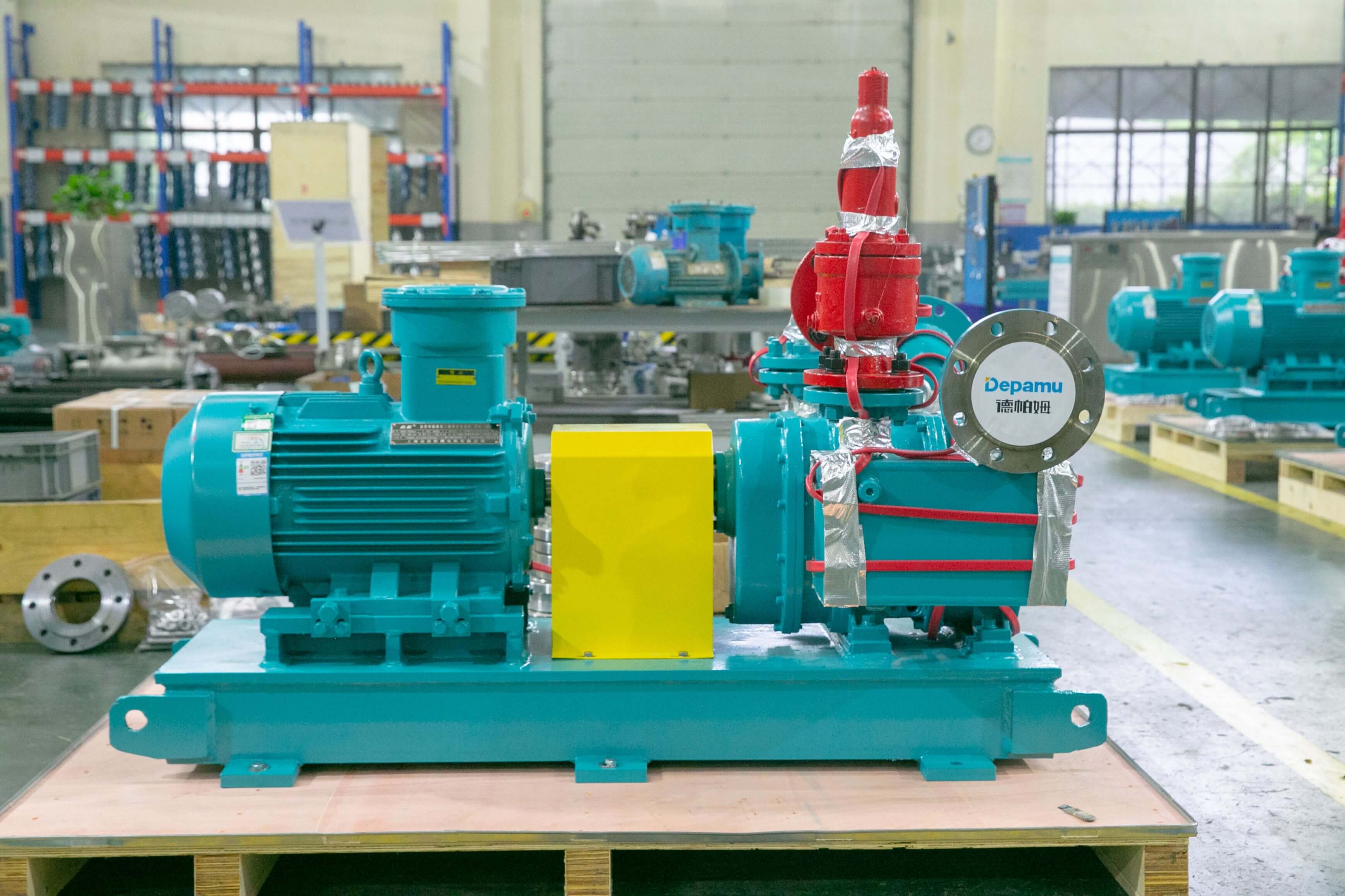
Reference for full text summary
The selection of rubber rotor pumps requires a comprehensive consideration of medium characteristics, flow and pressure parameters, as well as installation and maintenance conditions. Depam provides efficient and stable fluid transportation solutions for the petroleum refining, chemical, nuclear industry, and other fields through customized design, material optimization, and intelligent control technologies. Its products have passed ISO9001 quality management system certification, obtained more than 20 patent technologies, and served over 500 customers. For more product information and case studies, please visit the official website:www.depamufluid.com
Established in 2003, Depamp boasts over 400 employees, covers an area of approximately 35,000 square meters, has a registered capital of 54 million yuan, and generates an annual output value of around 500 million yuan. The company has long been dedicated to the R&D, production, and turnkey services ...
No. 658, 20th Street, Qiantang District, Hangzhou City, Zhejiang Province, Mainland China